 Lynden Siding
 Storm Damage in a Salt-Air, High-Rainfall Climate
Abbotsford sits close enough to the Salish Sea and the Fraser Valley weather systems that homes here take on a specific combination of punishment: salt-laden air moving in off the water, long stretches of driving rain that comes in sideways during winter storms, and a moss season that can run eight months or more in shaded, north-facing roof sections. None of these on their own would be a crisis. Together, over years, they shorten the life of a roof faster than most homeowners expect, and they turn a small storm event into a real repair need if the roof was already weakened.
Salt air accelerates corrosion on any exposed metal — flashing, fasteners, drip edge, vent caps. Once that metal starts to pit or rust, water finds a path around it instead of over it. Driving rain doesn't need a big hole to get in; wind-driven rain can push water sideways under shingles that are otherwise intact, especially at ridge lines, valleys, and anywhere the roof plane changes direction. And moss does more damage over time than most people realize — it holds moisture against the shingle surface, lifts tabs as it grows under them, and adds weight that stresses aging roof decking.
When a storm rolls through — high wind, hail, a heavy branch coming down, or just a prolonged soaking that finds every weak spot — the damage it causes is often the last straw on a roof that these three factors had already been working on quietly for years. That's the context we bring to every storm repair call in this area.
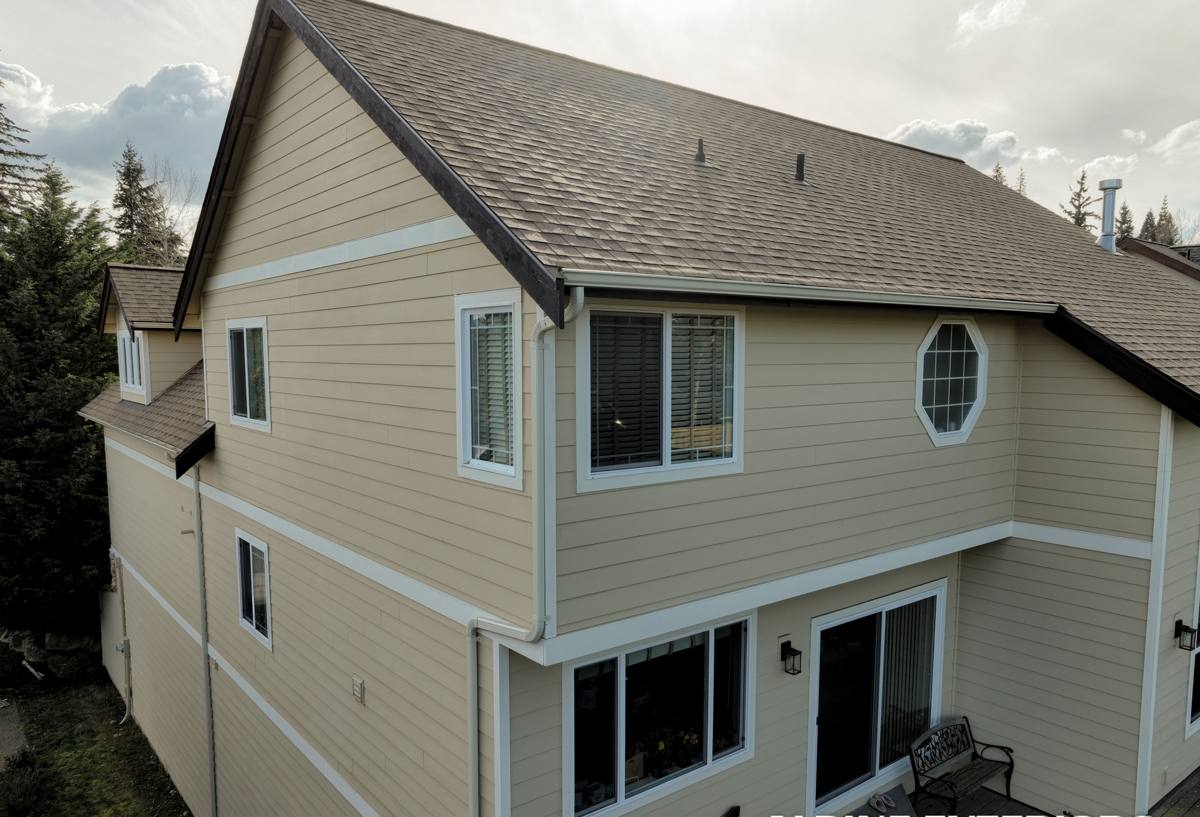
What Storm Damage Actually Looks Like
Homeowners often expect storm damage to be obvious — a hole, a missing section, water pouring into a room. Sometimes it is. More often, it's subtle enough that it gets missed until it's caused secondary damage.
Signs worth taking seriously
- Shingles that are cracked, curled, creased, or missing entirely, especially after high wind
- Granules collecting in gutters or at downspout outlets after a storm — a sign of impact damage or accelerated wear
- Flashing that's bent, lifted, or separated at chimneys, skylights, walls, or roof-to-roof transitions
- Dented or dislodged vent caps and pipe boots
- Water stains on ceilings or upper walls that appeared after a specific weather event
- Sagging in the roof line, which can indicate deck damage underneath the surface
- Debris — branches, gravel from adjacent roofing, anything heavy — that struck the roof and may have caused impact damage even without a visible hole
Not everything that looks alarming is storm damage in the insurance sense, and not everything that qualifies as storm damage is visible from the ground. That's why a proper inspection matters more than a quick look with binoculars.
How We Handle a Storm Damage Call
Emergency response first
If there's active water intrusion, the first priority is stopping it — tarping an exposed area, securing loose material, and making sure the interior of the home isn't taking on more damage while a permanent repair gets scheduled. This is triage, not a finished job, and we're upfront about that distinction.
Full inspection
Once the immediate risk is handled, we get on the roof and look at the whole system, not just the spot that's obviously damaged. Storm events rarely damage only one area — wind and rain stress the whole roof, and it's common to find a second problem area that wasn't visible from inside the house. We check the field of the roof, all flashing points, the ridge, valleys, and the condition of the decking where we can access it.
Honest scope and options
We tell you plainly whether this is a targeted repair, a larger section replacement, or something closer to a full re-roof — and why. We don't pad scope to make a job bigger than it is, and we don't recommend a patch when the underlying material is too far gone to hold one.
Documentation for insurance
If you're planning to file a claim, we document what we find — photos, notes on the damage pattern, and an honest description of cause. We work for you, not the insurance company, and we'll give you a straight answer about what we think is and isn't storm-related so you're not surprised later.
Repair vs. Replace: What Actually Drives the Decision
The right call depends on the age and condition of the roof under the damage, not just the size of the damaged area. A small hole in a roof that's otherwise five years from the end of its service life is a different situation than the same hole in a roof that's already worn thin from moss and salt exposure.
| Factor | Favors targeted repair | Favors larger replacement |
|---|---|---|
| Roof age | Under 10-12 years, materials still flexible | Approaching or past expected service life |
| Extent of damage | Isolated to one area or slope | Spread across multiple slopes or the whole field |
| Underlying decking | Solid, dry, no rot | Soft spots, rot, or moisture staining found underneath |
| Moss/algae history | Minimal, well-maintained | Heavy moss growth already compromising shingle grip |
| Matching materials | Discontinued shingle can still be reasonably matched | Shingle line discontinued or badly faded/mismatched |
| Insurance scope | Adjuster scope matches a repair | Adjuster or contractor scope indicates full replacement is more cost-effective |
We'll walk you through where your roof falls on this table before we recommend anything. A repair that's done right on a roof that has the years left in it is money well spent. A repair patched onto a roof that's already failing is money that buys you a year, maybe two, before you're back to square one.
Roofing Materials That Actually Hold Up Locally
Asphalt shingles
Still the most common and most cost-effective option, and a reasonable choice for most homes in this area — provided the right grade is used and ventilation is adequate. Cheaper shingle lines lose granules faster under driving rain and UV exposure, and lower-quality lines are more prone to curling once moss gets a foothold. A mid-to-upper grade architectural shingle with a solid algae-resistant rating is worth the modest upcharge here specifically because of the moss pressure.
Metal roofing
Performs very well against driving rain and wind uplift when installed correctly, and sheds moss far more easily than shingle because there's less surface texture for it to grip. The trade-off is upfront cost and the need for a contractor who's genuinely experienced with metal detailing — flashing mistakes on a metal roof are less forgiving than on shingle.
Flashing and fasteners
Given the salt air factor, we don't cut corners on flashing and fastener material. Standard galvanized steel corrodes noticeably faster near coastal air than it does further inland; stainless or higher-grade coated fasteners cost more per piece but they're a small fraction of the total job cost and they're the parts most likely to fail first if under-specified.
Moss, Drainage, and Preventing the Next Storm from Doing More Damage
A storm repair that ignores the conditions that weakened the roof in the first place is only a partial fix. Two things matter most in this climate: moss control and drainage.
Moss
Moss doesn't just look bad — it lifts shingle tabs as it grows, holds water against the surface, and adds weight. Zinc or copper strips at the ridge, kept clear of overhanging branches where possible, and periodic gentle cleaning (never pressure-washing shingles) go a long way toward slowing regrowth after a repair.
Drainage
Driving rain overwhelms gutters and valleys faster than a gentle rain does, and a valley or gutter that's even partially blocked with moss debris or granules will back water up under the shingle edge during the next heavy storm. Part of a proper storm repair includes making sure water has a clear path off the roof, not just patching the hole the last storm made.
What to Check After a Storm Before We Arrive
- Look for water stains or new drips on ceilings, especially in upper-floor rooms and closets
- Check the attic (if accessible) for daylight, damp insulation, or fresh water marks
- Walk the yard for shingle pieces, granules, or flashing that blew off
- Note which direction the storm wind was coming from — it helps us know where to look first
- Avoid getting on the roof yourself, especially if it's wet or you can see damage from the ground
- Take photos from the ground if it's safe to do so, before debris gets moved or weather changes further
Why a Crew That Already Works Abbotsford Matters
Storm damage repair isn't a specialty product line — it's judgment built from having actually worked on roofs in this specific weather pattern. A crew that already does regular work across the Lynden and Abbotsford area knows what moss damage looks like at six months versus three years, knows which flashing details fail first under sustained wind-driven rain, and isn't guessing at how salt air has aged the metal on a fifteen-year-old roof. That local pattern recognition is what keeps a repair from becoming a repeat call after the next storm.
It also means we're not treating your roof as a one-off. Being local to this corridor means we're available for the follow-up questions, the insurance adjuster walkthrough, and the maintenance check a year later — not just the initial repair.
If you've had storm damage or you're not sure whether what you're seeing qualifies, we're glad to take a look. Fill out the form below for a free, no-pressure estimate — we'll tell you honestly what we find and what your real options are.