 Lynden Siding
 Windows Built for Abbotsford's Fraser Valley Weather
Abbotsford sits in a stretch of the Fraser Valley where the weather doesn't do anything halfway. Winters bring long stretches of driving rain pushed in off the Pacific, humidity that never really lets up, and enough overcast days that moss gets a foothold anywhere moisture can sit for more than a day or two. Add in salt-laden air working its way inland and you've got a climate that is genuinely hard on window frames, seals, and glazing over time — harder than most homeowners realize until they're dealing with fogged glass or a sill that's gone soft.
We work this region regularly, which means we're not guessing at how a window will hold up here. We know which failure points show up first in this climate and we build the installation around avoiding them, not just around getting a new window into the opening.
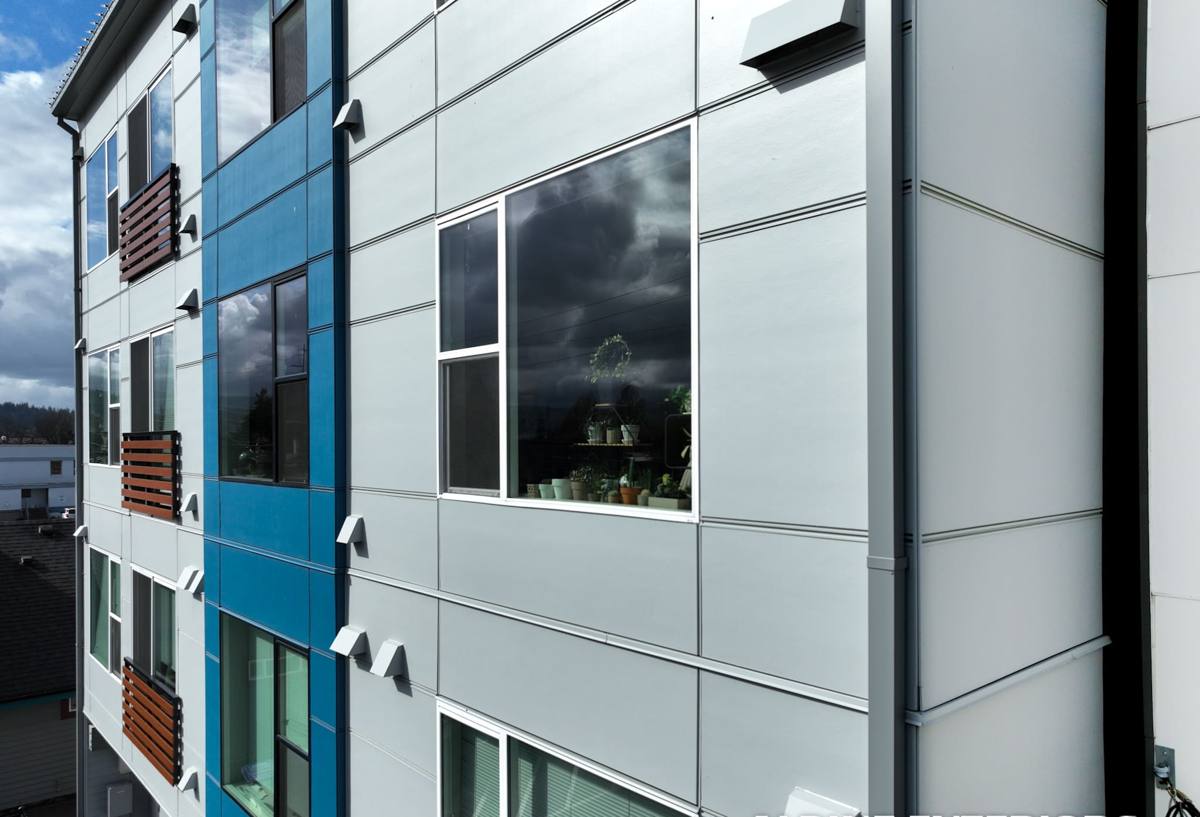
What "Energy-Efficient" Actually Means for a Window
"Energy-efficient" gets used loosely in this industry, so it's worth being specific about what actually moves the needle on comfort and heating costs in a climate like ours.
Glass and Glazing
Double-pane glass with a low-E coating and an argon or krypton gas fill between the panes is the baseline for this region. The low-E coating reflects heat back into the room in winter and blocks solar heat gain in summer, while the gas fill slows heat transfer through the glass itself. In a marine climate like ours, where the temperature swing between night and day is smaller than inland regions but humidity is constant, glass performance matters as much for condensation control as for raw insulation value.
Frame Material and Spacers
The frame and the spacer bar between the panes of glass are where a lot of window performance is won or lost. A poor spacer bar creates a cold bridge along the glass edge, which is exactly where you'll see condensation and, eventually, seal failure. Warm-edge spacer technology addresses this directly and is worth asking about regardless of which frame material you choose.
Air Sealing and Installation Quality
A high-performance window installed with gaps in the flashing or a poor seal against the wall assembly will underperform a mid-grade window installed correctly. This is the piece homeowners often underweight — the product spec sheet only tells part of the story. Installation quality is what determines whether that spec sheet performance actually shows up in your energy bill.
Signs Your Windows Are Losing the Battle
Not every window problem is obvious from across the room. Here's what we look for, and what you can check yourself before calling anyone out:
- Fogging or a hazy film between the panes of glass — this means the seal has failed and the gas fill is gone
- Visible moss or dark staining building up on the sill or in the corners of the frame
- A draft you can feel with your hand near the frame on a windy day
- Wood trim or sill that feels soft, spongy, or shows paint bubbling
- Difficulty opening, closing, or latching a window that used to operate smoothly
- Noticeably colder rooms near windows compared to the rest of the house in winter
- Rising heating costs without a clear explanation elsewhere in the home
Any one of these on its own isn't necessarily an emergency. Several of them together, especially on the weather-exposed side of the house, usually means the windows are past the point where caulking and weatherstripping will fix the problem.
What a Correct Installation Actually Involves
Swapping glass into an old frame, or setting a new window without properly integrating it into the wall's water management, is how you end up with a window that looks fine for a year or two and then starts leaking behind the siding where nobody can see it until there's damage. A correct installation treats the window as part of the wall system, not a standalone product.
That means:
- Removing the old unit down to the rough opening and checking the sheathing and framing underneath for hidden rot or moisture damage before anything new goes in
- Installing flashing tape and a sloped sill pan so any water that does get past the exterior finish drains back out, not into the wall cavity
- Sequencing the house wrap or weather-resistive barrier correctly around the window flanges — lapped so water sheds down and over, never trapped behind
- Shimming the unit square and plumb so it operates correctly and seals evenly for its full service life
- Sealing and insulating the gap between the frame and the rough opening with a product suited to that gap width, not just spray foam everywhere
- Finishing the exterior trim and caulking in a way that sheds water rather than holding it against the frame
Because we also do siding work, we think about window installation the same way we think about the wall assembly around it — the window has to work with the drainage plane, not fight it. That's a different mindset than a window-only crew that isn't thinking past the frame.
Comparing Frame Materials for This Climate
There's no single "best" frame material — the right choice depends on your home's exposure, your budget, and how much maintenance you want to take on. Here's an honest comparison for a climate with steady rain, humidity, and occasional salt exposure:
| Frame Material | Moisture Resistance | Maintenance | Typical Trade-Offs |
|---|---|---|---|
| Vinyl | Very good — won't rot or corrode | Low — occasional cleaning | Limited color options; can look less premium than other materials |
| Fiberglass | Excellent — very stable in wet, humid conditions | Low | Higher upfront cost than vinyl |
| Wood-clad | Good on the exterior clad side; interior wood needs protection | Moderate to high | Attractive interior finish, but cladding seams are a spot to watch over time |
| Aluminum | Fair — prone to condensation without a thermal break | Low | Poor insulator unless thermally broken; can feel cold to the touch |
For most homes in this area, we steer people toward vinyl or fiberglass because they hold up well against sustained moisture without a lot of upkeep. Wood-clad is a legitimate choice for homeowners who want that interior look and are willing to stay on top of maintenance — we're happy to install it, we just make sure clients understand the trade-off going in.
A Note on Cost Factors
Beyond frame material, the biggest cost drivers on a window job are the number of openings, whether it's a straightforward frame replacement or a full-frame tear-out with wall repair, glass upgrades (triple-pane, specialty coatings), and any custom sizing for non-standard openings. We give exact numbers after seeing the openings in person — broad brochure pricing rarely matches what's actually behind an older wall.
Our Process, Start to Finish
- On-site assessment. We look at every window being considered, check the rough openings where accessible, and talk through what you're trying to solve — comfort, condensation, drafts, appearance, or all of the above.
- Straightforward proposal. You get a clear scope and price, broken out by opening, with frame material and glass options explained rather than buried in jargon.
- Scheduling around the weather. Window openings are exposed during the swap, so we plan install days around forecasts and work efficiently to minimize how long any opening sits uncovered.
- Removal and inspection. Old units come out carefully, and we check the framing and sheathing before closing anything back up.
- Correct installation. Flashing, sill pans, air sealing, and trim are done to the standard described above — every window, not just the ones facing the street.
- Walkthrough. We test operation, check the seals, and walk the job with you before we consider it done.
Why Hire a Crew That Already Works in Abbotsford, BC
Serving both sides of the Whatcom County–Fraser Valley border isn't unusual for exterior contractors up in this corner of the country, but it does mean the crew showing up at your door should already be comfortable with the logistics — scheduling, materials, and permitting can work a little differently once you cross into Canada, and a contractor who does this regularly won't be figuring it out on your job. Just as important, a crew that already works Abbotsford homes has seen how this specific climate treats windows over years, not guessed at it from a manufacturer's brochure. That local track record is what tells you whether a flashing detail actually holds up through a wet Fraser Valley winter or just looks right on install day.
Protecting Your Investment: Maintenance and Warranty Basics
Even a well-installed, high-quality window benefits from a little upkeep in this climate:
- Clear moss or debris from sills and tracks a couple of times a year, especially after fall leaf-drop
- Check exterior caulking annually and re-seal any spots where it's cracked or pulled away
- Keep weep holes on vinyl and fiberglass frames clear so water can drain out as designed
- Operate hardware periodically through the year so locks and hinges don't seize up from disuse
Manufacturer warranties typically cover glass seal failure and hardware defects for a set number of years, while workmanship warranties on the installation itself are separate and worth understanding before you sign anything. We'll walk you through exactly what's covered on both fronts for whatever product you choose, in plain terms, before work starts.
If your windows are fogging, drafting, or just past their useful life, we're glad to take a look and give you a straightforward, no-pressure estimate. Use the form below to get started.