 Lynden Siding
 Why Wiser Lake Homes Ask Different Questions About Siding
Homes around Wiser Lake sit in a spot where Whatcom County's weather gets amplified. The lake itself keeps humidity higher than it is a few miles away in town, mature trees around the shoreline hold shade and moisture against exterior walls, and the same marine air that rolls in off the Sound carries a fine, persistent load of salt that settles on anything facing the water or the open pasture between here and the coast. Add the driving rain that comes sideways during winter storms, and siding here is working harder than siding on a dry, sunny lot ever will.
None of that means Wiser Lake is a bad place to own a home. It means the exterior envelope has to be chosen and installed with those specific stresses in mind, not treated like a generic siding job. That's the difference between a replacement that looks good for two summers and one that holds up through twenty Whatcom County winters.
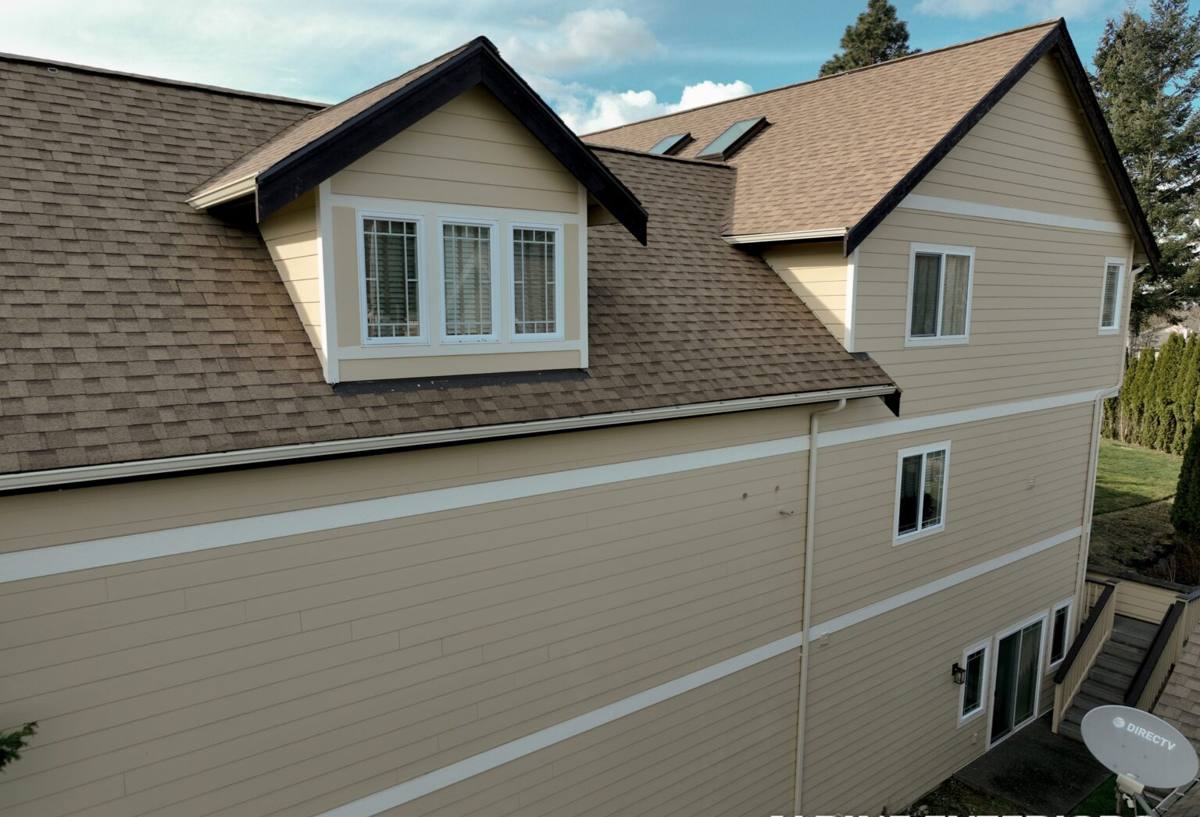
The Three Things Working Against Your Siding
Salt-Laden Air
Salt in the air doesn't just sit on the surface — it works into seams, fastener heads, and any spot where paint film has thinned or cracked. Over years, that accelerates corrosion on fasteners and trim, and it breaks down lower-grade paint finishes faster than manufacturers' warranties usually assume.
Driving Rain
Wind-driven rain doesn't fall straight down — it gets pushed sideways into laps, corners, and butt joints. Siding that isn't installed with the right lap exposure, flashing, and clearances will let that water find a way behind the cladding, where it causes rot and hidden damage long before anything shows on the surface.
A Long Moss Season
Shade from mature trees, plus lake humidity, means moss and algae get a real head start here and hold on longer into the year than they do on more open, sun-exposed lots. Moss holds moisture against the siding surface, and on materials that aren't dimensionally stable or properly primed, that constant damp exposure is what shortens a siding job's real lifespan — regardless of what the original installation looked like on day one.
What a Correct Siding Replacement Actually Involves
A siding replacement done right at Wiser Lake is not just stripping old material and nailing up new panels. The sequence matters as much as the product:
- Full tear-off and inspection — old siding comes off so the sheathing, framing, and any hidden rot can actually be seen and addressed, not covered over.
- Moisture barrier and flashing correction — house wrap, window and door flashing, and kick-out flashing at rooflines get installed or corrected to actively shed wind-driven rain rather than just resist it.
- Proper fastening pattern — fasteners driven to the manufacturer's spec, into framing, at the correct spacing, so the assembly can handle wind loads without working loose over time.
- Correct clearances — siding held above grade, decks, and roof lines per code and manufacturer requirements, so splash-back and standing moisture don't sit against the bottom edge.
- Factory-finished material — a finish that's cured and baked on in a controlled environment, not job-site painted, so it holds color and resists the salt and damp exposure this area sees.
Skip any one of these steps and the siding may still look fine at closeout — the problems it causes show up two, five, or ten years later, usually as rot, paint failure, or moss staining that won't wash off.
Comparing Siding Options for a Lake-Adjacent Property
| Factor | James Hardie Fiber Cement | Vinyl | Untreated Wood / Cedar |
|---|---|---|---|
| Moisture behavior | Dimensionally stable, doesn't swell or rot | Doesn't rot, but can warp and gap in temperature swings | Absorbs moisture, prone to rot without diligent upkeep |
| Salt air resistance | Factory finish holds up to coastal-influenced air | Can chalk and fade in salt exposure over time | Finish breaks down faster, needs frequent recoating |
| Moss/algae resistance | Smooth, stable surface resists buildup better than porous wood | Resists moss growth itself but seams and channels collect debris | Porous surface holds moss and moisture against the wood |
| Fire resistance | Non-combustible | Combustible, can melt or deform near heat sources | Combustible |
| Maintenance | Occasional wash, repaint only after 15+ years | Low maintenance but limited repair options once faded | Regular staining or painting required |
Signs Your Wiser Lake Home Needs Siding Replacement
- Soft or spongy spots when you press on siding, especially near the bottom courses or under windows
- Paint that's peeling, bubbling, or chalking faster than it should for its age
- Persistent moss or algae staining that comes back within a season of cleaning
- Visible gaps, warping, or buckling at seams and corners
- Rising energy bills that suggest the wall assembly behind the siding is no longer doing its job
- Rot or discoloration around window and door trim
- Siding that's original to a home built more than 20-25 years ago, especially with older wood or early-generation composite products
Why We Only Install James Hardie Here
We standardized on James Hardie fiber cement for every home we side, and Wiser Lake's climate is a good example of why. Hardie's HZ5 formulation is engineered for climates with real moisture exposure and freeze-thaw cycling, which fits this part of Whatcom County better than a one-size-fits-all product. It's non-combustible, which matters given how much of this area borders trees and open land. The ColorPlus factory finish is baked on under controlled conditions, so it resists the fading and chalking that salt-influenced air causes on job-site-painted or lower-grade finishes — and it comes with a real transferable warranty backing that performance.
We don't install LP SmartSide, vinyl, Cemplank, Allura, or unprimed wood species like cedar or spruce. Each of those products has legitimate uses and, in fairness, each does some things well — vinyl is inexpensive and low-maintenance in mild climates, cedar has genuine natural appeal, engineered wood siding is lighter to handle. But in a location dealing with salt-laden air, driving rain, and a long wet-moss season, we've made installing only Hardie our professional standard because it's the product we can stand behind for the full length of its warranty, not just for the first few years.
Our Process for a Wiser Lake Siding Replacement
Every job starts with an on-site walk-through, not a phone estimate. We look at your home's actual exposure — how close you are to the water, how much shade the lot gets, which walls take the worst of the wind-driven rain — and we check the condition of the sheathing and framing once old siding starts coming off, not just guess from the outside. From there:
- We give you a written scope and cost breakdown before any work starts, so there are no surprise change orders
- We tear off old siding in manageable sections to keep your home protected from weather during the job
- We correct flashing and moisture barrier issues as we find them, and we tell you what we found and why it matters
- We install to James Hardie's fastening and clearance specifications, not just "close enough"
- We walk the finished job with you before calling it done
What to Expect: Timeline and Disruption
A full siding replacement on an average Wiser Lake home typically runs from about a week to a few weeks, depending on the size of the house, the amount of trim and detail work, and what we find once the old siding is off. Weather is a real factor in scheduling here — we plan around the wetter stretches of the year rather than fighting them, because installing fiber cement correctly means working with dry conditions during the actual install, even if the surrounding forecast is typically damp. You'll have some noise and activity around your home during the day, but you should not lose full use of your house, driveway, or yard for the duration.
Why Local Experience at Wiser Lake Matters
A crew that's already worked homes around Wiser Lake knows which walls tend to take the worst of the weather, how far moss and algae typically creep back after a cleaning, and how the lake's humidity behaves differently than it does on a dry lot closer to central Lynden. That's not something you can fully account for from a general contractor's playbook — it comes from having actually stood on ladders on these specific streets, in this specific microclimate, watching how siding performs over years, not just at handoff.
If your siding is showing its age, or you just want a straight answer about what your home actually needs, we're happy to take a look. Reach out for a free, no-pressure estimate using the form below.