 Lynden Siding
 Birch Bay's Climate Is Harder on Siding Than Most of Whatcom County
Birch Bay sits right on the water, and that changes what a home's exterior has to deal with day in and day out. Inland communities in Whatcom County get plenty of rain, but Birch Bay adds salt-laden air off the Strait of Georgia, near-constant onshore moisture, and a moss season that can stretch for most of the year on shaded, north-facing walls. Siding that would hold up fine a few miles inland can wear noticeably faster on a Birch Bay lot, especially on the sides of the house that face the water or sit under tree cover.
This isn't a reason to panic about siding choice, but it is a reason to be picky about the product and the installation. A wall system on a Birch Bay home is doing more work than the same wall system fifteen miles east, and it should be built and installed with that in mind.
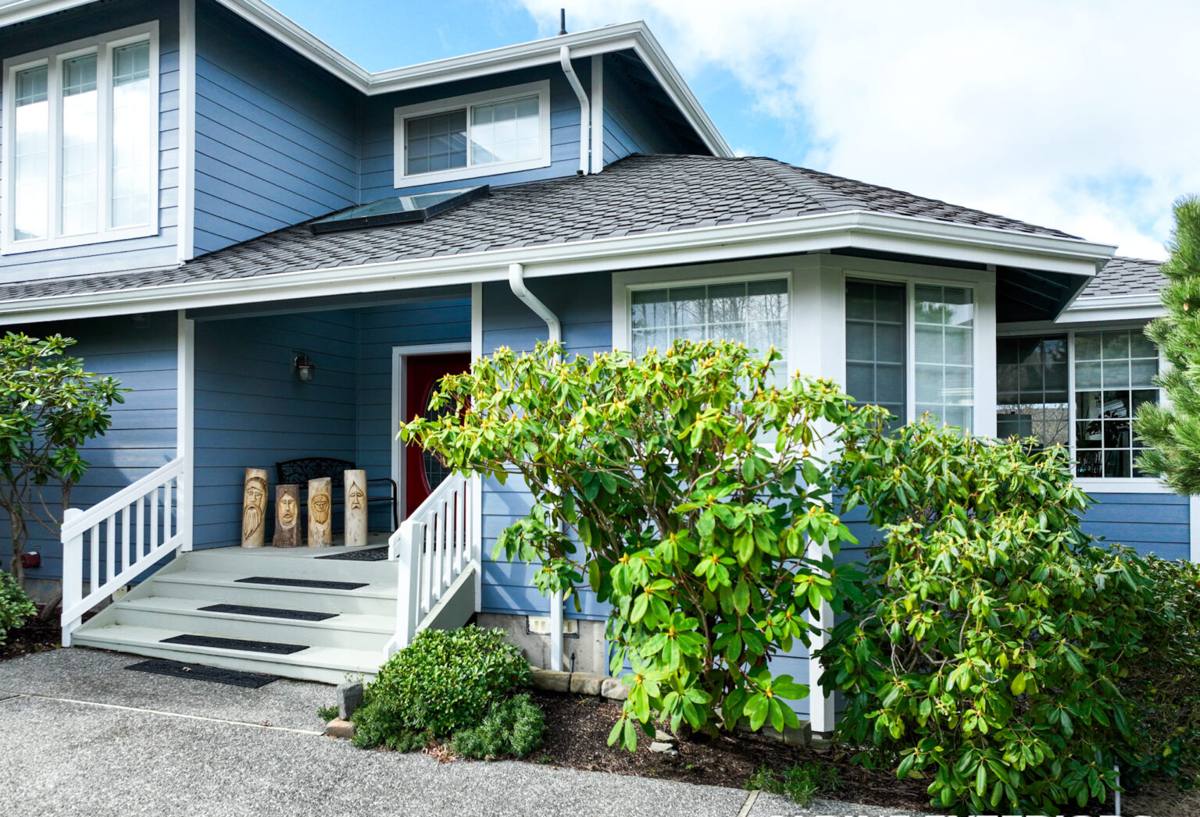
What Salt Air, Driving Rain, and Moss Actually Do to a Wall
Salt Air and Finish Wear
Airborne salt is corrosive and it's abrasive to exposed finishes. Over years, siding with a thin or field-applied paint layer tends to chalk, fade, and break down faster in a salt-air environment than the same product would somewhere drier and farther from the water. Fasteners, flashing, and trim details are also more exposed to corrosion near the coast, which is why the small hardware choices in a siding job matter as much as the siding itself.
Driving Rain and Water Management
Wind off the water pushes rain sideways into walls instead of letting it run straight down, which puts extra stress on every seam, joint, and penetration in the siding system. A wall that's only built to shed straight-down rain will eventually let water find its way behind the cladding in a driving-rain environment. That means the house wrap, flashing, and gaps behind the siding matter just as much as the siding material itself — arguably more, in a spot like Birch Bay.
Moss, Algae, and Shaded Walls
Long damp seasons and shaded lots near the water are ideal for moss and algae growth on siding, trim, and roof lines. Moss holds moisture against a wall surface, which is a slow but real problem for any material that isn't dimensionally stable or that can absorb and swell with trapped water. It also just looks bad faster than homeowners expect, particularly on north- and west-facing elevations that don't get much direct sun.
Why We Install Only James Hardie Fiber Cement Here
We made a decision a while back to install James Hardie fiber cement siding exclusively, and nowhere does that decision matter more than in a coastal microclimate like Birch Bay. Fiber cement is non-combustible, dimensionally stable, and doesn't swell, rot, or delaminate the way wood-based or wood-adjacent products can when they take on repeated moisture. That matters directly against the driving rain and prolonged dampness this area sees.
ColorPlus Factory Finish
James Hardie's ColorPlus finish is baked on in a controlled factory process, not brushed or sprayed on site. In a salt-air environment, a factory-cured finish holds its color and resists fading, chalking, and peeling far better than field-applied paint, which is one of the most common weak points on siding jobs near the water. It also comes with its own finish warranty, separate from the substrate warranty, which is worth understanding before you compare products.
HZ5 Product Line for the Pacific Northwest
Hardie engineers its HZ (HardieZone) product lines for specific climate zones, and the Pacific Northwest falls under HZ5, which is built around moisture and moderate-freeze performance rather than the intense heat and UV exposure that other HZ lines are engineered around. That's a meaningful distinction for a coastal Whatcom County home — the product is spec'd for the actual conditions it's going to face, not a generic national spec.
Why Not the Alternatives
We don't install vinyl, LP SmartSide, cedar, primed spruce, Cemplank, or Allura, and Birch Bay's climate is a good illustration of why. Vinyl can warp and fade under sustained UV and temperature swings and doesn't hold paint if you ever want to change color. Wood-based products need vigilant maintenance to keep moisture out of the substrate — a much bigger ask in a place with a long wet season and salt air. Other fiber cement brands may be reasonable products, but we've standardized on Hardie's specific formulation, factory finish process, and warranty structure, and we'd rather be excellent at installing one system correctly than average at installing several.
What a Correct Installation Involves
Fiber cement siding is only as good as the wall assembly behind it. In a high-exposure spot like Birch Bay, the details behind the siding matter as much as the boards themselves.
- A continuous water-resistive barrier (house wrap) installed shingle-style so every seam sheds water downward
- Proper rainscreen gap or drainage plane so any moisture that gets behind the siding can drain and dry rather than sit against the wall sheathing
- Correct flashing at every window, door, deck ledger, and roof-to-wall transition — the spots where driving rain finds a way in first
- Manufacturer-specified fastener type, spacing, and embedment, since undersized or over-driven fasteners are one of the most common causes of premature siding failure
- Caulking and sealant only where Hardie's install specs call for it — over-caulking traps moisture rather than keeping it out
- Proper clearance between siding and grade, decks, patios, and roof lines to keep the bottom edge of the siding away from standing water and splash-back
Skipping any one of these doesn't usually cause an obvious problem in year one. It shows up two, five, or ten years later as trapped moisture, staining, or a section of wall that starts failing well before the rest of the house — which is exactly the kind of thing a coastal climate accelerates.
Our Process for a Birch Bay Job
We start with a walk-around of the exterior to look at existing siding condition, moisture staining, moss growth patterns, and any trouble spots around windows, decks, and roof lines — this tells us as much about the wall assembly underneath as it does about the visible siding. From there we go over product line, color, and trim details, then handle tear-off, water-resistive barrier and flashing work, and the Hardie installation itself according to manufacturer spec, with attention to the coastal-specific details above. We clean up thoroughly and walk the finished job with you before we consider it done.
Cost Factors on a Birch Bay Home
Every home is different, and we don't quote sight-unseen, but these are the factors that most affect the cost of a Hardie siding project in this area:
| Factor | Why It Matters Here |
|---|---|
| Extent of moisture damage behind existing siding | Coastal homes more often need sheathing repair before new siding goes on |
| Wall complexity (gables, dormers, trim detail) | More cuts, corners, and flashing points increase labor time |
| Product line and profile (lap, shingle, panel) | Profile and plank width affect material cost and install time |
| Color (standard ColorPlus vs. custom) | Standard colors are factory-stocked; custom orders take longer and can cost more |
| Site access and staging | Waterfront and tree-covered lots can limit equipment access and add setup time |
Maintenance Once It's Installed
One advantage of Hardie in a spot like Birch Bay is how little upkeep it asks for compared to wood-based siding. It doesn't need repainting on the same cycle wood does, and it won't rot if a caulk joint fails somewhere. That said, in this climate we'd still recommend an annual rinse-down to knock off salt residue and discourage moss and algae buildup, especially on shaded elevations, and a periodic check of caulking at trim and penetrations. This is a fraction of the maintenance a wood or wood-composite product would demand in the same location.
Why Hiring a Crew That Already Works Birch Bay Matters
Siding contractors who mostly work drier, inland jobs don't always build in the extra margin a coastal home needs — the rainscreen detailing, the flashing sequencing, the fastener choices that hold up against salt air. A crew that's used to working around Birch Bay and similar Whatcom County coastal spots already knows where driving rain and moss tend to cause problems on this type of site, and builds the job with that in mind from the start rather than treating it as a standard install.
If you're thinking about new siding for a Birch Bay home, we'd be glad to take a look and give you a straightforward, no-pressure estimate — just fill out the form below.