 Lynden Siding
 Roofing Around Wiser Lake: A Different Set of Conditions
Wiser Lake sits just outside Lynden in Whatcom County, and homes around it face a roofing environment that's a little different from a house on an open lot in town. Mature tree cover along the shoreline keeps roof planes shaded for much of the day, lake humidity keeps wood and shingle surfaces damp longer after a storm passes, and the broader Whatcom County climate — steady winter rain, coastal moisture pushed in off the Salish Sea, and a moss season that can run from fall through spring — adds up to a roof that works harder than one a few miles inland. None of that means a roof around Wiser Lake needs to be exotic or overbuilt. It means the install has to account for shade, moisture, and moss from day one, not as an afterthought.
This page covers new roof installation specifically for homes in the Wiser Lake area: what the local conditions actually demand, what a correct installation includes, and why it matters to hire a crew that already understands this specific pocket of Lynden rather than one working from a generic checklist.
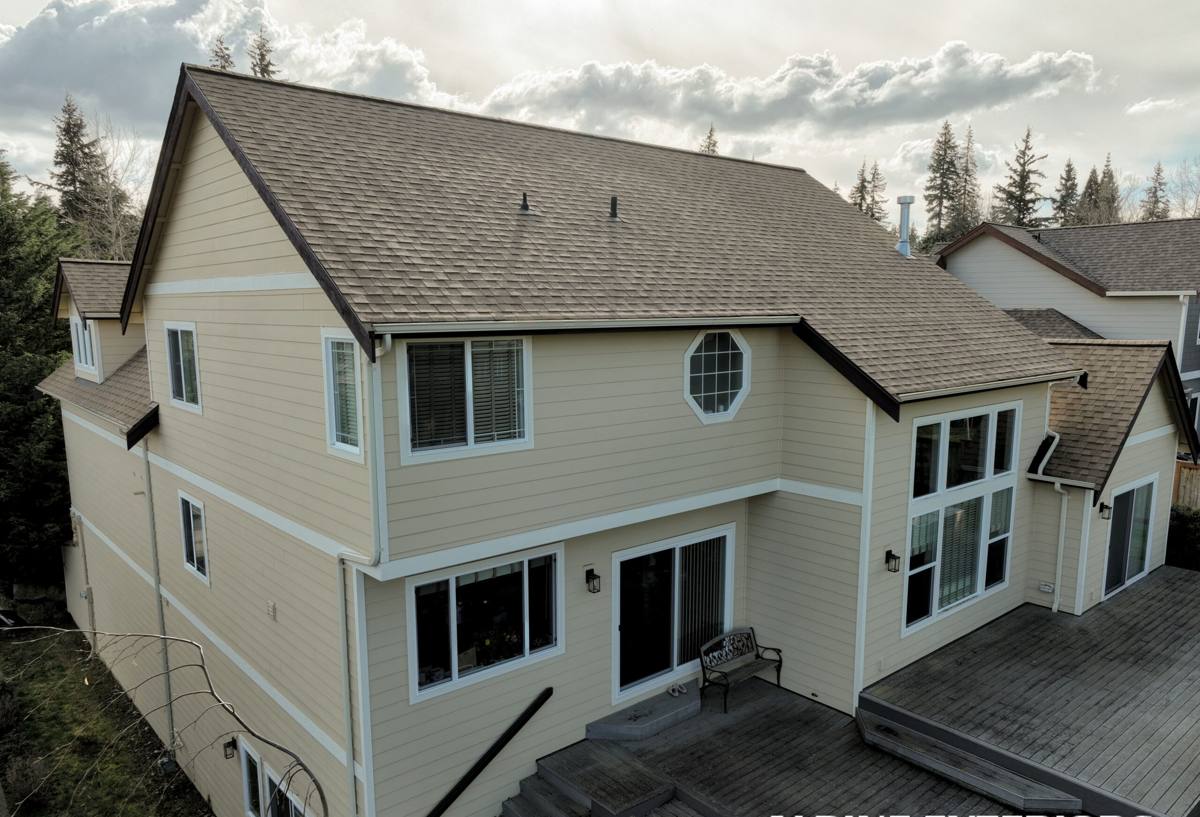
What Lake-Adjacent Homes Need From a New Roof
Shade and slow-drying surfaces
Tree canopy near the lake is a mixed blessing. It's part of why people live out there, but it also means roof sections under or near overhanging branches dry more slowly after rain than a roof in full sun. Slower drying gives algae and moss more time to take hold, and it means debris — needles, leaves, seed pods — has more opportunity to pile up in valleys and behind chimneys where it holds moisture against the roofing material.
Moss pressure
Moss doesn't just look bad. It holds water against the roof surface, works its way under shingle edges as it grows, and can lift granules and tabs over time. On a lake lot with consistent shade, moss isn't a maybe — it's an expected condition that the roof system needs to be designed to resist and that the homeowner needs a plan to manage.
Wind-driven rain and flashing detail
Open water means open exposure. Wind off the lake can drive rain sideways into eaves, dormers, and any wall-to-roof transition. That puts extra emphasis on flashing quality — step flashing, counterflashing, and valley work all matter more here than on a sheltered, tree-free lot in a subdivision.
Signs a Wiser Lake Home Needs a New Roof, Not a Repair
Not every roofing problem calls for full replacement. But a few conditions are strong signals that patching won't hold, especially given how much moisture this area sees:
- Granule loss heavy enough that you're finding shingle grit in gutters or at downspout outlets
- Moss established across multiple roof planes, not just an isolated shaded corner
- Shingles that are curling, cupping, or cracking, particularly on south- and west-facing slopes
- Daylight visible through the roof deck from inside the attic, or damp insulation below the sheathing
- Repeated leaks in the same area even after past patch repairs
- A roof original to the home and past 20-25 years old, regardless of visible condition
- Soft or spongy decking felt underfoot during an inspection walk
If you're seeing two or more of these, it's worth getting a straight answer on repair versus replacement before spending more money chasing leaks one at a time.
What a Correct Installation Actually Involves
A new roof is only as good as what happens under the finish layer. For a lake-adjacent, moisture-heavy site like Wiser Lake, a few steps matter more than usual:
Full tear-off and deck inspection
We don't install new roofing over old material. A full tear-off lets us see the actual deck condition — soft spots, rot around old penetrations, or damage that's been hidden under the existing shingles for years. Any compromised sheathing gets replaced before anything new goes down.
Ice and water shield at vulnerable points
Eaves, valleys, and areas around chimneys or skylights get a self-adhering waterproof membrane underneath the primary underlayment. This is the layer that protects against wind-driven rain and any moisture that works its way past the shingle surface — exactly the exposure this area sees regularly.
Proper ventilation
Balanced intake and exhaust ventilation keeps the attic and deck drier from the inside, which matters as much as shedding water on the outside. A roof that traps moist air underneath is fighting the same problem twice.
Flashing done right, not reused
Old flashing gets replaced, not recaulked and reinstalled. Step flashing at walls, counterflashing at chimneys, and properly formed valley metal are what actually keep wind-driven rain out — sealant is a backup, not the primary defense.
Algae- and moss-resistant materials where it makes sense
Many shingle lines now include copper- or zinc-infused granules specifically to resist algae and moss growth. On a shaded, lake-adjacent roof, that's a detail worth paying attention to rather than treating as a marketing add-on.
Comparing Roofing Options for a Shaded, Lake-Adjacent Lot
| Material | Moss/algae resistance | Typical lifespan | Upfront cost | Best fit |
|---|---|---|---|---|
| Standard asphalt composition shingle | Moderate — depends on granule type | 20-25 years | Lower | Budget-conscious replacement, less-shaded roof planes |
| Algae-resistant composition shingle | Good — built-in copper/zinc granules | 25-30 years | Slightly higher than standard | Most Wiser Lake homes given the shade and moisture |
| Standing seam metal | Very good — sheds water fast, little surface for growth to grip | 40-50+ years | Higher | Owners planning to stay long-term or wanting minimal moss maintenance |
| Cedar shake | Poor without aggressive upkeep — retains moisture | Varies widely with maintenance | Higher | Not our recommendation for shaded, high-moisture lots |
We're generally cautious about cedar shake on shaded, lake-adjacent lots specifically because of how it holds moisture under constant tree cover — it's not that the material is bad, it's that this particular site condition works against it. That's a maintenance and moisture conversation we'll have honestly, not a sales pitch either direction.
Our Installation Process
- On-site inspection — we walk the roof and attic, check deck condition, ventilation, and flashing points, and note shade patterns and drainage issues specific to your lot.
- Written estimate — a clear scope covering tear-off, deck repair allowance, underlayment, material choice, flashing, and ventilation, with no vague line items.
- Material selection — we'll walk through the tradeoffs in the table above based on your roof's actual sun/shade exposure, not a one-size-fits-all recommendation.
- Tear-off and deck prep — old roofing removed, deck inspected and repaired as needed before anything new is installed.
- Underlayment and flashing — ice and water shield at vulnerable areas, new flashing throughout, ventilation confirmed or corrected.
- Final install and cleanup — shingles or panels installed to manufacturer spec, site cleaned of debris and fasteners, and a final walkthrough with you.
Why Hiring a Crew That Already Works Wiser Lake Matters
A roofing crew that's worked other homes around Wiser Lake already knows which roof planes on a typical lot sit in shade most of the day, how quickly moss can re-establish on a north-facing slope near mature trees, and what flashing details hold up against wind coming off the water. That's not something you get from a crew that mainly works dry, open subdivisions closer to Bellingham or further into the valley. It also means we're familiar with Whatcom County permitting requirements and typical inspection expectations for this area, so there are no surprises mid-project.
Local also means accountability. If something needs a warranty callback, we're a short drive away, not a crew that came through once from out of the area.
Keeping a New Roof Performing After Installation
A correctly installed roof still benefits from basic upkeep, especially in a shaded, moisture-heavy spot like this:
- Keep gutters clear of leaf and needle buildup so water isn't backing up under the eaves
- Have overhanging branches trimmed back where practical to reduce shade and debris load
- Schedule a moss treatment or soft wash on the recommended interval for your material, rather than waiting until growth is visible from the ground
- Walk the attic once or twice a year to check for any signs of moisture, especially after a hard winter storm
None of this is intensive, but skipping it is how a well-installed roof ends up with an avoidable problem five or six years in.
If you're weighing repair versus replacement, or just want a straight assessment of what your roof around Wiser Lake actually needs, we're happy to take a look. The estimate is free, there's no pressure attached, and you'll get a clear answer about your options — use the form below to get started.