 Lynden Siding
 Asphalt Shingle Roofing Built for Acme's Climate
Acme sits in the part of Whatcom County where marine air off the Sound meets the moisture rolling down from the Nooksack valley and the foothills toward Mount Baker. That combination means more days of standing dampness, more wind-driven rain hitting roof edges sideways instead of straight down, and a moss season that can run most of the year if a roof isn't shedding water and drying out the way it should. An asphalt shingle roof installed correctly for this climate looks the same as one installed anywhere else on the day it goes on. The difference shows up five, ten, and twenty years later, in whether the deck underneath is still sound and whether the shingles are still doing their job or quietly failing under a blanket of moss.
This page covers what an asphalt shingle roof actually needs to hold up in Acme's weather, what a correct installation involves step by step, how we approach the job from first inspection to final cleanup, and why hiring a crew that already works this part of Whatcom County matters more than it might seem.
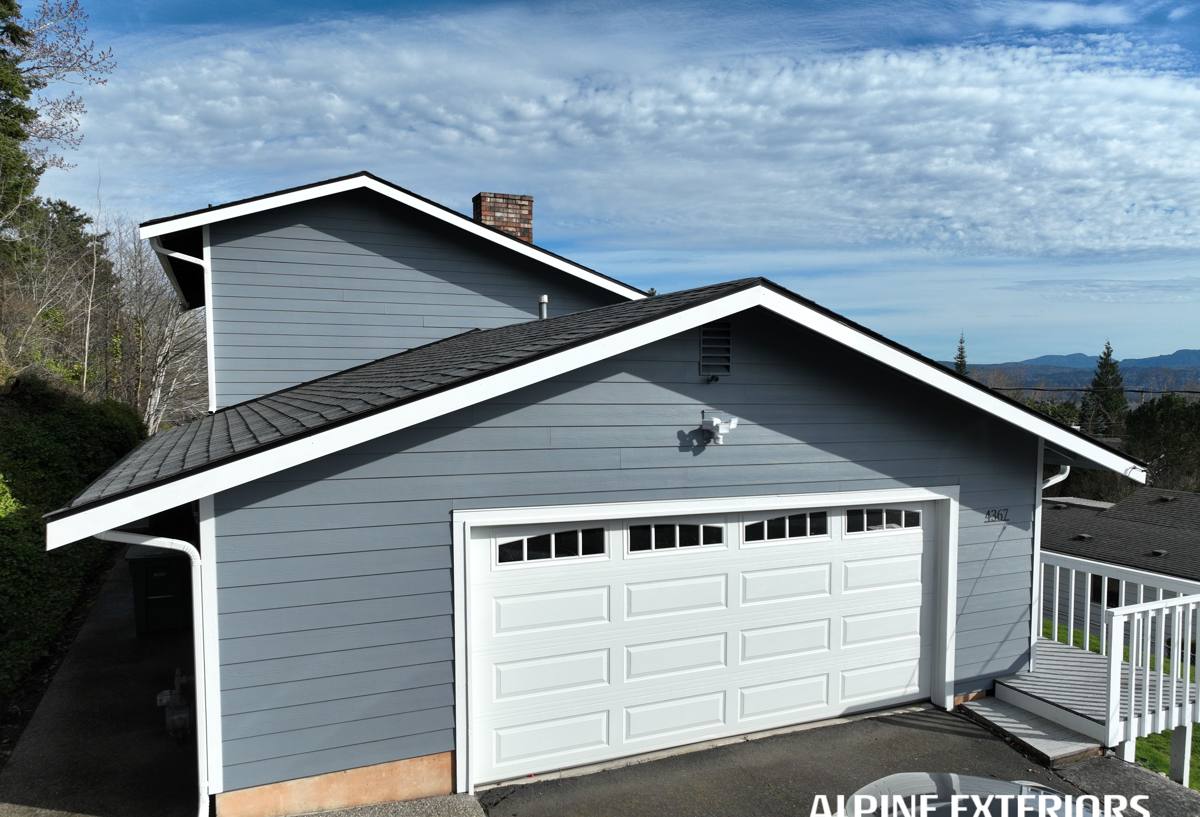
What This Climate Does to an Asphalt Shingle Roof
Moss and Algae Take Hold Fast
Shaded, north-facing slopes and roofs under overhanging trees stay damp longer here than they would in a drier climate, and moss doesn't need much encouragement. Once it establishes on a roof, it holds moisture directly against the shingle surface, works into the granule layer, and over time lifts shingle edges enough for wind and rain to get underneath. Left unaddressed for years, moss growth is one of the more common reasons we see otherwise mid-life shingle roofs failing early in this area.
Wind-Driven Rain Finds Every Gap
Rain that falls straight down is easy for a roof to shed. Rain that's being pushed sideways by wind is a different problem — it tests every seam, every piece of flashing, and every place where the roof meets a wall, chimney, or skylight. A roof that would perform fine in a calmer climate can leak in Acme if flashing details and underlayment weren't installed with driving rain specifically in mind.
Salt-Tinged Air and Metal Components
The marine influence in this part of Washington means the air carries more moisture and mild salinity than an inland climate would. That accelerates corrosion on unprotected fasteners, cheap flashing, and exposed metal edges over time. It's a slow effect that's easy to overlook on the day a roof goes on, but it shows up years later as rust streaking, weakened drip edge, or fasteners that no longer hold as tightly as they should. It's part of why material choice on the metal components of a roof matters as much as the shingles themselves.
Choosing the Right Shingle System for Acme Homes
Architectural vs. 3-Tab
Architectural (dimensional) shingles are heavier, laminated, and rated for higher wind speeds than older-style 3-tab shingles. In a climate with regular wind-driven rain and gusty winter storms, that extra weight and the way architectural shingles lock together give a meaningful edge in wind resistance and water shedding. 3-tab shingles are less expensive up front, but on a roof exposed to this kind of weather, the trade-off usually isn't worth it over the life of the roof.
Algae-Resistant Granules
Most major manufacturers offer a shingle line with copper- or zinc-infused granules designed to slow algae and moss growth over time. These aren't a substitute for good roof design and airflow, but on a shaded roof plane in a climate like Acme's, they buy real years before moss becomes a maintenance issue. We treat this as a standard recommendation for shaded or north-facing sections, not an upsell.
Wind and Impact Ratings
Shingle lines vary in their wind rating (commonly 110–130 mph when properly fastened) and, on some products, an impact rating for hail and debris. For Acme's exposure, we match the shingle rating and fastening pattern to the site rather than defaulting to the cheapest option that technically meets code.
Color and How It Ages
Shingle color is mostly an appearance choice, but it has a practical side in this climate too. Darker shingles tend to hide early moss shadowing and minor streaking longer, while lighter colors show algae staining sooner but often make granule loss and wear easier to spot during a visual check. Neither is wrong — it's worth factoring into the decision alongside your home's siding and trim rather than choosing on looks alone.
What a Correct Installation Actually Involves
Tear-Off and Deck Inspection
We remove the old roofing down to the deck rather than layering over it. That's the only way to find soft spots, rot, or delamination in the plywood or plank decking before they're covered up again for another 20 years. Any damaged decking gets replaced before anything else goes down — this is the step that gets skipped on rushed jobs and causes the most expensive problems later.
Underlayment and Ice-and-Water Shield
A synthetic underlayment goes down over the full deck as the roof's secondary water barrier. In the areas most exposed to wind-driven rain and ice damming — eaves, valleys, around penetrations, and low-slope transitions — we use a self-adhering ice-and-water membrane rather than underlayment alone. This is standard practice for the weather this region sees, not an add-on.
Flashing Details
Step flashing at walls, counter-flashing at chimneys, and properly formed valley and drip-edge metal are what actually stop water at the places a roof is most likely to leak. Reused old flashing or shortcuts here are a common source of "mystery leaks" on roofs that otherwise look fine. We install new flashing as part of a re-roof rather than reusing what's already there.
Fastening and Nailing Pattern
Manufacturer nailing patterns exist for a reason — correct nail placement, count, and depth are what the wind rating is actually based on. Overdriven or underdriven nails, or nails placed above the manufacturer's line, are a leading cause of shingles blowing off in storms even when the shingle itself was a good product.
Ventilation: The Part You Don't See But Will Feel
A shingle roof is only half the moisture story. Balanced attic ventilation — enough intake at the soffits or eaves and exhaust at or near the ridge — lets warm, moist air escape instead of condensing against the underside of the roof deck. In a damp climate like this one, poor ventilation leads to trapped moisture, which shortens shingle life from underneath, contributes to moss and algae on the topside by keeping the deck cooler and wetter longer, and can lead to mold or rot in the attic itself. We check soffit vents aren't blocked by insulation, confirm baffles are in place where needed, and size ridge or box venting to match the attic's intake, correcting the balance as part of every re-roof rather than treating it as a separate service, because a new roof installed over bad ventilation will show problems again within a few years.
What Drives the Cost of a Shingle Roof in Acme
Every roof is priced on its own specifics, but the same handful of factors move the number up or down on most jobs. Two roofs of the same square footage can land at noticeably different prices once pitch, access, and existing damage are factored in, which is why we walk the roof in person before giving a number. This table covers the main factors so you can understand where your estimate comes from rather than just seeing a total.
| Factor | Why It Matters Here |
|---|---|
| Roof size and number of planes | More square footage and more hips, valleys, and dormers mean more material, cutting, and flashing work |
| Deck condition | Rot or soft decking found during tear-off adds repair cost, but skipping the repair costs far more later |
| Shingle line chosen | Standard 3-tab, mid-grade architectural, and algae-resistant premium lines carry different material costs |
| Pitch and access | Steep or hard-to-access roofs take longer and require more safety setup and equipment |
| Ventilation upgrades | Adding or correcting intake and exhaust venting is often bundled into a re-roof rather than done as a separate job later |
| Flashing scope | Chimneys, skylights, and multiple wall intersections add labor and material beyond a simple gable roof |
| Tear-off layers | Removing multiple existing layers of roofing takes more labor and disposal cost than a single layer |
Our Process, Start to Finish
We keep the process straightforward and communicate at each stage so there are no surprises once work is underway.
- On-site inspection and honest assessment of what your current roof actually needs, not just a quote based on square footage alone
- Written estimate covering shingle line, flashing scope, underlayment, ice-and-water shield placement, and ventilation, with a firm price before any work starts
- Scheduled tear-off, full deck inspection, and repair of any rot or damage found, with photos before it's covered by new roofing
- Underlayment, ice-and-water shield, new flashing, and shingle installation completed to manufacturer specification, not a shortened version of it
- Ventilation check and correction where soffit intake or exhaust venting is inadequate or blocked
- Final walk-through with you, plus site cleanup and a magnetic sweep for stray nails around the property
A Homeowner's Maintenance Checklist
A properly installed shingle roof in this climate still benefits from basic upkeep. This is what we recommend to Acme homeowners regardless of who installed the roof:
- Have moss growth removed gently, not pressure-washed, as soon as it appears rather than letting it establish over a full season
- Keep gutters and valleys clear of needles and debris so water has a clear path off the roof
- Trim back overhanging branches to reduce shade and debris buildup on north-facing roof slopes
- Walk the property after major windstorms and look for lifted, cracked, or missing shingles from the ground
- Check that attic ventilation isn't blocked by insulation, stored items, or debris in the soffits
- Have the roof professionally inspected every few years, and always after significant hail or wind events, even without visible damage
Why Hire a Crew That Already Works in Acme
A contractor who works this specific stretch of Whatcom County knows which roof orientations in this area hold moss the longest, how much ice-and-water shield to use given the real rainfall and wind patterns here, and what ventilation setups actually keep attics dry through a wet Pacific Northwest winter. That's different from general roofing knowledge — it's site-specific judgment built from doing this work on homes with the same weather exposure as yours, season after season. It also means a crew that's easy to reach if a question comes up after the job is done, rather than one that installed a roof once and moved on to the next county and never came back.
If you're weighing a repair against a full re-roof, or just want an honest look at how much life is left in your current shingles, we're glad to come take a look. Use the form below to request a free, no-pressure estimate for your Acme property.