 Lynden Siding
 Roof Repair Built for Maple Falls Conditions
Maple Falls sits in one of the wetter, mossier corners of Whatcom County, and the roofs here show it. Between salt-laden air moving in off the water, long stretches of driving rain, and a moss season that can run most of the year in shaded areas, roofs in this area age differently than roofs twenty miles inland. A repair that would hold up fine in a drier climate can fail here in a single wet winter if it doesn't account for how much moisture this roof is actually dealing with.
We work on homes throughout Lynden and the surrounding Whatcom County communities, and Maple Falls comes with its own patterns we've learned to watch for: tree cover that keeps roof sections shaded and damp longer than open areas, valleys and north-facing slopes that hold moss and debris, and metal fasteners or flashing that corrode faster from salt exposure than manufacturers' general guidance assumes. Repairing a roof here isn't just patching a leak — it's fixing the problem in a way that accounts for why the roof failed in the first place.
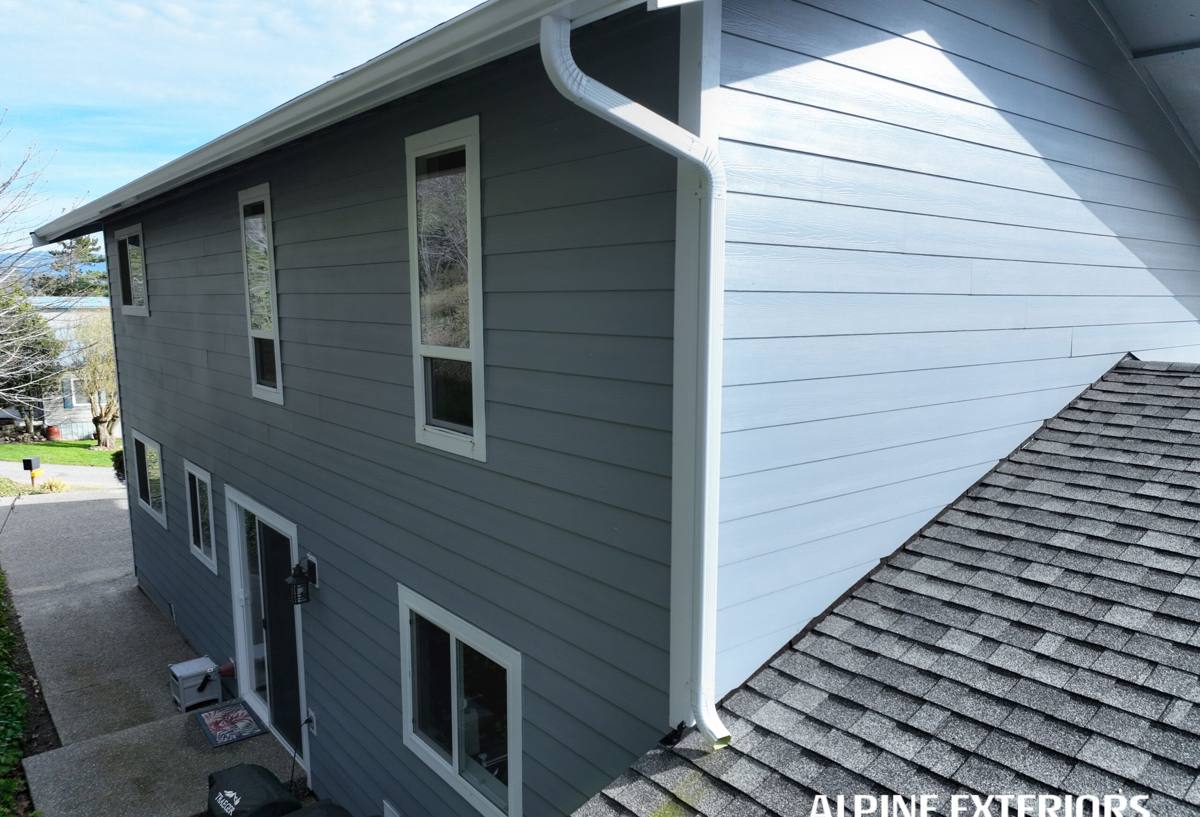
What Local Homes Actually Need
Most roof repair calls we get in this area fall into a few categories, and each one has a slightly different fix depending on the roofing material and how long the problem has been building.
Moss and Organic Growth Damage
Moss doesn't just sit on top of shingles — it works underneath tabs and granules, holds moisture against the roof deck, and lifts shingle edges over time. On older roofs, moss growth is often the first sign of a deck that's already absorbing water it shouldn't be. A repair here has to include actually removing the growth (not just treating the surface), checking for soft or delaminated decking underneath, and replacing anything compromised before new material goes down.
Flashing and Fastener Corrosion
Salt air accelerates corrosion on exposed metal — chimney flashing, valley metal, roof vents, and exposed nail heads all take more of a beating here than they would further from the coast. Corroded or lifted flashing is one of the most common leak sources we find that homeowners never suspect, because the leak often shows up on a ceiling several feet away from where the water actually enters.
Wind-Driven Rain Intrusion
Driving rain doesn't behave like a straight downpour — it gets pushed sideways and upward under shingle edges, around vents, and into any gap that a calmer rain would never reach. Repairs that only address the visible damage and ignore how wind-driven rain moves across a roof tend to leak again in the next storm.
Granule Loss and Shingle Wear
Constant wet-dry cycling wears down shingle granules faster than in drier regions, which shortens the effective lifespan of asphalt roofing. Bald patches, granules collecting in gutters, and curling shingle edges are all signs the roofing has moved past routine wear and into repair territory.
What a Correct Repair Involves
A proper roof repair isn't just sealing the spot where water is visibly coming through. We treat every repair call as a small diagnostic project first, then a fix.
- Locate the actual entry point — not just the ceiling stain, since water travels along rafters and sheathing before it shows up inside.
- Check the roof deck condition around the damaged area for soft spots, rot, or delamination that needs to be addressed before new material is installed over it.
- Assess surrounding material so we're not patching new shingles or flashing next to material that's about to fail anyway.
- Replace or repair flashing, underlayment, and shingles as needed, matching existing material where possible.
- Clear moss and debris from the repair area and surrounding roof sections that are contributing to the moisture problem.
- Confirm drainage — gutters, valleys, and downspouts near the repair are doing their job, since a repair means little if water is still pooling nearby.
Repair vs. Replacement: How We Decide
Not every roof problem needs a full replacement, and not every leak can be solved with a patch. Here's how we generally think through it with homeowners.
| Factor | Leans Toward Repair | Leans Toward Replacement |
|---|---|---|
| Age of roof | Under 15 years, or well-maintained older roof | Approaching or past manufacturer's expected lifespan |
| Extent of damage | Isolated to one section or flashing point | Widespread granule loss, multiple leak areas |
| Deck condition | Solid sheathing, no rot found | Soft or rotted decking in multiple spots |
| Moss/moisture history | First occurrence, addressed early | Recurring moss damage over several seasons |
| Cost over time | Repair cost is a small fraction of replacement | Repeated repairs are adding up close to replacement cost |
We'll tell you honestly which category your roof falls into. If a repair will genuinely hold, we're not going to push a replacement — but if the underlying deck or material is compromised, patching it is just delaying a bigger problem (and a bigger bill) down the road.
Why Salt Air and Moss Change the Math
Coastal-adjacent climates like this stretch of Whatcom County put extra stress on materials in ways that aren't always obvious from the outside. Salt in the air accelerates oxidation on any exposed metal fastener, flashing seam, or vent component — meaning hardware that's rated for decades of use inland can corrode meaningfully faster here. Combine that with prolonged dampness from moss and shade cover, and you get a roof environment that ages faster than the calendar suggests.
This is why we don't treat repair specs the same everywhere. In a Maple Falls repair, we're more conservative about flashing material choice, more thorough about moss removal (not just a surface treatment), and more attentive to ventilation, since a poorly ventilated attic traps moisture against the roof deck from underneath while rain and moss work on it from above.
Our Process for a Repair Call
Homeowners calling about a roof issue usually just want two things: an honest answer about what's actually wrong, and a straightforward path to getting it fixed.
- We inspect the roof in person — the reported leak area and the broader roof, since related problems often exist nearby.
- We check the attic or interior access points where possible, since interior signs often tell us more than the exterior view.
- We explain what we found in plain terms: what's damaged, why, and what it will take to fix it correctly.
- We give you a clear scope and price before any work starts — no surprise add-ons once we're on the roof.
- We complete the repair, clean up thoroughly, and leave the roof in a condition to handle the next wet season.
Why Local Experience Matters Here
A roofing crew that mostly works drier, inland areas can still do competent work, but they're often working from general assumptions rather than direct experience with how this specific climate behaves. Knowing which shingle brands and flashing details actually hold up against sustained coastal moisture, which roof orientations in this area collect moss fastest, and how wind-driven rain typically finds its way into a roof system here comes from doing this work repeatedly in these conditions — not from a manual.
We're a Lynden-based crew, and Maple Falls is part of the territory we work regularly. That means we're not guessing at how this climate affects a roof — we're applying what we've already seen hold up and what we've seen fail.
Simple Maintenance That Extends a Repair's Life
A good repair lasts longer when the roof around it is kept up. A few things worth doing regardless of whether you've had recent repair work:
- Keep overhanging branches trimmed back to reduce shade, debris buildup, and moss growth on the roof surface.
- Have gutters cleared at least once a year, more often if you're under heavy tree cover, so water isn't backing up under roof edges.
- Schedule a roof check after major storms, especially ones with high wind, to catch lifted shingles or flashing before they become leaks.
- Address moss early — a light growth is a maintenance task, a heavy mat is a repair project.
Get an Honest Look at Your Roof
If you're dealing with a leak, a stain on the ceiling, visible moss buildup, or just want a second opinion on a repair another crew recommended, we're glad to take a look. The estimate is free, there's no pressure to sign anything on the spot, and you'll get a straight answer about what your roof actually needs. Use the form below to request a time that works for you.