 Lynden Siding
 Windows Built for the Deming Stretch of Whatcom County
Homes in the Deming area sit in one of the wettest corners of Washington. You're close enough to Bellingham Bay and the Strait of Georgia to get the marine air, and close enough to the foothills to catch heavier, longer rain events than towns further out on the flats. That combination of salt-tinged moisture, driving rain, and a moss season that can run eight or nine months out of the year is hard on window assemblies that weren't built or installed with this specific climate in mind.
Windows are one of the biggest gaps in a home's weather barrier. A wall assembly might have housewrap, flashing tape, and siding all doing their job, but every window is a hole cut through all of that protection. If the flashing detail around it is wrong, or the sealant has failed, water finds that gap and works its way into the wall cavity long before you see a stain on the drywall. In a climate like ours, that process moves faster than homeowners expect.
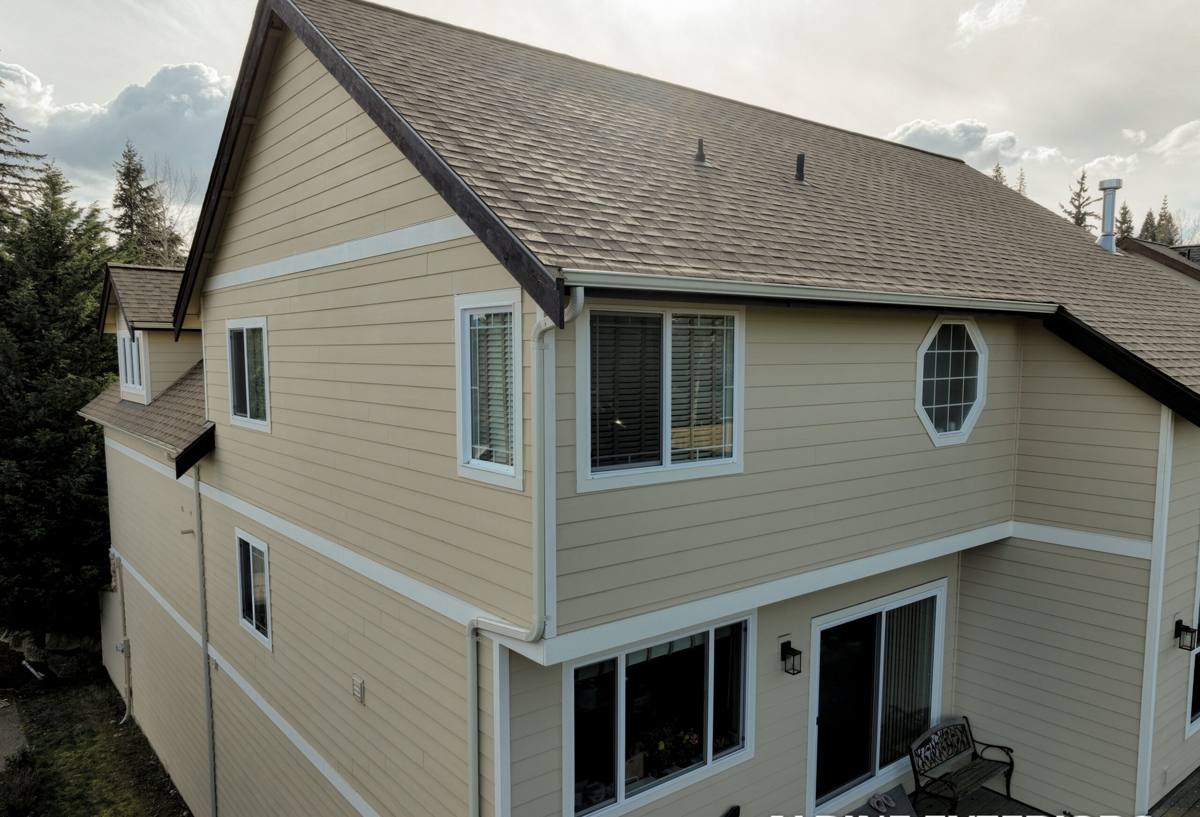
Signs a Deming Home Needs Window Attention
Most window failures don't show up as a broken pane. They show up as slow, quiet damage that homeowners notice months or years after it started. Common signs we see on service calls in this area include:
- Fogging or a milky haze between double-pane glass, meaning the seal has failed and the gas fill is gone
- Soft or discolored trim and sill wood, especially on the sides that take the most wind-driven rain
- Visible moss or dark streaking on the frame or nearby siding, a sign moisture is sitting there longer than it should
- Drafts you can feel with a hand near the frame on a windy day
- Windows that are hard to open, close, or lock, which often points to a frame that's swelled or warped from moisture
- Rising heating bills without a clear cause elsewhere in the house
Any one of these on its own isn't an emergency. Several at once, especially on a home that's twenty-plus years old, usually means the original installation is reaching the end of its useful life.
What a Correct Window Installation Actually Involves
Setting a window into a rough opening looks straightforward from the outside, but the parts that determine whether it lasts fifteen years or thirty-five happen before the window ever goes in.
Flashing and Water Management
Every opening needs a sill pan or sloped flashing detail so any water that gets past the window sheds outward instead of pooling on the sill. Side and head flashing need to integrate with the housewrap in the correct shingle-lap order — water always has to be directed down and out, never into a seam. This is the single most common shortcut we find when we're called in to fix a leaking window someone else installed.
Air Sealing and Insulation
The gap between the window frame and the rough opening needs a continuous air seal, typically low-expansion foam or backer rod and sealant, not just fiberglass batting stuffed in by hand. Gaps here are a direct path for both drafts and moisture-laden air to reach the wall cavity.
Proper Shimming and Leveling
A window that isn't shimmed level and plumb will bind, won't seal against its own weatherstripping correctly, and puts uneven stress on the frame that shortens its life. This step gets rushed on jobs where the crew is paid by the unit instead of by the hour.
Exterior Trim and Sealant
The visible caulk line is the last line of defense, not the first. It should be a purpose-built exterior sealant rated for this climate, tooled properly, and never used to compensate for a flashing detail that was skipped.
Our Window Installation Process
We keep the process the same on every job because the steps that get skipped are the ones that come back to bite a homeowner five years later.
- On-site assessment. We look at the existing windows, the wall assembly where visible, and any signs of past water intrusion before recommending anything.
- Measuring and product selection. We measure each opening individually — older Deming-area homes are rarely perfectly square — and go over material, glass, and performance options based on that specific wall and exposure.
- Removal. Old windows come out carefully so we can inspect the rough opening and sill for hidden rot or moisture damage before anything new goes in.
- Sill and flashing repair. Any soft wood or failed flashing gets addressed at this stage. This is not an optional add-on; it's part of the job.
- Installation and air sealing. The new window is set, shimmed, sealed, and insulated using the flashing sequence described above.
- Interior and exterior finish. Trim, caulk, and touch-up work are completed and the site is cleaned up.
- Final walkthrough. We test operation and locking on every window before we consider the job done.
Window Materials: What Actually Holds Up Here
Every material has trade-offs. We're upfront about them rather than pushing whatever has the best margin.
| Material | Moisture Performance | Maintenance | Typical Lifespan |
|---|---|---|---|
| Vinyl | Won't rot; seams and welds are the weak point if not fabricated well | Low — occasional cleaning | 20–30 years |
| Fiberglass | Very stable in wet, temperature-swinging climates; low expansion/contraction | Low | 30–40 years |
| Wood-clad | Good if the cladding seal stays intact; vulnerable where cladding is damaged or gaps open | Higher — needs periodic inspection of clad seams | 20–30 years with upkeep |
| Aluminum | Prone to condensation without a thermal break; not our default recommendation for this climate | Low | Varies widely |
For most homes in the Deming area, we lean toward vinyl or fiberglass because both handle sustained moisture exposure with minimal upkeep. Wood-clad windows can look excellent and perform well, but we're honest that they demand more attention in a climate that stays damp for most of the year — if the cladding seal is ever compromised, moisture can get trapped behind it in a way that's harder to catch early.
What Drives the Cost of a Window Installation
| Factor | Why It Matters |
|---|---|
| Number of openings | Straightforward — more windows means more material and labor |
| Full-frame vs. retrofit (pocket) install | Full-frame replaces the whole frame and lets us fully redo flashing; retrofit is faster and cheaper but relies more on the existing frame being sound |
| Rough opening condition | Rot or damage found during removal adds repair work before the new window can go in |
| Glass package | Low-E coatings, gas fills, and impact-rated glass all add cost but improve performance and comfort |
| Window size and type | Large picture windows, bays, and custom shapes cost more than standard single- or double-hung units |
| Trim and finish work | Matching existing interior trim or upgrading exterior trim adds labor beyond the window itself |
We give a broad range during the initial conversation and a firm number after we've actually measured and looked at the rough openings — a phone quote on windows is close to guesswork given how much condition varies house to house.
Retrofit vs. Full-Frame: Which Makes Sense
Retrofit (sometimes called pocket) replacement reuses the existing frame and just swaps the sash and some hardware. It's less invasive and less expensive, and it can be the right call when the existing frame is dry and sound. Full-frame replacement removes everything down to the rough opening, which costs more but is often the better choice on older Deming-area homes where we suspect — or find — moisture damage behind the old frame. We'll tell you honestly which situation you're in rather than defaulting to the cheaper option when it isn't the right one.
Why a Crew That Already Works Deming Matters
Window installation isn't just a product install — it's a detail-sensitive job that depends on getting the flashing and sealing right for the specific weather load a wall sees. A crew that regularly works this part of Whatcom County has already seen how driving rain hits west- and south-facing walls here, how long moss sits on a north-facing frame before anyone notices, and where older local homes tend to have hidden sill damage before we even open the wall. That's not something a crew passing through once can match, and it's the difference between an installation that looks fine on day one and one that's still tight fifteen years later.
We also know the practical side: permitting expectations in Whatcom County, realistic scheduling around the wetter months, and how to sequence a job so openings aren't sitting exposed longer than necessary during a rain-heavy stretch.
Maintaining New Windows in This Climate
A correct installation gets you most of the way, but a little seasonal attention extends the life of any window considerably. We recommend homeowners:
- Rinse frames and tracks a couple of times a year to clear moss spores and debris before they take hold
- Check exterior caulk lines annually, especially after the first winter, for cracking or separation
- Keep gutters and downspouts clear so overflow isn't running down the wall directly above a window
- Test locks and operation each season — a window that won't close fully isn't sealing fully either
- Trim back vegetation that keeps a window frame shaded and damp longer than the rest of the wall
None of this takes long, but skipping it is how a well-installed window still ends up with an avoidable problem a decade in.
Get a Straight Answer on Your Windows
If you're dealing with drafts, fogged glass, soft trim, or you're just planning ahead before the next wet season sets in, we're happy to take a look. We'll give you a straight read on what's actually going on and a no-pressure estimate for fixing it right. Use the form below to get started.