 Lynden Siding
 Windows Built for Acme's Weather, Not Just Any Weather
Acme sits at the foot of the Cascade foothills east of Lynden, and homes out here take on a different kind of weather load than a house closer to town. You're dealing with heavier rainfall, more shade from surrounding trees and terrain, higher humidity that lingers longer into the day, and a moss and mildew season that can stretch across most of the year. Windows in this setting aren't just letting in light — they're one of the main barriers standing between a wood-framed or vinyl-sided home and a slow, ongoing moisture problem. When a window is installed correctly here, it sheds water, resists wind-driven rain, and doesn't give mold or rot a foothold. When it's installed poorly, or when an aging window's seals and flashing have simply worn out, Acme's climate finds every weak point fast.
We install windows throughout Whatcom County, including Lynden and the surrounding rural and semi-rural areas like Acme, and we size up every job with the local conditions in mind — not a generic install checklist.
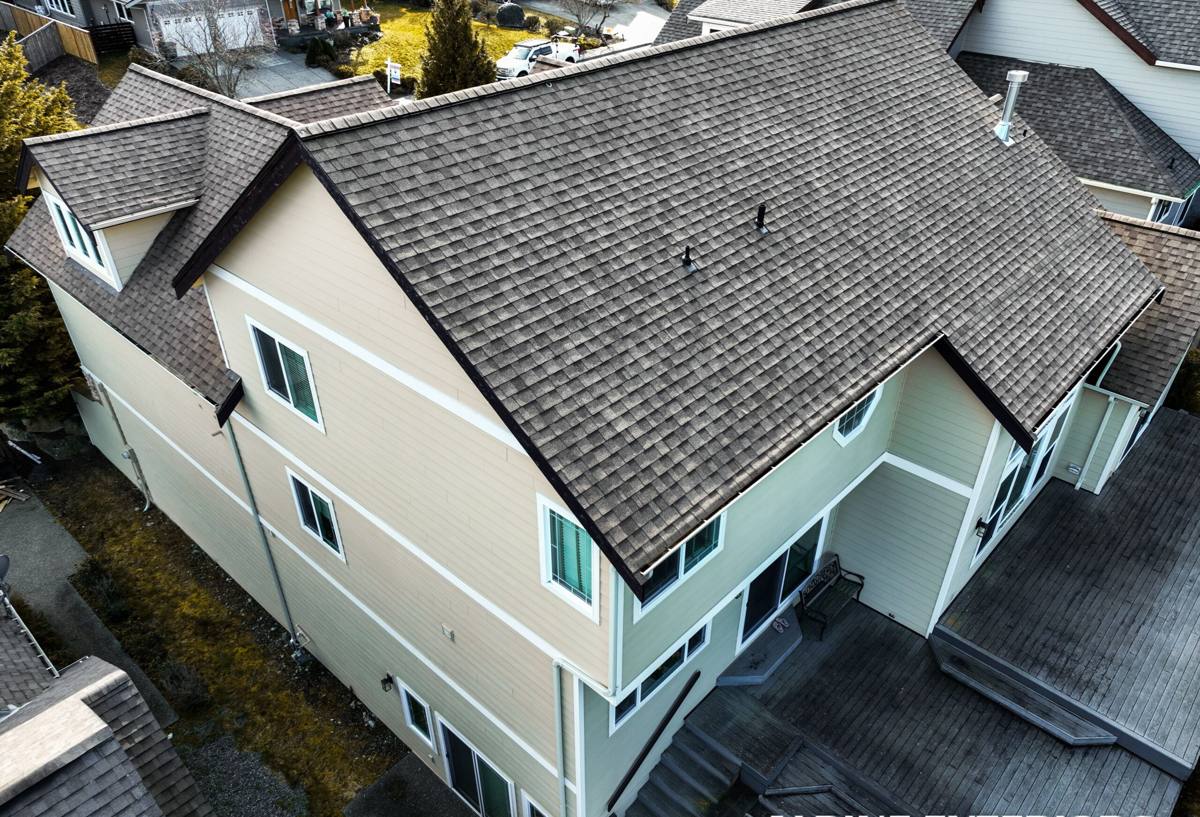
What Acme's Climate Does to Windows Over Time
Whatcom County's proximity to the Salish Sea means homes here deal with salt-laden air on top of near-constant moisture, and Acme's more wooded, low-lying pockets add extended dampness and shade that keeps surfaces wet longer after a storm passes. Combined, these conditions accelerate a few specific problems:
- Seal failure and fogging. Double-pane windows rely on a sealed gas fill between the panes. Constant humidity cycling and temperature swings between damp mornings and cooler nights stress that seal faster than in drier climates, leading to fogged or cloudy glass.
- Wood rot at the sill and frame. Older wood-framed windows, or newer windows with poor flashing, let water track down behind the trim and sit against the sill. In a shaded, damp setting like Acme, that wood rarely gets a chance to fully dry out between rain events.
- Moss and mildew buildup on exterior trim. Moss doesn't just grow on roofs. It settles into window trim, sills, and caulk lines, holding moisture against the surface and breaking down caulk and paint faster than a drier, sunnier location would see.
- Driving rain intrusion. Wind-driven rain off the foothills can push water sideways into gaps that would stay dry in a calmer microclimate. Flashing details that would be "good enough" elsewhere aren't always good enough here.
None of this means Acme is a bad place to own a home — it means the install has to account for what the site actually throws at it, every season, for the next 20-plus years.
Signs an Acme Home Needs New Windows
Homeowners usually notice one of two things first: a comfort problem (drafts, cold spots, condensation) or a visible problem (fogged glass, peeling trim paint, soft wood at the sill). Either one is worth a look before it turns into a bigger repair.
Comfort and performance signs
- Noticeable draft near the window frame even when it's fully latched
- Condensation forming between the panes (not just on the interior surface)
- Windows that are hard to open, close, or lock — frames have swollen or warped
- Rooms near certain windows that feel colder than the rest of the house
- Rising heating bills without any other clear cause
Visible damage signs
- Soft, discolored, or spongy wood at the sill or bottom corners of the frame
- Persistent moss or dark staining on the trim that keeps coming back after cleaning
- Peeling or bubbling paint concentrated around the window opening
- Visible daylight or gaps around the frame from outside
- Water staining on interior drywall below or beside a window
A single symptom doesn't always mean full replacement — sometimes it's a caulking or flashing repair. But when several of these show up on the same window, or on multiple windows on the same exposure (usually the side that takes the most weather), replacement is typically the more honest long-term answer than another round of patching.
What a Correct Window Installation Actually Involves
The window itself matters, but in a climate like this, the installation details matter just as much — arguably more. A quality window installed with poor flashing will fail faster than a mid-grade window installed correctly. Here's what we consider non-negotiable on every job:
1. Proper flashing and water management
Every opening gets flashed so that water is directed out and away from the wall assembly, layered so each piece overlaps the one below it — the same shingle-lap principle that keeps a roof dry. This is the single biggest factor in whether a window stays dry over the next decade.
2. Sill pan installation
A sill pan creates a catch basin at the bottom of the rough opening so that any water that does get past the window has somewhere to go besides straight into your wall framing. In a high-rainfall area like Whatcom County, we treat this as standard practice, not an upsell.
3. Correct air sealing and insulation
Gaps around the frame get sealed with the right materials — not just caulk on the exterior trim, but proper backer rod and sealant, plus low-expansion foam or insulation in the gap between the window frame and rough opening. This addresses both drafts and moisture-driven condensation.
4. Level, plumb, square setting
A window that isn't set level and square won't operate smoothly and won't seal evenly, which creates the exact weak points that let water and air in over time.
5. Exterior trim and finish work that sheds water
Trim gets installed and sealed so water runs off rather than pooling at joints — a small detail that, ignored, is one of the most common causes of the wood rot we see on older Acme homes.
How We Approach a Window Installation Project
Our process is straightforward because there's no reason to complicate it. Here's what to expect:
- On-site assessment. We look at your existing windows, note which exposures are taking the most weather, check for any signs of hidden moisture or rot around the openings, and talk through what you're trying to solve — comfort, appearance, energy costs, or all three.
- Product selection. We walk through frame material, glass options, and style choices based on your home's construction, your budget, and how much weather exposure that side of the house gets.
- Written estimate. You get a clear, itemized estimate before any work starts — no surprise add-ons partway through.
- Removal and inspection. When we pull the old window, we inspect the rough opening for hidden rot or water damage. If we find something, we address it before the new window goes in rather than sealing a problem behind a fresh install.
- Installation. Flashing, sill pan, air sealing, and setting the window to level and square, followed by exterior trim and finish work.
- Final walkthrough. We check operation, look at the finish work with you, and make sure everything opens, closes, and locks the way it should.
Frame and Glass Options: Weighing the Trade-Offs
There's no single "best" window material — the right choice depends on your home's age, your budget, and how much upkeep you want to take on. Here's how the common options stack up for a climate like Acme's:
| Material | Moisture Performance | Maintenance | Typical Trade-Off |
|---|---|---|---|
| Vinyl | Good — won't rot, handles humidity well | Low — occasional cleaning | Fewer custom color/finish options than wood or fiberglass |
| Fiberglass | Very good — dimensionally stable in temperature and moisture swings | Low to moderate | Higher upfront cost than vinyl |
| Wood (clad exterior) | Depends entirely on the cladding and finish quality — exposed wood is a poor fit here | Higher — finish needs monitoring, especially on damp exposures | Classic appearance, but more sensitive to installation quality in wet climates |
| Aluminum | Weaker — prone to condensation and thermal transfer without thermal breaks | Low | Not typically our first recommendation for Whatcom County's climate |
For most Acme homes, we lean toward vinyl or fiberglass frames because they hold up well against sustained humidity and don't need the finish upkeep that painted or stained wood surfaces do in a shaded, damp setting. That said, if you have a home where wood-frame windows are part of the architectural character, it's still a workable choice — it just means being realistic about the maintenance commitment, particularly on north- or west-facing walls that stay wet longer.
On glass, we typically recommend double-pane with a low-E coating and argon fill as the baseline for this region — it cuts heat loss and helps manage the condensation that shows up on interior glass during cold, damp mornings. Triple-pane is worth discussing if you're on a particularly exposed or noisy site, but for most Acme homes, a quality double-pane unit with correct installation covers the performance you need.
Cost Factors to Understand Before You Get Quotes
We don't publish blanket pricing because window costs vary a lot based on real factors specific to your home — but it helps to know what actually drives the number up or down before you start comparing quotes.
- Frame material — vinyl is generally the most budget-friendly, fiberglass and wood-clad options cost more
- Window size and style — a standard double-hung replacement costs less than a large picture window or a custom shape
- New construction vs. replacement — replacing an existing window in a sound opening is typically less involved (and less costly) than a new-construction install requiring new framing
- Hidden damage — if we find rot or water damage in the rough opening once the old window is out, that repair adds cost, but skipping it means the new window fails early
- Number of windows — doing multiple windows in one visit is more cost-efficient per unit than single, one-off replacements over time
- Access and site conditions — second-story or hard-to-access windows take more labor time
The honest way to get a real number is a site visit, not a phone quote — too much depends on the condition behind the existing window to price it sight unseen.
Why Hiring a Crew That Already Works in This Area Matters
Window installation isn't a one-size-fits-all trade. A crew that mostly works in drier, milder parts of the state may not think twice about sill pan flashing or exterior trim sealing, because in a lot of climates, skipping that detail doesn't cause a visible problem for years. In Whatcom County — and especially in a shaded, moisture-heavy pocket like Acme — those shortcuts show up fast, usually as rot, mold, or a failed seal well before the window's expected lifespan is up.
Working this area regularly means we've seen how local homes actually hold up over time: which exposures take the worst weather, where moss and moisture tend to concentrate, and what installation details are worth insisting on rather than treating as optional. That's not a marketing claim — it's just what comes from doing this work in this specific climate, on this specific type of housing stock, on an ongoing basis.
Maintaining Your Windows After Installation
A correct installation gets you most of the way to a long-lasting window, but a little upkeep extends that lifespan further — especially here.
- Clean moss and debris off exterior trim and sills periodically rather than letting it build up
- Check caulk lines once a year, especially after winter, and touch up any that have cracked or pulled away
- Keep gutters and downspouts clear so overflow isn't running down the wall past your windows
- Trim back vegetation that keeps a window's exterior shaded and damp longer than necessary
- Address any small paint or finish wear on wood-clad frames before it becomes exposed wood
None of this is complicated, but skipping it in a climate like Acme's tends to shorten the life of even a well-installed window.
Get a Free, No-Pressure Estimate
If your windows are drafty, fogged, sticking, or showing wear around the frame, it's worth having someone take an honest look before winter rains put more stress on them. We'll walk the exterior with you, check the condition of your existing windows and openings, and give you a straightforward estimate with no pressure to commit on the spot. Use the form below to request a free estimate for your Acme home.