 Lynden Siding
 Custer sits in a stretch of Whatcom County where open farmland meets marine air moving in off the Salish Sea. It's a place where houses still need to look like they belong on the land — which is a big reason board and batten siding keeps showing up on new builds and remodels out here. The vertical lines read as farmhouse, barn, or modern-rural depending on the trim and color, and it holds up visually on everything from a full elevation to a gable accent over lap siding. But board and batten is not a forgiving profile to get wrong, and this corner of the county is not an easy climate to get it wrong in.
Why Board & Batten Fits Custer's Character
Board and batten is a vertical-plank siding system: wide boards (or panels) run top to bottom, with narrow battens covering the seams between them. It's one of the oldest siding styles in American building because it was originally practical — cover the joints, shed water down instead of sideways, and use less finish lumber than a full lapped wall. That practicality is exactly why it still works on the kind of rural and semi-rural properties common around Custer: outbuildings, detached garages, and farmhouse-style homes where a clean, strong vertical line looks intentional rather than trendy.
Homeowners here usually reach for it for one of two reasons: a full board and batten exterior for a farmhouse or modern-rural look, or a mixed application — board and batten on gables, dormers, or an entry feature with lap siding on the rest of the house. Both are legitimate uses. What matters more than the look is whether the assembly behind it can handle what this climate throws at it.
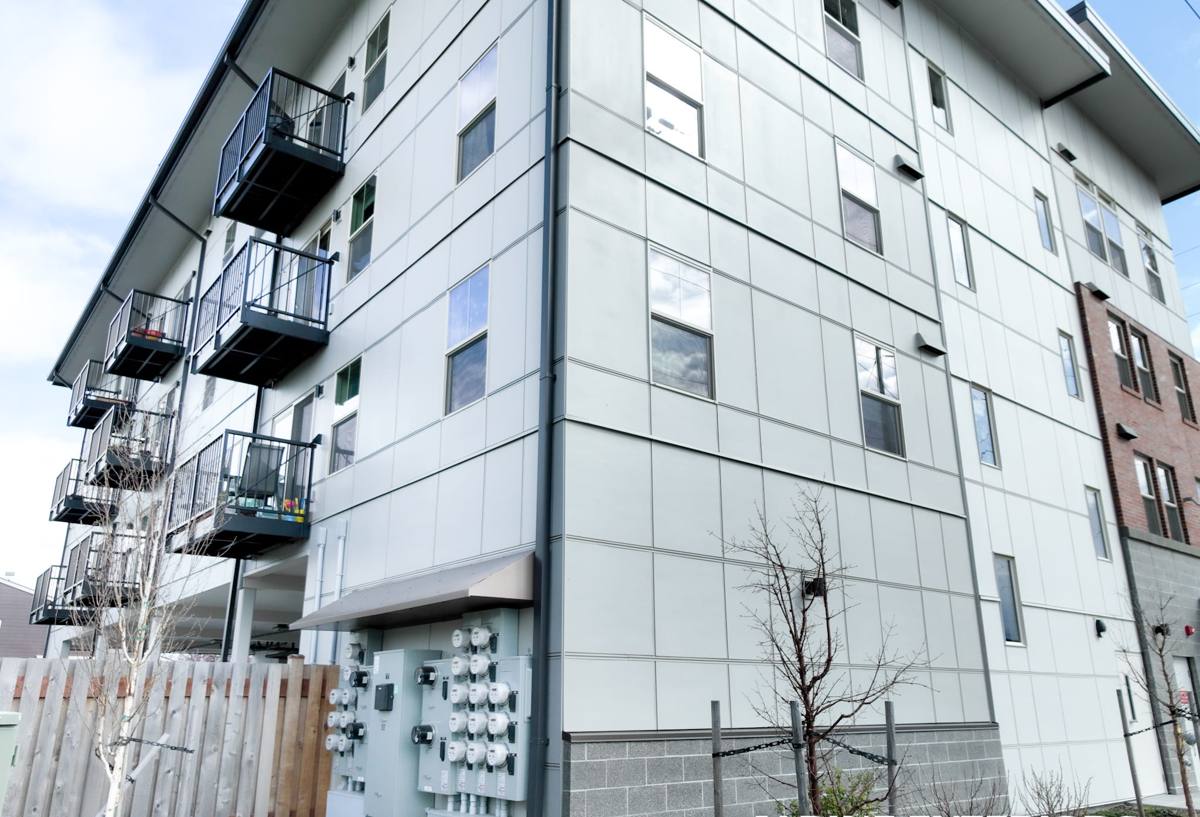
What Whatcom County's Coastal Climate Does to Vertical Siding
Custer isn't oceanfront, but it's close enough to the water and open enough to weather systems moving through the Salish Sea corridor that salt-bearing air, driving rain, and prolonged damp shade are all real, ongoing factors for anything on the outside of a house — and board and batten's design makes it more sensitive to some of these than a standard lap profile.
Salt Air and Fastener Corrosion
Salt-tinged marine air accelerates corrosion on fasteners, flashing, and any exposed metal trim. Board and batten has more linear feet of fastening than lap siding of the same wall area, because both the boards and the battens get nailed off. If the fasteners aren't corrosion-resistant and properly set, you get rust streaking through the finish and, eventually, fastener failure at the batten line — which is one of the most common places board and batten siding fails prematurely in coastal-influenced climates.
Driving Rain and Vertical Seams
Whatcom County gets a lot of rain, and a fair amount of it arrives sideways in wind-driven storms. Board and batten relies on the batten overlapping the joint between boards to shed that water — there's no shingle-lap the way there is with horizontal siding. If the water-resistive barrier behind it isn't continuous and properly lapped, or if the battens aren't sized and fastened correctly, wind-driven rain can push water past the seams and into the wall assembly instead of down and off it.
The Long Moss Season
Between the rainfall and the tree cover common on rural Custer lots, moss and algae growth has a long season here — often close to year-round on north- and shade-facing walls. Vertical siding sheds bulk water well, but any surface that stays damp under moss or organic debris will hold moisture against the substrate longer than a clean, dry wall. That matters more for the material choice and the finish than for the profile itself, but it's a factor that has to be planned for on this job specifically.
What a Correct Board & Batten Installation Actually Involves
The look of board and batten is simple. The assembly behind a good one is not. Most of the siding failures we get called out to inspect trace back to shortcuts in the parts nobody sees once the boards go up.
Water-Resistive Barrier and Rainscreen Gap
Every board and batten job we do starts with a continuous, properly lapped water-resistive barrier over the sheathing, with a drainage gap — a rainscreen — behind the siding itself. That gap lets any moisture that does get past the cladding drain and dry instead of sitting against the WRB. In a climate with this much sustained damp weather, skipping the rainscreen is the single biggest corner-cut we see on vertical siding jobs.
Batten Spacing and Fastening
Battens need to be sized and spaced to fully cover the board joint with margin on both sides, and fastened with corrosion-resistant fasteners set at the manufacturer's specified pattern — not just "enough nails to hold it up." Fastener placement also has to account for board expansion and contraction, especially on longer wall runs, so the siding doesn't buckle or split at the batten line over time.
Flashing at Windows, Corners, and the Foundation Line
Vertical siding brings water straight down to whatever's at the bottom of the run — window heads, outside corners, and the foundation transition all need flashing detailed to actually catch and redirect that flow. This is where driving rain finds its way in if it's rushed, and it's not something you can fix later without pulling siding back off.
Why We Install Board & Batten Only in James Hardie Fiber Cement
We don't offer board and batten in vinyl, engineered wood, or primed spruce, and that's a deliberate standard, not a lack of options. Vinyl board and batten expands and contracts more than fiber cement, which stresses the joints this profile depends on, and it doesn't hold a factory finish the way ColorPlus does. Engineered wood and primed spruce are both wood-based products that depend entirely on an intact factory or field-applied coating to keep moisture out — any cut edge, fastener hole, or coating failure gives water a path into the substrate, and that's a bigger liability on a vertical profile with more seams than a horizontal one.
James Hardie fiber cement is non-combustible, dimensionally stable in wet climates, and available in HZ5 formulations engineered for the kind of wet, temperature-swinging weather the Pacific Northwest produces. The ColorPlus factory finish is baked on under controlled conditions rather than field-sprayed, which gives it better long-term color retention and a stronger, more consistent bond than most site-applied paint systems — and it comes with Hardie's transferable warranty. For a profile that lives or dies on how well its seams and finish hold up over time, that combination is why board and batten leaves our shop in Hardie and nothing else.
Board & Batten Materials Compared
| Material | Salt Air / Moisture Behavior | Moss & Algae Resistance | Maintenance | Fit for Custer's Climate |
|---|---|---|---|---|
| James Hardie fiber cement | Dimensionally stable, engineered HZ5 line for wet climates | Factory finish resists staining better than raw wood | Occasional wash, minimal touch-up | Built for this |
| Vinyl | Expands/contracts more, seams under more stress | Can trap moisture behind panels if installed loose | Low, but color can chalk/fade | Workable, not our standard |
| Engineered wood | Vulnerable at cut edges and fastener holes | Needs intact coating to resist growth | Coating inspection needed regularly | Higher risk in sustained damp |
| Primed spruce / cedar | Depends entirely on paint/stain integrity | Prone to moss and mildew without upkeep | Repaint/reseal on a recurring cycle | Highest upkeep for this climate |
Our Process, Start to Finish
- On-site inspection and estimate — we look at wall orientation, existing sheathing condition, drainage, and shade exposure before quoting anything.
- Tear-off and sheathing check — old siding comes off and the sheathing gets inspected and repaired before anything new goes on.
- Water-resistive barrier and rainscreen installation — continuous, properly lapped, with a drainage gap behind the siding.
- Board and batten install — Hardie boards and battens fastened to spec, with flashing detailed at every window, corner, and transition.
- Trim, caulking, and finish check — joints sealed where required and the ColorPlus finish inspected for any field touch-up.
- Final walkthrough — we go over the finished wall with the homeowner before calling the job done.
Maintaining Board & Batten Siding in a Moss-Prone Climate
A correctly installed Hardie board and batten wall doesn't need much, but a little seasonal attention goes a long way in this part of Whatcom County:
- Soft-wash the siding annually, especially on north- and shade-facing walls where moss gets a head start.
- Keep gutters and downspouts clear so runoff isn't sheeting down the siding face.
- Trim back vegetation and tree limbs that keep a wall section shaded and damp longer than the rest of the house.
- Check caulking at trim and window flashing once a year and touch up any gaps before wet season sets in.
- Keep soil, mulch, and landscaping pulled back from the bottom edge of the siding to maintain proper clearance.
Why Hire a Crew That Already Works in Custer
Board and batten siding done right depends on details that don't show up in a brochure — how much wind-driven rain a given wall orientation actually takes, how long moss season really runs on a shaded gable, how the local building department wants flashing and clearance details handled. A crew that's already worked houses in and around Custer has seen how these variables play out on real walls in this specific stretch of Whatcom County, not just in a manufacturer's install guide. That local track record is what keeps a board and batten job from becoming a five-year callback.
If you're weighing board and batten for a Custer home, we're happy to walk the property, look at your wall exposures, and put together a straightforward, no-pressure estimate — just fill out the form below to get started.