 Lynden Siding
 Birch Bay's Siding Problems Aren't Like Everywhere Else in Whatcom County
Birch Bay sits right on the water, and that changes what siding has to survive. A few miles inland in Lynden, siding mostly deals with rain, temperature swings, and shade-driven moss growth. On the bay, you add salt-laden air and near-constant wind-driven moisture to that list. Salt air is corrosive to fasteners and trim hardware, it accelerates paint and coating breakdown, and it works its way into seams and laps that would hold up fine on a drier, more sheltered lot. Combine that with Whatcom County's long wet season and the moss and algae that come with it, and you get siding that ages faster than the manufacturer's warranty tables assume.
None of that means Birch Bay siding is doomed — it means repairs here have to account for conditions the siding was rated for on paper but rarely tested against in practice. A patch job that ignores salt exposure or moisture cycling will fail again, usually within a season or two, in the same spot.
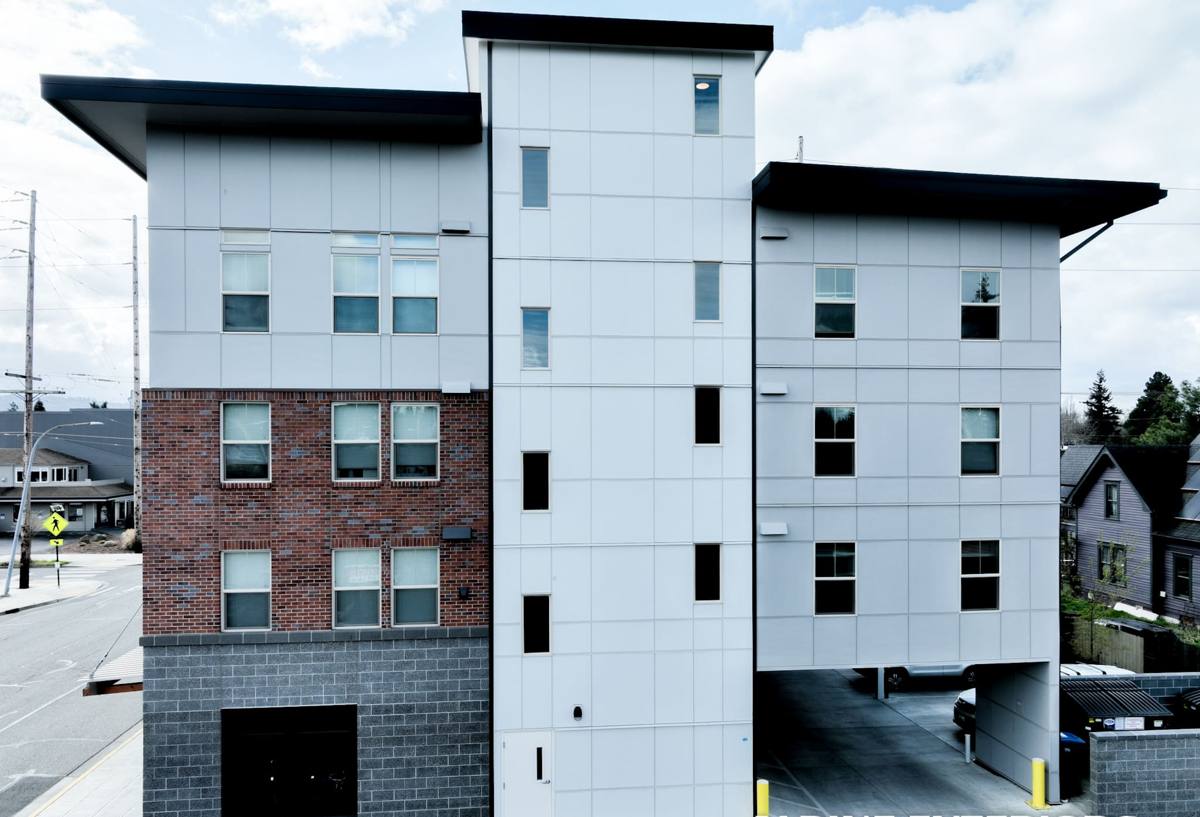
What Salt Air, Driving Rain, and Moss Actually Do to Siding
Salt air
Airborne salt settles on every exterior surface, not just siding. It accelerates corrosion on nails, screws, flashing, and any exposed metal trim. Once fasteners start to corrode, they lose holding power, and siding panels or boards can work loose at the very points that are supposed to keep water out. Salt residue also breaks down factory and field-applied finishes faster than inland exposure does, which shows up as chalking, fading, or a rougher surface texture over time.
Driving rain
Wind-driven rain off the water doesn't just fall on siding — it gets pushed sideways and upward into laps, corners, and butt joints that a calm-weather installation might never have to deal with. If caulking has failed, if a lap isn't sealed correctly, or if flashing was installed short, driving rain finds those gaps and pushes moisture behind the siding rather than just running down the face of it.
Moss and algae
Whatcom County's damp, mild climate keeps moss and algae active for most of the year, and shaded or north-facing walls near the water rarely get enough sun to dry out between rain events. Moss holds moisture directly against the siding surface, which is worse than the rain event itself — it's the difference between a wall that gets wet and dries versus a wall that stays wet.
Signs a Birch Bay Home Needs Siding Repair, Not Just a Wash
Pressure washing off surface moss can make siding look better for a season without addressing anything underneath. Before assuming a cleaning will solve the problem, look for these signs that point to an actual repair need:
- Soft or spongy spots when you press on the siding, especially near the bottom courses or around window and door trim
- Visible gaps, cracking, or separation at seams, corners, and butt joints
- Paint or finish that's peeling, bubbling, or chalking heavily in specific areas rather than evenly across the whole wall
- Rust streaking below nail heads or trim fasteners
- Moss or algae that regrows quickly after cleaning, especially in the same spot each time
- Warping, bowing, or panels that no longer sit flat against the wall
- Interior signs — musty smell, discoloration, or soft drywall on an exterior wall — that suggest moisture has already gotten past the siding
What a Correct Repair Actually Involves
A siding repair that's done right is not just cutting out a bad section and nailing in a patch. On a Birch Bay home, we treat every repair call as a chance to check the water management behind the siding, because a failure on the surface is often a symptom of something happening underneath.
Diagnose before cutting
We start by figuring out why that section failed — a caulking gap, a flashing detail that was never installed correctly, a fastener pattern that let water in, or straightforward wear from years of salt and moisture exposure. Repairing over the cause without fixing it just buys a year or two before the same spot fails again.
Check the water-resistive barrier
Once siding is removed from the repair area, we look at the house wrap or weather barrier underneath. If it's torn, improperly lapped, or missing flashing at a window or door, that gets corrected before anything new goes back on. Skipping this step is the single most common reason repairs fail early near the water.
Match and integrate the new material
New siding, trim, and fasteners need to match the existing profile, exposure, and finish closely enough that the repair doesn't stand out and doesn't create a new point of stress at the transition. We use corrosion-resistant fastener specs suited to a marine-influenced environment rather than whatever happens to be standard inland.
Reseal and finish correctly
Caulking, paint, or factory-matched finish gets applied to manufacturer specification, not just "close enough." In a salt-air environment, the quality of that final seal has an outsized effect on how long the repair lasts.
Repair or Replace? How We Help Birch Bay Homeowners Decide
Not every damaged wall needs full replacement, but not every repair is worth doing either. The right call depends on how much of the wall is affected, what's causing the damage, and what's underneath. Here's how we generally think through it:
| Situation | Repair usually makes sense | Replacement usually makes sense |
|---|---|---|
| Extent of damage | Isolated to one wall section or a few boards/panels | Recurring failures across multiple walls or the whole exterior |
| Underlying barrier | House wrap and flashing are intact once opened up | Barrier is compromised, torn, or missing in multiple areas |
| Siding age and material | Siding is in generally good condition and material is still available or matchable | Siding is near end of life, discontinued, or has chronic moisture issues |
| Cause of failure | A single identifiable install defect (one bad flashing detail, one gap) | Systemic issue — the product or original install can't handle Birch Bay's exposure |
| Cost over time | Lower upfront cost, reasonable if it's a true one-time fix | Better long-term value if repairs would otherwise recur every year or two |
We'll tell you honestly which category your home falls into. If a repair will hold, we don't push replacement. If we think a repair is just delaying an inevitable bigger job, we say so and explain why.
Why We Repair With — and Recommend — James Hardie Fiber Cement
Our crew installs and repairs James Hardie fiber cement siding exclusively. We don't install vinyl, LP SmartSide, Cemplank, Allura, primed spruce, or cedar, and that standard applies to repair work too: when a repair calls for new material, we use Hardie products engineered for exactly the kind of exposure Birch Bay deals with.
Hardie's HZ5 product line is formulated for harsher climate zones, and fiber cement itself doesn't absorb moisture the way wood-based siding can, doesn't rot, and isn't a food source for the moss and algae that thrive in this climate. It's also non-combustible, which matters independent of coastal exposure but is a real advantage on top of everything else. The ColorPlus factory finish is baked on and warranted against fading and chipping in a way field-applied paint on other materials generally isn't.
That said, we're not going to tell a homeowner with vinyl or wood siding that their existing siding is garbage — plenty of it performs fine for years when it was installed correctly and maintained. What we will say honestly: those materials have real trade-offs in a salt-air, high-moisture environment — higher maintenance, more sensitivity to installation quality, or moisture behavior that doesn't favor them here — and when a homeowner is facing a repair that keeps recurring, we think Hardie is the better long-term answer for this specific location.
If your existing siding isn't Hardie
We can still evaluate the damage and give you an honest assessment, including whether a targeted repair with compatible material makes sense or whether the wall is a candidate for replacement down the line. We won't try to talk you into a full re-side for a problem a proper repair can solve.
Our Process for a Birch Bay Repair Call
- Inspection. We look at the damaged area and enough of the surrounding wall to understand whether this is isolated or a sign of a bigger issue.
- Honest assessment. You get a clear explanation of what's causing the damage, what a repair involves, and whether repair or replacement is the better move — with the reasoning, not just a recommendation.
- Written estimate. Scope and cost factors laid out before any work starts, no surprise add-ons once we're into the wall.
- Repair work. Removal of damaged material, correction of any underlying flashing or barrier issues, installation of matched material with appropriate fasteners, and proper sealing and finishing.
- Walkthrough. We show you what was found and what was done before we consider the job complete.
Why a Crew That Already Works Birch Bay Matters
Siding repair in a marine environment isn't the same trade as siding repair on a dry, inland lot, and a crew that mostly works away from the water can miss things that are obvious to someone who deals with this exposure regularly. Knowing which fastener specs actually hold up against salt air, which wall orientations near the bay take the worst of the wind-driven rain, and how aggressively moss comes back on shaded, water-facing walls isn't guesswork — it's pattern recognition from doing this work in this specific area.
Our crew is based in Lynden and works throughout Whatcom County, including Birch Bay on a regular basis, so this isn't an unfamiliar environment we're adapting to on the fly. We show up already knowing what tends to fail here and why.
After the Repair: Keeping Salt Air and Moss From Coming Back
A good repair buys you time, but a few habits extend it:
- Rinse siding periodically to remove salt residue buildup, especially on walls facing the water
- Trim back vegetation and tree cover that keeps shaded walls from drying out between rain events
- Check caulking at trim, corners, and penetrations annually — it's the first thing to fail and the cheapest to catch early
- Address moss as soon as it appears rather than letting it establish, since it's far easier to remove early than after it's taken hold
- Watch for the same warning signs listed earlier — soft spots, peeling finish, rust streaking — even after a repair, since they can appear in new locations
If you're seeing damage, recurring moss, or soft spots on your Birch Bay home's siding, we're happy to take a look and give you a straight answer about what it needs. Reach out for a free, no-pressure estimate — there's a form below to get started.