 Lynden Siding
 Siding Repair Built for Deming's Corner of Whatcom County
Deming sits in that stretch of Whatcom County where the Nooksack valley funnels weather in from the coast and up against the foothills. Homes here take a different kind of beating than a house downtown in Lynden proper — more shade from tree cover in places, more standing moisture after a storm rolls through, and long stretches of the year where siding just doesn't get a chance to fully dry out between rain events. When siding fails in this area, it's rarely one dramatic event. It's usually months or years of small moisture exposures that finally caught up with a seam, a corner, or a section that was never quite sealed right to begin with.
This page is about repair specifically — fixing what's failing on a home's existing siding, not a full re-side. If your siding is fundamentally sound but has a problem area, a repair is often the right call, and doing it correctly the first time matters more here than in a drier climate, because a rushed patch job in this kind of weather tends to fail again within a season or two.
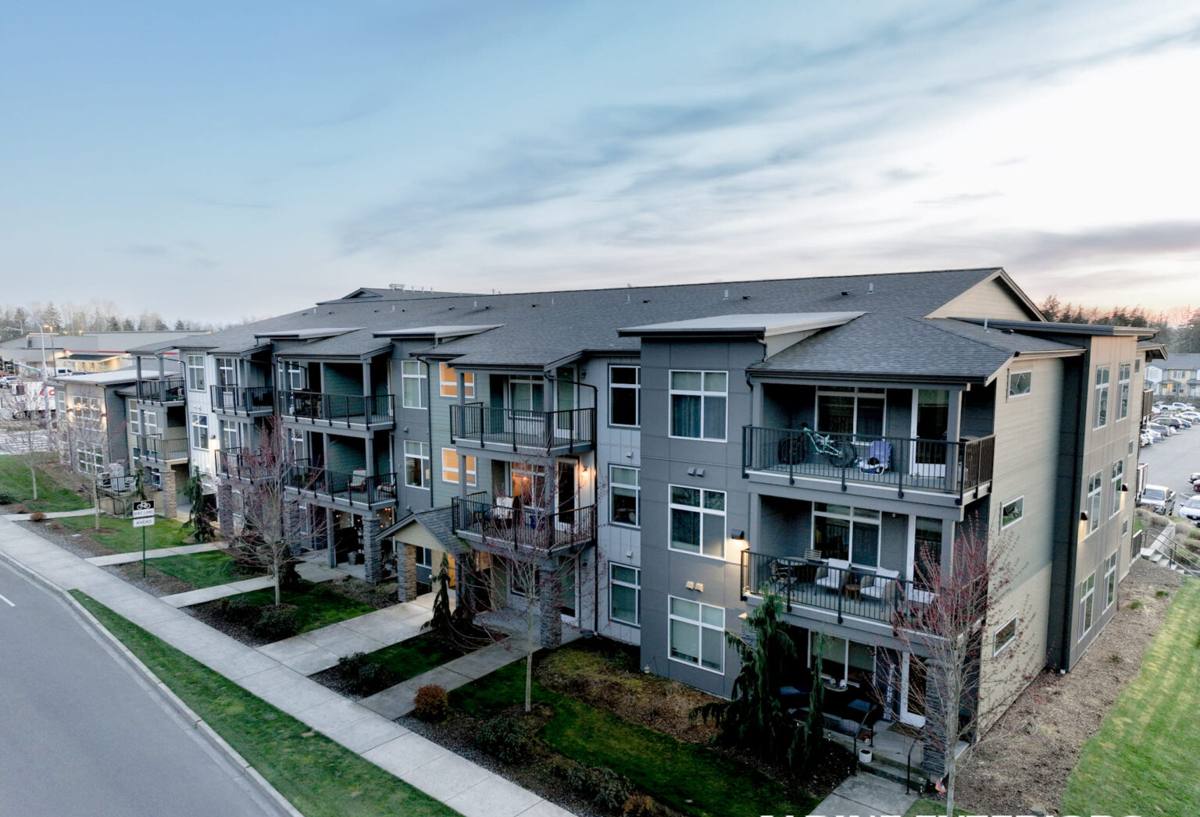
What Whatcom County Weather Does to Siding Over Time
Three things drive most of the siding repair calls we see out this way, and Deming gets a heavier dose of all three than a lot of neighborhoods closer to town:
- Driving rain. Wind-driven rain doesn't just wet the surface of your siding — it pushes water sideways into laps, seams, and any gap around trim, fasteners, or penetrations. Over time that moisture works its way behind the siding if the water-resistive barrier or flashing details weren't done right.
- Salt air influence. Even well inland from the coast, Whatcom County's marine air carries enough salt to accelerate corrosion on fasteners, staples, and any exposed metal trim. Rusted fasteners are one of the most common things we find when we pull a failing section of siding apart.
- Moss and organic growth. Shaded, damp siding in this area grows moss and algae for a good chunk of the year. That growth holds moisture against the surface far longer than open sun-exposed walls would ever see, which is exactly the condition that rots wood-based products and degrades paint film on anything not built to shed water aggressively.
None of that is unusual for this part of Washington — it's just the reality of building and maintaining a home here. The point of a proper repair is to break that cycle in the specific spot that's failing, not just cover it up.
Signs Your Siding Needs Repair, Not Just a Wash
A lot of homeowners in the Deming area first notice a problem as discoloration or a soft spot they assume is cosmetic. It usually isn't. Here's what actually signals a repair need versus something you can leave alone for now:
| What You're Seeing | Likely Cause | Repair Urgency |
|---|---|---|
| Soft or spongy siding when pressed | Moisture intrusion, possible rot behind the surface | High — address before next wet season |
| Visible gaps at seams or corners | Failed caulking, original install shortcuts | Moderate — worsens with driving rain |
| Persistent moss or algae in one section | Poor drying/ventilation in that area of the wall | Moderate — treat and correct drainage, not just clean |
| Rust streaks below fasteners or trim | Corroding fasteners, often original galvanized nails | Moderate to high depending on spread |
| Bubbling or peeling paint in a localized area | Trapped moisture pushing through the finish | High — usually a sign of what's happening underneath |
| Warped or bowed panels | Water absorption in wood-based or composite siding | High — structural risk if left |
Repair vs. Replace: How We Actually Make That Call
Not every problem area needs a full re-side, and we're not going to tell you it does. The honest breakdown:
When repair makes sense
If the damage is isolated — a section behind a downspout that's been getting soaked, a corner where flashing failed, a handful of boards that took impact damage — and the rest of the siding is sound, a targeted repair is the right, cost-effective move. This is especially true if your existing siding is James Hardie fiber cement in good condition overall; there's no reason to replace a whole wall to fix one bad section.
When it's time to talk about replacement instead
If we open up one problem area and find the same rot, moisture staining, or fastener corrosion spreading across multiple walls, that's usually a sign of a systemic issue — often tied to the original product choice or how it was installed — rather than a one-off. In that case, patching becomes a short-term fix on a longer-term problem, and we'll tell you that plainly instead of billing you for repeat repairs over the following years.
What a Correct Repair Actually Involves
A siding repair done right is not just pulling a bad board and nailing up a new one. In a climate like this, the details around the patch matter as much as the patch itself:
- Open up further than the visible damage. Moisture travels. We check adjacent boards, sheathing, and the water-resistive barrier behind the failed section before closing anything up.
- Assess and repair the barrier underneath. If the house wrap or building paper is torn, compressed, or missing at the failure point, that gets corrected — replacing siding over a compromised barrier just resets the clock on the same failure.
- Correct flashing and drainage, not just cosmetics. Water needs a path out from behind the siding. If the original install didn't provide proper flashing at a window, door, or horizontal trim board, that gets fixed as part of the repair, not left as-is.
- Match materials correctly. Patching fiber cement into fiber cement is straightforward. Patching a different product into an existing wall — or matching an older discontinued color — takes more judgment, and we'll be upfront if a perfect match isn't realistic.
- Refasten with corrosion-resistant hardware. Given how much fastener corrosion we see in this area, repairs go back together with fasteners rated for the exposure, not whatever happened to be on hand.
- Reseal and finish to spec. Caulking, paint, and trim details get finished to match manufacturer installation guidelines, not just "good enough to look right from the street."
Why We Only Install James Hardie — And What That Means for Your Repair
We're a James Hardie-exclusive contractor. We don't install vinyl, LP SmartSide, cedar, primed spruce, Cemplank, or Allura, and that shapes how we approach repair work too. If your home already has James Hardie fiber cement siding, repairs are usually the easiest and most predictable kind of job we do — the product is non-combustible, dimensionally stable, and holds up to the moisture cycling this climate throws at it, so a well-executed patch tends to stay fixed.
If your home has a different siding product and needs a repair, we'll still repair it honestly and correctly where that makes sense. But if a homeowner in the Deming or greater Lynden area is facing repeated repair calls on the same walls — chronic moisture issues, recurring rot, fastener failure, or a product that's simply reached the end of what patching can fix — that's the conversation where we talk about James Hardie as the replacement option. It's not because we're pushing a product; it's because in a climate with this much driving rain and prolonged dampness, we've standardized on the one fiber cement system with the engineering, factory-applied ColorPlus finish, and warranty backing to hold up long-term when installed to spec.
What Makes James Hardie Different in This Climate Specifically
A few product characteristics matter more here than they would in a drier region:
- Fiber cement doesn't absorb and swell with moisture the way wood-based products can, which matters when a wall stays damp for extended stretches during moss season.
- It's non-combustible, which is a separate consideration from moisture but relevant given regional wildfire risk in drier summer months.
- ColorPlus factory finish is baked on under controlled conditions, which holds up better to UV and moisture cycling than field-applied paint on some alternative products, meaning fewer repaint cycles over the life of the siding.
- HZ5 and climate-engineered product lines are built with the Pacific Northwest's wet-weather exposure in mind, not a one-size-fits-all national spec.
Our Repair Process, Start to Finish
We keep this straightforward because a repair shouldn't feel like a mystery:
- Inspection first. We look at the visible damage and check surrounding areas — including anywhere moisture could be traveling that isn't obvious from the ground.
- Honest scope. You get a clear answer on whether this is a contained repair or a sign of something bigger, before any work starts.
- Written estimate. No verbal-only pricing. You'll know what's being done and what it costs before we schedule the work.
- Correct materials and fasteners. Matched appropriately to your existing siding and rated for this region's exposure.
- Clean finish. Repaired sections are sealed, caulked, and finished to blend in as closely as the situation allows.
- Follow-up if needed. If we find something during the repair that changes the scope, we stop and talk to you before proceeding — we don't expand a job without your sign-off.
Why a Crew That Already Works Deming and Lynden Matters
Siding repair isn't just about technique — it's about knowing what this specific area does to a house. A crew that mostly works drier, more urban parts of the county might not think twice about a shaded, moss-prone section of wall or a corner that catches wind-driven rain off the valley. We work this region regularly, which means we're not guessing at how Whatcom County's weather patterns interact with a particular wall orientation or a shaded lot near tree cover — we've seen the failure patterns before and know what to check for beyond the obvious damage.
It also means accountability. A contractor who's local and plans to keep working in your neighborhood has every reason to do the repair right the first time, because a callback isn't just inconvenient — it's a conversation with a neighbor down the road.
A Few Things to Check Before You Call Anyone
If you're trying to decide whether it's worth getting an estimate, a quick walk around your home can tell you a lot:
- Press gently on any discolored or stained siding sections — does it feel soft or give at all?
- Look for moss or algae concentrated in one area versus spread evenly — a concentration often points to a drainage or drying problem specific to that spot.
- Check trim boards and corners for gaps, cracking caulk, or separation.
- Look below windows and at wall penetrations (vents, hose bibs, light fixtures) for staining that suggests water is getting behind the siding there.
- Note any areas with rust streaking, which usually means fastener corrosion underneath.
None of this requires special tools — just a walk around the exterior on a dry day. If you find one or more of these signs, it's worth having someone look at it before the next wet season sets in.
If you're seeing any of these signs on a home in Deming, Lynden, or the surrounding area, we're happy to take a look and give you a straight answer — repair, replace, or leave it alone for now. Reach out for a free, no-pressure estimate using the form below.