 Lynden Siding
 Blaine Roofs Work Harder Than Most
Blaine sits right on the water, tucked against the Salish Sea near the Canadian border, and that location shapes what a roof has to survive here. Salt-laden air moves off the bay and settles on shingles, flashing, and fasteners year-round. Add Whatcom County's long wet season — driving rain that comes in sideways off the water more often than it falls straight down — and you get roofs that age differently than they would twenty miles inland. On top of that, the shade and moisture that many Blaine properties sit under keep roofs damp for months at a stretch, which is exactly the condition moss needs to take hold.
None of this means a roof in Blaine is doomed. It means the repair work has to account for corrosion, wind-driven water intrusion, and biological growth as three separate problems, not one. A patch job that ignores any of those three tends to fail faster here than it would in a drier, less coastal town.
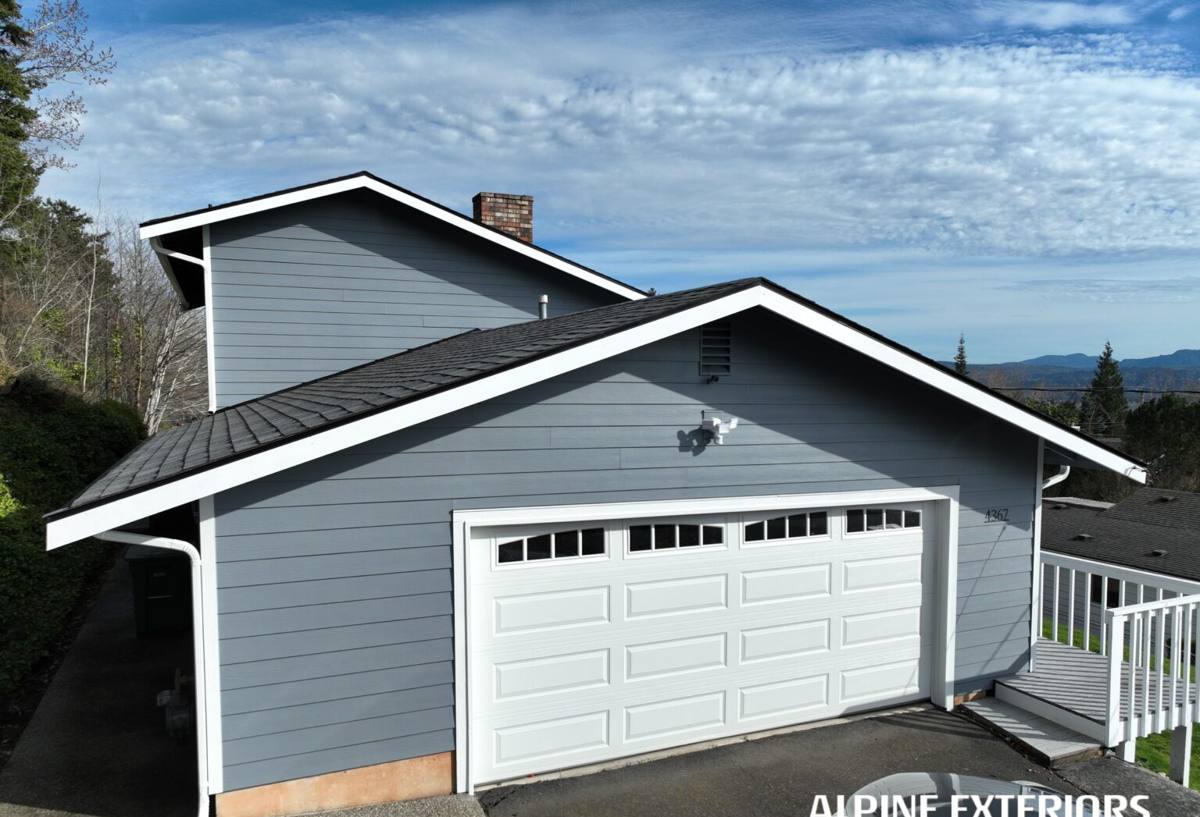
What Salt Air and Moss Actually Do to a Roof
Salt air and corrosion
Airborne salt is mildly corrosive to exposed metal. Nail heads, flashing seams, gutter fasteners, and vent stacks are the first things to show it — usually as rust streaks or a fastener that's backed out slightly because the metal underneath it has started to degrade. Once a fastener loosens, the seal around it goes with it, and that's a direct path for water.
Driving rain and wind-driven water
Rain that comes in at an angle doesn't behave like rain falling straight down. It gets pushed up under shingle edges, into flashing laps, and around vent boots that were only ever designed to shed water moving one direction. A roof near the water needs every lap and seal doing its job, because there's less margin for error.
Moss, shade, and moisture retention
Moss doesn't just sit on top of shingles looking bad — its root structure lifts shingle edges and holds moisture directly against the roofing material and the deck underneath. On a roof that already stays damp longer than average because of shade or coastal humidity, moss can establish itself in a single wet season and start doing damage in the second.
Signs a Blaine Roof Needs Repair
- Rust streaking below flashing, vent stacks, or nail lines
- Moss growth thick enough to hold a shingle edge up off the roof deck
- Granule loss showing up in gutters, especially after a windy rain event
- Soft or discolored ceiling spots after a storm with driving wind
- Curling or lifted shingle edges near ridges and valleys, where wind-driven rain hits hardest
- Flashing that looks loose, gapped, or visibly corroded around chimneys and roof-wall intersections
- Gutters or downspouts overflowing during rain, which points to a blockage or a pitch problem worth checking from the roof, not just the gutter
Any one of these on its own might be minor. Two or three together, especially after a wet winter, is usually a sign the roof needs a real look rather than a guess from the ground.
What a Correct Repair Involves
A repair that actually holds up in this climate isn't just swapping a shingle. It means:
- Diagnosing the source, not just the symptom. Water that shows up on a ceiling in one room can travel a surprising distance from where it actually entered the roof. We trace it back before we open anything up.
- Checking underlayment condition, not just the shingle surface. If wind-driven rain has been getting past the shingle layer for a while, the underlayment and deck underneath may already be affected, and that changes the scope of the fix.
- Replacing fasteners and flashing with corrosion-appropriate materials. Near the water, we don't reuse compromised metal or fasten new work down with hardware that's already showing early rust elsewhere on the roof.
- Removing moss at the root, not just scraping the surface. Surface-only moss removal leaves the parts already embedded under shingle edges, and it comes right back within a season.
- Matching materials to what's already on the roof so the repair blends and performs the same as the surrounding field, rather than creating a new weak seam at the patch edge.
Our Process for Blaine Roof Repairs
- On-site inspection. We get on the roof (and in the attic, if access allows) to see actual conditions rather than estimating from photos or the ground.
- Plain-language diagnosis. We explain what's actually failing, why, and what caused it — salt corrosion, moss retention, wind-driven rain, or a combination.
- A written scope and estimate. You know exactly what's being repaired and roughly what it costs before any work starts.
- The repair itself. Matching materials, corrosion-resistant fasteners where exposure calls for it, and proper flashing and sealing at every touched seam.
- A final check. We walk the repair area and the surrounding roof so nothing adjacent gets missed.
Repair or Replace? What Actually Decides It
| Factor | Usually points to repair | Usually points to replacement |
|---|---|---|
| Age of roofing material | Well within expected lifespan | At or past expected lifespan for the material |
| Extent of damage | Isolated to one section or feature (a valley, a vent, one slope) | Spread across multiple slopes or recurring in several spots |
| Deck condition | Solid, no soft spots found | Soft decking or rot found during inspection |
| Moss history | First or occasional occurrence, caught early | Chronic, recurring moss with shingle lift across large areas |
| Fastener/flashing corrosion | Localized to a few points | Widespread corrosion across most exposed metal |
We'll tell you honestly which side of that table your roof falls on. There's no benefit to us selling a full replacement when a targeted repair will hold, and no benefit to patching a roof that's actually past the point where repair makes financial sense.
Materials That Hold Up Near the Water
Not every fastener or flashing product performs the same near salt air. Standard galvanized hardware can start showing surface rust faster in a coastal environment than it would further inland, especially once the protective coating gets scratched during installation or by years of weather. On repair work in Blaine, we default to fasteners and flashing rated for higher corrosion resistance where the roof's exposure calls for it — it costs a little more up front and saves a callback down the road.
The same logic applies to sealants and underlayment. Products that handle occasional moisture fine can behave differently under near-constant humidity and driving rain. We use materials suited to sustained wet exposure, not just intermittent weather.
Staying Ahead of Moss Between Repairs
A repair fixes what's already damaged. Keeping moss and debris from causing the next round of damage is mostly maintenance, and it's worth doing whether or not you're due for a repair right now:
- Clear moss and debris from valleys and shaded slopes at least once a year, more often under heavy tree cover
- Keep gutters and downspouts clear so water isn't backing up under the roof edge
- Trim back branches that keep a section of roof shaded and damp longer than the rest
- Have flashing and fastener condition checked periodically, especially on a roof that's a decade or more old
- Address small leaks quickly — a small, isolated repair now is almost always cheaper than the deck damage that shows up if it's ignored through another wet season
Why Hire a Crew That Already Works Blaine
A roof repair crew that works Blaine regularly already knows what coastal exposure does to fasteners, flashing, and shingles, without needing to learn it on your roof. That translates into fewer surprises during the estimate, materials chosen correctly the first time, and a repair scoped around how this specific stretch of Whatcom County actually weathers a roof — not a generic checklist built for a drier region. It also means a shorter drive when you need someone back out for a follow-up look, which matters when a storm is coming and you want the repair holding before it hits.
We're straightforward about what we find, what it'll take to fix it, and what it costs. If your roof only needs a repair, that's what we'll recommend. If you'd like a second opinion on a quote you already have, or you just want an honest look at a leak or moss problem before it gets worse, we're happy to come take a look. The estimate is free, and there's no pressure attached to it — just a clear answer about what your roof actually needs.