 Lynden Siding
 Roof Replacement Built for Nooksack's Weather
Nooksack sits in the upper Nooksack River valley, close enough to the water and the Strait of Georgia weather system that homes here take on the same salt-tinged air, driving rain, and long moss season as the rest of northern Whatcom County. That combination is hard on a roof in a specific way: it's not one big storm that causes the damage, it's years of sustained dampness that shingles, underlayment, and flashing were never quite built to handle. A roof replacement here isn't just swapping old shingles for new ones. It's an opportunity to correct whatever let moisture in the first time, so the next roof actually lasts as long as it's rated to.
We replace roofs on Nooksack homes as part of our regular work across this part of the county, and the approach doesn't change from job to job because the climate doesn't change from job to job. Every replacement here gets built around moss, wind-driven rain, and moisture — not around whatever the cheapest spec sheet allows.
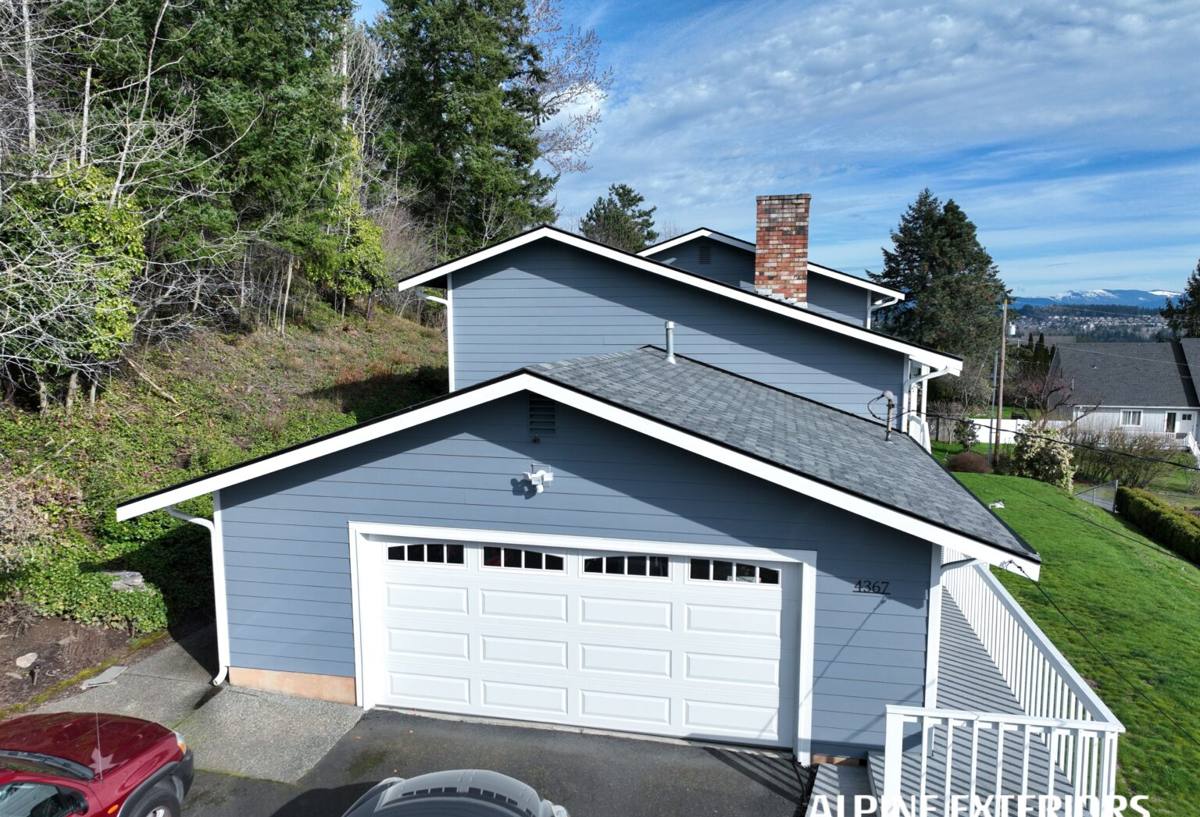
What This Climate Does to a Roof Over Time
Moss and Algae Take Hold Fast
Shaded slopes, north-facing planes, and roofs near mature trees stay damp longer than sun-exposed sections, and in this climate that dampness rarely gets a long enough dry stretch to fully clear before the next rain. Moss doesn't just sit on top of shingles — it holds water against the surface, works into shingle edges and laps, and over a few seasons can lift or loosen roofing material that would otherwise still have years of life left in it.
Wind-Driven Rain Finds Weak Points
Rain moving through this part of the valley often comes in sideways rather than straight down, which means it gets pushed into places a roof isn't designed to shed water from directly — under flashing laps, into valleys, and around any penetration like a vent pipe or chimney. A roof that was installed for a calmer, drier climate, or installed with shortcuts at those transition points, tends to leak there first.
Constant Dampness Wears on Materials Differently Than Dry Heat Does
Whatcom County doesn't see extreme temperature swings most years, but a roof that stays damp more often than it fully dries out ages differently than the same roof would somewhere drier. Asphalt granules break down faster, wood-based materials stay saturated longer, and any exposed fastener or metal flashing that isn't corrosion-rated has more opportunity to fail. A replacement roof needs materials and details chosen for that reality, not for a national average climate.
Signs Your Nooksack Roof Is Past the Point of Repair
Not every problem roof needs full replacement, and we'll say so plainly if a repair is the honest answer. But there's a point where patching stops being cost-effective and starts being a way of delaying an expense that's coming regardless. Some signs point clearly toward replacement rather than another repair:
- Moss or algae covering large sections of the roof, not just isolated patches, especially if it returns quickly after cleaning
- Multiple past repairs in different areas of the same roof within a few years
- Shingles that are curling, cupping, or losing granules across broad areas rather than one localized spot
- Soft or spongy decking discovered during an inspection or repair, which signals moisture has already reached the wood below the shingles
- A roof at or past its rated lifespan, particularly one that's spent that whole life in a damp, shaded climate like this one
- Daylight or water staining visible from inside the attic in more than one location
One or two of these might still be a repair conversation. Several of them together, especially on a roof already near the end of its expected life, usually means a replacement is the more honest and more economical path forward.
What a Correct Roof Replacement Actually Involves
A roof replacement is more than removing old shingles and nailing down new ones. The parts of the job nobody sees from the ground are what determine whether the new roof performs well through its first decade or starts leaking in year six. On every full replacement, that includes:
- Complete tear-off down to the roof deck, not a layover on top of existing shingles, so the deck can actually be inspected and repaired
- Repair or replacement of any decking found to be soft, delaminated, or moisture-damaged during tear-off
- A moisture-rated underlayment across the full roof, not just a minimum-code product
- Ice-and-water shield at eaves, valleys, and other spots where water and debris naturally collect
- New flashing at every valley, chimney, vent pipe, skylight, and roof-to-wall transition, properly lapped and sealed rather than reused from the old roof
- Balanced intake and exhaust ventilation so moisture in the attic has somewhere to go instead of condensing against the underside of the new deck
- Corrosion-resistant fasteners and metal components suited to a consistently damp, salt-tinged climate
None of these steps add much to the overall cost of a job relative to the roofing material itself, but skipping any of them is exactly what turns a roof rated for twenty-five or thirty years into one that's leaking or needs re-roofing again in fifteen.
Choosing a Roofing Material for a Nooksack Home
There isn't one right roofing material for every house — it depends on the roof's pitch, how much shade it gets, your budget, and how long you plan to own the home. What matters is going into that decision with a clear picture of the real trade-offs in this specific climate, not a sales pitch built around whichever product has the best margin.
| Material | Moss & Moisture Behavior | Typical Maintenance | Realistic Lifespan Here |
|---|---|---|---|
| Architectural asphalt shingle | Performs well with proper ventilation and moss-resistant granules; the most common choice | Periodic moss removal, gutter checks | 20-30 years |
| Standing seam metal | Sheds water and resists moss buildup due to its smooth, non-porous surface | Low; occasional fastener and seam checks | 40-60 years |
| Cedar shake | Absorbs moisture readily; needs strong airflow underneath to dry fully between rains | Higher; regular treatment and moss control required | 20-30 years with consistent upkeep |
| Composite/synthetic shingle | Resists moisture absorption well; performance varies by manufacturer | Low to moderate | 30-50 years depending on product |
Architectural asphalt is the right call for most Nooksack homes when budget and appearance matter alongside durability. Metal earns its higher upfront cost on steep, shaded roofs where moss has historically been a losing battle. Cedar can work, but only on roofs with the airflow to support it — on a shaded, damp lot it tends to need more upkeep than most homeowners want to sign up for. We'll walk through which option actually fits your roof rather than defaulting to whatever's easiest to install.
How We Approach a Roof Replacement Job
Inspection and Honest Assessment
Before any tear-off begins, we get on the roof and look at the actual condition of the shingles, decking, flashing, and ventilation — not just the parts visible from the driveway. We'll tell you plainly whether replacement is the right call or whether a repair would genuinely hold for a few more years. That assessment is also where we identify likely problem spots, like an undersized valley or a chimney flashing detail, before they turn into surprises mid-job.
Protecting the Property During Tear-Off
Landscaping, siding, and gutters get covered or protected before the old roof comes off, and debris is contained and hauled off the property rather than left to accumulate. Tear-off exposes the deck to weather, so we plan the work in stretches where we can get the deck dried in the same day whenever the forecast allows it.
Deck Repair Before Anything Goes Back Down
Any soft, delaminated, or water-damaged decking uncovered during tear-off gets replaced before underlayment goes down. This is the step that gets skipped by crews trying to move fast, and it's also the step most likely to cause a callback two winters later if it's skipped.
Underlayment, Flashing, and Ventilation
This is where the roof's actual weather resistance gets built. Ice-and-water shield goes down at eaves and valleys, moisture-rated underlayment covers the rest of the deck, and new flashing goes in at every penetration and transition. Ventilation gets checked and corrected here too, since a well-shingled roof over a poorly ventilated attic will still trap moisture and shorten its own lifespan from underneath.
Final Installation and Walkthrough
Shingles or panels go down to manufacturer specification, and we do a full site cleanup, including a magnetic sweep for stray nails. Before we consider the job done, we walk the roof and the property with you, point out what was found and fixed, and answer any questions about warranty coverage and maintenance going forward.
What Roof Replacement Typically Costs to Consider
Every roof is different, and the honest answer to "what will this cost" comes from an actual inspection, not a phone estimate. That said, several factors consistently move the price up or down, and it's worth understanding them before you start getting quotes.
| Factor | How It Affects the Job |
|---|---|
| Roof size and complexity | More valleys, dormers, and roof planes mean more flashing work and labor time |
| Material choice | Asphalt is the most budget-friendly; metal and cedar cost more upfront but shift the maintenance and lifespan math |
| Deck condition | Rot or soft decking found during tear-off adds repair cost that can't be known until the old roofing is off |
| Roof pitch and access | Steep or hard-to-access roofs take longer and require more safety equipment |
| Layers being removed | Tearing off multiple existing layers takes more labor than a single-layer tear-off |
| Ventilation upgrades needed | Correcting inadequate intake or exhaust ventilation adds a modest but worthwhile cost |
We give a written estimate after an actual inspection, and we'll flag any factor that's likely to add cost — like suspected deck damage — before work starts rather than after, so there are no surprise change orders partway through.
Why a Crew That Already Works in Nooksack Matters
A roofing crew that works across this part of Whatcom County through every season sees how moss, wind-driven rain, and sustained moisture actually behave on real houses over years, not just how a product performs on a manufacturer's data sheet. That shows up in practical decisions on your job: which roof orientations in the Nooksack area need extra ventilation because of tree shade and valley moisture, how much ice-and-water shield a given roof's valleys actually warrant, and which flashing details are worth the extra time on install day so you're not dealing with a leak two winters from now. It also means that if a warranty question or maintenance issue comes up years down the road, you're calling a crew still working in the same area, not tracking down a contractor who's moved on.
Protecting Your New Roof After Installation
A correctly installed roof still benefits from basic upkeep in this climate, and a little attention goes a long way toward hitting its full rated lifespan.
- Have gutters cleared at least twice a year so water isn't backing up under the roof edge
- Watch shaded and north-facing slopes for early moss growth and address it before it spreads
- Trim back tree limbs that overhang the roof to reduce shade and debris buildup
- Schedule a visual inspection after any major windstorm
- Get a professional look at the roof roughly once a year, ideally before the heaviest fall rains arrive
- Address small issues, like a lifted shingle tab or a gap in sealant, before the next wet season rather than after
None of this is complicated or expensive, but skipping it is how a well-built roof still ends up needing early repairs.
Get a Free, No-Pressure Estimate
If your Nooksack roof is aging, showing moss and moisture damage, or you're just trying to plan ahead before it becomes an emergency, we're glad to come take an honest look. Use the form below to schedule a free estimate — no pressure, and no upsell script, just a straightforward read on what your roof actually needs.