 Lynden Siding
 Roofs in Nooksack Work Harder Than Most
Nooksack sits in a part of Whatcom County where the roof over your head is doing constant, unglamorous work. Moist air pushes in off the Sound and up the river valleys, driving rain comes in sideways more often than most homeowners expect, and shaded, tree-lined lots stay damp long after a storm has passed. None of that is dramatic on any single day. Over a few years, it adds up to shortened shingle life, soft spots in the decking, and moss colonies that homeowners in drier climates never have to think about.
We repair roofs in Nooksack and the surrounding Lynden area because we live with the same weather our customers do. That matters more than it sounds like it should. A roofer who mostly works dry-climate jobs will diagnose a leak differently than one who has spent years tracing moisture problems that built up slowly, under moss, over an entire wet season.
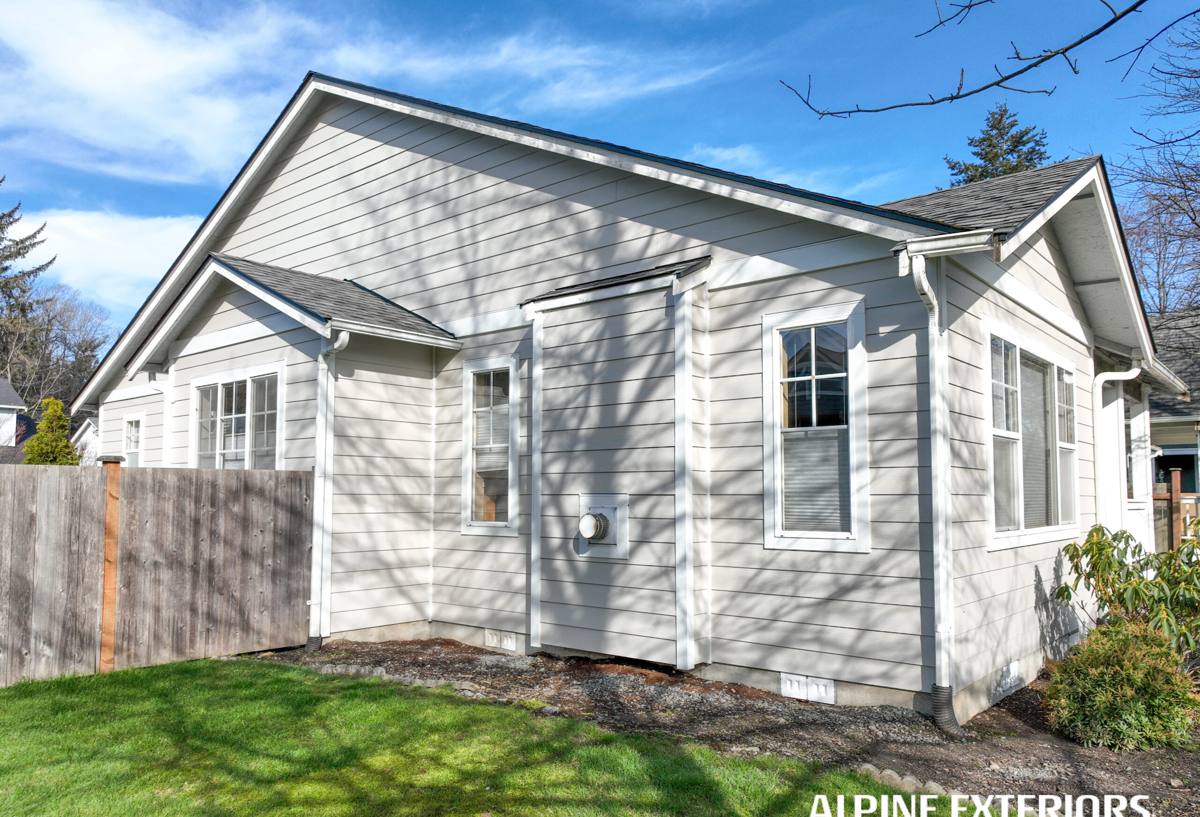
What This Climate Actually Does to a Roof
Driving Rain and Wind-Driven Water
Straight-down rain rarely causes leaks on a roof that was installed correctly. The problems show up when wind pushes rain sideways and forces it up under shingle edges, around vent boots, and into flashing laps that were never sealed quite right in the first place. Whatcom County gets enough wind-driven storms each year that these weak points get tested repeatedly, and a roof that "seemed fine" for years can develop a leak the first time a storm hits from an unusual direction.
Moss and Prolonged Moisture
Moss needs shade and moisture to establish itself, and a lot of Nooksack properties offer both. Moss holds water against the shingle surface long after the rest of the roof has dried out, which softens the asphalt mat, lifts shingle edges, and eventually opens a path for water to reach the decking underneath. By the time moss is visible from the ground, it's usually been growing for a season or more.
Temperature Swings and Material Fatigue
Whatcom County doesn't get extreme heat, but the freeze-thaw cycles of a typical winter still stress roofing materials. Water that gets into a small crack or nail hole, then freezes, expands the opening. Repeat that enough winters in a row and small, ignorable problems become active leaks.
Signs a Nooksack Home Needs Roof Repair
Most roof repairs we do didn't start as emergencies. They started as small signs that got put off for a season or two. Here's what we tell homeowners to watch for:
- Dark streaks or green-black patches on shingles, especially on north-facing or shaded slopes
- Granules collecting in gutters or at the base of downspouts
- Shingles that look curled, cupped, or lifted at the edges
- Soft or spongy spots when walking the roof, or sagging visible from the ground
- Water stains on interior ceilings, especially after a windy rainstorm
- Daylight visible through the attic roof deck, or damp insulation near the eaves
- Flashing around chimneys, skylights, or vent pipes that looks rusted, lifted, or gapped
- Missing or cracked shingles after a windstorm
Any one of these on its own might not mean much. Two or three together, especially heading into the wet season, is worth a look before it turns into a decking repair instead of a shingle repair.
What a Correct Repair Actually Involves
Finding the Real Source, Not Just the Symptom
Water doesn't always leak straight down from where it enters. It can travel along the decking or rafters before showing up as a stain on a ceiling several feet away. A repair that just patches the spot above the stain often misses the actual entry point, which means the "fixed" leak comes back the next hard rain. We trace the path from the interior sign back to the actual failure — a lifted shingle, a cracked flashing seal, a nail that backed out — before we touch anything.
Matching the Repair to the Existing Roof
Patching in new shingles that don't match the existing color, profile, or wear pattern is a cosmetic problem homeowners notice immediately, and it's avoidable in most cases with the right sourcing. Where an exact match isn't available because of age or discontinued product lines, we'll tell you that upfront rather than let you find out after the fact.
Flashing and Underlayment Come First
The shingles get the attention, but flashing and underlayment are what actually keep water out at the vulnerable points — chimneys, skylights, valleys, and wall intersections. A repair that replaces shingles but reuses old, corroded flashing is a repair that will leak again. We replace flashing as part of the repair whenever it shows wear, not just when it's visibly failed.
Checking the Decking
Once shingles are pulled back, we check the roof decking underneath for soft spots or rot. This is the step that separates a thorough repair from a fast one. Decking that's been holding moisture needs to be addressed now, while it's exposed, rather than left to keep degrading under a fresh layer of shingles.
Repair, or Is It Time to Replace?
Not every damaged roof needs to come off. A lot of what looks alarming from the ground — a moss patch, a curled shingle, a stain on the ceiling — is a legitimate, contained repair. But there are cases where repeated repairs stop making financial sense. Here's how we generally think about it:
| Situation | Usually Repair | Usually Replace |
|---|---|---|
| Roof age | Under 15-18 years, asphalt shingle | Nearing or past manufacturer's expected lifespan |
| Damage extent | Localized to one slope, valley, or flashing point | Multiple slopes affected, widespread granule loss |
| Decking condition | Solid, dry, no rot found | Soft, delaminated, or rotted in multiple areas |
| Repair history | First or second repair on this roof | Third or more repair in a few years |
| Moss/algae extent | Isolated patches, shingles intact underneath | Heavy coverage with shingle mat breakdown |
We'll always tell you honestly which side of that table your roof falls on. A roof that can be legitimately repaired doesn't need to be sold as a replacement, and we're not going to push a full tear-off on a homeowner when a targeted repair will hold for years.
Our Roof Repair Process
1. Inspection and Honest Diagnosis
We walk the roof, check the attic if accessible, and identify the actual source of the problem — not just the visible symptom. You get a plain explanation of what we found and why it's happening, in terms that make sense whether or not you know anything about roofing.
2. A Clear, Written Estimate
You'll know the scope of the repair and the cost before any work starts. If we find something additional once we're into the repair — decking rot that wasn't visible from the surface, for example — we stop and talk to you before proceeding, not after.
3. The Repair Itself
We work efficiently but don't cut steps to save time. That means proper flashing work, matched materials where possible, and decking checks at every repair point, not just the one that was reported.
4. Cleanup and Walkthrough
Nails, old shingle debris, and moss removal debris get cleared from the yard and gutters before we consider the job done. We'll walk you through what was repaired and what to keep an eye on going forward.
Cost Factors Worth Understanding
Roof repair pricing in the Nooksack area varies quite a bit depending on scope — a single flashing repair might run a few hundred dollars, while extensive storm or moss damage across multiple slopes can run into the thousands. Rather than quote a number that won't mean much without context, here's what actually drives the cost:
- Roof pitch and accessibility — steep or high roofs take longer and require more safety setup
- How much decking, if any, needs to be replaced under the shingles
- Whether flashing at chimneys, skylights, or valleys needs full replacement
- Shingle or material availability for a close color and profile match
- Extent of moss or algae removal required before repair work can begin
- Number of separate repair locations on the roof
We break these factors down in the written estimate so you know what you're paying for, not just a total.
Why a Crew That Already Works Nooksack Roofs Matters
Roofing problems in this part of Whatcom County follow patterns that repeat from house to house — moss on the shaded north slope, flashing wear at the chimney facing the prevailing wind, soft decking at the eaves where snow or debris tends to sit longest. A crew that's repaired roofs across Nooksack and greater Lynden season after season recognizes those patterns quickly instead of treating every job as a first-time diagnosis. That translates into a faster, more accurate inspection and a repair that's built for the conditions your roof actually faces, not a generic fix pulled from a manual.
It also means we're not a name you found once and won't see again. We're local, our work is easy to check up on, and we stand behind repairs on roofs we may be asked to service again down the road. That accountability shapes how carefully we do the work the first time.
Get a Straightforward Look at Your Roof
If you're seeing moss buildup, a stain on a ceiling, or storm damage after a windy night, it's worth having someone take an honest look before it turns into a bigger repair. We offer free, no-pressure estimates for roof repair work in Nooksack and the surrounding area — come take a look, tell you what we find, and let you decide from there.