 Lynden Siding
 Roofing in Nooksack Isn't the Same as Roofing Somewhere Dry
Nooksack sits close enough to the water and the river bottomland that homes here deal with a specific combination of weather stress: salt-tinged air moving in off the Strait, long stretches of driving rain in fall and winter, and a moss season that can run eight months or more depending on how much shade a roof gets. None of that is dramatic on its own. The problem is what it does cumulatively, year after year, to a roof that wasn't installed with those conditions in mind.
An asphalt shingle roof that would perform fine in a drier inland climate can start showing granule loss, soft spots, and moss colonization years earlier here if the underlayment, ventilation, and flashing details weren't matched to this specific environment. That's the gap we work to close on every Nooksack roof we do — not a generic install, but one built for what this stretch of Whatcom County actually throws at a house.
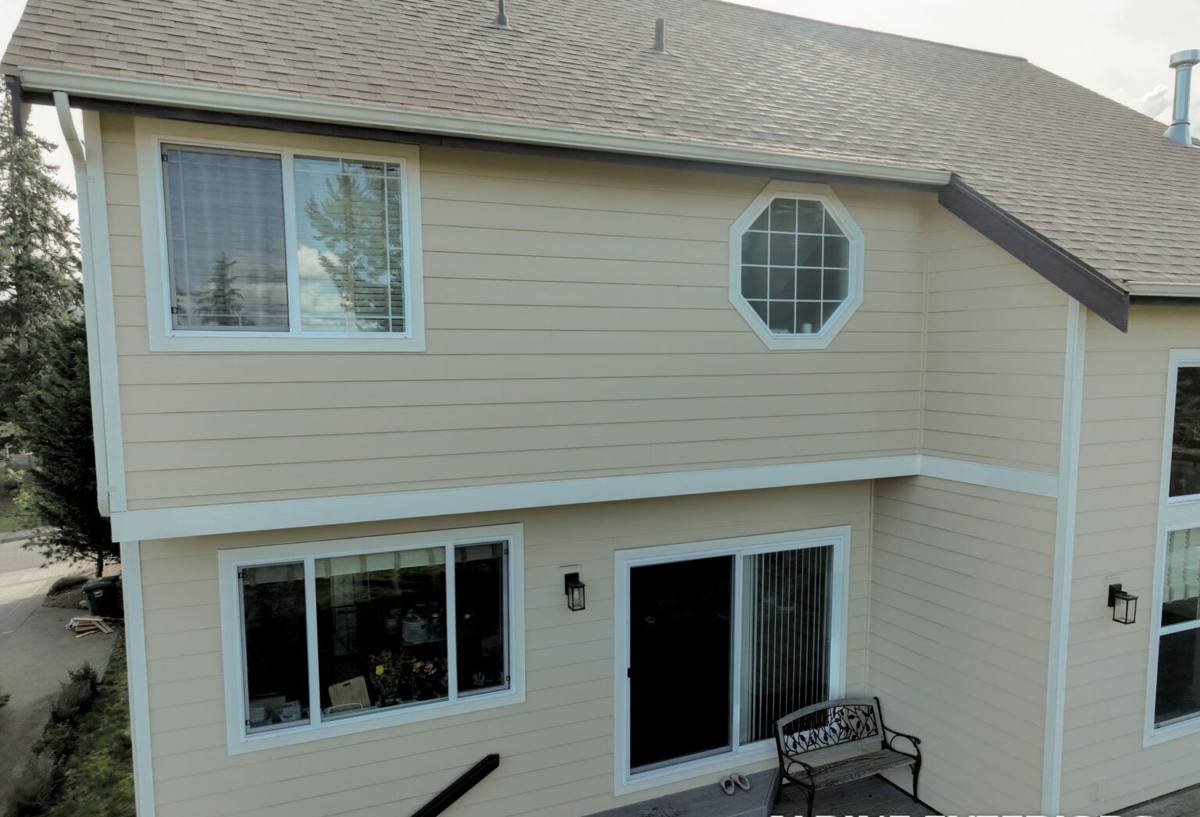
What Salt Air, Rain, and Moss Actually Do to a Shingle Roof
Salt Air
Airborne salt doesn't rot asphalt shingles the way it corrodes bare metal, but it does accelerate wear on exposed fasteners, flashing, and any unprotected metal components — vent caps, drip edge, valley metal. Over time, salt-laden moisture speeds up corrosion at these points, which is exactly where small leaks start.
Driving Rain
Wind-driven rain doesn't just fall straight down — it gets pushed sideways and upward under shingle tabs, into valleys, and around penetrations like pipe boots and chimneys. A roof with marginal underlayment or loose flashing details might handle a light drizzle fine and still leak during a real Pacific storm system, because the water is coming from an angle standard shingle coverage wasn't designed to block alone.
Moss
Long, cool, damp seasons are ideal moss-growing conditions, especially on north-facing slopes or roof sections shaded by trees. Moss holds moisture against the shingle surface, works its way under tab edges as it grows, and gradually lifts shingles away from the deck. Left unchecked, it shortens the usable life of an otherwise sound roof by years.
What a Correct Asphalt Shingle Installation Involves
A shingle roof is a system, not a single product. Every layer has a job, and skipping or shortcutting one undermines the rest — including the shingle itself.
- Deck inspection and repair — any soft, delaminated, or water-damaged decking gets replaced before anything goes down, not covered up.
- Ice-and-water shield at vulnerable points — valleys, eaves, and around penetrations get a self-adhering waterproof membrane, not just felt.
- Synthetic underlayment across the field — a durable, water-resistant layer that gives the roof a real second line of defense if wind ever drives water under a shingle tab.
- Properly lapped and fastened flashing — step flashing at walls, counter-flashing at chimneys, and new drip edge, installed in the correct sequence with the underlayment, not caulked on as an afterthought.
- Balanced intake and exhaust ventilation — soffit vents feeding a ridge vent (or equivalent) so the attic can actually breathe.
- Manufacturer-spec nailing — correct nail count, placement, and pattern for the specific shingle and local wind exposure, not just "enough to hold it down."
Any one of these done wrong can look fine on the day of the job and fail two or three winters later. That's why we treat the whole system as the actual scope of work, not the shingle brand as the headline.
Choosing a Shingle Line for This Climate
Homeowners often start the conversation asking about a specific shingle color or brand. We'd rather start with what the roof needs to survive here, then find the right product tier to match the budget.
| Shingle Tier | Typical Lifespan | Best Fit For | Trade-offs |
|---|---|---|---|
| 3-tab / builder-grade | 15-20 years | Budget-driven re-roofs, rental properties | Less wind resistance, faster granule wear in wet climates |
| Standard architectural (laminate) | 25-30 years | Most Nooksack homes — good balance of cost and durability | Mid-range algae resistance unless upgraded cap chosen |
| Premium architectural with algae-resistant granules | 30+ years | Shaded lots, north-facing slopes, homes near moisture-heavy landscaping | Higher upfront cost, but meaningfully slows moss/algae staining |
| Impact-resistant / high-wind rated | 30+ years | Open, exposed lots that catch more direct wind and rain | Higher material cost; overkill on sheltered lots |
For most Nooksack properties, we lean toward a standard-to-premium architectural shingle with algae-resistant granules. The upgrade cost is modest compared to the labor cost of a full tear-off, and it directly addresses the moss and staining issue that's specific to this area rather than a generic roofing concern.
Ventilation Matters More Here Than People Expect
A shingle roof with poor attic ventilation traps warm, moist air underneath the deck. In a colder, drier climate that might just shorten shingle life a bit. In Western Washington's damp climate, it also encourages condensation on the underside of the sheathing, which can lead to rot, mold, and — ironically — moss and algae getting a foothold from underneath as well as above. When we replace a roof, we evaluate intake and exhaust ventilation as part of the job, not as an optional add-on, because a new roof installed over an unventilated attic just resets the clock on the same problem.
Repair, Re-Roof, or Full Replacement — How We Help You Decide
Not every roofing problem in Nooksack calls for a full replacement. The right call depends on the roof's age, how widespread the damage is, and what's causing it.
| Situation | Likely Approach | Why |
|---|---|---|
| Isolated leak, roof under 10 years old | Targeted repair | Flashing or a single damaged section is often the cause, not the shingle field itself |
| Heavy moss coverage, shingles otherwise intact | Moss treatment plus repair | Removing moss and correcting the moisture source can add years without a full tear-off |
| Widespread granule loss, curling, or brittle shingles | Full replacement | The shingle has reached the end of its service life; patching won't hold |
| Multiple past leaks, soft decking found on inspection | Full replacement | Deck damage means the problem goes deeper than the shingle layer |
We'll always tell you honestly which category your roof falls into. A repair that genuinely solves the problem is better for you and better for our reputation in this town than talking every homeowner into a full replacement.
Signs a Nooksack Roof Needs a Look
- Visible moss, especially on north-facing or shaded slopes
- Granules collecting in gutters or at downspout outlets
- Shingle tabs that look curled, cupped, or lifted at the edges
- Dark streaking that doesn't wash off with rain
- Daylight or staining visible in the attic near the ridge or valleys
- Soft or spongy spots when walking the roof (we check this, not something to test yourself)
- Rusting or loose flashing around chimneys, vents, or skylights
Catching these early is almost always cheaper than waiting. A moss problem caught in year six is a cleaning and a repair; the same problem ignored until year twelve can mean deck damage and a full tear-off.
Our Process, Start to Finish
- On-site inspection — we walk the roof (weather permitting) and check the attic, not just look from the ground.
- Honest scope and written estimate — repair, partial re-cover, or full replacement, explained in plain terms with the reasoning behind it.
- Material selection — we walk through shingle tiers and colors based on your roof's exposure and budget, not a one-size pitch.
- Tear-off and deck inspection — old material removed, decking checked and repaired as needed before anything new goes down.
- System install — ice-and-water shield, underlayment, flashing, ventilation, and shingles installed in the correct sequence.
- Site cleanup — magnetic sweep for nails, debris hauled, gutters checked for granule buildup.
- Final walkthrough — we go over the finished roof with you before we consider the job done.
Why Working With a Crew That Already Knows Nooksack Matters
A roofing crew that works this specific area regularly knows which slopes tend to hold moss longest, which older Nooksack-area homes commonly have marginal attic ventilation, and how the local rain patterns actually behave — as opposed to applying a generic install spec and hoping it holds up. That local familiarity shows up in small decisions: where we add extra ice-and-water membrane, how we handle valleys on a shaded roof, which shingle tier we actually recommend instead of just upselling. It's less about any single trick and more about not treating every roof the same when the climate and lot conditions genuinely aren't the same.
We're also simply easier to reach for a warranty question or a follow-up five years down the road when we're already working in the area — not a crew that did one job here and moved on to the next county.
Maintenance That Actually Extends Roof Life Here
A well-installed shingle roof in Nooksack still benefits from basic upkeep given the local conditions:
- Keep gutters clear so water isn't backing up under the eave edge during heavy rain
- Trim back overhanging branches that shade the roof and feed moss growth
- Have moss professionally treated rather than pressure-washed, which can strip granules and shorten shingle life
- Get a roof checked after any major windstorm, even if nothing looks obviously wrong from the ground
None of this requires a big annual budget — it's mostly about not ignoring small things until they become big ones.
Ready to Talk About Your Roof?
If you're seeing moss building up, granules in the gutters, or you just want an honest read on how much life is left in your current roof, we're happy to take a look. The estimate is free, there's no pressure attached to it, and you'll get a straight answer about whether you need a repair, a partial fix, or a full replacement — use the form below to get started.