 Lynden Siding
 Why Acme-Area Roofs Take More Abuse Than You'd Think
Acme sits in a part of Whatcom County where the weather doesn't do anything in half measures. Long stretches of low-pressure systems roll through with driving, sideways rain that doesn't just fall on a roof, it gets pushed under loose shingle edges and around poorly sealed flashing. Add in the shaded, tree-lined lots common in this area and you get roof sections that stay damp for days after a storm passes everyone else's neighborhood. That combination of driving rain, marine-influenced moist air, and long shaded moss seasons is exactly why a roof built for a drier climate doesn't hold up here the way it should.
None of this means a roof over an Acme home has to fail early. It means the installation details that get skipped on a lot of jobs — proper underlayment, correct fastening, real attic ventilation, and flashing that's actually lapped the right direction — matter more here than they would somewhere with milder weather. Get those right and a roof will do its job for decades. Skip them and you'll be dealing with moss, soft decking, or leaks well before the shingles themselves wear out.
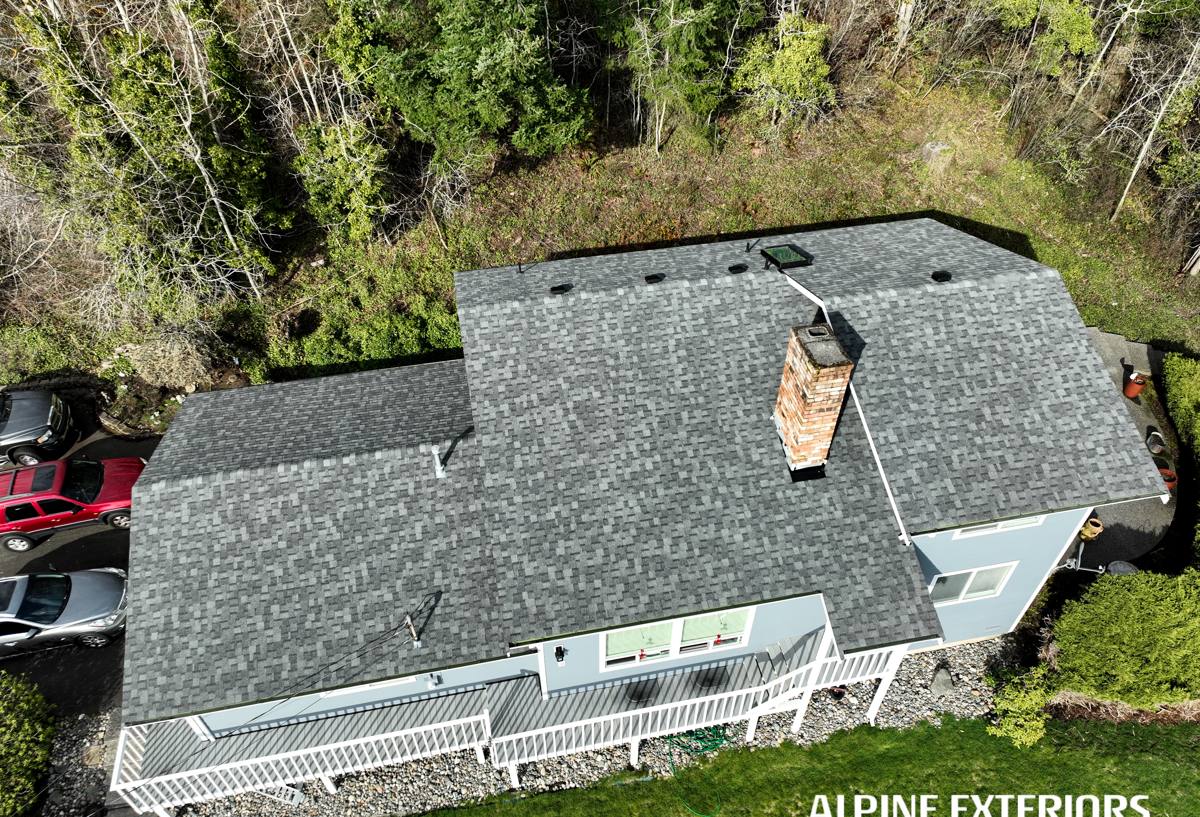
What a Correctly Installed Roof Needs to Do Here
Shed Water, Not Just Repel It
There's a difference between a roof that repels rain falling straight down and one that sheds water being driven sideways by wind. Whatcom County storms regularly do the latter. That means every lap, every nail pattern, and every piece of flashing has to account for wind-driven rain finding its way uphill under a shingle edge, not just water running downhill in a straight line.
Resist Moss, Not Just Survive It
Moss isn't cosmetic. It holds moisture against the shingle surface, works its way under tabs, and can lift granules that protect the asphalt underneath from UV and weather damage. A correct installation accounts for moss pressure from day one — material choice, roof pitch limitations, and shaded valleys all factor in.
Handle Marine Air on Metal Components
Flashing, fasteners, and any exposed metal on a roof take on marine-influenced moisture differently than they would further inland. Using the right grade of fasteners and flashing, and making sure metal-to-metal and metal-to-shingle transitions are properly sealed, slows corrosion that would otherwise show up as rust streaks and eventual leaks years before it should.
Our New Roof Installation Process for Acme Homes
A roof replacement isn't just tearing off old shingles and nailing down new ones. Here's how a job should go, start to finish:
- On-site inspection. We walk the roof, check the attic, and look at flashing, valleys, and any problem areas before quoting anything.
- Full tear-off. Old shingles and underlayment come off down to the deck — no roofing over an old layer, which traps moisture and voids most manufacturer warranties.
- Deck inspection and repair. Any soft, delaminated, or water-damaged sheathing gets replaced before anything new goes down. This step gets skipped by corner-cutting crews and it's the single biggest cause of early roof failure.
- Ice-and-water shield and synthetic underlayment. Applied at eaves, valleys, and around penetrations first, then across the full deck for a second layer of moisture protection under the shingles.
- Drip edge and flashing. New metal at all edges, valleys, chimneys, and roof-to-wall transitions — the details that stop wind-driven rain from finding a way in.
- Shingle or panel installation. Installed to manufacturer nailing patterns and exposure specs, not shortcut spacing that speeds up the job but weakens wind resistance.
- Ridge ventilation. Balanced intake and exhaust venting so the attic can actually dry out between storms instead of holding moisture.
- Cleanup and magnetic sweep. Old material, debris, and stray nails cleared from the yard and driveway.
- Final walkthrough. We go over the finished roof with the homeowner before calling the job done.
Choosing Roofing Materials That Hold Up to Local Weather
There's no single "right" material for every home — pitch, budget, and the look you want all factor in. But some options handle this climate's rain and moss pressure better than others.
| Material | Moisture/Moss Resistance | Wind Performance | Typical Lifespan | Maintenance |
|---|---|---|---|---|
| Architectural asphalt shingle | Good with algae-resistant granules | Strong when properly nailed | 25–30 years | Periodic moss/debris removal |
| 3-tab asphalt shingle | Fair — thinner profile holds moisture longer | Lower wind rating than architectural | 15–20 years | More frequent moss/debris removal |
| Standing seam metal | Excellent — sheds water and resists moss growth | Very strong | 40–50+ years | Minimal, occasional fastener check |
| Composite/synthetic shake | Good, engineered for wet climates | Strong | 30–40 years | Low, periodic inspection |
For most Acme-area homes, an architectural asphalt shingle with algae-resistant granules hits the right balance of cost, appearance, and durability. Homes with heavier tree cover or steeper pitches sometimes do better with metal, since it sheds moss-forming debris and driving rain more effectively than any shingle can.
Ventilation and Moisture Control: The Part Homeowners Don't See
A new roof can look perfect from the driveway and still be set up to fail from the inside. Attic ventilation is where that happens. In a climate with this much sustained moisture in the air, an attic that can't breathe traps humidity, which condenses on the underside of the decking, soaks insulation, and rots wood from the inside out — long before the shingles above show any wear.
Correct ventilation balances intake, usually at the soffits, with exhaust at the ridge, so air actually moves through the attic space instead of sitting stagnant. Baffles keep insulation from blocking that airflow at the eaves. This isn't an upsell — it's a structural requirement for a roof to last its rated lifespan in a climate like this one, and it's one of the first things we check when a homeowner comes to us with a leak on a roof that isn't actually that old.
Signs an Acme Home May Need a New Roof
- Granules collecting in gutters or at the base of downspouts
- Shingles that are curling, cupping, or missing entirely
- Moss or dark streaking spreading across shaded sections of the roof
- Soft or spongy spots when walking the roof for inspection
- Daylight visible through the roof deck from inside the attic
- Water stains on ceilings or in the attic after heavy rain
- Flashing around chimneys, vents, or skylights that's rusted, cracked, or pulling away
- A roof that's 20+ years old and has never been fully replaced
One or two of these on their own aren't always urgent. Several at once, especially combined with an aging roof, usually means it's time for a real inspection rather than another round of patchwork repairs.
What Affects the Cost of a New Roof in This Area
| Factor | Why It Matters |
|---|---|
| Roof pitch and access | Steeper roofs and difficult access take more time and safety setup, which affects labor cost |
| Number of existing layers | Tearing off multiple old layers adds disposal and labor time |
| Decking condition | Rot or water damage found during tear-off means replacing sheathing before installation continues |
| Material choice | Asphalt, metal, and composite options carry different material and labor costs |
| Valleys, chimneys, and skylights | Each penetration needs custom flashing work, which adds time and material |
| Roof size and complexity | Straightforward gable roofs cost less per square than roofs with multiple angles and dormers |
We won't quote a firm number without seeing the roof — anyone who does is guessing, and guesses on roofing jobs tend to turn into change orders once the tear-off starts. What we can tell you upfront is that decking repair, if it's needed, is the most common reason a final cost differs from an initial estimate, which is why we check for it before, not after, we start.
Why a Crew That Already Works Acme Matters
A roofing crew that regularly works this part of Whatcom County has already seen how the local weather patterns play out on real roofs — which valleys collect moss fastest, which roof orientations take the worst of the driving rain, and which older installation habits are causing the leaks we get called out for. That's not something you get from a crew passing through the area once and moving on.
It also means we're not learning the permitting process, the typical soil and drainage conditions around foundations, or the realities of scheduling around this region's wet season on your job. We've already worked through that, which keeps the installation moving and reduces surprises.
Permits, Warranties, and Timeline
Most full roof replacements in unincorporated Whatcom County require a building permit, and we handle that process as part of the job rather than leaving it to the homeowner. On material warranties, manufacturers require a full tear-off and proper ventilation to honor their coverage — roofing over an existing layer, or skipping ventilation upgrades, can void that protection even if the shingles themselves are covered.
As for timeline, most single-family roof replacements in this area take one to three days of active work once material is on site, weather permitting. Given how much rain this region gets, we build weather flexibility into scheduling rather than rushing a job during a wet window, since a roof installed in a downpour is more likely to have problems than one installed with a clear forecast.
If your Acme-area home needs a new roof, or you're not sure whether repairs will get you by another year, we're happy to take a look. Reach out for a free, no-pressure estimate using the form below.