 Lynden Siding
 Why Nooksack Roofs Take a Beating
Nooksack sits in a part of Whatcom County where the weather doesn't do anything halfway. Rain comes sideways off the foothills for months at a stretch, moisture from Puget Sound and the Strait of Georgia rides inland on the wind, and shaded roof slopes stay damp long enough to grow a full coat of moss before summer ever shows up. None of that is unusual for this corner of Washington, but it does mean a roof here works harder than a roof in a drier climate, and it shows the difference between a correctly installed roof and one that was just nailed down fast.
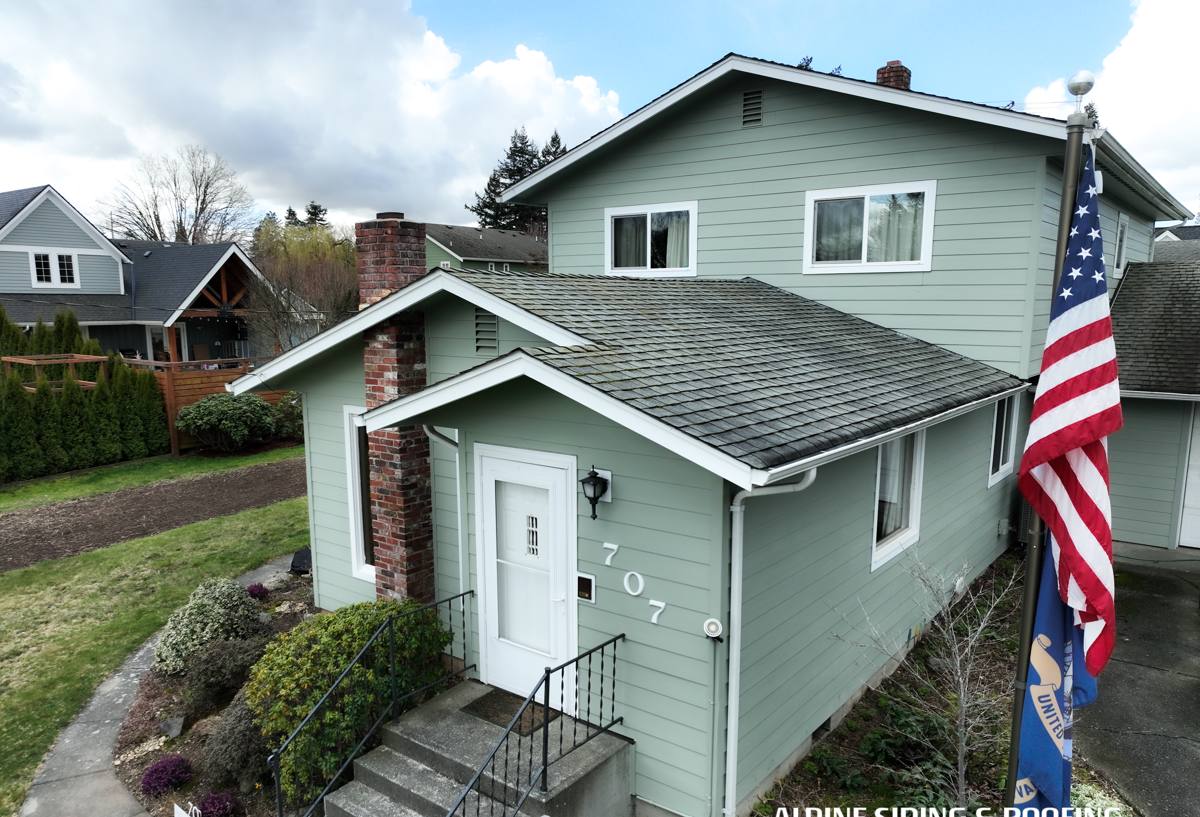
Asphalt shingles in this environment tend to hold moisture against the deck, which is exactly what moss and algae need to take hold. Once moss gets established, it lifts shingle edges, traps water underneath, and accelerates granule loss. Homeowners in Nooksack and the surrounding Lynden area often end up re-roofing or patching more often than they'd like, not because the roofers did a bad job, but because the material itself isn't built for standing up to sustained damp.
Why Metal Roofing Makes Sense Here
Metal roofing handles this climate differently than shingles do. It sheds water fast, dries quickly after a storm, and gives moss and algae almost nothing to grip onto compared to a shingle surface. That doesn't mean a metal roof will never see a streak of green in a shaded valley or north-facing slope, but it dramatically reduces the buildup that eats away at asphalt roofs year after year.
It also holds up better to the wind gusts that come through the valley during fall and winter storms, and it carries snow and ice load well when the region gets a cold snap. For a homeowner who's tired of dealing with moss treatments, granule loss, and shortened roof life, metal is a straightforward upgrade — not a trend, just a material better matched to what Nooksack weather actually does to a roof.
What It Doesn't Solve on Its Own
Metal roofing is not a substitute for good ventilation, proper flashing, or a well-built underlayment system. A metal roof installed poorly can still leak, still trap moisture in the attic, and still corrode prematurely at fastener points. The material helps, but the installation is what actually determines how the roof performs over the next 30 to 50 years.
Metal Roofing Systems We Install
Not every metal roof is the same product wearing a different color. The systems differ in how they're fastened, how they handle expansion and contraction, and how much maintenance they ask of the homeowner over time.
| System | How It's Fastened | Best For |
|---|---|---|
| Standing seam | Concealed clips, no exposed fasteners on the panel field | Long-term, low-maintenance roofs; steeper pitches; homes where fewer penetrations matter most |
| Exposed-fastener panel | Screws driven through the panel into the deck or purlins | Budget-conscious projects, outbuildings, shops, and simpler roof lines |
| Stone-coated steel | Interlocking panels, hidden fasteners | Homeowners who want the profile of shingle or tile with metal's durability |
Exposed-fastener systems cost less up front, but the screws and their rubber washers are wear items — they compress and harden over the years and eventually need attention or replacement. Standing seam avoids that maintenance point entirely because there's nothing punched through the panel face. For Nooksack's rain volume, we generally steer homeowners toward standing seam when the budget allows it, simply because fewer penetrations means fewer future leak points in a climate that gives water every opportunity to find one.
What a Correct Installation Actually Involves
Deck and Underlayment
Before any metal goes down, the deck has to be sound — no soft spots, no rot, no leftover fasteners from the old roof. Over that deck, we install a high-temperature synthetic underlayment, with self-adhered ice-and-water membrane at eaves, valleys, and any roof-to-wall transitions. In a climate that sees this much sustained rain, that membrane is not optional trim — it's the backup layer that keeps a roof dry if wind-driven water ever gets past the metal itself.
Fastening and Movement
Metal panels expand and contract with temperature swings, and if they're fastened rigidly in the wrong spots, that movement telegraphs as oil-canning, loosened seams, or stress cracks at fastener points over time. Standing seam clips are designed to let the panel float slightly; exposed-fastener systems need fasteners driven straight and to the correct torque — overdriven screws crush the washer and stop sealing.
Flashing and Penetrations
Chimneys, vents, skylights, and wall transitions are where most roof leaks actually start, metal or otherwise. Every penetration needs purpose-built flashing detailed to shed water downhill, not caulk relied on as a primary seal. Caulk fails; properly lapped metal flashing doesn't.
Ventilation
A metal roof over a poorly ventilated attic can trap condensation on the underside of the panels, which leads to rust from the inside out — a problem that has nothing to do with the roof's exterior durability and everything to do with airflow. We check ridge and soffit venting as part of every metal roofing job, not as an upsell.
Where We See Older Installs Go Wrong
Working in and around Nooksack and Lynden, we come across a lot of roofs — some our own past work, plenty installed by other crews. The problems that show up most often trace back to a handful of shortcuts:
- Fasteners driven at the wrong angle or torque, so the rubber washer never fully seals
- Missing or undersized ice-and-water membrane at valleys, where this region's rain volume concentrates
- Flashing that relies on caulk instead of properly lapped metal
- Panels fastened too rigidly, leading to oil-canning or seam stress after repeated temperature swings
- Attic ventilation ignored, leading to condensation rust that homeowners mistake for a bad panel
None of these are exotic failures — they're the predictable result of rushing a job that has a lot of small details, in a climate that punishes shortcuts faster than a drier one would.
Our Process, Start to Finish
1. On-Site Estimate
We walk the roof, check the deck condition where we can, measure pitch and complexity, and talk through which metal system actually fits the home and the budget — not just the one with the best margin.
2. Written Scope
You get a clear, itemized scope: tear-off or overlay, underlayment type, panel system, flashing details, and ventilation work, so there's no guessing what's included.
3. Tear-Off and Deck Check
Old roofing comes off, the deck gets inspected for rot or soft spots common on older Whatcom County homes, and any damaged sheathing is replaced before anything new goes down.
4. Underlayment and Flashing
Ice-and-water membrane at vulnerable areas, synthetic underlayment across the field, and new flashing at every penetration and transition.
5. Panel Installation
Panels go on to manufacturer spec, with attention to fastener torque or clip spacing depending on the system, and consistent seams and lines across the roof.
6. Final Walkthrough
We walk the finished roof with you, check ventilation is functioning, and answer questions about care and what to expect over the coming years.
Cost Factors on a Nooksack Home
Metal roofing costs more up front than asphalt shingles, and the final number depends on more than just square footage. Broadly, homeowners should expect metal roofing to run from moderate to a significant premium over shingles, with the spread driven by these factors:
| Factor | Why It Matters |
|---|---|
| Panel system | Exposed-fastener panel costs less than standing seam; stone-coated steel sits in between |
| Roof pitch and complexity | Steep pitches, multiple valleys, and dormers all add labor and material |
| Tear-off vs. overlay | Removing an old roof and repairing the deck adds cost but avoids trapping moisture under the new one |
| Ventilation upgrades | Adding or correcting ridge/soffit venting is a smaller line item that protects the whole investment |
| Panel gauge and coating | Heavier gauge steel and better paint systems cost more but last longer under sustained rain and UV exposure |
We'd rather walk a homeowner through these trade-offs honestly during the estimate than quote a number over the phone that doesn't reflect the actual roof.
Living With a Metal Roof in This Climate
Metal roofing asks less of a homeowner than asphalt does, but "less maintenance" isn't the same as "no maintenance." A few habits keep it performing well through Nooksack's wet seasons:
- Clear gutters and downspouts before the fall rains arrive, so water isn't backing up under eave flashing
- Keep overhanging branches trimmed back to cut down on shade and debris buildup that feeds moss
- Have fastener washers checked periodically on exposed-fastener systems, since they're the one true wear item
- Rinse off heavy moss or debris buildup rather than letting it sit and hold moisture against the panel
- Schedule a walk-through after major windstorms to catch any loosened flashing early
Why Hire a Crew That Already Works This Area
Nooksack and Lynden roofs don't face generic weather — they face this valley's specific mix of sustained rain, moss pressure, and wind that funnels through from the coast. A crew that installs metal roofs here regularly knows where the moss actually takes hold on local rooflines, which flashing details hold up over a Whatcom County winter, and how to size ventilation for the moisture load this area produces. That's not something you get from a crew passing through on a one-off job.
If you're weighing metal roofing for a home in Nooksack or anywhere around Lynden, we're glad to come take a look and give you a straight, no-pressure estimate — what your roof actually needs, what it would cost, and why. There's no obligation, just an honest read on your roof from a crew that works this area.