 Lynden Siding
 Full Siding Replacement for Maple Falls Homes
Maple Falls sits in the kind of setting that's easy on the eyes and hard on a house — tucked into tree cover with the kind of shade and moisture that make for a beautiful lot and a demanding exterior. When siding on a home in this area has reached the point of no return — cracked or delaminating panels, soft spots where a screwdriver sinks into the substrate, or paint that won't hold no matter how often it's redone — a repair isn't the fix. A full siding replacement is a bigger project than a patch job or a section swap, and it's also the point where a homeowner has the most control over what goes back on the wall and how well it performs for the next several decades.
This page is specifically about full siding replacement — tear-off of the existing cladding down to the sheathing, correction of whatever water-resistive barrier and flashing problems get uncovered along the way, and installation of new siding built for this region's climate. We serve Maple Falls as part of our regular Whatcom County service area, and this is what that job actually involves here.
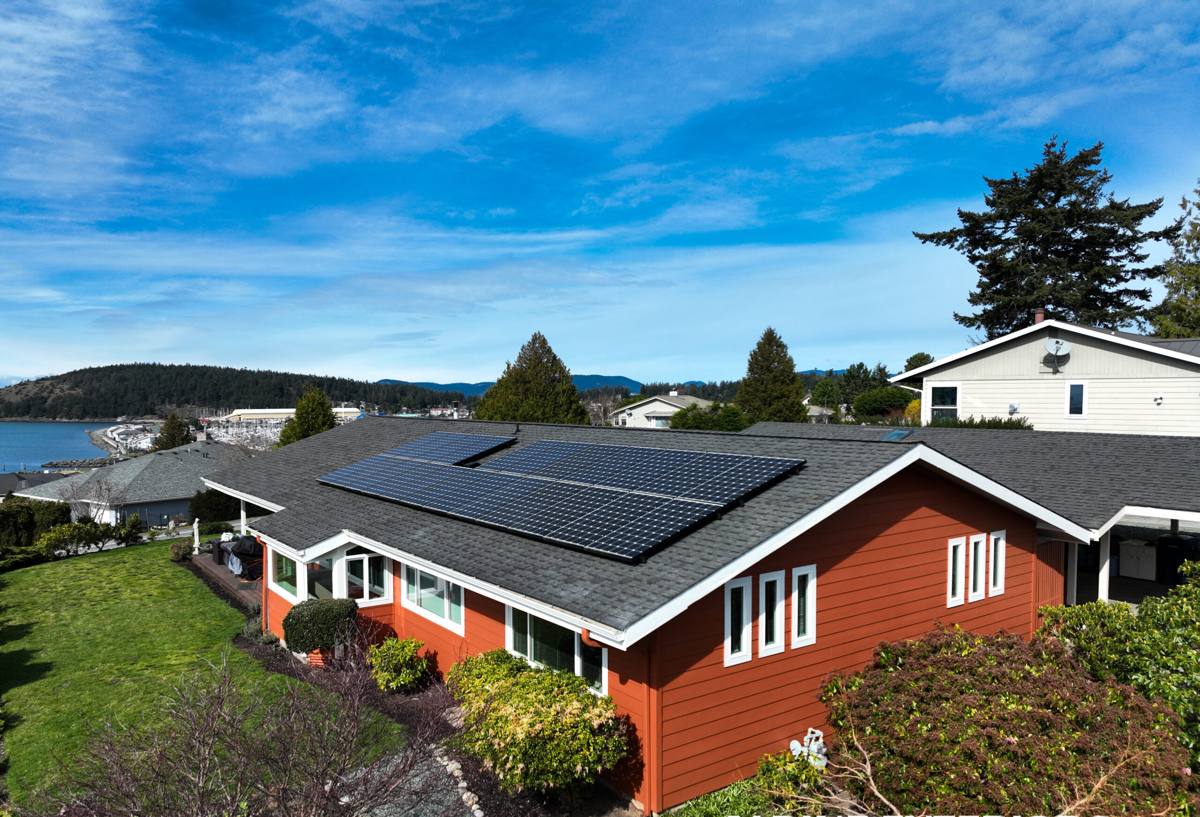
Why Maple Falls Homes Wear Out Siding Faster Than People Expect
Salt Air Working Its Way Inland
Whatcom County's marine air doesn't stop at the coastline. It moves inland across the whole region, and over years it accelerates corrosion on fasteners, flashing, and lower-grade trim hardware. It's a slower process this far from open water than right on the shore, but it's steady, and it's one more reason cheap fastener and trim choices don't hold up here the way they might in a drier inland climate.
Driving Rain That Hits Walls Sideways
Rain through the fall and winter months in this part of the state rarely falls straight down — wind pushes it sideways into wall assemblies, window flashing, and the seams where trim meets siding. A siding system that isn't detailed for wind-driven rain will let water in behind the cladding within a few wet seasons, no matter how good the material itself is rated to be. This is the single biggest factor in how a replacement should be installed, not just what it's made of.
Heavy Tree Cover and a Long Moss Season
Maple Falls has more shade and tree cover than most of the surrounding valley towns, and that combination of shade and near-constant moisture produces a moss and mildew season that can run close to year-round on north-facing and heavily shaded walls. Porous or moisture-retentive siding materials become growth surfaces over time in conditions like this, and a wall that never fully dries out between rain events ages differently than a wall that gets regular sun.
Signs a Repair Won't Cut It Anymore
Not every siding problem calls for a full tear-off. But certain signs mean patching individual boards or panels is just delaying a bigger job, often while trapped moisture does more damage to the sheathing underneath.
- Soft, spongy, or crumbling siding when pressed, especially near the bottom courses or around windows
- Visible cracking, delamination, or bowing across multiple sections rather than one isolated spot
- Paint or finish that won't hold for more than a season or two, even after prep and repainting
- Persistent moss or mildew staining that returns within weeks of cleaning
- Musty smells or visible staining on interior walls that share an exterior wall with problem siding
- Siding older than 25-30 years, particularly if it's a wood-based or older composite product
If a home is showing two or three of these at once, that's usually a sign the water-resistive barrier or sheathing behind the siding has already been compromised in places, not just the visible surface.
What a Full Replacement Actually Involves
Tear-Off and Inspection
Every full replacement starts with removing the existing siding down to the sheathing. This is the point where problems that were invisible from the outside — rot, trapped moisture, damaged or missing house wrap — actually show up. It's also the reason a per-square-foot estimate given without ever seeing behind the old siding should be treated as a starting point, not a final number.
Sheathing and Water-Resistive Barrier Repair
Any soft or rotted sheathing gets cut out and replaced before anything new goes back on the wall. The water-resistive barrier — the layer between the sheathing and the siding that's supposed to stop bulk water while letting the wall assembly dry — gets installed or repaired to current standards, with particular attention to how it integrates with window and door flashing.
Flashing and Drainage Details
This is where most long-term siding failures actually originate, and it's the detail a rushed or inexperienced install skips. Window head flashing, kick-out flashing at roof-to-wall intersections, and a drainage plane that lets any water that does get behind the siding find its way back out are what separate a siding job that lasts thirty years from one that starts leaking in five, regardless of the cladding material.
New Siding Installation
We install James Hardie fiber cement exclusively — more on why below. Installation follows Hardie's published fastening, clearance, and caulking specifications, which matters directly for warranty coverage as well as performance. Clearances at grade, decks, and roof lines get set correctly the first time, since those are the spots most likely to trap moisture if they're installed too tight.
Why We Install Only James Hardie Fiber Cement
We used to install a broader range of siding products. We narrowed to one system after seeing, repeatedly, what actually holds up through a full range of Whatcom County winters versus what looks good on a spec sheet and struggles on a real wall a few wet seasons in.
- Non-combustible core: Fiber cement doesn't feed a fire the way wood-based siding products can — a real factor for both safety and insurance underwriting.
- Factory-applied ColorPlus finish: The color coat is baked on under controlled factory conditions instead of applied in the field, which holds adhesion and color far longer under sustained moisture and UV exposure.
- Climate-engineered HZ product lines: Hardie's HZ5 formulation is built specifically for regions with significant moisture exposure and freeze-thaw cycling — a close match for Maple Falls and the surrounding county.
- Dimensional stability: Fiber cement doesn't swell, cup, or warp the way engineered wood siding can after repeated wetting cycles.
- A strong transferable warranty: Hardie backs the product with a robust warranty structure, provided the installation follows their published specs — which is also why correct installation isn't optional on our jobs.
We don't install LP SmartSide, vinyl siding, Cemplank, Allura, primed spruce, or cedar. Each has a place in the market and plenty of satisfied owners elsewhere. Our decision is a professional standard, not a judgment of every homeowner who's chosen differently: in a climate that puts this much sustained moisture and salt exposure on a wall, we'd rather stand behind one system fully than offer a lower-cost option that quietly shifts maintenance risk onto the homeowner down the line.
How Common Alternatives Compare for a Maple Falls Replacement
| Product | Trade-off in this climate |
|---|---|
| Vinyl siding | Panel seams and gaps give wind-driven rain an entry point; can warp under sustained UV and temperature swings |
| LP SmartSide / engineered wood | Wood-strand core is more moisture-sensitive at cut edges and fastener points, a real concern in a heavily shaded, high-moisture setting |
| Primed spruce or cedar | Needs ongoing paint and moisture maintenance to avoid rot; heavier long-term ownership cost than the upfront price suggests |
| Other fiber cement brands | May lack a climate-specific HZ-style line or the same factory-finish warranty depth as James Hardie |
What Drives the Cost of a Full Replacement
No two Maple Falls homes cost the same to re-side, and any number quoted before a real inspection is a rough range at best. The factors below are what actually move the estimate.
| Factor | Why it matters |
|---|---|
| Amount of hidden sheathing damage | Rot found during tear-off has to be cut out and replaced before new siding goes on; extent isn't fully known until the old siding is off |
| Home size and wall complexity | More corners, dormers, and roof-to-wall intersections mean more flashing detail work, not just more square footage |
| Trim and accessory scope | Fascia, corner boards, and window trim are often replaced alongside the field siding for a consistent, warrantied system |
| Access and site conditions | Tree-covered or sloped lots, common around Maple Falls, can affect staging, scaffolding, and equipment access |
| Existing paint or coating removal | Some older siding systems require extra prep or disposal handling depending on the coating |
Permitting and Scheduling for a Maple Falls Project
Full siding replacement in Whatcom County typically requires a permit, and timelines depend on the permitting office's current workload as much as the job itself. We handle permitting as part of the project scope so a homeowner isn't left tracking that down separately. Scheduling around this area's weather also matters — tear-off exposes the sheathing to the elements, so we plan the work to minimize how long a wall sits open, and we're realistic with homeowners about weather-driven delays rather than promising a fixed date regardless of conditions.
Checklist: What to Confirm Before Signing a Siding Replacement Contract
- Exactly what product and product line is being installed, in writing
- Whether the contractor pulls their own permits or expects the homeowner to
- How sheathing repair and change orders are priced if rot turns up during tear-off
- What flashing and water-resistive barrier details are included, not just "siding install"
- Who the manufacturer's warranty applies to, and whether installer certification affects coverage
- A realistic project timeline that accounts for local weather patterns, not just labor days
Why It Matters That We Already Work in This Area
A crew that installs siding across northern Whatcom County regularly sees how Maple Falls' particular mix of shade, moisture, and elevation plays out on real houses — which walls stay damp longest, where moss comes back fastest, and which flashing details actually get tested by this area's weather rather than a generic regional average. That's different from a crew that bids a job here occasionally and applies the same approach they'd use on a dry, open lot across the county. Knowing the area doesn't replace a proper inspection of any individual home, but it does mean fewer surprises and a system that's specified for the conditions the house actually faces.
If your Maple Falls home needs a full siding replacement, we're glad to take a look and put together a straightforward estimate — no pressure, no inflated urgency, just an honest read on the condition of the house and what it needs. Use the form below to request a free estimate.