 Lynden Siding
 Why Nooksack Homes Put Extra Demands on Windows
Nooksack sits in the Nooksack River valley, a few miles from Lynden and close enough to Sumas and the Canadian border that winter cold snaps and summer heat can both show up hard. Add in the marine-influenced air that moves inland off Puget Sound and the Strait of Georgia, and you get a climate that swings between soaking wet and quietly humid for most of the year. Whatcom County's driving rain, long moss season, and repeated freeze-thaw cycles don't just wear on siding and roofs — they work on window frames, seals, and glazing too, especially on older farmhouses and homes built before energy codes tightened up.
Windows that were fine when they were installed twenty or thirty years ago are often the weakest point in a Nooksack home's building envelope today. Single-pane glass, tired aluminum frames, and dried-out weatherstripping let conditioned air escape and let cold, damp air in — and in this climate, that moisture has somewhere to go: into wall cavities, onto sills, and into wood trim where it feeds rot and mildew.
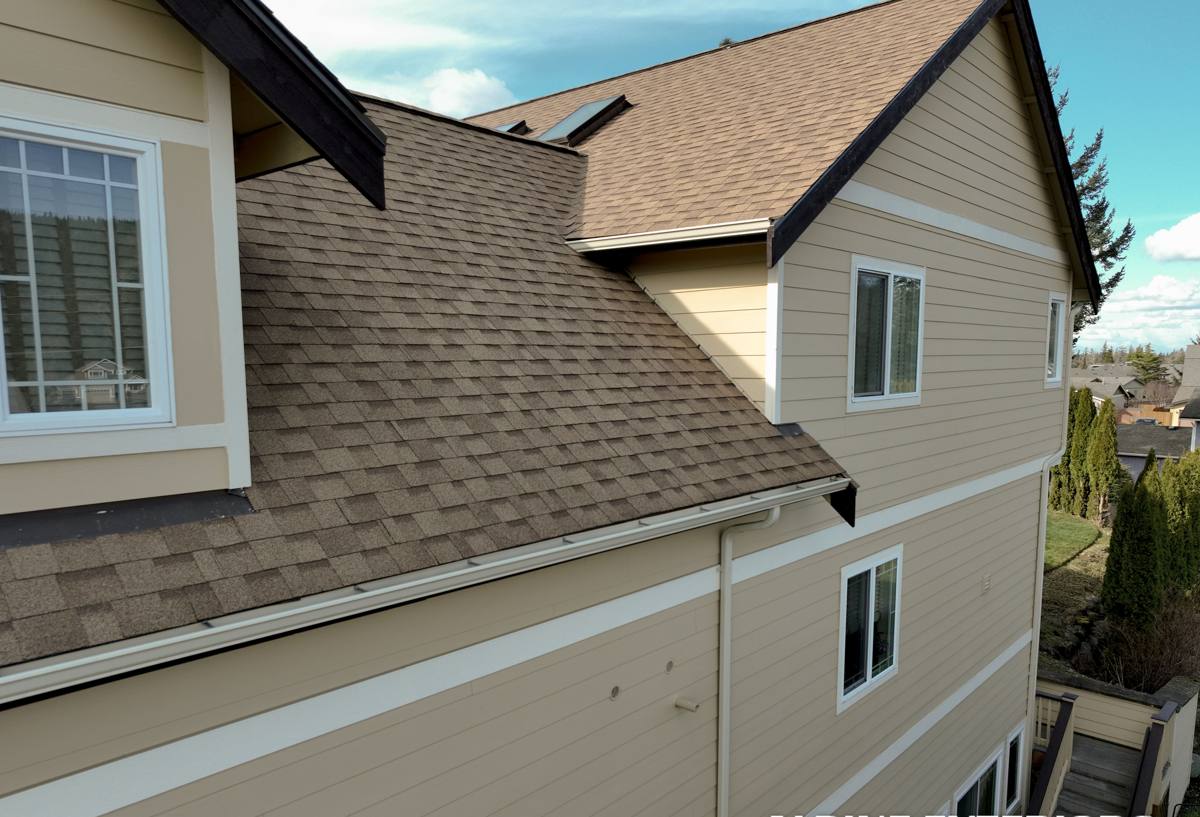
Signs Your Current Windows Are Costing You Money
Most homeowners don't think about their windows until something is visibly wrong, but by then the energy loss has usually been happening for years. Watch for:
- Condensation or fogging between panes, which means the seal has failed and the insulating gas fill is gone
- Drafts you can feel by hand near the frame, especially during Nooksack's wind-driven winter storms
- Soft or discolored wood on the interior sill or exterior trim
- Windows that are difficult to open, close, or lock — a sign the frame has shifted or swollen
- Visible moss or dark staining building up on exterior sills and drip caps
- A noticeable difference in room temperature near the window compared to the rest of the house
Any one of these can usually be lived with for a while. Together, they add up to a heating bill that's higher than it should be, and a slow, ongoing moisture problem that gets more expensive to fix the longer it's ignored.
What Actually Makes a Window Energy-Efficient
Glass and Gas Fill
The glass package matters more than most marketing suggests. In this climate we pay attention to two numbers: U-factor, which measures how well the window resists heat loss (lower is better), and Solar Heat Gain Coefficient, or SHGC, which measures how much solar heat passes through. A moderate SHGC works well here, since Whatcom County doesn't need to reject much summer sun but does need to hold onto winter heat. Double-pane windows with a low-E coating and argon gas fill are the practical baseline for this area; triple-pane adds more insulating value, but at added cost and weight.
Frame Material
The frame is where climate exposure really shows up over time. It has to handle constant moisture cycling — wet through fall and winter, drying out in short bursts of summer sun — without warping, rotting, or letting water track behind the siding. Frame choice gets its own comparison below because it matters that much.
Installation Detail
A high-performance window installed with poor flashing or a gapped sill pan will underperform a mid-grade window installed correctly. The same is true of siding work: the product only performs as well as the water management built in around it. Windows are no exception.
Frame Materials: What Holds Up in This Climate
There's no single "best" window for every house, but some materials are a clearly better fit for Nooksack's rain-and-moss climate than others. Here's how the common options compare:
| Frame Material | Moisture Resistance | Maintenance | Typical Lifespan | Best Fit |
|---|---|---|---|---|
| Vinyl | Good — won't rot, but seams and welds need to be quality-built | Low; occasional cleaning | 20-30+ years | Most Nooksack homes; strong overall value |
| Fiberglass | Excellent — very stable through wet/dry cycling, minimal expansion | Low | 30-40+ years | Homes with heavy sun and rain exposure, or where long-term stability matters most |
| Wood-Clad | Fair to good — depends heavily on clad quality and joint sealing | Higher; exposed wood needs monitoring | 20-30 years with upkeep | Homeowners prioritizing a traditional wood interior look |
| Bare Aluminum | Poor in this climate — conducts cold, prone to condensation | Moderate | Varies widely | Not something we recommend for Whatcom County's wet winters |
We're upfront about that last row: aluminum frames without a thermal break tend to perform poorly in a climate this wet and this cold in winter. That's less about the material being bad everywhere and more about it being a poor match for the moisture and temperature swings Nooksack sees every year. For most homes here, vinyl or fiberglass hits the right balance of cost, performance, and long-term durability.
Our Installation Process
Assessment and Measurement
We start by looking at each opening individually — not every window on a house is in the same condition. We check for existing rot, out-of-square openings (common in older Nooksack farmhouses), and how the window ties into the surrounding siding and trim, since that connection is where most leaks eventually start.
Removal Without Collateral Damage
Old windows come out carefully, with attention to protecting the siding, trim, and interior finishes around the opening. If we find soft sheathing or rot behind the old frame — which does turn up on occasion in homes that have taken years of driving rain — we address it before the new window goes in, not after.
Flashing and Water Management
This is the step that separates a window that lasts thirty years from one that leaks in five. Every opening gets a sill pan and properly lapped flashing so that any water reaching the frame is directed back out, not into the wall cavity. In a climate with as much sustained rain as Whatcom County gets, this detail isn't optional.
Setting, Sealing, and Insulating
The new window is set level and plumb, shimmed correctly so it operates smoothly, and insulated around the frame — not overpacked with spray foam, which can bow a frame out of square. Exterior sealant and interior air sealing both get attention, since air leaks and water leaks are separate problems that both need solving.
Finish and Cleanup
Trim is reinstalled or replaced to match, hardware is tested and adjusted, and the site is cleaned up — old windows and packaging hauled off, not left for the homeowner to deal with.
What Affects the Cost
Window replacement pricing varies from house to house, but the main cost drivers stay consistent. This isn't a quote — it's a way to understand where the money actually goes:
| Cost Factor | Why It Matters |
|---|---|
| Number of openings | Straightforward — more windows means more material and labor |
| Frame material | Vinyl is typically the most budget-friendly; fiberglass and wood-clad cost more upfront |
| Glass package | Triple-pane, upgraded low-E coatings, and specialty tints add cost over standard double-pane |
| Condition behind the old window | Rot repair or reframing adds labor that can't always be seen until the old window is out |
| Window size and type | Large picture windows, bays, and custom shapes cost more than standard double-hung or slider sizes |
| Access and site conditions | Second-story or hard-to-reach openings take more time and equipment |
Why Local Nooksack Experience Matters
Window replacement isn't just a product swap — it's construction work on a building envelope that has to keep performing through another Whatcom County winter. A crew that already works in and around Nooksack has seen how the local housing stock is built, how older farmhouses and mid-century homes in this area tend to be framed, and where the recurring trouble spots are — usually wherever wind-driven rain hits an unprotected corner or a window that was never flashed correctly in the first place.
That local familiarity also means fewer surprises during the job. We know what building department expectations look like in this part of the county, we know how siding and window work needs to integrate so the two details don't fight each other, and we're not learning the region's climate on your house.
Keeping New Windows Performing Long-Term
A correctly installed, energy-efficient window is a low-maintenance product, but low-maintenance isn't no-maintenance in a climate that keeps moss growing on north-facing surfaces for months at a time. A little seasonal attention goes a long way:
- Rinse pollen, moss spores, and grime off glass and frames a couple of times a year
- Check exterior caulking annually for cracks or gaps, especially after a hard winter
- Keep gutters and downspouts clear so water isn't sheeting down across upper windows
- Vacuum weep holes and tracks on sliders and double-hungs so drainage paths stay open
- Operate locks and hardware periodically so they don't seize up between seasons
- Watch for condensation between panes — it's the clearest sign a seal has failed and won't self-correct
None of this is heavy work, but skipping it is how a good window installation slowly turns into a problem installation ten or fifteen years down the road.
If your windows are drafty, fogged, hard to operate, or just old enough that you've been wondering whether it's time, we're happy to take a look and talk through honest options for your home. Fill out the form below for a free, no-pressure estimate.