 Lynden Siding
 Window Installation in Blaine: A Coastal Border Town's Real Demands
Blaine sits at the northern edge of Whatcom County, close enough to Semiahmoo Bay and Drayton Harbor that salt air is part of daily life for most homes in town, not just the ones with a water view. It's also the last stop before the Canadian border, a stretch of coastline where Pacific storm systems come ashore with real force. Windows take the brunt of that exposure more directly than almost any other part of a house — they're the one component that has to be watertight, operable, and airtight all at the same time, sitting in an opening cut straight through the wall assembly. Get the installation wrong here and the climate finds the gap fast.
We're based just up the road in Lynden, and Blaine is regular territory for our crew. We install and replace windows, and we handle siding, roofing, and decks as well, treating the whole exterior as one connected system rather than separate trades that don't talk to each other. This page covers what window installation specifically needs to hold up in Blaine, what a correct job actually involves, and how our process works for homes in this part of the county.
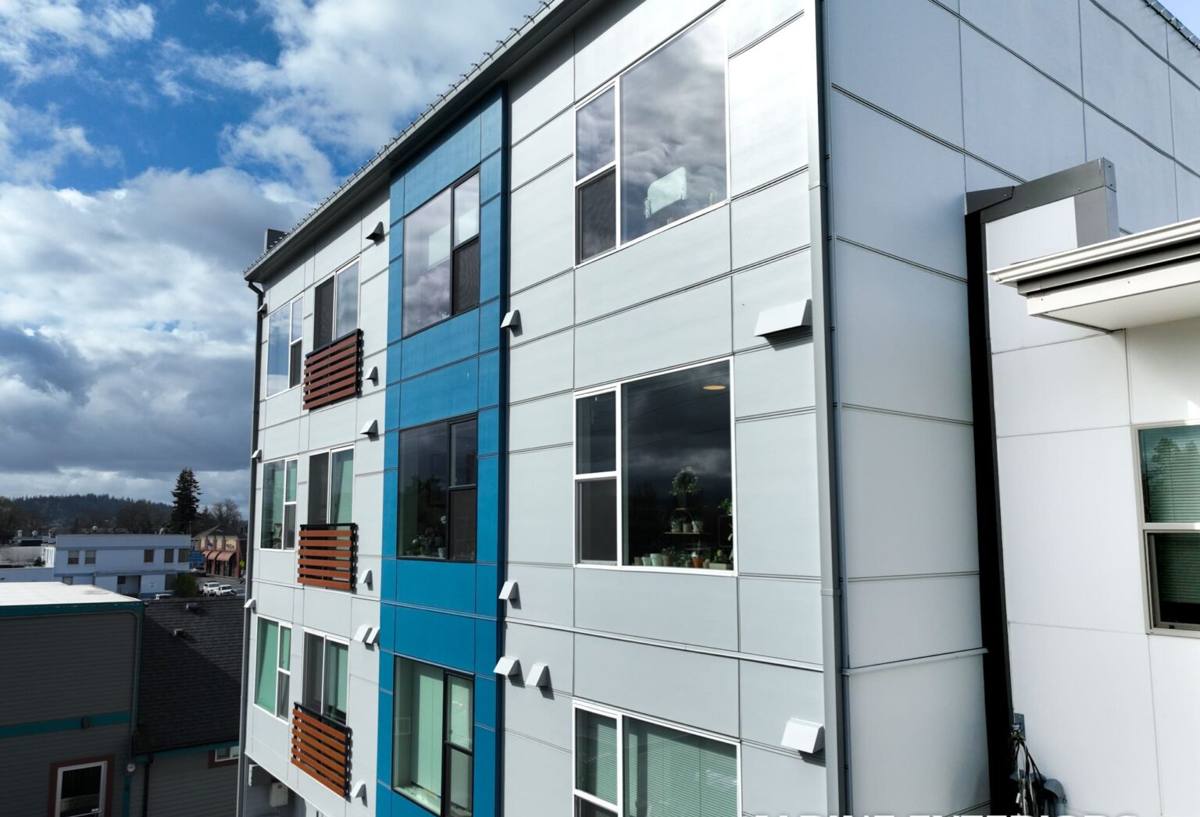
What Blaine's Climate Demands From a Window Installation
Salt Air and Hardware Corrosion
Homes in Blaine, especially anywhere near the bay or harbor, take a steadier dose of salt-laden air than towns set further inland. Salt accelerates corrosion on window hardware, screen frames, and lower-grade fasteners, and it works faster on a window facing open water than one tucked on a sheltered, inland wall. A window with corroding hardware doesn't just look bad — it stops latching and sealing correctly, which turns a hardware problem into a moisture problem.
Wind-Driven Rain and Flashing
Storms coming off the water in Blaine don't drop rain straight down. Wind pushes it sideways into window flashing, head trim, and the sill pan beneath the frame, and that sideways load is a harder test of the installation than of the window product itself. A well-made window with sloppy flashing will leak in a town like this; a modest window installed with a correctly pitched sill pan and properly lapped flashing usually won't. Most of the water damage we find around windows on service calls traces back to an installation shortcut, not a bad window.
A Moss Season That Runs Most of the Year
Mild temperatures and near-constant moisture give moss and mildew a long growing season in Blaine, and window sills are one of the first places it shows up — they hold water longer than a vertical wall surface and sit in the shade more often than people expect. On wood-framed windows, that moisture supports slow rot at the sill and lower corners well before it's visible from the street. It's a gradual failure, which is exactly why it gets missed until paint starts failing or a sill feels soft underfoot.
Choosing the Right Window Frame Material for This Coast
There's no single right answer for every home — budget, exposure, and how long you plan to stay in the house all factor in. What matters in Blaine specifically is understanding how each frame material actually behaves under sustained salt exposure and near-constant moisture, not just how it performs on a spec sheet written for a drier climate.
| Frame Material | Behavior in Salt Air and Moisture | Typical Maintenance | Realistic Lifespan Here |
|---|---|---|---|
| Vinyl | Won't rot or corrode; weld and seam quality matters more this close to the water | Low; occasional track and weep-hole cleaning | 20-30 years |
| Fiberglass | Dimensionally stable, resists moisture and salt-driven corrosion well | Low | 30-40+ years |
| Wood, painted or clad | Attractive but vulnerable to moisture and salt at joints and sills without diligent upkeep | Higher; regular paint or finish maintenance | 15-25 years depending on upkeep |
| Aluminum | Conducts cold and is one of the more corrosion-prone options unless finished for coastal exposure | Moderate to high | 15-25 years in this environment |
We'll walk you through which frame material fits your home's exposure, budget, and the look you want, rather than defaulting to whichever product is easiest to sell. A window facing the water and one on a sheltered, landward wall of the same house don't always call for the same answer, and we'll say so.
Full-Frame vs. Insert Replacement for Blaine Homes
One of the first decisions on any window project is whether to do a full-frame replacement, which removes the old window down to the rough opening and rebuilds the flashing from scratch, or an insert replacement, which fits a new window into the existing frame. Insert replacement is faster and less invasive to the surrounding siding and trim, and it works well when the existing frame is structurally sound and was properly flashed to begin with. Full-frame replacement costs more and takes longer, but it's the honest answer when there's already moisture damage at the sill or jambs, or when the original flashing wasn't done correctly.
That decision matters more in Blaine than in a sheltered inland town, because a frame that's already taken years of salt-laden wind and driving rain is more likely to be hiding damage behind trim that still looks fine from the outside. We open things up and look before we recommend either path — we won't seal a moisture problem behind a new window just because insert replacement is the faster job.
What a Correct Installation Involves
Most window failures in this climate aren't failures of the window itself — they're shortcuts in the flashing and sealing details that don't show up until a wet season or two later. On every job in Blaine, that means:
- A properly pitched sill pan that sheds water outward instead of letting it pool under the frame
- Head flashing integrated with the housewrap or building paper above the window, lapped correctly for water to shed downward and outward
- Jamb flashing tied into the surrounding wall assembly rather than relying on caulk alone to do that job
- Weep holes and drainage paths left clear and functional, not sealed shut during installation
- Corrosion-resistant fasteners and hardware rated for sustained salt exposure, not standard-grade parts because they're cheaper
- Insulation and air sealing around the frame that doesn't trap moisture against the framing
- A finished opening checked for square and level before trim goes back on, so the window operates smoothly for years, not just on install day
None of these add meaningfully to the cost of a job relative to the window itself, but skipping any one of them is exactly what turns a window that should last decades into one that's leaking behind the wall within a few years — and in a town this exposed, that timeline moves faster than homeowners expect.
How We Approach a Window Installation in Blaine
The process is the same discipline every time, adjusted for what a given house and wall orientation actually need:
- On-site assessment. We look at the existing windows, the condition of the surrounding frame and siding, and which walls take the most direct wind and rain exposure.
- Honest scope and options. We'll tell you whether insert or full-frame replacement fits your situation, walk through frame material trade-offs for your budget, and flag anything else we see — moisture damage, siding issues, roof-to-wall transitions — that's worth addressing at the same time.
- Careful removal. Old windows come out without tearing up more of the surrounding wall than necessary, and we check the opening for hidden rot or damage before anything new goes in.
- Flashing and sill pan work. This is where most of the long-term performance of the installation actually comes from, and it's not a step we compress to save time.
- Installation and finish. New windows are set, sealed, insulated, and trimmed, with hardware and fasteners chosen for this coastal environment specifically.
- Final check. Every window gets operated, checked for square, and inspected for a clean, weathertight finish before we call the job done.
Signs a Blaine Home Needs Window Attention
- Visible fogging or condensation between panes, which usually means a failed seal on a double- or triple-pane unit
- Drafts or a noticeable temperature difference near a closed window
- Soft, discolored, or spongy trim and sill material, especially on water-facing or shaded walls
- Difficulty opening, closing, or latching a window that used to operate smoothly
- Rust streaking or stiff, corroded hardware and screen frames
- Visible gaps, cracked caulk, or daylight around the frame from inside
- Water staining on interior wall or ceiling surfaces near a window
Any one of these is worth a professional look before another wet winter off the water works on it further. Caught early, most point to a repair or resealing job. Left alone, several of them point to water damage already working on the surrounding wall framing.
Why a Local Whatcom County Crew Matters in Blaine
A crew that installs windows across this county through every season sees how salt air, wind-driven rain, and moss actually behave on real houses over years, not just how a product performs on a spec sheet. That shows up in practical decisions on install day: how much extra attention a water-facing wall in Blaine needs compared to a sheltered one, how a sill pan should be pitched for the amount of wind-driven water a given elevation actually sees, and which flashing details are worth the extra time so you're not dealing with a leak two winters later. It also means working with someone who already understands the difference between a border-town coastal property and a more sheltered inland home, and doesn't apply the same approach to both.
Beyond Windows: The Rest of the Exterior
Windows are our focus on this page, but the same climate that wears on a window wears on the rest of a Blaine home's exterior too. We also handle siding, roofing, and deck construction, and on siding specifically we install James Hardie fiber cement as our standard, chosen for how it holds up against sustained salt exposure and moisture compared to lower-cost alternatives. If a window project turns up moisture damage in the surrounding siding or trim, or a roof-to-wall transition that's letting water in above a window, we can address it as part of the same conversation instead of sending you to find a second contractor.
If your Blaine home has windows that are fogging, drafty, hard to operate, or showing rust and rot around the frame, we're glad to take a look and give you a straightforward, honest read on what it actually needs. Reach out using the form below to schedule a free, no-pressure estimate.