 Lynden Siding
 Siding Built for the Maple Falls Environment
Maple Falls sits in the wooded foothill country east of Lynden, where the tree canopy is heavier, the shade is deeper, and the air stays damp longer into the day than it does out on the open valley floor. That combination matters more for siding than most homeowners realize. Whatcom County as a whole deals with a marine-influenced climate that brings driving rain and long stretches of overcast, moisture-laden air. In a shaded, forested setting like Maple Falls, that moisture has fewer chances to burn off between storms, and it shows up on siding as a long moss season, slow-drying wall surfaces, and paint that fails years before it should on cheaper products.
None of this means a home in Maple Falls needs anything exotic. It means the siding needs to be genuinely water-resistant rather than just water-resistant on a spec sheet, and it needs to be installed with the moisture management details done correctly the first time, because callbacks on a wooded, sometimes gravel-access lot are more expensive for everyone than getting it right up front.
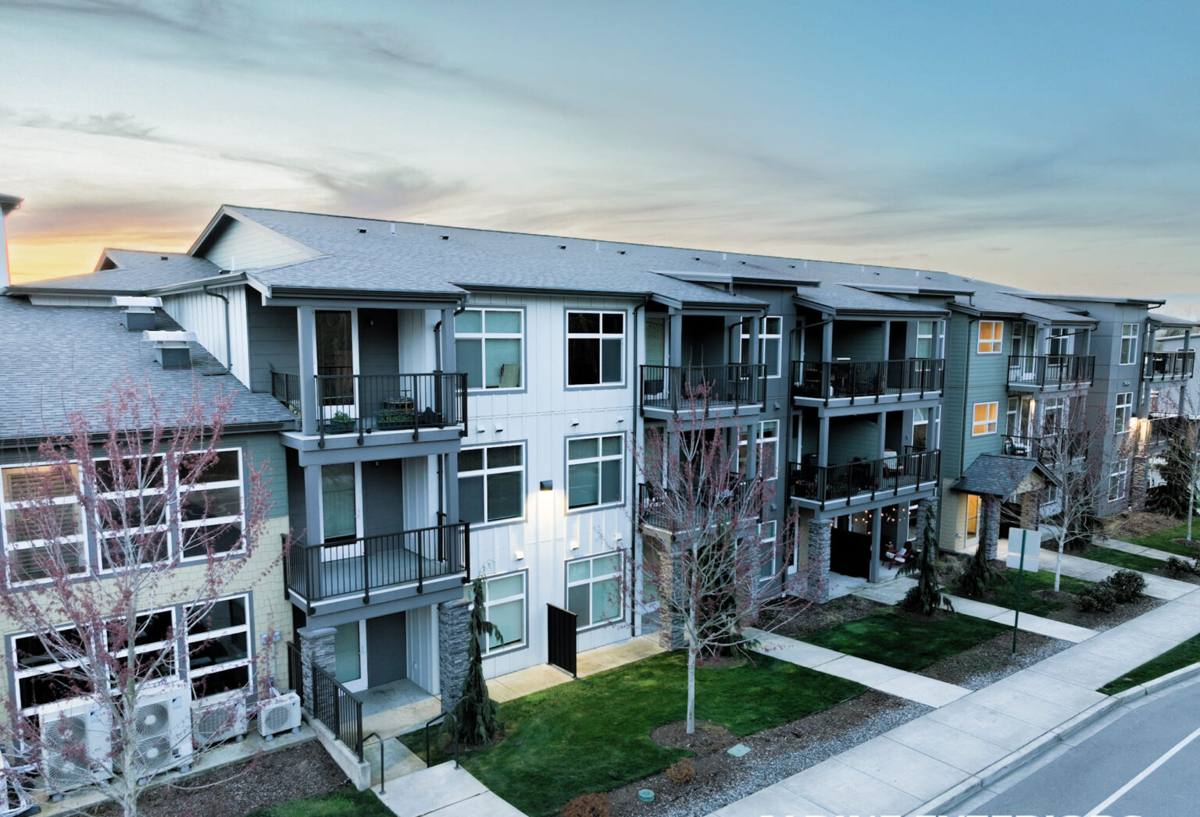
What Fiber Cement Actually Solves Here
Fiber cement siding is a mix of cement, sand, and cellulose fiber, pressed and cured into planks and panels. Unlike wood-based siding products, it does not have a wood core that can wick moisture and swell, and it is not vulnerable to the kind of rot that shows up on shaded, slow-drying walls after a few Whatcom County winters. It is also non-combustible, which is a real consideration for homes tucked into tree cover toward the Mount Baker corridor, where wildfire risk in dry stretches is a legitimate part of home planning even in a normally wet region.
For Maple Falls specifically, the properties that matter most are:
- Moisture stability — fiber cement does not swell, cup, or delaminate the way wood-based sidings can when they stay damp for extended periods under shade.
- Factory-cured finish — a baked-on factory finish holds color and sheds water better than field-applied paint, which matters when a wall doesn't get much direct sun to help it dry.
- Non-combustible core — one less variable to worry about for homes near heavier tree cover.
- Dimensional stability — the material doesn't expand and contract with humidity swings the way wood products do, so joints and caulk lines hold up longer.
Why We Install Only James Hardie Fiber Cement
There are other fiber cement and fiber-cement-adjacent products on the market, and some of them are reasonable products in the right application. We standardized on James Hardie specifically because of three things: the ColorPlus factory finish system, the HardieZone engineering that accounts for regional climate differences, and a warranty structure that's backed by a large, established manufacturer rather than a smaller regional player. For a climate like Whatcom County's — wet, shaded in many areas, with a real moss season — those differences aren't marketing points, they're the reason the siding still looks right in year fifteen instead of year seven.
We don't install vinyl, LP SmartSide, primed wood, or off-brand fiber cement panels, and we're upfront about why: we'd rather stand behind one system we know performs in this climate than offer a menu of products with different failure modes, different warranty terms, and different installation tolerances for our crews to track.
What Correct Installation Actually Involves
Fiber cement siding is only as good as the installation behind it. Most of the problems we get called out to look at on other contractors' work trace back to installation shortcuts, not the material itself. On a Maple Falls home, correct installation means:
Moisture management behind the siding
A weather-resistant barrier goes on the wall sheathing before any siding, with proper lapping and flashing at every window, door, and penetration. This is the layer that actually keeps water out of the wall assembly — the siding itself is the second line of defense, not the first.
Correct clearances and fastening
Hardie's installation specs call for specific clearances from grade, roof lines, and decks, along with specific fastener patterns and caulk joints. Skipping these clearances is the single most common shortcut that leads to moisture problems later, especially on a shaded lot where wood trim and ground contact points stay damp longer.
Trim and joint detailing
Butt joints, corners, and trim transitions need to be caulked and detailed to shed water, not just to look clean on installation day. On a property with heavy tree cover, these are the spots where moss and mildew show up first if they're not done right.
| Product Line | Best For | Notes for This Climate |
|---|---|---|
| HardieZone HZ5 | Wetter, harsher climates like the Pacific Northwest | Engineered moisture and freeze-cycle performance for regions like Whatcom County |
| HardiePlank Lap Siding | Most single-family homes | Traditional lap profile, wide color and texture range |
| HardieShingle | Accent areas, gables, dormers | Staggered or straight-edge shingle look without the maintenance of real wood shingles |
| HardiePanel | Modern facades, accent walls | Vertical panel look, often paired with batten trim |
Our Process From Estimate to Finished Job
- On-site inspection of the existing siding, trim, and any moisture or rot damage found during tear-off.
- A written estimate that breaks out material, labor, and any repair work needed to the sheathing or framing.
- Removal of the old siding and inspection of the wall assembly before anything new goes up — this is where hidden moisture damage gets caught.
- Installation of the weather-resistant barrier, flashing, and trim, all detailed for proper water shedding.
- Installation of the James Hardie siding to manufacturer specifications, including correct clearances and fastening.
- Final caulking, touch-up, and a walkthrough before we consider the job done.
On wooded or limited-access properties, which are common around Maple Falls, we account for site access, staging space, and tree cover during scheduling so the job isn't slowed down by surprises on the day crews show up.
Living With Fiber Cement in a Shaded, Moss-Prone Setting
Fiber cement is low-maintenance compared to wood, but "low-maintenance" doesn't mean "no maintenance," especially under heavy tree cover. A little seasonal attention keeps a Hardie installation looking right for decades:
- Keep gutters and downspouts clear so water isn't running down wall surfaces during heavy rain.
- Rinse siding annually to remove pollen, dust, and early moss or algae growth before it takes hold.
- Trim back vegetation and tree limbs that keep wall sections in constant shade and slow drying time.
- Inspect caulk joints at trim and penetrations every year or two, and re-caulk as needed.
- Address any moss or mildew promptly with a gentle wash rather than pressure-washing directly into joints and seams.
Cost Factors for a Maple Falls Project
Every home is different, and we don't quote a job without seeing it, but the variables that most often move the price on a project in this area are:
| Factor | Why It Matters |
|---|---|
| Home size and wall complexity | More linear footage, corners, and trim detail means more material and labor |
| Existing siding tear-off | Removing old siding, especially if there's hidden rot, adds time and disposal cost |
| Site access | Wooded lots, gravel driveways, or limited staging space affect how efficiently crews can work |
| Trim and accent choices | Shingle accents, board-and-batten sections, or custom trim add labor beyond standard lap siding |
| Repair work discovered during tear-off | Rotted sheathing or framing found once old siding comes off needs to be repaired before new siding goes on |
Why It Matters to Hire a Crew That Already Works in Maple Falls
A crew that regularly works this part of Whatcom County already understands the practical realities that don't show up in a generic estimate: gravel and shared driveways that need room for material delivery, well and septic systems that have to be worked around rather than assumed away, permitting through the county rather than a city building department, and the reality that a wooded lot dries out differently than an open one in town. That local familiarity shows up in fewer surprises mid-project and a more accurate estimate from the start.
It also matters for something less obvious: knowing which details actually matter for this climate. A crew installing siding across drier regions of the state doesn't necessarily carry the same instincts about clearance heights, flashing details, and drying time that a crew working Whatcom County's wetter, shadier lots day in and day out does. That's not a knock on other contractors — it's just a different set of conditions, and conditions here reward attention to moisture detailing that other climates don't demand as strictly.
Get a Straightforward Estimate
If you're weighing a siding replacement for a home in Maple Falls, we're happy to come take a look, walk the exterior with you, and give you an honest read on condition, options, and cost — no pressure, no upsell script. Fill out the form below to schedule a free estimate.