 Lynden Siding
 Composite Decking Built for Maple Falls' Foothill Climate
Maple Falls sits up the Mount Baker Highway corridor east of Lynden, where the flat, open farmland of the valley floor gives way to denser tree cover and rising foothill terrain. That change in setting matters more than people expect when it comes to an outdoor deck. A deck has no roofline or siding to shield it — it sits directly under the sky, and in Maple Falls that sky delivers more shade, more standing moisture, and a longer wet season than a comparable deck out on open ground closer to town.
We're based in Lynden, and we've done enough deck work up this corridor to know that a deck built for Maple Falls needs different priorities than one built for a sunny, open lot. This page covers composite decking specifically for this area: what the climate actually does to a deck here, what a correct composite install involves, and how our process works when the job is up in the foothills rather than out on the valley floor.
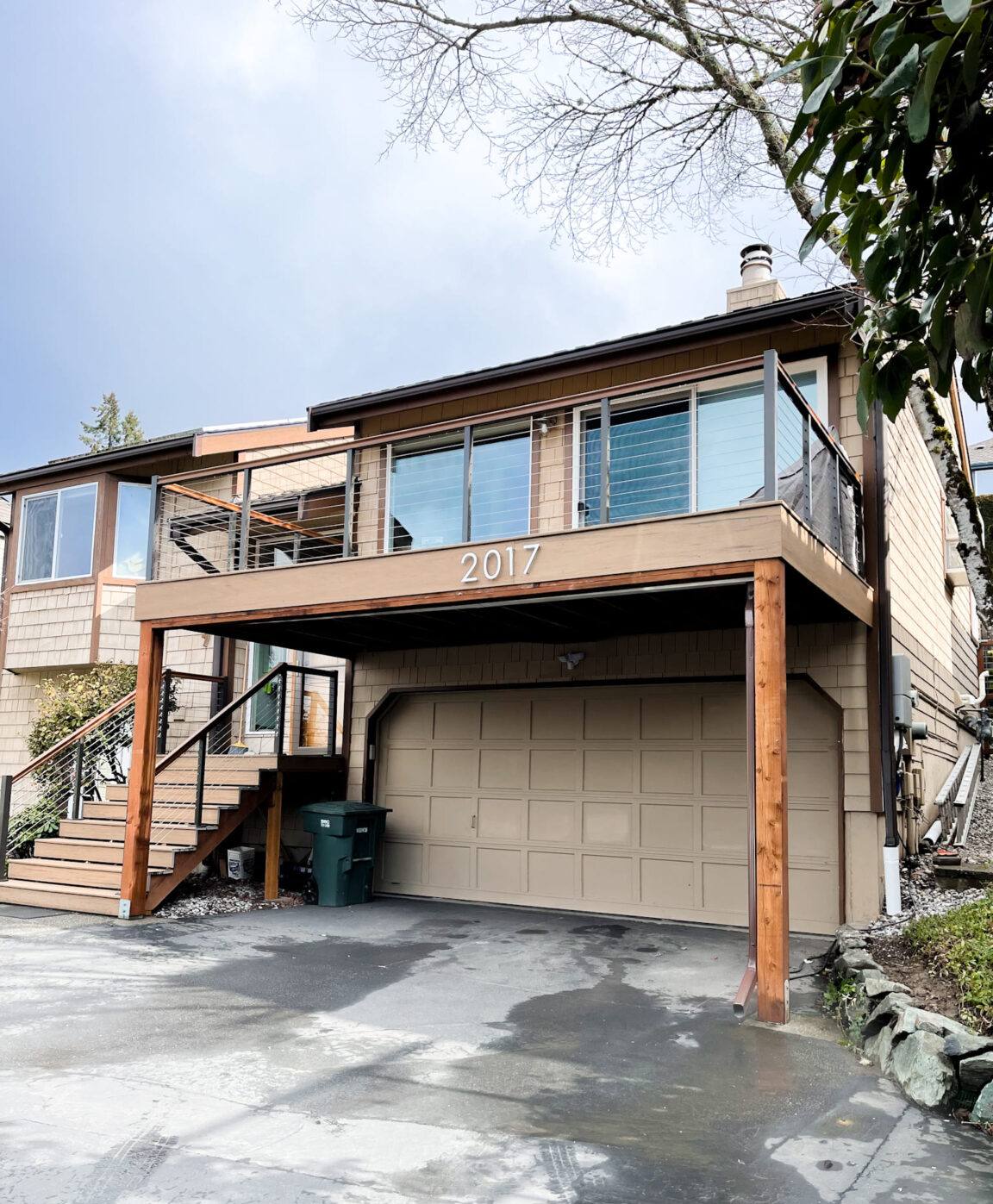
What This Corner of Whatcom County Puts a Deck Through
A Moss Season That Runs Longer Under the Tree Cover
Heavier tree cover means more shade, and shade means a deck surface that stays damp longer after every rain instead of drying out between storms. Moss and mildew take hold fastest on surfaces that hold moisture, and a shaded deck under mature trees is about as good a growing surface as it gets. Homes further out toward open farmland dry out faster between wet spells; a wooded Maple Falls lot often doesn't get that break, which stretches the moss season out closer to year-round on north-facing or heavily shaded decks.
Driving Rain and Runoff Off the Foothills
Rising terrain pushes incoming weather systems up and wrings more moisture out of them, so this part of the county tends to see a wetter pattern than towns sitting flat on the valley floor. That shows up as sustained rain events rather than quick passing showers, and on a sloped or elevated lot, it also shows up as runoff moving across and under a deck's substructure during heavy storms. A deck built without that runoff path in mind ends up with water sitting against framing it was never meant to sit against.
Salt Air, Even This Far Inland
Maple Falls sits well inland from Bellingham Bay and the coastline, and salt exposure here is genuinely lighter than it is on Whatcom County's coastal towns. It isn't zero, though — marine air moves across the whole region, and over years it still plays a role in corrosion at exposed fasteners and metal hardware. It's a smaller factor here than moss and moisture, but it's not a reason to skip corrosion-resistant hardware on a deck that's meant to last.
Why Composite Holds Up Better Than the Alternatives Here
Homeowners in this area generally weigh three options: wood, capped composite, and cellular PVC. Given how much shade and sustained moisture a Maple Falls deck deals with, the gap in real-world performance between these materials shows up faster here than it would on a drier, sunnier lot.
Wood
Pressure-treated lumber and cedar look good when new and cost less up front, but both need regular sealing or staining to resist moisture, and both are the first materials to show soft spots, graying, and moss growth once maintenance slips — which happens easily on a deck that's harder to keep dry in the first place. In a heavily shaded setting, wood's maintenance window shrinks; it needs attention more often than the same board would on an open, sunny lot.
Capped Composite
Capped composite boards have a plastic shell wrapped around a wood-fiber composite core, which resists moisture absorption, staining, and mildew growth far better than uncapped composite or bare wood. That cap layer is the reason we recommend composite for a shaded, wet lot specifically — it's doing real work in exactly the conditions Maple Falls sees most of the year, not just holding up better in a lab test.
Cellular PVC
PVC decking contains no wood fiber at all, so there's nothing for moisture to work into even at cut ends or fastener holes. It costs more than composite and can flex more under concentrated point loads, but on a deck that sits in near-constant shade and dampness, some homeowners decide the added moisture resistance is worth the extra cost. It's a reasonable option here; it's just not always the necessary one.
| Material | Handling Shade & Moisture | Moss Resistance | Upkeep |
|---|---|---|---|
| Cellular PVC | Excellent — no wood fiber to absorb moisture | Strong, smooth non-porous surface | Occasional washing |
| Capped composite | Strong — cap layer resists moisture and staining | Good on most product lines | Occasional washing |
| Uncapped composite | Moderate — some absorption at exposed fiber | Fair; more prone to buildup in shade | Periodic cleaning |
| Cedar | Moderate — needs sealing to hold up in sustained shade | Fair when sealed and maintained | Regular oiling or sealing |
| Pressure-treated wood | Weak against sustained shade and moisture over time | Poor without regular treatment | Regular sealing or staining |
What a Correct Composite Deck Install Involves in Maple Falls
The decking boards get most of the attention, but on a shaded, moisture-heavy lot, what's underneath the surface determines how long the deck actually lasts. A build done right for this area includes:
- Framing sized and rated for sustained moisture exposure, not a generic span table pulled for a drier site
- Corrosion-resistant fasteners and hardware throughout, since even reduced salt exposure adds up over years
- Correct board gapping so the composite can shed water and dry between rain events instead of trapping it against the cap
- Grading and drainage planning underneath the deck, especially on sloped lots where runoff needs a clear path around and away from the framing
- Extra ventilation clearance under low decks on shaded lots, since airflow is what actually dries a substructure between storms — shade alone won't
- Proper ledger flashing where the deck ties into the house, one of the most common points where moisture gets into a structure that otherwise looks fine
- Hidden fastener systems on the composite surface where the product supports it, for a cleaner deck and less exposed metal
- Joist spacing matched to the specific composite product's span rating rather than a standard wood-deck layout
Skip any of these and the deck usually looks fine for the first year or two. The gap shows up later — a joist that's stayed damp too long, standing water where drainage should have carried it off, or moss creeping in at the shaded edge of the deck first.
Choosing the Right Composite Board for a Shaded, Wet Lot
Cap Type and Surface Texture
Most composite lines now offer a full cap (plastic shell on all four sides of the board) versus a three-sided cap that leaves the underside exposed. On a lot with this much sustained moisture, a full cap is worth the difference — it means no exposed wood-fiber core anywhere on the board, including the bottom face sitting closest to a damp substructure.
Color Choice Under Heavy Tree Cover
Darker composite colors absorb more heat and dry faster after rain in full sun, but under consistent tree cover that heat advantage mostly disappears — a shaded deck doesn't get enough direct sun for color to make much difference in drying time. That opens up the color choice to whatever fits the house, without the same fade and heat concerns a sunnier lot would raise.
Hidden Fastener Systems
Composite boards installed with hidden fastener clips instead of face screws leave fewer entry points for moisture at the board surface and less exposed metal overall. On a deck that stays damp longer than most, that's a meaningful difference over the life of the deck, not just a cosmetic upgrade.
How Our Process Works
We start with a site visit to look at the actual conditions on your lot — tree cover and shade pattern through the day, grade and drainage around the deck footprint, and how exposed or sheltered the site is relative to the rest of the property. From there we walk through composite options that fit the budget and how the deck will be used, and we're straightforward about where a full-cap board or PVC makes more sense than a lighter-duty composite line.
Permitting for a deck in this part of Whatcom County follows standard setback, structural, and elevation requirements, and we handle that as part of the job. Once permitted, we build the substructure and framing first — sized and fastened for the actual moisture and drainage conditions on your lot — then the composite decking surface, railing, and any stairs. We close out with a walkthrough covering what the specific board you chose needs going forward, which for most composite lines is minimal but not nothing.
What Your Composite Deck Still Needs From You
Composite decking is lower-maintenance than wood, not maintenance-free, especially on a shaded lot. A short list worth keeping up with:
- Sweep or rinse the deck periodically to clear leaves, needles, and organic debris before they hold moisture against the surface
- Keep gaps between boards clear so water can drain and air can move through as the design intends
- Trim back overhanging branches where you can, since more direct light and airflow is the single biggest factor in keeping moss from taking hold
- Check railing posts and hardware once a year for early corrosion or loosening
- Address any standing water or soft framing underneath right away — that's a structural issue, and shade and moisture make it worse over time, not better
Why It Matters That We Already Work Maple Falls
A crew that mainly builds decks on open, sunny lots out on the valley floor can still do competent work, but a shaded Maple Falls lot has variables that don't come up as often closer to Lynden — drainage planning for sloped, wooded ground, ventilation details that matter more without direct sun to help dry things out, and a moss season that runs longer than it does on open farmland. Working this corridor regularly means we've already seen which composite lines actually hold up under sustained tree cover and which framing and drainage details are worth the extra time rather than an upsell.
Whether you're replacing an aging deck or building new, we're happy to walk your Maple Falls property and lay out the options honestly — what your specific lot needs and what it doesn't. Reach out below for a free, no-pressure estimate.