 Lynden Siding
 Storm Damage Roof Repair for Laurel Homes
Laurel sits in the rural stretch of Whatcom County between Lynden and Bellingham, and roofs out here take a different kind of beating than roofs in a sheltered subdivision. Open farmland means wind has room to build speed before it hits a roofline. Mature tree cover on the wooded lots means branches and windthrow are a real risk during fall and winter storms. And the same marine weather pattern that makes this corner of Washington green year-round also keeps roofs wet, shaded, and slow to dry out between storms. When a windstorm, hail event, or falling limb damages a roof in Laurel, the repair needs to account for all of that — not just patch the visible hole and move on.
This page is about one thing: storm damage roof repair, done right, for homes in and around Laurel. Not a full re-roof pitch, not a generic roofing overview — what it actually takes to assess and fix storm damage on a Whatcom County roof, and why the local conditions here change how that work should be done.
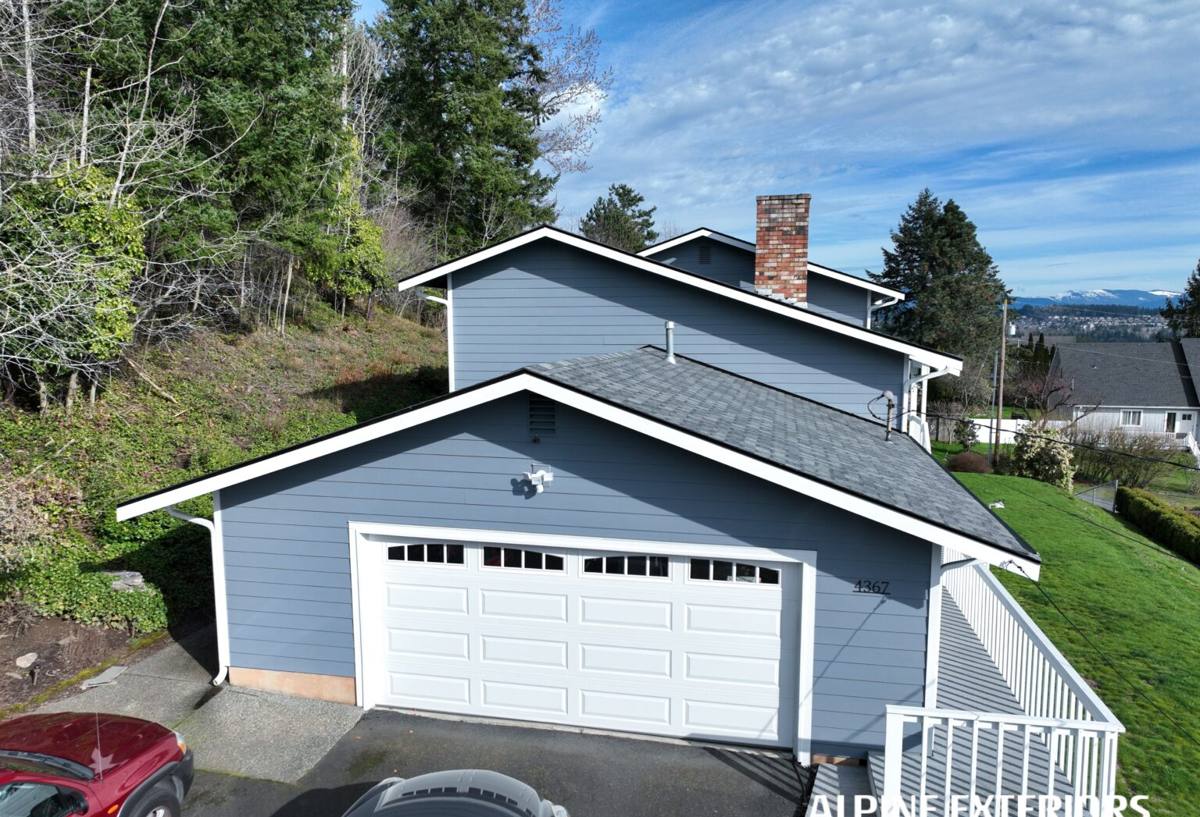
Why Laurel Roofs Take a Different Kind of Damage
Three things define roofing conditions in this part of Whatcom County, and all three show up in storm damage claims.
Salt Air Off the Sound
Even inland from the water, prevailing weather off the Strait of Georgia and Bellingham Bay carries a measurable amount of salt into the air across Whatcom County. Salt-laden moisture accelerates corrosion on exposed metal — nail heads, flashing seams, gutter fasteners, and vent stacks — faster than it would in a dry inland climate. After a storm, corroded fasteners and pitted flashing are often part of why a roof failed in the first place, not just cosmetic wear.
Driving Rain, Not Just Rain
Pacific storm systems that move through this area frequently bring rain on a strong horizontal wind, not straight-down rain. Driving rain finds every gap a vertical rain would never reach — under lifted shingle tabs, behind loose flashing, up under ridge caps. A roof that would shed a calm rainstorm without issue can leak badly in a wind-driven one, which is exactly the pattern that shows up after Laurel's worst fall and winter storms.
A Long Moss Season
Shaded, north-facing, and tree-covered roof sections in Laurel stay damp for much of the year, and moss takes hold anywhere moisture lingers. Moss doesn't just look bad — it lifts shingle edges, holds water against the roof deck, and gives wind something to grab during a storm. A roof going into storm season with an established moss problem is more likely to lose shingles and take on water than a clean one.
What Actually Counts as Storm Damage
Not every issue found after a storm was caused by that storm, and that distinction matters for both the repair scope and any insurance claim. Common storm-related damage we see on Laurel roofs includes:
- Wind-lifted or torn-off shingles, especially along ridges, edges, and any section facing the prevailing wind
- Impact damage from falling branches or wind-blown debris
- Flashing pulled loose or bent at chimneys, skylights, and roof-to-wall transitions
- Gutter and downspout damage that redirects water back under the roof edge
- Granule loss on asphalt shingles from hail or wind-driven debris, which shortens the shingle's remaining life even where it hasn't leaked yet
- Water intrusion at the roof deck that wasn't visible from the ground
Some of these are obvious from the driveway. Others — a soft spot in the decking, a slow leak that's been tracking along a rafter for weeks — aren't, which is why a proper storm damage repair starts with a full inspection, not a quick look at the spot the homeowner already found.
What a Correct Repair Involves
A storm damage repair done right isn't just replacing the shingles that are obviously missing. It has a few distinct stages, and skipping any of them is how a "fixed" roof leaks again in the next storm.
Emergency Protection First
If a roof has active exposure — an open section, a tarp situation, water actively getting in — that gets stabilized first, before any permanent work is scheduled. In driving rain, a few hours of delay can mean the difference between a shingle repair and a soaked, sagging section of decking.
Full Inspection, Not a Spot Check
Storm damage rarely stays confined to one obvious spot. We check the full roof plane, not just the area the homeowner flagged, including flashing, vents, valleys, and any section that's shaded or hard to see from ground level — the exact areas where moss and slow leaks tend to hide in this climate.
Matching Materials, Not Just Covering the Hole
Patching storm damage with mismatched shingles or the wrong flashing profile creates a weak point that fails again in the next storm. We match shingle type, color, and exposure to what's already on the roof wherever a supplier can still provide it, and we tell you honestly when an exact match isn't possible — better to know that up front than be surprised at project's end.
Decking and Underlayment Where It's Needed
If water has been sitting against the roof deck — which happens easily under moss or lifted shingles in a wet climate — the plywood or OSB underneath may be soft or delaminating. Shingles installed over damaged decking won't hold, no matter how well they're nailed. We check decking condition as part of every storm repair, not as an upsell after the fact.
Corrosion-Resistant Fasteners and Flashing
Given how much salt exposure Whatcom County roofs deal with, we use fasteners and flashing rated for coastal-influenced conditions rather than the cheapest option available. It costs a little more up front and holds up considerably longer.
Storm Repair Options at a Glance
| Damage Type | Typical Repair Approach | What to Expect |
|---|---|---|
| A few missing or lifted shingles | Spot replacement with matched shingles and re-sealing | Usually a same-day repair once materials are matched |
| Damaged flashing at chimney, skylight, or wall | Remove and reflash with corrosion-resistant metal | Half-day to full-day, depending on access |
| Branch or debris impact damage | Localized shingle and possible decking replacement | Timeline depends on decking condition underneath |
| Moss-related lifting and moisture damage | Moss removal, moisture assessment, targeted repair or resurfacing of the affected section | May reveal deck damage not visible until moss is cleared |
| Widespread wind or hail damage | Full inspection, insurance documentation, and section or full replacement as warranted | Longer timeline; often insurance-involved |
How Our Process Works
- Inspection. We walk the full roof, document what we find with photos, and explain what's storm damage versus pre-existing wear.
- Written estimate. A clear scope of work and price range before anything is scheduled — no verbal-only quotes.
- Insurance documentation, if needed. If you're filing a claim, we provide the photo documentation and written scope your adjuster will need. We work for you, not the insurance company, and we won't inflate a claim to pad the job.
- The repair. Scheduled around weather windows — driving rain and repair work don't mix, so timing matters more here than in a drier climate.
- Cleanup and walkthrough. Debris and old materials hauled off, and we walk the finished work with you before we call it done.
What To Do Right After a Storm
What you do in the first day or two after storm damage affects both the repair and, if applicable, your insurance claim.
- Take photos of visible damage from the ground — don't get on the roof yourself
- Note the date and general weather event, which insurers will ask for
- Check attic or upper-floor ceilings for staining, which can indicate a leak even without visible exterior damage
- Avoid DIY tarping on a wet or steep roof — it's a common source of injury and can also void certain insurance coverage
- Call for an inspection promptly — a small storm-related leak left through a few more Whatcom County rain systems can turn into a decking replacement
- Get a written estimate before authorizing repairs, especially if a contractor showed up unsolicited after the storm
Why a Crew That Already Works Laurel Matters
After a bad storm rolls through Whatcom County, it's common to see unfamiliar trucks going door to door offering fast roof repairs — sometimes honest, often not. A crew that already works in Laurel and the surrounding Lynden area has a few advantages that matter here specifically:
- We know how salt air and driving rain actually age a roof in this area, not just in theory
- We're not disappearing after the storm-chasing season ends — if something needs a warranty follow-up, we're still local
- We understand the rural access, longer driveways, and tree-cover conditions common to properties around Laurel, which affects staging, ladder placement, and safe access
- We can give you a straight answer about whether a section is genuinely storm damage or a moss-and-age issue the storm just exposed
Rebuilding trust after a bad experience with a storm-chasing outfit is common in this line of work. If that's where you're starting from, we're happy to give you a second, honest opinion even if we didn't do the original inspection.
Get a Straight Answer on Your Roof
If a recent storm left you with missing shingles, a leak, or just some uncertainty about whether your roof came through okay, we'll take a look and tell you plainly what we find — no pressure, no inflated scope. Reach out for a free estimate using the form below.