 Lynden Siding
 Siding Repair Built for Laurel's Climate
Homes in the Laurel area near Lynden sit in a stretch of Whatcom County where the weather doesn't do siding any favors. You've got salt-tinged air rolling in off the water, long stretches of driving rain through fall and winter, and a moss season that seems to start earlier and last longer every year. None of that is unusual for this part of Washington, but it does mean siding here ages differently than siding in a drier inland climate. Small problems don't stay small — a gap in caulking or a cracked board that would be cosmetic somewhere else becomes a moisture entry point here, and moisture is the one thing siding can't tolerate long-term.
This page is about siding repair specifically for homes in and around Laurel — not a general overview of siding, but what actually needs attention on houses in this microclimate, what a repair job should include if it's going to hold up, and how we approach it differently than a crew that doesn't work this area regularly.
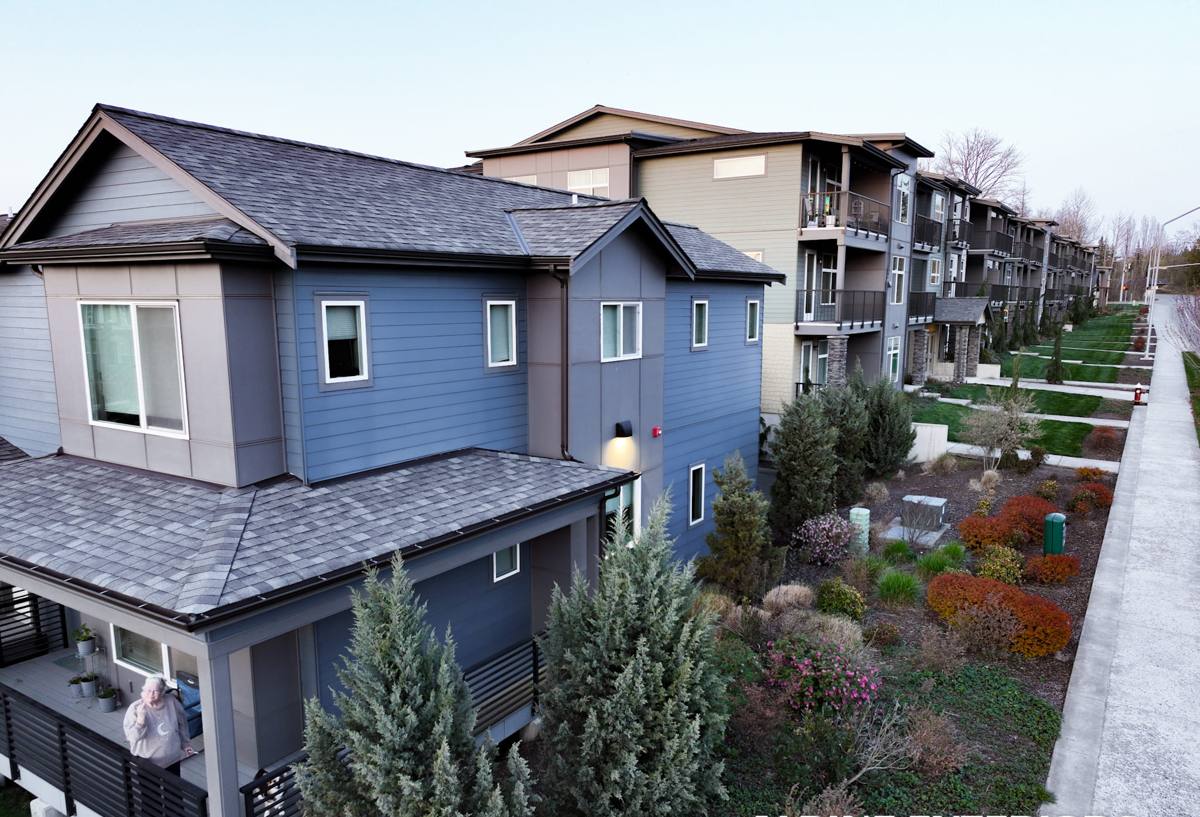
Why Laurel Homes Take a Different Kind of Beating
Salt Air and Slow Corrosion
Proximity to the water means airborne salt settles on exterior surfaces over time. It's subtle — you won't see it happen — but it accelerates the breakdown of fasteners, corrodes exposed metal flashing and trim, and can eat away at caulking and sealants faster than manufacturers' standard lifespans suggest. A repair that ignores this and uses standard-grade fasteners or trim is a repair that fails again in a few years.
Driving Rain, Not Just Rain
Whatcom County doesn't just get a lot of rain, it gets wind-driven rain that pushes water sideways into seams, laps, and butt joints that would stay dry in a calmer climate. Siding systems are engineered around the assumption that water sheds downward and outward. When rain arrives at an angle, any gap in the water-management details — flashing, house wrap, caulking, board overlaps — becomes an entry point instead of a shed point.
A Moss Season That Doesn't Really End
Shaded, north-facing, and tree-lined sections of Laurel properties stay damp for months at a stretch, which is exactly what moss and algae need to establish. Left alone, moss holds moisture directly against the siding surface, keeps it from drying between rain events, and can work into seams and beneath trim. It's not just a cosmetic issue — persistent moss buildup is one of the more common reasons we find soft, moisture-damaged siding underneath during a repair visit.
Signs a Laurel Home Needs Siding Repair
Most siding failures don't announce themselves with a hole in the wall. They show up as smaller signals that are easy to write off until they aren't. Worth a look at least once a year, especially after the wet season:
- Soft or spongy spots when you press on the siding, especially near the bottom courses or under windows
- Visible cracking, splitting, or bowing in individual boards or panels
- Paint that's peeling, bubbling, or failing in one localized area rather than evenly across the wall
- Dark streaking, green film, or thick moss growth that keeps returning after cleaning
- Gaps opening up at seams, corners, or where siding meets trim, windows, or doors
- Rust staining below nail heads or metal flashing
- A musty smell or visible staining on interior walls that back up to exterior siding
- Rot or soft wood at the base of walls, especially near downspouts, planters, or ground contact points
Any one of these on its own might be minor. Several together, or one that's been ignored for a season or two, usually means water has already gotten past the surface.
What a Correct Repair Actually Involves
The visible damage is rarely the whole story, which is why a repair that only addresses what you can see from the ground tends to be a repair you'll pay for again. A repair done right on a Laurel-area home includes:
Diagnosis Before Demolition
Before anything gets pulled off the wall, we find out why the damage happened, not just where it is. A cracked board near a downspout might be a siding problem, or it might be a drainage problem that will crack the next board too if it's not addressed at the source.
Checking What's Behind the Siding
Once damaged boards or panels come off, we look at the house wrap, flashing, and sheathing underneath. If water has been getting in, the siding is often the least of the damage — sheathing can be soft, framing can be wet, and insulation can be compromised. Replacing siding over a compromised substrate just hides the problem for another season.
Matching Material and Finish
A repair should blend in, not stick out. That means matching board profile, exposure, and color as closely as possible, which is easier when the original installation was done with a consistent, well-documented product line rather than mixed materials patched together over the years.
Rebuilding the Water-Management Details
This is the part that actually determines whether the repair lasts. Flashing gets reinstalled correctly, not just caulked over. Seams and laps are rebuilt to shed water the way they were designed to. Fastener spacing and type meet manufacturer specs, not just whatever's on hand. In a climate with driving rain and long wet seasons, these details matter more here than almost anywhere else in the state.
Repair vs. Replacement: How We Make the Call
Not every damaged section needs full replacement, but not every damaged section should just be patched, either. Here's generally how the decision plays out on Laurel homes:
| Situation | Usually a Repair | Usually Points to Replacement |
|---|---|---|
| Damage extent | Isolated to one or two boards/panels or a single wall section | Spread across multiple walls or recurring in the same areas repeatedly |
| Substrate condition | Sheathing and framing underneath are dry and sound | Soft sheathing, rot, or moisture found behind the siding |
| Siding age | Mid-life siding in otherwise good condition | Siding near or past its expected service life |
| Material type | Product still performs well and can be reasonably matched | Original material has known long-term moisture or maintenance issues in this climate |
| Cause of damage | One-time event: impact, storm damage, isolated flashing failure | Systemic issue: chronic moss retention, widespread caulk failure, poor original installation |
We'll always tell you honestly which category your situation falls into. A repair that's likely to fail again within a couple of years isn't a good use of your money, and we'll say so rather than patch something we know won't hold.
Our Process for Laurel Repair Calls
- On-site inspection. We look at the damaged area and the surrounding siding, not just the spot you called about, since related issues often show up nearby.
- Diagnosis of the cause. We identify whether the damage is from moisture intrusion, moss retention, impact, fastener failure, or an original installation issue.
- Substrate check. Where damage suggests water has gotten behind the siding, we confirm the condition of the house wrap and sheathing before quoting the repair.
- Honest recommendation. You'll get a clear answer on whether a targeted repair makes sense or whether the underlying damage calls for replacing a larger section.
- Repair or referral to replacement. If repair is the right call, we do it to the same standard as new installation. If a section has moved past what a repair can reasonably fix, we'll walk you through replacement options — and for that, we install James Hardie fiber cement exclusively, for reasons rooted in exactly the climate problems described above.
Why We Only Install James Hardie When Replacement Is Needed
When a repair call turns into a replacement conversation, our answer on material doesn't change: James Hardie fiber cement, and nothing else. In a climate with salt air, driving rain, and heavy moss pressure, the products we don't install — vinyl, LP SmartSide, primed wood, and other fiber cement alternatives — each carry trade-offs around moisture behavior, maintenance burden, or long-term durability that we're not willing to put our name behind. Hardie's fiber cement is non-combustible, holds up to sustained moisture exposure far better than wood-based alternatives, and the ColorPlus factory finish resists the fading and touch-up cycle that painted siding goes through in this kind of weather. It's engineered specifically for climates like this one, backed by a strong transferable warranty, and it performs the way it's supposed to when installed to spec — which is the standard we hold every job to, repair or replacement.
Why a Crew That Works Laurel Regularly Matters
Siding repair isn't one-size-fits-all across Whatcom County. A crew that mostly works drier, inland areas isn't necessarily thinking about salt air corrosion on fasteners or the way moss retention behaves on a shaded, water-adjacent lot. A crew that's actually done repair work in and around Laurel knows what tends to fail first in this specific setting, what the substrate usually looks like once you open a wall up, and how to detail flashing and seams so they hold up against wind-driven rain rather than just rain falling straight down. That local pattern recognition is the difference between a repair that lasts and one you're calling someone back for in two years.
After the Repair: Keeping It That Way
A good repair buys you time, but ongoing care in this climate still matters. A few habits go a long way:
- Rinse siding annually, and more often on shaded or north-facing walls where moss takes hold fastest
- Keep gutters and downspouts clear so water isn't dumping directly onto siding or pooling at the base of walls
- Trim back vegetation and tree cover that keeps sections of the wall in constant shade and moisture
- Do a quick visual check after major storms for cracked boards, lifted trim, or new gaps at seams
- Address small issues — a cracked board, a gap in caulking — before the next wet season, not after
If you're seeing signs of siding trouble on a Laurel-area home — soft spots, recurring moss, cracked boards, or damage from a recent storm — we're happy to come take an honest look. The estimate is free, there's no pressure, and you'll get a straight answer on whether it's a repair or something bigger. Fill out the form below to get started.