 Lynden Siding
 Siding Built for Laurel's Corner of Whatcom County
Laurel sits in the stretch of Whatcom County between Lynden and Bellingham, where farmland, tree cover, and proximity to Puget Sound and the Strait of Georgia combine into a climate that is genuinely hard on exterior siding. Homes here deal with salt-tinged marine air, long stretches of driving rain off the water, and a moss season that can run from October well into spring. None of that is unique to any one house — it's the baseline every siding product on a Laurel home has to survive, year after year, for decades.
We install James Hardie fiber cement siding exclusively, and we work this specific area regularly. This page covers what that combination — the right product, installed correctly, by a crew that knows the local conditions — actually means for a home in Laurel.
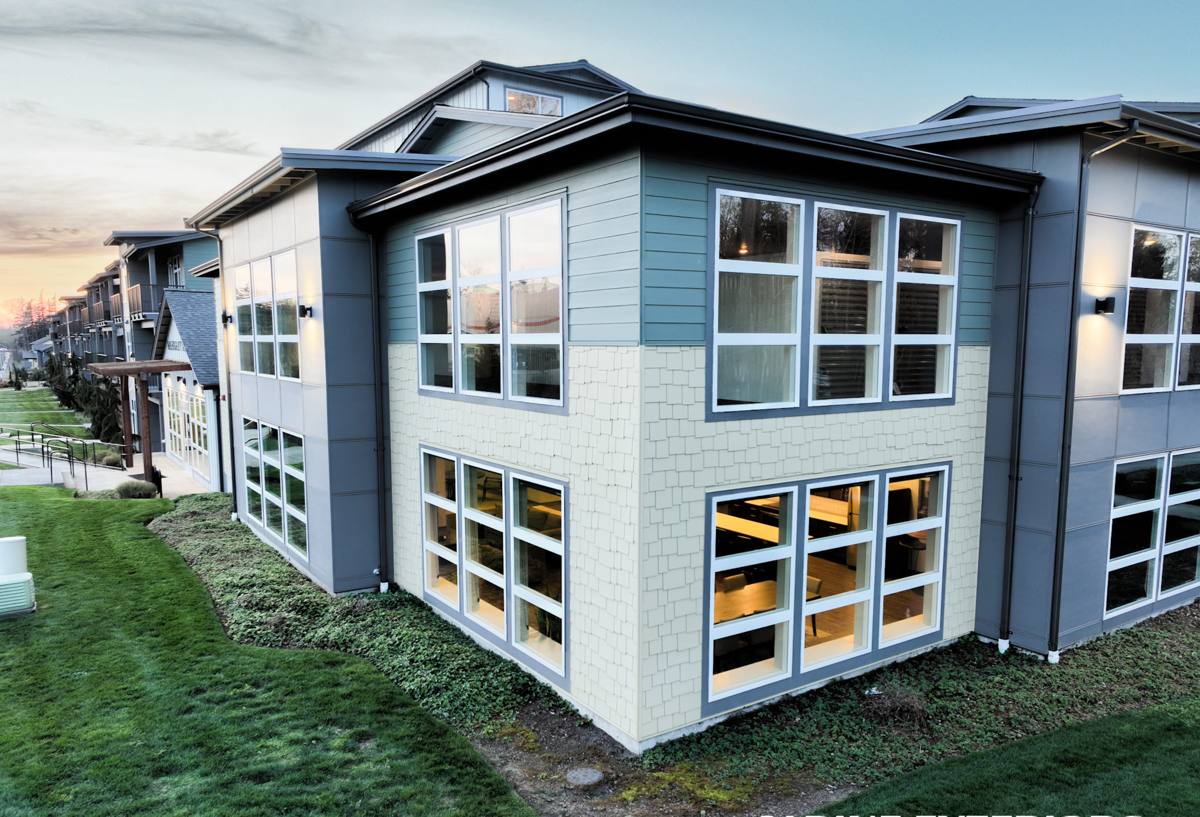
Why We Only Install James Hardie
We get asked, fairly often, why we don't offer vinyl, LP SmartSide, cedar, or one of the other fiber cement brands. The honest answer is that after years of installing and repairing siding in this climate, James Hardie is the product we trust to hold up without becoming a maintenance project for the homeowner.
- Non-combustible: Hardie's fiber cement composition doesn't burn, which matters more each wildfire season across Washington.
- Climate-engineered product lines: Hardie makes an HZ5 formulation specifically for the wetter, cooler climate zones the Pacific Northwest falls into.
- Factory-applied ColorPlus finish: baked-on color that resists fading and doesn't rely on a field-applied paint job to hold up to rain and salt air.
- Track record: we've seen how it performs on real Whatcom County homes over time, not just in a spec sheet.
Vinyl can warp and fade under UV and temperature swings, and its seams give moisture a path in over time. LP SmartSide is a wood-strand product — well-engineered, but still wood-based, which means edge and cut-end sealing is unforgiving in a climate this wet. Cedar and primed spruce look great on day one but demand a repainting and caulking schedule most homeowners underestimate. We'd rather put one product on every home and know exactly how it behaves in this climate than spread our expertise across five.
What the Local Climate Actually Does to Siding
Salt Air
Laurel isn't waterfront, but it's close enough to Puget Sound and the Strait of Georgia that salt-laden air still reaches inland on a regular basis. Salt accelerates corrosion on fasteners and trim metal, and it degrades paint films faster than a drier inland climate would. Fiber cement doesn't corrode, but every metal component in a siding system — nails, flashing, trim — needs to be rated for it.
Driving Rain
Wind-driven rain off the water doesn't just fall straight down — it gets pushed sideways into laps, seams, and penetrations. A siding system that isn't detailed for driving rain will eventually let water behind the cladding, even if the surface material itself is fine. This is a water-management problem as much as a materials problem.
Moss Season
Between the shade from tree cover common around Laurel and months of damp weather, moss and mildew get a long runway to establish themselves on north-facing and shaded walls. Porous or textured surfaces give moss more to grip. A dense, factory-finished fiber cement surface is far harder for moss to colonize than bare wood or a chalky painted finish.
What Correct Installation Involves
James Hardie siding is only as good as the installation behind it. The material is engineered to perform in this climate, but a rushed or generic install can undercut all of that. On a Laurel job, we pay particular attention to:
- Weather-resistive barrier: a continuous, properly lapped water-resistive barrier behind the siding, not just wherever the sheathing happens to be exposed.
- Rainscreen gap: a drainage space behind the siding so any water that does get past the cladding can drain and the wall can dry, rather than sitting against the sheathing.
- Flashing at every penetration: windows, doors, hose bibs, light fixtures, and vents all need proper flashing detail — these are the most common failure points on any siding job, not the field of the siding itself.
- Correct fastening: Hardie specifies fastener type, spacing, and placement, and getting it wrong can void the warranty and create long-term problems.
- Manufacturer-spec gapping and caulking: proper clearance at butt joints and trim, sealed with the right products, so the system can move and shed water as designed.
None of this is exotic — it's just detail work that has to be done consistently, on every wall, in weather that doesn't always cooperate.
HZ5 and Why the Climate Zone Matters
James Hardie manufactures its siding in climate-specific formulations, and Western Washington falls into the HZ5 zone — engineered for regions with sustained moisture and moderate freeze-thaw cycling rather than extreme heat or arid conditions. Installing the correct zone product matters more than most homeowners realize; a formulation engineered for a hot, dry climate is not what you want on a Laurel home dealing with months of damp weather. We install HZ5-appropriate product as a matter of course, not as an upsell.
ColorPlus Finish vs. Job-Site Paint
One of the more overlooked advantages of Hardie siding is the ColorPlus factory finish option — color baked onto the board under controlled conditions, with a finish designed to resist fading, chipping, and the kind of moisture intrusion at cut edges that eventually leads to peeling paint. In a climate with this much rain and salt air, a factory finish holds its color and integrity longer than a field-applied paint job, and it removes an entire maintenance cycle from the homeowner's plate. Field painting is still an option for homeowners who want a fully custom color, but for most Laurel homes, ColorPlus is the lower-maintenance, better-performing choice.
Cost Factors on a Laurel Siding Project
| Factor | Why It Matters Here |
|---|---|
| Home size and wall complexity | More corners, gables, and penetrations mean more flashing and cutting labor |
| Existing siding removal | Tear-off and disposal of old cedar, vinyl, or damaged siding adds labor and haul-away cost |
| Sheathing/framing repair | Rot found behind old siding — common on shaded, moss-prone walls — must be repaired before new siding goes on |
| Trim and finish package | ColorPlus trim, corner boards, and accent details affect material cost |
| Access and site conditions | Tree cover, fencing, and lot layout around Laurel properties can affect staging and scaffolding needs |
We walk through these factors on-site with every homeowner before quoting, so there are no surprises once work starts.
Signs a Laurel Home May Need New Siding
Because moss, moisture, and salt air work slowly, siding problems often show up gradually rather than all at once. Worth a closer look if you're seeing:
- Soft or spongy spots when you press on the siding, especially near the bottom courses or window sills
- Persistent moss or dark streaking on north- or shade-facing walls that comes back soon after cleaning
- Paint that's peeling, bubbling, or chalking faster than it should
- Visible gaps, warping, or cupping in board siding
- Rust staining running down from nail heads or trim fasteners
- Rising energy bills that may point to a wall system no longer keeping weather out
Any of these can indicate moisture has already gotten behind the cladding — worth having looked at before it becomes a framing repair rather than a siding replacement.
Why a Crew That Already Works Laurel Matters
Siding installation isn't just about the product — it's about understanding the specific conditions a house sits in. A crew that regularly works the Lynden and Whatcom County area already knows how driving rain behaves against exposed walls out here, how much moss pressure to expect on shaded elevations, and what fastener and flashing details actually hold up to salt air over time. That familiarity shows up in the details: where extra flashing gets added, how the rainscreen gap is handled around tricky trim, and which walls need the most attention during install. It's the difference between a crew following a generic spec sheet and one that's adjusting for the house in front of them.
Get an Estimate
If your Laurel home is due for new siding or you're seeing early signs of moisture or moss trouble, we're happy to take a look and walk you through what correct James Hardie installation would involve for your specific house. The estimate is free, with no pressure to move forward — just a straight assessment from a crew that knows this area. Use the form below to get started.