 Lynden Siding
 Siding Replacement for Kendall Homes
Kendall sits out where the Nooksack Valley opens up north of Lynden, and homes here take a different kind of weathering than a house sitting in town. You're closer to open farmland, closer to the foothills, and fully exposed to the same marine air that moves in off the Salish Sea and rides the valley inland. That combination of salt-tinged moisture, driving rain that comes in sideways during winter storms, and a moss season that can run eight months out of the year means siding in Kendall works harder than siding almost anywhere else in Whatcom County.
We're a Lynden-based crew, and Kendall is inside our regular service area — not a once-in-a-while drive-out. That matters more than most homeowners realize when it comes to siding, because the right installation approach here depends on knowing exactly how this specific area behaves through a full Pacific Northwest year, not just following a generic install manual.
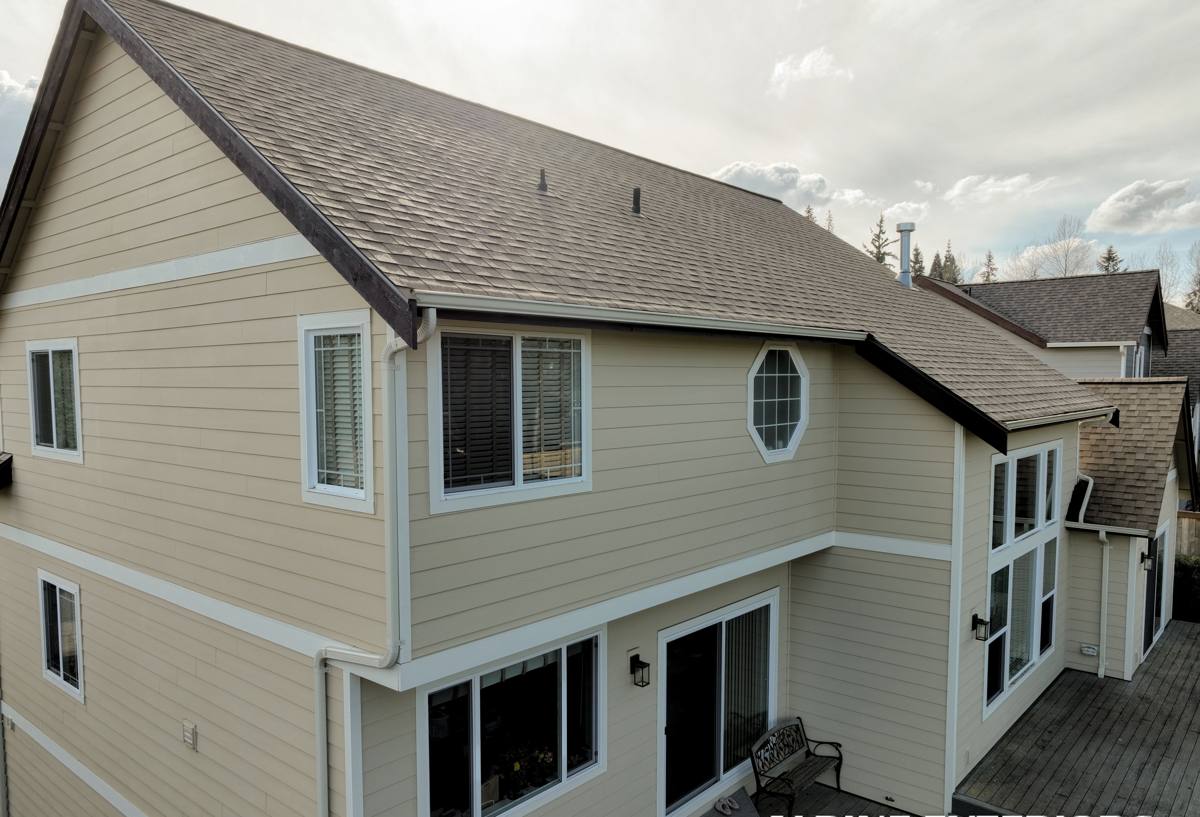
What Kendall's Climate Actually Does to Siding
Salt Air and Moisture Load
Whatcom County's proximity to Puget Sound and the Georgia Strait means the air carries more salt and humidity than siding manufacturers assume in their baseline product testing. Salt-laden moisture accelerates corrosion on fasteners and trim metal, and it keeps wood-based and wood-adjacent products damp longer after every rain. Over years, that constant damp cycle is what drives rot, delamination, and paint failure on siding that isn't built to handle it.
Driving Rain
Kendall's more open exposure means wind-driven rain hits walls at an angle instead of just running straight down. That matters because angled rain finds every gap in flashing, every under-caulked seam, and every spot where siding wasn't held to the correct clearance off a deck, roofline, or grade. A product and installation that only handles vertical rainfall well will show water intrusion problems here faster than in a more sheltered part of town.
Moss and Sustained Dampness
Moss doesn't just grow on roofs — it colonizes siding surfaces, gutters, and trim wherever shade and moisture combine, and Kendall's tree cover and farmland humidity give it plenty of opportunity. Moss holds moisture directly against the siding surface for extended periods, which is a slow but real threat to any siding material that isn't dimensionally stable and rot-proof at its core.
Why We Install Only James Hardie Fiber Cement
Every product decision we make traces back to the conditions described above. We standardized on James Hardie fiber cement siding because it's engineered to hold up to exactly this kind of coastal-adjacent, high-moisture Pacific Northwest exposure, and because Hardie backs the product with a system — not just a board.
- Non-combustible core: Fiber cement doesn't feed a fire the way wood-based products can, which matters for wildfire-season air travel and ember exposure even here in the wetter part of the state.
- HZ5 and HZ10 engineering: Hardie makes climate-specific product lines built for moisture and freeze-thaw cycling, which fits Whatcom County's damp winters far better than a one-size-fits-all board.
- ColorPlus factory finish: A baked-on finish applied under controlled conditions resists fading and chipping far longer than field-applied paint, which is the finish type that struggles most under Kendall's UV-and-rain cycle.
- Dimensional stability: Fiber cement doesn't swell, cup, or split the way wood and wood-composite sidings can when they take on repeated moisture, which is the single biggest failure mode we see in this climate.
- Transferable warranty: A strong, transferable warranty protects the investment for the homeowner and for whoever buys the house next.
We don't install LP SmartSide, vinyl, Cemplank, Allura, primed spruce, or cedar. Some of those products have real strengths in the right application, but none of them match Hardie's combination of moisture resistance, factory-finish durability, and long-term performance in a climate like Kendall's. We'd rather install one product correctly and stand behind it than offer five options and hedge on all of them.
What a Correct Siding Replacement Involves
Replacing siding is not just swapping old boards for new ones. In a moisture-heavy area like Kendall, the work that happens underneath the siding matters as much as the siding itself.
Tear-Off and Sheathing Inspection
Removing the old siding is when we find out what's actually been happening behind it — soft sheathing, rot at window and door openings, or moisture staining that tells us where water has been getting in. Any of that needs to be addressed before new siding goes up, not covered over.
Weather-Resistive Barrier
A correctly lapped, sealed weather-resistive barrier is the layer that actually keeps bulk water out of the wall assembly. Given how much driving rain Kendall sees, we treat this layer as non-negotiable, not a formality.
Flashing at Every Penetration
Windows, doors, hose bibs, light fixtures, and deck ledgers are the places water gets in. Correct flashing detail at every one of these penetrations is what separates a siding job that lasts 30+ years from one that leaks within five.
Fastening and Clearances
Hardie siding has specific fastener spacing, fastener type, and clearance requirements — off the ground, off roof lines, off decks and patios. Skipping these specs is the most common cause of early failure we see on fiber cement jobs done by crews that don't install it regularly.
Caulking and Sealant Detail
Every seam, joint, and trim intersection needs the right sealant, applied correctly. In a high-moisture area like this, a rushed caulk job is often the first thing to fail.
Our Process for Kendall Jobs
- On-site assessment: We walk the exterior, check for existing moisture damage, and evaluate exposure on each elevation — north and west walls typically take the worst of the driving rain out this way.
- Product and color selection: We help you choose the right Hardie line and ColorPlus finish for your home's exposure and style.
- Written estimate: Clear scope, materials, and timeline before any work starts.
- Tear-off and inspection: Old siding comes off, sheathing gets inspected, and any repairs get flagged and discussed before covering anything up.
- Weather barrier and flashing installation: Done to spec, at every penetration, before a single piece of siding goes up.
- Hardie installation: Installed to manufacturer fastening and clearance specs by a crew that installs this product routinely.
- Final walkthrough: We go over the finished job with you before calling it done.
Cost Factors for Kendall Siding Replacement
Every home is different, but these are the main variables that move a project's scope and cost. We'll give you specifics for your home after an on-site look — broad ranges without seeing the house aren't useful to you.
| Factor | Why It Matters in Kendall |
|---|---|
| Extent of hidden moisture damage | Sheathing rot found at tear-off adds repair scope before new siding can go on |
| Home size and elevation count | More wall area and more complex rooflines mean more flashing and cutting detail |
| Existing siding type | Some materials (like old cedar or certain composite products) come off more slowly than others |
| Trim and detail work | Corner boards, window trim, and fascia detail affect labor and material scope |
| Exposure level | Walls facing prevailing wind and rain may need extra flashing attention, adding some labor |
| Hardie product line chosen | Lap, shingle, and panel styles carry different material costs |
Signs Your Kendall Home Needs Siding Attention
- Soft or spongy spots when you press on the siding surface
- Visible cupping, warping, or separation at seams
- Persistent moss or dark staining that keeps returning after cleaning
- Paint that's peeling, bubbling, or chalking faster than expected
- Rising energy bills that suggest the wall assembly is no longer insulating well
- Visible gaps around windows, doors, or trim where caulking has failed
If you're seeing more than one of these, it's worth getting an honest look before the damage spreads further into the wall assembly.
Why a Local Crew Matters for This Job
Siding installation isn't just about following a manufacturer's manual — it's about applying that manual correctly to the specific conditions a house faces. A crew that works Kendall and the rest of the Lynden area regularly already understands how this valley's exposure, rainfall patterns, and moss pressure differ from a job three towns over. That local knowledge shows up in the details: where extra flashing attention pays off, which elevations need the most careful sealant work, and how to sequence a job around Whatcom County's wet-season weather windows.
We're not traveling in from out of the area to do a one-off job and move on. Kendall is part of our regular route, and we stand behind the work because we're still local when the warranty period is still running.
Get an Honest Look at Your Siding
If your Kendall home's siding is showing wear, or you're planning ahead for a replacement, we're glad to come take a look and give you a straightforward, no-pressure estimate. Use the form below to get started.