 Lynden Siding
 Siding Repair in Kendall: Built for Whatcom County Weather
Kendall is a quieter, more rural stretch of Whatcom County, sitting up toward the Mount Baker foothills northeast of Lynden. Homes here tend to sit on bigger lots with more tree cover, more distance between neighbors, and more direct exposure to whatever weather rolls off the mountains and up the valley. That combination — mature trees, open exposure, and a wetter microclimate than the valley floor — means siding on a Kendall home ages differently than siding closer to town. A repair call here isn't just "patch the bad spot." It's understanding why that spot went bad in the first place, and making sure the fix doesn't just fail again in two years.
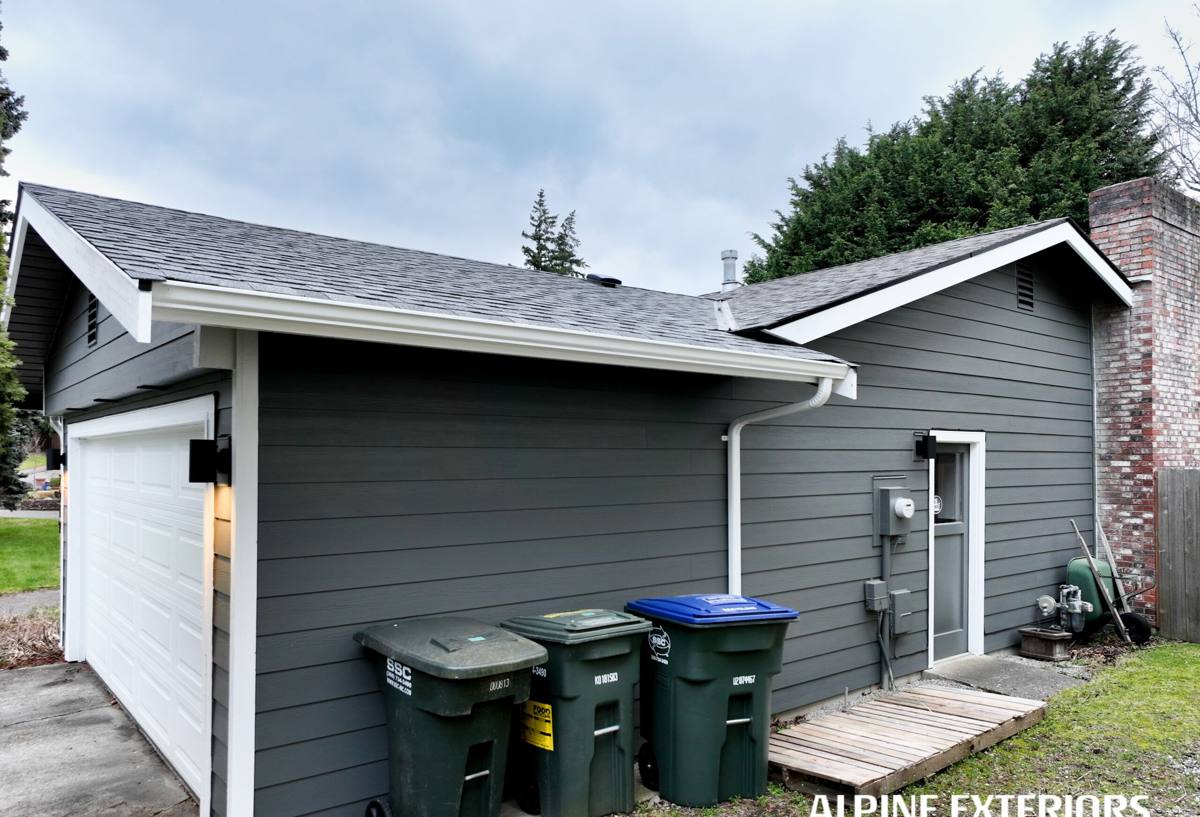
What Kendall's Climate Does to Siding
Driving Rain
Whatcom County doesn't get gentle drizzle for half the year — it gets wind-driven rain that hits siding sideways, working its way behind trim, into seams, and under anything that isn't sealed correctly. On homes with more open exposure, like many in and around Kendall, that wind-driven moisture finds every weak point in a siding system: a gap in caulking, a butt joint that wasn't flashed, a nail that backed out just enough to let water track behind the panel.
A Long Moss Season
Tree cover keeps a lot of Kendall properties shaded for a large part of the year, and shade plus moisture is exactly what moss and algae need. Once moss gets a foothold on siding — especially at the bottom courses, behind gutters, or wherever a roofline drains onto a wall — it holds water against the surface far longer than open rain ever would. That's a slow, steady source of rot and paint failure that homeowners often don't notice until the siding underneath has already been compromised.
Marine-Influenced Air
The same marine air system that moves salt-tinged moisture across Whatcom County reaches inland areas like Kendall too, especially during the wetter months. It's not the same direct salt exposure you'd get right on the water, but it adds another layer of moisture and mineral content that accelerates wear on anything not built to handle it — fasteners, caulking, and lower-grade siding materials in particular.
Temperature Swings
Kendall's proximity to the foothills means bigger day-to-night and season-to-season temperature swings than areas closer to Puget Sound. Materials that expand and contract more than they should — or that were installed without room to move — develop stress cracks and joint failures faster here than in milder microclimates.
Common Siding Problems We Find on Kendall Homes
- Moisture staining and soft spots at the bottom few courses, especially near grade, downspouts, or shaded corners
- Moss and algae buildup holding water against the siding surface for extended periods
- Caulk failure at butt joints, trim, and window/door transitions, letting wind-driven rain track behind the siding
- Warping or cupping in wood-based or engineered wood siding that's absorbed repeated moisture cycles
- Cracked or split panels from wind-thrown branches or debris, common on tree-covered lots
- Nail pops and fastener corrosion, which create small openings that let water in behind the cladding
- Color fade or chalking on older paint-grade siding that was never factory-finished for UV and moisture exposure
What a Correct Siding Repair Actually Involves
A siding repair that only addresses what's visible on the surface usually doesn't hold. The panel might look fixed, but if the underlying cause — a moisture path, a missing flashing detail, rotted sheathing — isn't corrected, the same failure shows up again within a season or two, often worse.
A repair done right starts with figuring out how water got in and how far it traveled, not just where it's showing. That means checking behind the damaged section, not just at it.
- Assess the full extent of damage, not just the visibly affected panel — moisture often travels further than it shows on the surface
- Check the condition of the sheathing and house wrap underneath before closing anything back up
- Replace compromised material rather than caulking over it
- Correct the underlying cause — missing flashing, poor caulk joints, improper clearance from grade or roofline — so the same failure doesn't recur
- Match replacement panels for profile, exposure, and finish so the repair doesn't stand out
- Reseal and re-fasten to the manufacturer's installation specifications, not just "close enough"
Repair or Replace? How We Make That Call
Not every siding problem in Kendall needs a full re-side, and not every problem is a quick patch either. The right call depends on a few honest factors:
| Factor | Points Toward Repair | Points Toward Replacement |
|---|---|---|
| Extent of damage | Isolated to one or two areas | Spread across multiple elevations |
| Underlying sheathing | Sound, dry | Soft, rotted, or water-stained |
| Age of existing siding | Recently installed, still performing well | Near or past its expected service life |
| Cause of failure | A single fixable defect (bad caulk joint, storm damage) | A systemic issue (wrong material for the climate, failed original installation) |
| Material match | Discontinued profile or color still available | No longer matches; patch would be visibly different |
When damage is limited and the sheathing underneath is dry, a targeted repair is the honest, cost-effective answer. When the damage points to a bigger pattern — repeated moisture intrusion, a material that was never suited to this climate, or sheathing that's already compromised — we'll tell you that plainly instead of patching something that's going to keep failing.
Why We Only Repair and Install James Hardie Siding
When we're called out to repair siding in Kendall, we see every kind of material — vinyl, LP SmartSide, cedar, older fiber cement, and James Hardie. Each one has a place in the market, and each one has real trade-offs worth understanding before you decide what goes back up on your house.
Vinyl is inexpensive and easy to install, but it flexes and warps with temperature swings, and it can't be color-matched with paint the way fiber cement can — once a section is damaged, replacement panels are the only real fix, and older colors are often discontinued. Cedar looks great new, but it needs ongoing maintenance to fight the exact moisture and moss conditions Kendall's tree cover creates, and once rot sets in, it spreads. Engineered wood products like LP SmartSide perform reasonably when installation and maintenance are followed to the letter, but they're more sensitive to sustained moisture exposure than fiber cement, and a missed caulk joint or a moss-covered lower course can shorten their service life meaningfully in a climate like this one.
James Hardie fiber cement is what we choose to put on homes and what we recommend when a repair points toward a bigger replacement. It's non-combustible, it's engineered in HZ product lines specifically for climates with heavy moisture exposure, and its ColorPlus factory finish holds color and resists the fade and chalking that plain paint-grade siding shows after a few Whatcom County winters. It also carries a strong transferable warranty, which matters when the failure mode you're guarding against is exactly the kind of slow, moisture-driven wear this climate produces. We don't install LP SmartSide, vinyl, Cemplank, Allura, primed spruce, or cedar — not because those products have no merit, but because we've made a professional call about what holds up best, longest, with the least maintenance burden, in this specific climate.
Our Kendall Siding Repair Process
- On-site inspection of the damaged area and a check of surrounding sections for related moisture damage
- Removal of affected siding to inspect house wrap and sheathing condition underneath
- Honest assessment: repair scope, replacement scope, or a conversation about full re-siding if the damage is systemic
- Correction of the root cause — flashing, clearance, caulk joints — before any new material goes up
- Installation of matched or replacement material to manufacturer specification
- Final inspection for proper sealing, fastening, and finish match
Signs Your Siding Needs a Repair Call
- Soft or spongy spots when you press on the siding, especially near the bottom courses
- Visible moss or algae that keeps coming back after cleaning
- Cracked, split, or missing sections after a windstorm
- Caulk that's cracked, shrunk, or pulled away from joints and trim
- Peeling or bubbling paint, especially on wood-based siding
- Musty smell or visible staining on interior walls that share an exterior wall with damaged siding
- Fasteners that have backed out or are visibly rusted
Why It Matters to Hire a Crew That Already Works in Kendall
Repair work is detail work, and the details change based on what a property actually deals with. A crew that already works rural Whatcom County properties knows what tree-covered, larger lots in Kendall tend to throw at siding — where moss builds up fastest, which elevations take the worst of the wind-driven rain, and how sheathing typically holds up under long-term shade and moisture. That familiarity means less time spent diagnosing and more time spent fixing the actual problem correctly the first time.
It also means straight answers. If a repair is genuinely all your siding needs, that's what we'll recommend. If the damage points to something bigger, we'll walk you through why, in plain terms, without pushing a bigger job than the house actually calls for.
If you're seeing moisture damage, moss buildup, or storm damage on your Kendall home's siding, we're happy to take a look and give you a straightforward assessment. Reach out for a free, no-pressure estimate using the form below.