 Lynden Siding
 Roof Replacement Built for Deming's Climate
Deming sits along the Nooksack River in the foothills toward Mount Baker, and that setting shapes what a roof up here has to deal with. Homes are tucked under heavier tree canopy than you'll find closer to town, which means more shade, more standing moisture, and more organic debris landing on the roof deck year-round. Add in the driving rain that moves through Whatcom County for much of the year, plus the salt-tinged marine air that reaches inland from the Sound, and you have a combination that ages roofing materials faster than a lot of homeowners expect.
A roof replacement in Deming isn't just about swapping old shingles for new ones. It's about building a roof system that can shed water fast, resist moss and moisture intrusion under a shaded canopy, and hold up to years of wind-driven rain without hidden leaks developing under the surface. That's the standard we hold every replacement to.
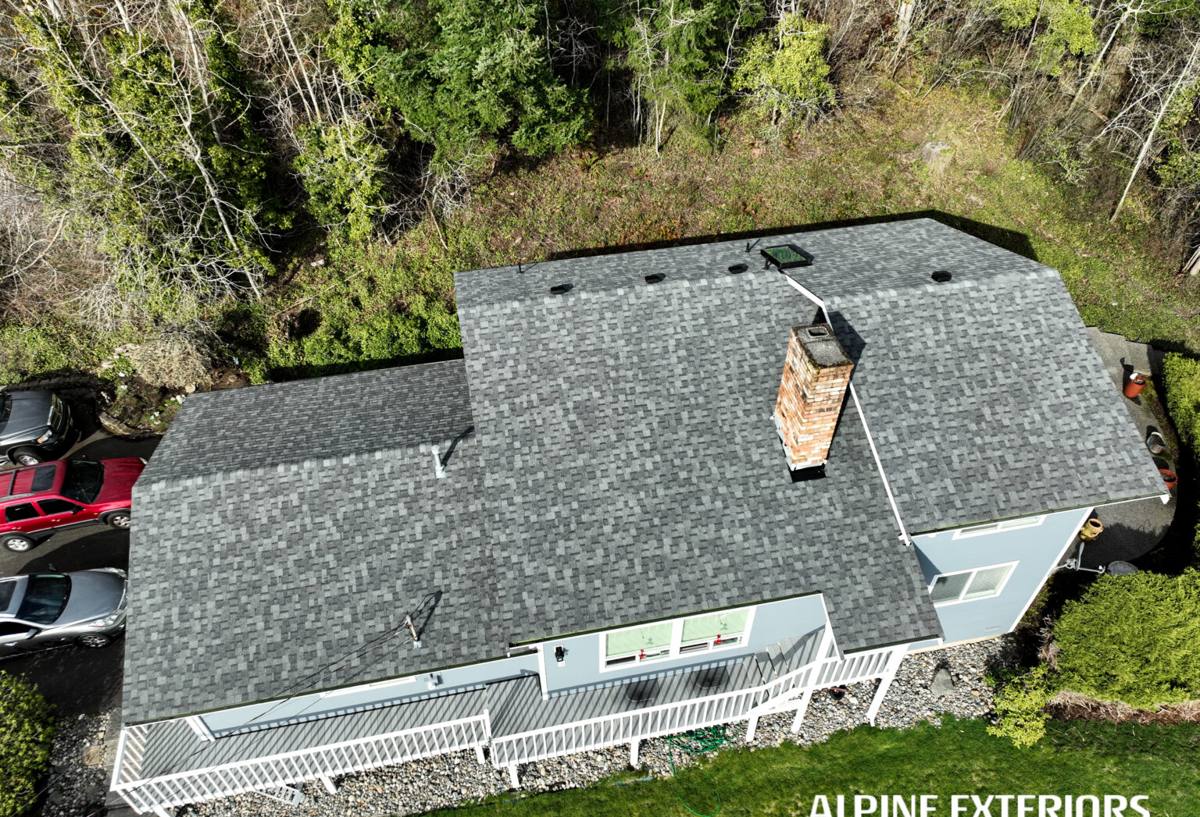
Signs a Deming Roof Needs Replacing, Not Just Repairing
Repairs make sense for isolated damage — a cracked pipe boot, a few lifted shingles after a windstorm. Replacement becomes the honest recommendation when the roof's overall condition means repairs would just be patching a system that's failing as a whole. Here's what we look for during an inspection:
- Granule loss heavy enough that you can see bare asphalt on multiple slopes
- Shingles that are cupping, curling, or cracking across large sections rather than in one spot
- Moss or algae growth that keeps returning within a season or two of cleaning, especially on the shaded north- and east-facing slopes common in Deming's tree-covered lots
- Soft or spongy spots on the roof deck when walked, which usually means water has already reached the sheathing
- Daylight visible through the attic roof boards, or water stains on attic insulation and rafters
- A roof that's approaching or past the manufacturer's expected service life for its material and installation conditions
- Repeated repair calls to the same areas of the roof over the past year or two
If you're only seeing one or two of these, a repair may still be the right call. If several apply at once, replacement is usually the more cost-effective path — repeated patch jobs on a failing roof tend to cost more over time than doing the job right once.
What a Correct Roof Replacement Actually Involves
Full Tear-Off and Deck Inspection
We don't install new roofing over old layers. A full tear-off lets us see the actual condition of the roof deck — something you can't evaluate accurately from the outside. In a property with the moisture exposure common around Deming, it's not unusual to find sections of sheathing that have softened from long-term moisture intrusion, particularly near valleys, chimneys, or shaded low-slope sections. Any compromised decking gets replaced before anything new goes down; installing new roofing over a soft deck just sets up the next failure.
Underlayment and Moisture Barrier
The underlayment is your roof's backup defense, and in a climate with this much sustained rain, it matters as much as the shingles themselves. We use synthetic underlayment for its tear resistance and water shedding, with self-adhered ice-and-water barrier at vulnerable points — eaves, valleys, and roof penetrations — where wind-driven rain is most likely to find a way in.
Ventilation
Proper intake and exhaust ventilation keeps the attic space at a consistent temperature and moisture level. This matters even more on tree-shaded properties, where cooler, damper air sits longer against the roof deck. Poor ventilation shortens shingle life from the underside and contributes to moss and mildew getting a foothold, on top of the surface exposure the roof already deals with.
Flashing
Flashing around chimneys, skylights, vent pipes, and roof-to-wall transitions is where most roof leaks actually originate — not the field of the roof itself. We replace flashing as part of every full replacement rather than reusing old pieces, since flashing is inexpensive compared to the water damage a failed piece can cause down the line.
Choosing a Roofing Material for a Deming Home
There's no single "best" roofing material — the right choice depends on your home's exposure, your budget, and how much long-term maintenance you're willing to take on. Here's how the common options stack up for a property with Deming's rain and shade conditions:
| Material | Typical Lifespan | Moss & Moisture Resistance | Maintenance Needs |
|---|---|---|---|
| Architectural asphalt shingle | 25–30 years | Good with proper ventilation and periodic cleaning | Moderate — benefits from moss treatment on shaded slopes |
| Standing seam metal | 40–50+ years | Excellent — sheds water and debris quickly, resists moss growth | Low |
| Composite/synthetic shake | 30–50 years | Good — engineered to resist moisture absorption | Low to moderate |
| Cedar shake | 20–30 years with upkeep | Requires consistent maintenance in shaded, damp settings | High — regular treatment and inspection needed |
Cedar shake has a natural look many homeowners like, but on heavily shaded lots it takes on and holds moisture longer than other materials, which means a more demanding maintenance schedule to keep it performing. We're upfront about that trade-off rather than recommending a product that will create ongoing headaches for a property with Deming's tree cover. Standing seam metal and architectural asphalt tend to be the more practical long-term choices for shaded, high-moisture lots, and we'll walk through the real trade-offs for your specific roof before you commit to anything.
Our Roof Replacement Process
- On-site inspection. We walk the roof and attic, check the deck condition, ventilation, and flashing points, and take photos to review with you.
- Written estimate. You get a clear breakdown of material options, scope of work, and price — no vague allowances or surprise add-ons later.
- Scheduling around weather. Given how much rain moves through this region, we plan installation windows carefully and keep the roof deck protected if conditions shift mid-job.
- Tear-off and deck repair. Old roofing comes off completely; any damaged sheathing is identified and replaced before new materials go down.
- Underlayment, flashing, and material installation. Installed to manufacturer specifications so warranties stay valid.
- Cleanup and final walkthrough. We magnet-sweep for nails, haul away debris, and walk the finished roof with you before calling the job done.
Cost Factors in a Deming Roof Replacement
Every roof is different, so exact pricing depends on your specific project, but most full replacements in this area fall in a broad range depending on the factors below. We'll give you real numbers after an on-site look — not a guess over the phone.
| Factor | Why It Affects Cost |
|---|---|
| Roof size and number of slopes | More square footage and complexity means more material and labor time |
| Pitch and accessibility | Steeper roofs and limited access (common on wooded lots) require more setup and safety measures |
| Deck condition | Sheathing repair or replacement adds material and labor beyond the base tear-off |
| Material choice | Asphalt, metal, and composite products carry different material and installation costs |
| Ventilation and flashing upgrades | Bringing an older roof system up to current standards adds scope but reduces future problems |
As a general guide, full roof replacements in this region often land somewhere in the $10,000–$30,000+ range depending on these factors — but that's a broad range, not a quote. Tree-heavy lots around Deming sometimes add a little to the scope if limbs need trimming back for safe access, which we'll flag during the inspection rather than as a surprise later.
Moss, Debris, and Protecting Your New Roof
A new roof still needs some upkeep, especially under the kind of tree canopy common around Deming. Falling needles, leaves, and moss spores collect in valleys and along eave lines, and if they're left to sit, they hold moisture against the roof surface long after the rain stops. We recommend homeowners have gutters and roof valleys cleared at least once or twice a year, and keep an eye out for early moss growth on shaded slopes so it can be treated before it spreads. A properly ventilated, well-flashed roof handles this environment far better than an older system, but no roof in this climate is entirely maintenance-free.
Why Hire a Crew That Already Works in Deming
Roofing crews that mostly work drier, more open sites don't always account for what heavy tree cover and sustained valley rain do to a roof system over time. We work throughout Whatcom County, including properties along the Nooksack River corridor and the wooded lots common around Deming, and we build every replacement around what actually holds up here — not a generic spec sheet. That means paying closer attention to ventilation on shaded roofs, being deliberate about underlayment and flashing at vulnerable points, and being honest with you about which materials will hold up with reasonable upkeep versus which ones will fight you every season.
If your roof is showing its age or you just want an honest read on its condition, we're happy to take a look. Reach out for a free, no-pressure estimate — we'll walk the roof, tell you what we see, and lay out your real options with no obligation.