 Lynden Siding
 Metal Roofing in Deming: Built for This Valley's Weather
Deming sits upriver from Lynden along the Nooksack River valley, in the more rural, tree-covered stretch of Whatcom County heading toward the foothills. It doesn't get hit with salt air the way our waterfront service areas do, but it still sits inside the same marine-influenced weather system that soaks this whole corner of Washington — and the heavier tree cover and valley shade common around Deming properties often means roofs here stay damp longer than a more open, in-town lot would. Add driving rain that comes in sideways more often than straight down, and a moss season that runs long in shaded, wooded settings, and you've got a climate that's genuinely hard on a roof, year after year.
Metal roofing holds up well against exactly that combination, but only when it's specified and installed correctly for the conditions. This page covers what a Deming home actually needs from a metal roof, what a correct installation involves, and how our process works from first look to final walkthrough.
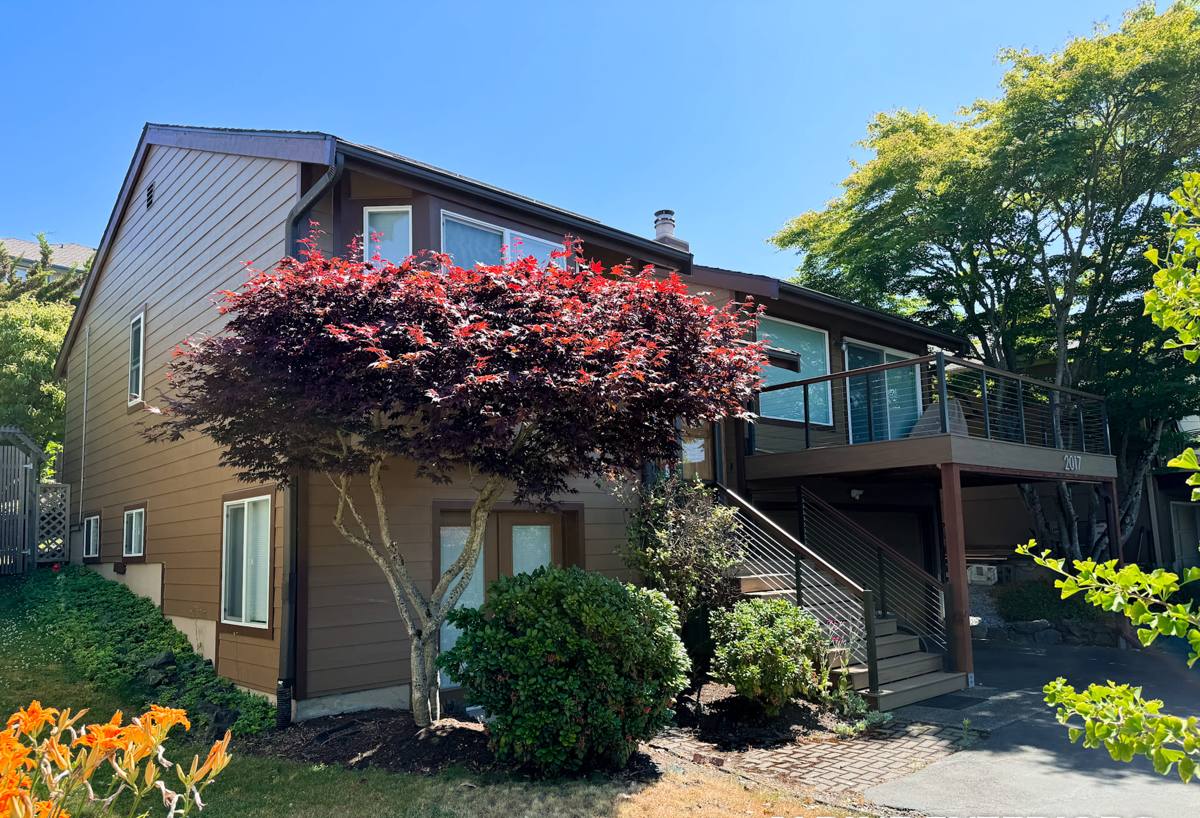
What This Climate Does to a Deming Roof
Driving Rain in a Wooded Valley
Rain in this part of the county doesn't fall straight down as often as people expect. Wind pushes it sideways and up into roof valleys, around chimneys and vent penetrations, and under any lap or seam that wasn't sealed with that in mind. On a rural or wooded lot, gusts funneling through the valley can hit a roof from shifting directions across a single storm, which is a heavier and more directional load than an annual rainfall number suggests.
A Long, Shaded Moss Season
Properties around Deming tend to have more mature tree cover than in-town lots, and shade is the single biggest factor in how long moss and algae stay active on a roof. North-facing slopes and anything shielded by fir or cedar canopy can stay damp for days after a storm has passed elsewhere. Left unchecked, moss holds water against the roofing surface and works its way under seams and fasteners, and on some materials it can lift or loosen the roofing itself over time.
Salt-Tinged Air and General Corrosion
Deming is inland relative to our waterfront service areas, so direct salt spray isn't the driving concern here that it is closer to the water. Marine air still moves up this valley on the prevailing weather, though, and combined with near-constant dampness for much of the year, it's still enough to matter for fasteners, flashing, and any unprotected metal component. We don't treat corrosion resistance as optional just because a property sits a few miles inland.
Snow and Temperature Swings
Deming sits closer to the foothills than in-town Lynden, and elevation gain in the surrounding area means occasional snow loads that stay lighter closer to the water rarely reach. Most winters bring only light, short-lived snow, but a roofing system that sheds it cleanly rather than letting it sit and refreeze against the eaves is a real advantage on the years it does show up.
Why Metal Roofing Fits This Climate So Well
A correctly installed metal roof answers most of what this climate throws at a roof better than any other common material. Its smooth, non-porous panel surface doesn't hold moisture the way granulated shingles or wood shakes do, which means moss has a much harder time getting a foothold even on shaded slopes. Steep-slope metal sheds wind-driven rain and snow aggressively rather than letting it linger in valleys or against fastener heads. And with the right coating and fastener specification, a metal roof shrugs off decades of damp, marine-influenced air with very little maintenance.
None of that is automatic, though. Metal roofing is less forgiving of installation mistakes than asphalt shingle — a poorly formed seam, an undersized fastener, or a mismatched metal at a flashing joint can turn a fifty-year roofing system into one with problems inside a decade. The material's long service life is only real when the install underneath it is done right.
Standing Seam vs. Exposed-Fastener Panel
"Metal roofing" covers more than one system, and the two most common options for a residential roof behave differently over time — especially in a climate this consistently damp.
| System | How It's Fastened | Moisture & Moss Behavior | Typical Service Life |
|---|---|---|---|
| Standing seam | Concealed clips under raised, interlocking seams — no exposed fasteners on the panel face | Excellent; no penetrations for water to work into and a smooth surface moss struggles to hold onto | 40-60 years |
| Exposed-fastener panel | Screws driven through the panel face into the substrate, with rubber washers sealing each one | Good when fasteners and washers are maintained; washers are the weak point and degrade faster in sustained damp | 25-40 years, largely dependent on fastener maintenance |
Standing seam costs more up front because of the labor and equipment involved, but it removes the long-term maintenance item that exposed-fastener systems carry — those washers don't last as long as the panel itself, and a shaded, damp roof is exactly where they age fastest. Exposed-fastener panel is still a reasonable, lower-cost option for many roofs; the honest trade-off is accepting that fastener and washer condition needs periodic attention over the roof's life.
What a Correct Metal Roof Installation Involves
Most metal roof problems we get called out to inspect don't come from the panels themselves — they come from shortcuts in what's underneath or around them. On every metal roofing job, that means:
Underlayment Built for Sustained Moisture
Metal panels are only the outer shell; a synthetic, high-temperature-rated underlayment underneath is what protects the deck if condensation forms on the underside of the panel or if wind ever drives moisture past a seam. Given how much of the year this valley stays damp, we don't treat underlayment as a minimum-code afterthought.
Correct Fastening and Seam Work
Standing seam relies on properly formed, consistent seams and correctly spaced concealed clips that allow the panel to expand and contract with temperature changes without stressing the roofing system. Exposed-fastener panel needs the specified fastener pattern and torque, not a rushed approximation — an overdriven or underdriven screw compresses its washer unevenly and starts leaking years before it should.
Flashing at Valleys, Penetrations, and Walls
Chimneys, vent pipes, skylights, and roof-to-wall transitions are where the majority of roof leaks start on any material, metal included. Flashing details need to be properly lapped, sealed, and integrated with the panel system rather than caulked over as a shortcut.
Avoiding Dissimilar-Metal Corrosion
Galvanic corrosion happens when incompatible metals sit in contact with each other in the presence of moisture — for example, the wrong fastener alloy against a steel or aluminum panel, or a mismatched gutter system. In a climate that stays damp this much of the year, that reaction can eat into a component years faster than expected. We spec fasteners, flashing, and trim that are compatible with the panel material, not just whatever's on hand.
Ventilation
Balanced attic and roof deck ventilation keeps condensation from forming on the underside of the panels and helps the whole system dry out between rain events instead of trapping moisture against the deck.
Cost Factors for a Deming Metal Roof
Metal roofing bids vary more than shingle bids, largely because panel system, gauge, and coating all move the number independently of roof size.
| Factor | What It Affects |
|---|---|
| Panel system | Standing seam costs more than exposed-fastener panel due to labor, tooling, and the concealed-fastener design |
| Metal gauge and type | Heavier-gauge steel or aluminum resists denting and holds up longer under branch fall and debris common on wooded lots |
| Coating quality | A quality PVDF (Kynar-type) finish resists fading and chalking far longer than a basic painted finish |
| Roof pitch and complexity | More valleys, dormers, and penetrations mean more flashing detail and labor time |
| Tear-off vs. re-roof | Whether the existing roof comes off and the deck gets inspected, or metal goes over an existing layer where code allows it |
| Access and site conditions | Tree cover, steep driveways, and rural staging areas common around Deming properties can add labor time |
A detailed, itemized estimate tells you far more than a single bottom-line number, and it's worth asking any contractor to walk through exactly what panel system, gauge, and coating they're quoting before comparing prices side by side.
How Our Process Works
- In-person inspection. We look at the existing roof, deck condition, tree cover, and drainage in person, not from a photo, and talk through what a metal roof would actually involve for that specific house.
- Written estimate. You get an itemized bid covering panel system, gauge, coating, underlayment, flashing scope, and cleanup — not a vague single-line number.
- Scheduling around weather and access. Rural and wooded Deming lots sometimes need extra staging consideration, and wet-season timing is built into the schedule honestly rather than promised away.
- Tear-off and deck inspection. Where a full tear-off is the right call, we check the deck for moisture damage before anything new goes down.
- Underlayment, flashing, and panel installation. Each layer goes in to manufacturer specification, with extra attention at valleys, penetrations, and wall transitions.
- Final walkthrough. We review the completed roof with you, cover basic care, and do a full site cleanup before calling the job done.
Signs a Deming Roof Is Worth a Second Look
- Moss buildup on shaded slopes that keeps returning shortly after cleaning
- Rust staining at fastener heads, flashing, or gutter connections
- Curling, cracking, or missing shingles if your current roof is asphalt and nearing the end of its life
- Water staining on interior ceilings near exterior walls, chimneys, or skylights
- Debris or standing moisture collecting in valleys after every storm rather than draining off
- A roof that's already had several patch repairs in the last few years
- Visible sagging along the roofline or soft spots when walked on
None of these automatically mean you need a metal roof specifically — plenty of these issues get addressed with a straightforward repair or a shingle replacement. They're worth a professional look either way, and if you're already weighing options, it's a reasonable point to ask honestly whether metal makes sense for your roof's pitch, shade exposure, and how long you plan to stay in the home.
Why Hiring a Crew That Already Works Deming Matters
Metal roofing is less forgiving than shingle work, and a crew that's installed it across this part of Whatcom County has already seen how a wooded, shaded lot behaves differently than an open in-town roof — which slopes hold moss longest, how much flashing attention a given valley actually needs, and which fastener and coating choices are worth the extra cost for a property that sits under heavy tree cover most of the year. That's the kind of judgment that shows up in the small decisions made on install day, not just in the product brochure.
It also matters for access and logistics. Rural Deming properties don't always have the same staging space or driveway access as an in-town lot, and a crew that's worked the area already knows how to plan around that instead of running into it mid-job.
A Practical Checklist Before You Choose a Metal Roofing Contractor
- Do they specify the exact panel system, gauge, and coating in writing, not just "metal roof"?
- Is fastener and flashing compatibility with the panel metal addressed explicitly, to avoid dissimilar-metal corrosion?
- Does the estimate separate material warranty coverage from their own workmanship warranty?
- Do they carry current Washington contractor licensing and active liability insurance?
- Can they speak specifically to how tree cover and shade around a property like yours affect the recommendation?
- Have they done recent, real work in or near Deming and the surrounding valley?
Beyond the Roof
Roofing is one piece of what a Deming property's exterior deals with in this climate — the same driving rain and long moss season wear on siding and trim too. We also handle siding, window replacement, and deck construction, and if a roofing project turns up moisture damage at a wall-to-roof transition or aging siding nearby, we can address it as part of the same conversation instead of sending you to find a second contractor.
If you're weighing a metal roof for your Deming home, or just want an honest read on what your current roof actually needs, we're glad to take a look. Reach out using the form below to schedule a free, no-pressure estimate.