 Lynden Siding
 Why Deming Homes Need Siding Built for This Climate
Deming sits in a stretch of Whatcom County where tall conifers, close tree lines, and river-valley moisture combine to create some of the toughest conditions siding faces anywhere in the region. Marine air pushes inland off the Salish Sea and settles into the valley, driving rain comes sideways during winter storms, and shaded, tree-covered lots mean siding often takes many extra days to fully dry out after a wet spell. That combination is exactly what produces the long moss and algae season homeowners here already know well — dark green-black staining on north-facing walls, trim, and anywhere direct sun rarely reaches.
Siding in Deming isn't just cosmetic. It's the first line of defense against moisture intrusion into wall framing, and on wooded, semi-rural lots with well water, septic systems, and long gravel driveways, the margin for error is smaller than it looks. A product and installation method that work fine in a dry, open subdivision can fail early here if they aren't matched to the actual conditions on the ground.
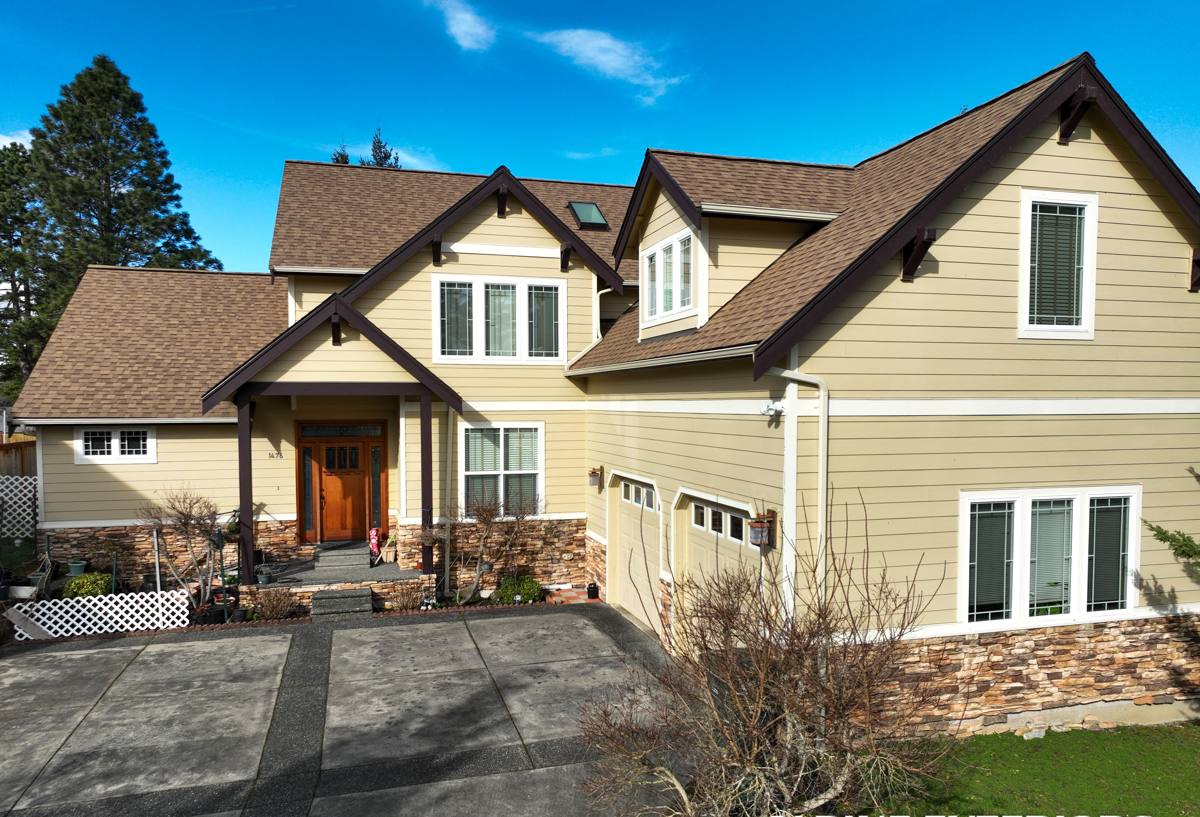
What Correct James Hardie Installation Involves in This Environment
A Real Drainage Plane, Not Just a Weather-Resistive Barrier
Every Hardie installation should include a code-compliant water-resistive barrier, but in a climate with this much sustained moisture, we also build in a drainage gap wherever conditions call for it — usually with a furring strip or drainage wrap system behind the siding. That gap lets bulk water that gets past the cladding drain and evaporate instead of sitting against the sheathing. On shaded, tree-covered walls that stay damp longer, that gap is often the difference between siding that lasts decades and one that traps moisture behind it for years without anyone noticing.
Fastening, Clearances, and Flashing
James Hardie's own installation instructions specify fastener type, spacing, and penetration depth, plus minimum clearances from grade, roof lines, and decks. On rural Deming properties with uneven grading, forested slopes, or ground-contact vegetation, those clearances get skipped more often than you'd expect on production-built homes. We hold to Hardie's published clearances and flash every window, door, deck ledger, and roof-to-wall intersection correctly — because a single missed flashing detail is a common source of hidden rot behind siding that otherwise looks fine from the yard.
Factory Finish Where It Matters Most
ColorPlus factory-applied finish is baked on under controlled conditions and backed by its own finish warranty, which matters more in a climate that alternates between soaking rain and moss growth than in drier parts of the state. Field-painted siding depends entirely on paint adhesion holding up against constant moisture cycling; a factory finish removes a lot of that variability from day one.
Common Problems We See on Wooded and Rural Deming Properties
- Moss and algae staining concentrated on shaded, north- or east-facing walls under tree canopy
- Trim and lower courses of old siding rotted from ground contact or vegetation growing against the wall
- Gutter overflow near heavily treed rooflines sending sheet water directly down the siding face
- Missing or degraded weather barrier behind older siding, discovered only during tear-off
- Well-water irrigation or sprinkler overspray leaving mineral staining on lower siding courses
- Long gravel driveways kicking up dust and debris that accelerates surface wear near grade
Most of these aren't dramatic failures — they're slow, cumulative issues that show up as maintenance headaches years before they'd ever be called an emergency. Catching them at the tear-off stage, before new siding goes up, is far cheaper than discovering rotted sheathing after the fact.
Our Process, Start to Finish
- On-site walkthrough: we look at your current siding, trim, flashing, and any moisture or moss patterns specific to your lot's sun exposure and tree cover.
- Written estimate: a clear scope covering tear-off, weather barrier and drainage plane approach, trim, and the specific James Hardie products and colors that fit your home.
- Tear-off and inspection: we remove old siding and check sheathing for hidden rot before anything new goes on — this is where problems from years of moisture exposure actually get found.
- Weather barrier and drainage detailing: correct house wrap or building paper, flashing at every penetration, and a drainage gap where conditions warrant it.
- Hardie installation to spec: proper fastener schedule, clearances from grade and roof lines, and factory-mitered or field-cut trim done to manufacturer tolerances.
- Final walkthrough: we go over the finished work with you before calling the job done.
James Hardie Product Lines That Fit Deming's Wooded Lots
Hardie's HZ10 formulation is engineered for cooler, wetter climate zones like ours, and within that line there are a few product choices that matter more on shaded, tree-covered properties than on open, sunny ones.
| Product | Best Fit For | Why It Matters Here |
|---|---|---|
| HardiePlank lap siding | Most Deming homes, standard walls | Widest color range in ColorPlus finish; proven track record in wet, shaded conditions |
| HardiePanel vertical siding | Accent walls, gable ends, shop or outbuilding exteriors | Sheds sideways-driven rain well on exposed gable faces |
| HardieShingle siding | Accent areas, dormers, cottage-style facades | Adds texture without sacrificing fiber cement's moisture resistance |
| HardieTrim boards | Corners, fascia, window and door trim | Non-combustible, won't absorb moisture and swell like wood trim near ground contact |
Color choice matters here too. Darker ColorPlus tones can make moss and algae staining less visually obvious between cleanings, while lighter tones show it faster but also make it easier to spot early. Either way, ColorPlus finish resists fading and cracking far better than field-applied paint under constant damp-to-dry cycling.
Why We Don't Install Alternatives
We get asked why we don't offer vinyl, LP SmartSide, or cedar as options. Vinyl can warp and its seams are a long-term moisture entry point in a climate this wet. Engineered wood products like LP SmartSide depend on an intact factory coating to keep moisture out of a wood-based substrate — any breach at a cut edge or fastener hole becomes a slow-moving problem in a climate that stays damp for months at a time. Cedar and primed spruce require ongoing refinishing to hold up, which is a real maintenance commitment on a shaded, hard-to-access wall. None of these are bad products in every setting — they just aren't what we're willing to warranty our installation work against in this specific climate, which is why we standardized on non-combustible, factory-finished fiber cement.
Cost Factors for a Deming Siding Project
| Factor | Why It Affects Cost |
|---|---|
| Tear-off vs. overlay | Full tear-off costs more up front but is the only way to find and fix hidden moisture damage |
| Home size and wall complexity | Gables, dormers, and multiple roof lines mean more flashing and cutting |
| Access and driveway length | Long rural driveways and limited staging area can affect material delivery and setup time |
| Trim scope | Full HardieTrim replacement vs. spot repair changes both material and labor cost |
| Existing damage found at tear-off | Rotted sheathing or framing repairs are priced separately once uncovered |
| Color and product mix | Mixing lap, panel, and shingle products for accent areas adds labor over a single product run |
We won't quote a number here that doesn't apply to your specific home — every estimate is a walkthrough first, written scope second.
Maintenance Checklist for Wooded, Rural Properties
- Trim back branches and vegetation that keep siding shaded and damp longer than the rest of the house
- Clean gutters at least twice a year where heavy tree cover is nearby, so overflow doesn't sheet down the siding
- Rinse moss- and algae-prone walls with a gentle wash on a schedule that fits your specific shade pattern
- Keep sprinklers and irrigation from spraying directly onto siding to avoid mineral staining
- Check that mulch, soil, or gravel hasn't crept up to reduce required clearance at the base of the wall
- Walk the exterior once a year looking for caulking gaps at trim and window edges before winter rains set in
Why Hire a Crew That Already Works in Deming
A crew that regularly works this part of Whatcom County already understands how tree cover, valley moisture, and rural lot layouts change the job — where drainage details matter most, which walls will fight moss no matter what color you pick, and how to stage a job on a long gravel driveway without losing a day to access problems. That's different from a general contractor pricing a Deming job the same way they'd price one in a dry, open neighborhood across the county. We install James Hardie exclusively, to manufacturer spec, because we've seen what happens when shortcuts meet this particular climate, and we'd rather do the job right the first time than get called back for moisture damage in five years.
If you're weighing a siding replacement or repair on a Deming-area home, we're happy to walk the property with you and give you a straightforward, no-pressure estimate — just fill out the form below to get started.