 Lynden Siding
 Why Deming Homes Wear Out Their Siding Faster Than You'd Expect
Deming sits in the Nooksack River valley at the foot of the North Cascades, and that setting shapes everything about how siding ages here. The tree cover and river-bottom humidity keep exterior walls damp longer after every rain than they would in a more open, drier part of Whatcom County. Add the driving, wind-pushed rain that rolls up the valley off the marine air mass to the west, and you have a recipe for siding that stays wet on the north and west-facing walls for days at a stretch during the fall and winter months.
That prolonged dampness is what drives moss and algae growth on siding, trim, and roof edges — a problem that shows up earlier and spreads faster on homes tucked under conifers than on homes out in the open. Moss holds moisture against the surface of whatever it's growing on, which is a bigger deal for wood-based products than most homeowners realize. It's also why gutters, downspouts, and the bottom courses of siding near grade take a beating here: constant splash-back and slow-draining ground keep those lower boards wet even when the rest of the wall has dried out.
None of this means Deming homes need to fight a losing battle against the weather. It means the siding material and the installation details have to be matched to what this specific valley climate actually does to a wall over 20 or 30 years, not what a generic product spec sheet assumes.
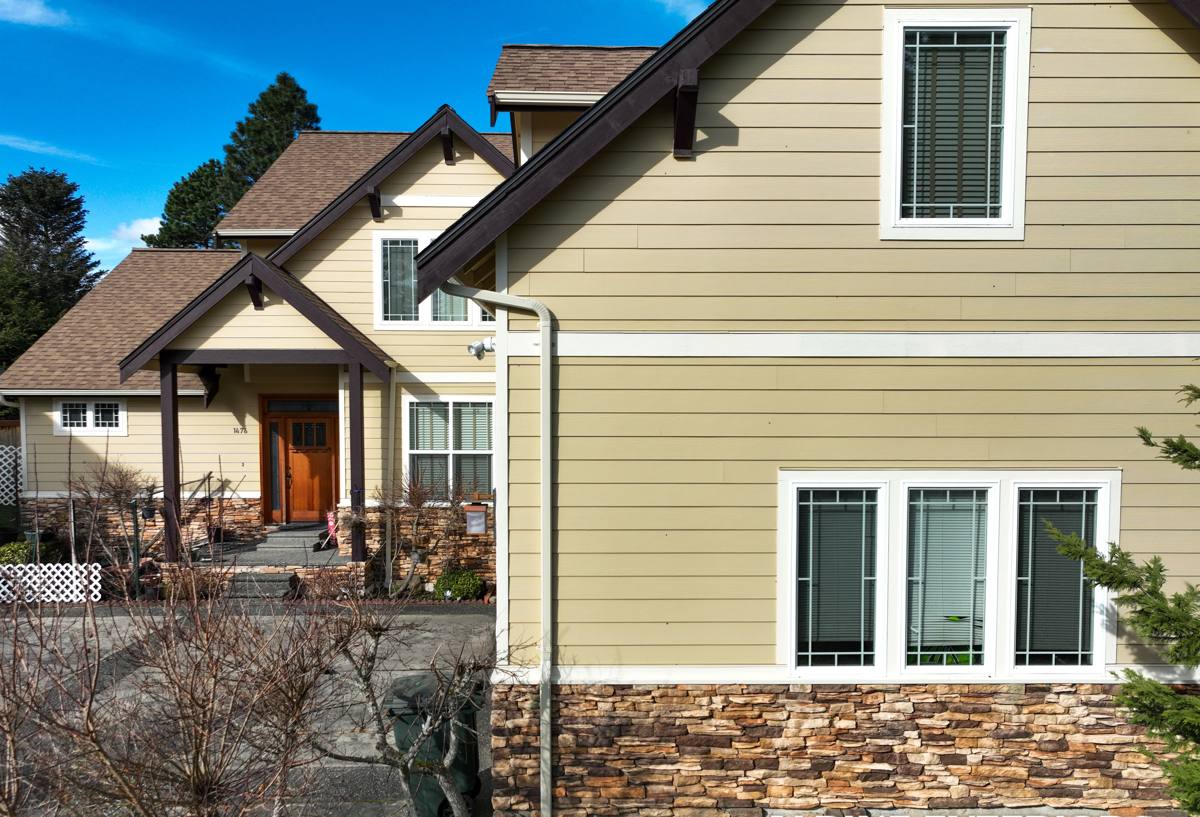
What "Correct" Fiber Cement Installation Actually Requires Here
Fiber cement is a strong product on paper, but it only performs as advertised when it's installed to the manufacturer's specifications — and in a damp, tree-shaded valley like Deming, the margin for error is smaller than it is in a drier climate.
Clearances and Flashing
Fiber cement siding needs proper clearance from grade, roof lines, decks, and horizontal surfaces so water has somewhere to go instead of wicking up into the bottom edge of the boards. Every window, door, and penetration needs correctly lapped flashing and housewrap integration — not just caulk — because caulk alone fails long before the siding does, and once water gets behind the cladding it doesn't dry out quickly in a shaded, humid valley setting.
Fastening and Joints
Fastener placement, nailing patterns, and butt joint treatment all affect how well a wall sheds water over time. Joints that aren't properly caulked, primed, or shielded with a joint flashing strip become the first place moisture — and eventually moss and mildew staining — takes hold.
Factory-Finished Coatings
A factory-applied finish matters more in a climate like this than it does somewhere dry, because a field-painted product has more seams in its protective coating for water to find. A consistent, factory-cured finish holds up to years of damp cycling without the touch-up painting that field-finished siding eventually demands.
Why We Install Only James Hardie Fiber Cement
We made a decision as a company to install James Hardie fiber cement siding exclusively — not LP SmartSide, not vinyl, not Cemplank or Allura, not primed spruce or cedar. That's not a marketing angle; it's a standard we hold because of what we've seen matching materials against climates like Deming's over years of local exterior work.
Fiber cement in general resists the two things that punish siding in this valley: sustained moisture and organic growth. It's non-combustible, dimensionally stable, and doesn't swell, rot, or feed fungal growth the way wood-based and engineered-wood products can when they stay damp. Within fiber cement, James Hardie is what we standardize on because of the specifics: their HZ5 product line is engineered for the kind of freeze-thaw and moisture cycling this region sees, their ColorPlus finish is a factory-baked coating with a dedicated finish warranty, and their transferable product warranty gives homeowners real protection if they sell the house before the siding's service life is up.
We're not going to tell you every other product is junk — vinyl and engineered wood have real uses and real advantages in the right application. But for a Deming home sitting under tree cover with a long wet season ahead of it every year, we don't think it's honest to sell a homeowner something we don't believe will hold up as well as Hardie does, so we don't install it.
Our Installation Process for Deming Projects
- On-site assessment: We walk the property, check existing siding and trim for moisture damage, moss buildup, and drainage issues, and look at how sun exposure and tree cover vary wall by wall.
- Substrate and moisture barrier check: Before new siding goes up, we confirm the housewrap or weather-resistive barrier is intact and correctly lapped, and we address any water intrusion or rot we find underneath.
- Flashing and clearance details: Every window, door, deck ledger, and roof intersection gets flashed to shed water outward, with proper clearance maintained at grade and horizontal surfaces.
- Hardie installation to spec: Boards, panels, or shingle-style siding go up following James Hardie's fastening, nailing, and joint-treatment requirements — not shortcuts.
- Trim, caulking, and final detailing: Joints, corners, and penetrations are sealed and finished so the wall assembly works as a system, not a collection of separate parts.
- Walkthrough: We go over the finished job with the homeowner, including what maintenance to expect given the property's specific sun and moisture exposure.
Cost Factors for a Deming Fiber Cement Project
Every home is different, but the same handful of factors drive most of the cost variation we see on Deming jobs specifically:
| Factor | Why It Matters in Deming |
|---|---|
| Existing siding removal | Wood or older siding with moisture or moss damage often needs more substrate repair before new siding goes on |
| House size and wall complexity | More corners, gables, and dormers mean more flashing and cutting time |
| Tree cover and access | Wooded lots can mean more setup, staging, and cleanup around landscaping |
| Hardie product line chosen | Panel style, plank exposure, and shingle-style profiles vary in material cost |
| Trim and detail work | Window and door surrounds, fascia, and soffit work add labor beyond the flat wall area |
Living With Moss Season: What Ongoing Maintenance Looks Like
Even with the right material and a correct install, no siding in this valley is entirely maintenance-free. What changes with Hardie fiber cement is how forgiving that maintenance is.
- Rinse siding periodically to keep moss spores and organic buildup from taking hold, especially on shaded north and west walls
- Keep gutters clear so overflow doesn't run down the wall face and feed moss growth near the top courses
- Trim back tree limbs and shrubs that hold moisture against the siding or block sun and airflow
- Check caulking at trim joints and penetrations annually and touch up as needed
- Watch the bottom courses near grade and any splash zones near downspouts or low decks for early staining
Because Hardie's finish and substrate aren't feeding organic growth the way wood-based products can, a rinse-and-inspect routine goes a lot further than it would on cedar or primed wood siding sitting under the same tree canopy.
Signs a Deming Home's Siding Needs Attention
A few warning signs come up often on the homes we look at in this area:
- Persistent moss or algae staining that comes back within weeks of cleaning
- Soft or spongy spots, especially near the bottom courses or under windows
- Paint that's peeling or bubbling rather than just fading
- Visible gaps, warping, or separation at joints and corners
- Interior signs of moisture near exterior walls, like musty smells or staining on interior drywall
Any one of these is worth a look before it turns into a bigger repair. Catching moisture intrusion early, before it reaches framing or sheathing, is almost always the difference between a straightforward siding job and a much more involved repair.
Why It Matters That We Already Work in Deming
A crew that's worked this specific stretch of the Nooksack valley knows which walls on a typical Deming lot take the worst of the wind-driven rain, how fast moss comes back under heavy tree cover, and what the drainage and grading around older homes here tends to look like. That local pattern recognition shows up in small decisions during an install — where to add extra flashing attention, which walls need a closer look at the substrate before covering it up — that a crew unfamiliar with this specific valley climate might not think to flag.
It also means straightforward logistics: knowing local permitting expectations, being able to schedule around this area's wet-season weather windows, and being reachable if a question comes up after the job is done.
If you're weighing options for your Deming home's siding, we're happy to come take a look, walk the property with you, and talk through what we'd recommend and why — no pressure, no obligation. Reach out using the form below to schedule a free estimate.