 Lynden Siding
 Blaine sits right on the water where Whatcom County's coastline meets the open Salish Sea, and that location makes for one of the more demanding window climates in the county. Salt-laden marine air, wind-driven rain that comes in sideways off the bay rather than falling straight down, and a wet season long enough to keep moss growing on anything that holds moisture — all of it works against window frames, hardware, and seals year after year. A window that would last decades a few miles inland can start showing problems much sooner here if it wasn't installed with this environment in mind.
None of that means windows in Blaine are doomed to fail early. It means the material choices, the flashing details, and the hardware all need to account for the environment from the start, instead of treating a waterfront Blaine home the same as a sheltered inland property.
Why Blaine's Marine Climate Is Hard on Windows
Salt Air and Metal Components
Airborne salt accelerates corrosion on anything metal — hinges, cranks, locks, screws, and aluminum framing components. Left unprotected, hardware can pit, stiffen, or seize over time, and screens or weep-hole covers can corrode noticeably faster than they would inland. This is one reason hardware finish and frame material matter more on a Blaine home than on a typical interior Whatcom County job.
Wind-Driven Rain and Water Intrusion
Rain falling straight down is relatively easy for a window to shed. Rain being pushed sideways by wind off the water is a different problem — it gets forced up under trim, into gaps around the frame, and behind siding if the flashing wasn't done correctly. A window can look fine on a calm day and still leak during a winter storm if the water management behind it wasn't built for wind-driven rain in the first place.
The Long Moss Season
Shaded walls and damp, mild winters in this part of Whatcom County support a moss and algae season that runs most of the year on north- and west-facing surfaces. Moss holding against a sill or lower sash keeps that surface wet far longer than it should be, which is exactly the kind of sustained moisture that leads to rot in wood trim and premature seal failure.
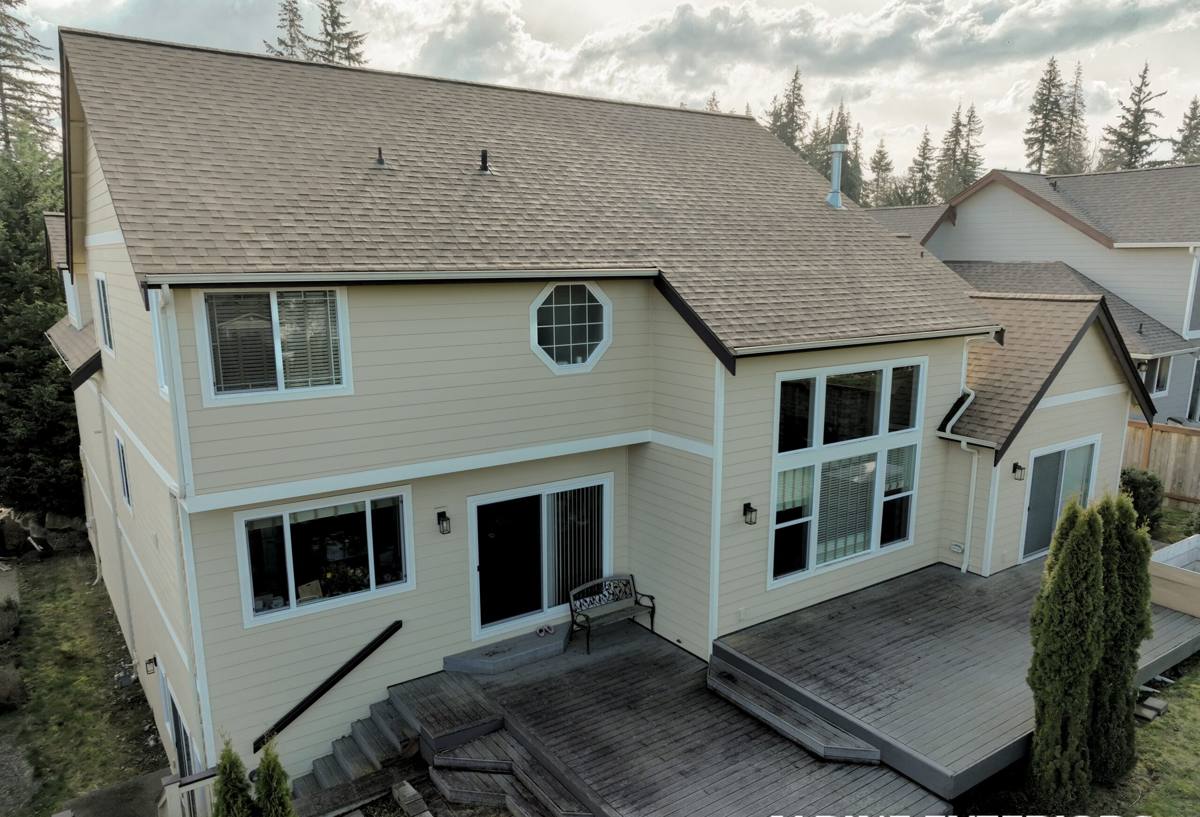
What a Correct Window Installation Involves Here
The window unit itself is only part of the job. How it's tied into the wall — the flashing sequence, the sealant, the path water takes if it gets past the outer seal — is what actually determines whether it holds up through a Blaine winter.
Flashing and Water Management
A proper install builds in a drainage path so any water that gets past the outer seal runs back out instead of sitting against the framing. That means a sill pan under the rough opening, correctly lapped flashing tape and house wrap above and below the window, and head flashing that sheds water past the top of the unit rather than trapping it. Caulk should be a backup line of defense, not the primary one.
Sealants and Fasteners for Salt Exposure
We use exterior-grade sealants rated for the temperature swings and UV exposure of coastal Western Washington, and stainless or coated fasteners on the sections of a home most exposed to salt spray and prevailing wind. That costs a little more up front than standard hardware, but it's cheaper than replacing corroded components a few years down the road.
Choosing Window Materials for a Blaine Home
There's no single best material for every house on this stretch of coastline — it depends on the home's exposure, your maintenance appetite, and your budget. Here's a general comparison of how common frame materials hold up in a salt-air, high-rainfall setting like Blaine.
| Frame Material | Salt & Moisture Resistance | Maintenance | General Cost Range |
|---|---|---|---|
| Vinyl | Good — won't rot or corrode; very low-grade vinyl can become brittle with age | Low | Lower |
| Fiberglass | Very good — dimensionally stable through temperature swings | Low | Mid to higher |
| Aluminum | Fair — can corrode near salt air unless well coated; conducts cold | Moderate | Varies |
| Wood / Wood-Clad | Needs the most protection from sustained moisture and salt exposure | High — regular painting or staining | Higher |
For most Blaine homes we work on, vinyl or fiberglass frames end up being the practical choice, since they hold up well against salt air and repeated wetting without the upkeep that wood or bare aluminum demand. That's not a rule against wood or aluminum — either can be the right call for a specific look or an older home — but we'll walk through the maintenance trade-off honestly before you commit to one.
Insert Replacement vs. Full-Frame Replacement
Homeowners often assume every window replacement works the same way, but there are two different approaches, and the right one depends on the condition of what's already in the wall.
Insert Replacement
A new window goes into the existing frame, which stays in place. It's faster and less disruptive to interior and exterior trim, and it works well when the existing frame and surrounding wall are still sound and dry.
Full-Frame Replacement
The old window and its frame come out entirely, exposing the rough opening down to the framing. This is the right approach when there's already water damage, soft wood, or a flashing failure behind the old window — which shows up often enough on older, more exposed Blaine properties that it's worth checking for before assuming an insert will do.
We'll tell you honestly which approach your home needs rather than defaulting to whichever is quicker for us.
Signs Your Current Windows Are Losing the Fight
Because of the moss season and steady damp, a lot of the wear we find in Blaine homes develops slowly and gets noticed only once it's fairly advanced. Common signs include:
- Fogging or moisture trapped between panes on a double-glazed unit — a sign the seal has failed
- Soft, discolored, or spongy wood trim around the window frame
- A window that's become hard to open, close, or lock compared to how it used to operate
- Visible moss or dark streaking building up on sills and lower trim
- Noticeable drafts or a cold spot near the window, especially on windy days
- Stiff, gritty, or corroded hardware — cranks, hinges, or locks that resist smooth operation
Any one of these on its own isn't necessarily an emergency, but a few of them together usually means the window, and possibly the wall behind it, needs a closer look before the next wet season sets in.
Our Process for a Blaine Custom Windows Project
1. On-Site Assessment
We look at more than the glass — the condition of the surrounding trim, siding, and wall assembly matters just as much, since a new window installed into a compromised opening will fail the same way the old one did.
2. Measurement and Product Selection
We measure precisely for the actual opening rather than assuming standard sizes, and walk through frame material, glass package, and hardware options based on which side of the house is being addressed — a window facing the prevailing wind and water gets treated differently than one on a sheltered wall.
3. Removal and Opening Prep
Old windows come out carefully so we can inspect the rough opening for hidden rot or past water damage before anything new goes in. Any damaged framing gets repaired first — closing a new window into a bad opening just hides the problem instead of solving it.
4. Installation
This is where the sill pan, flashing, insulation, and sealant work described above comes together, followed by careful interior and exterior trim work to match the rest of the home.
5. Cleanup and Walkthrough
We clear the site of old materials and debris and walk through the finished windows with you, including how they operate and what basic maintenance to expect going forward.
Energy Performance in a Marine Climate
Whatcom County winters aren't extreme in temperature, but Blaine's exposure to wind off the water means air infiltration is often a bigger comfort issue here than raw cold. A tight, correctly installed window with a good seal does more for comfort and heating costs than chasing the highest possible glass rating on a window that's poorly sealed into the wall. Double-pane, low-E glass is the standard choice for most homes in the area; triple-pane can make sense on walls that take the brunt of the wind and rain, but it isn't necessary on every window in the house.
Maintenance That Matters for Blaine Windows
Even a well-installed window needs some upkeep in this climate. A short seasonal routine goes a long way toward protecting the investment:
- Rinse salt residue off frames and glass a few times a year, especially after storms
- Clear moss and debris from sills and tracks before it holds moisture against the frame
- Check and lubricate hardware — locks, cranks, hinges — if it starts feeling stiff
- Inspect exterior caulking annually and re-seal any cracked or separated joints
- Keep gutters and downspouts clear so roof runoff isn't sheeting down across window trim
Why Local Blaine Experience Matters
A crew that's already worked on homes in Blaine knows which walls take the worst of the wind and salt, what the older housing stock in the area tends to have behind the siding, and which details actually matter here versus what's fine for a more sheltered inland job in Lynden or elsewhere in Whatcom County. That kind of judgment comes from doing the work in this specific environment repeatedly, not from a general installation checklist applied the same way everywhere.
If you're weighing new or replacement windows for a Blaine home, we're glad to take a look and give you a straightforward, no-pressure estimate — just fill out the form below.