 Lynden Siding
 Custer's Climate Is Harder on a Roof Than It Looks
Custer sits close enough to the Salish Sea coastline that salt-laden air travels further inland than most homeowners expect, settling on roof surfaces and slowly working at metal fasteners, flashing, and exposed edges. Add Whatcom County's long wet season, driving rain that comes in sideways off winter storms, and shaded, slow-drying rooflines that stay damp for months at a time, and you get a climate that ages roofing material faster than the manufacturer's brochure suggests. Moss isn't a cosmetic problem here — it's a moisture problem that starts small and works its way under shingles if it's ignored for a season or two.
None of this means a roof in Custer is doomed to fail early. It means the installation has to account for these conditions from the start, rather than relying on a generic install that would be fine in a drier climate but falls short here.
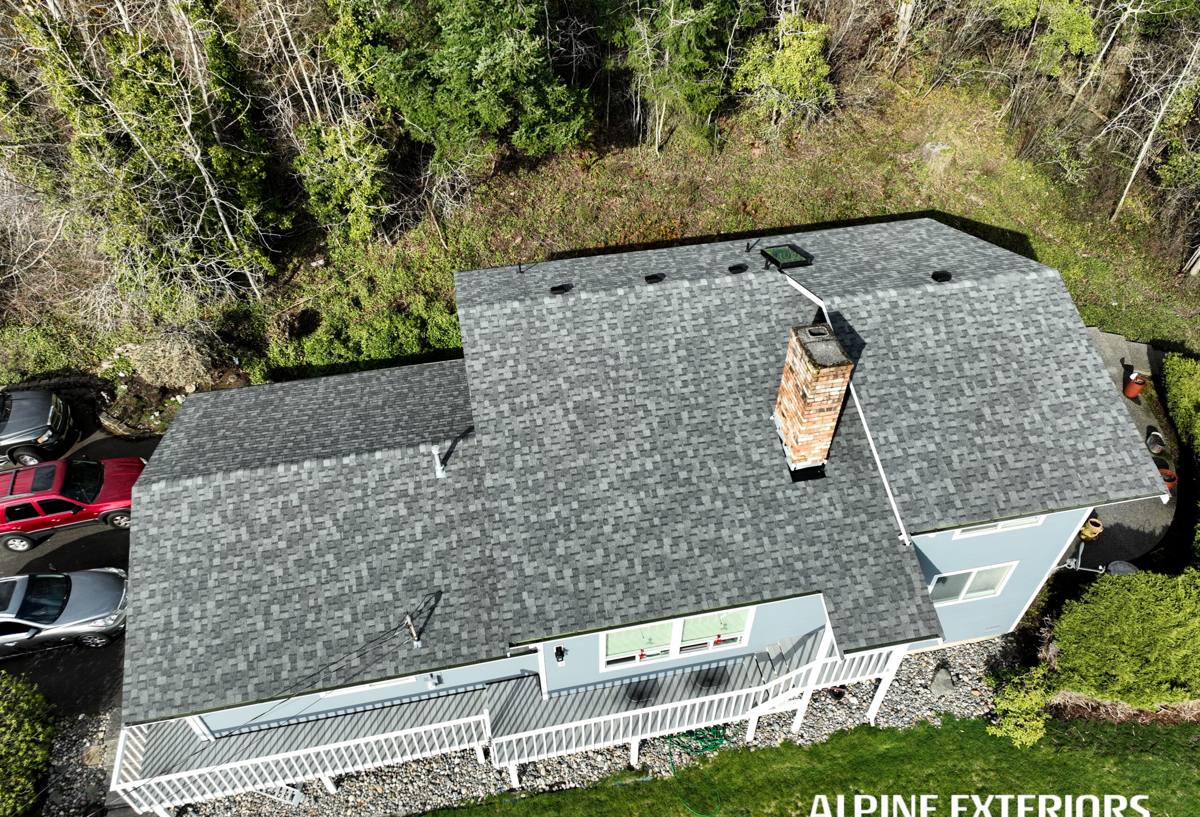
Signs It's Time for a New Roof, Not Another Patch
A lot of roofs get patched two or three times before anyone seriously considers a full replacement. That's often the more expensive path in the long run. Some signs point clearly toward replacement rather than another repair:
- Granule loss heavy enough that you're finding grit in gutters every time it rains
- Shingles that are cupping, curling at the edges, or cracking in multiple areas rather than one isolated spot
- Moss that keeps returning to the same areas within a year of cleaning, which usually signals the shingles underneath are already degraded
- Soft spots in the decking you can feel when walking the roof, or sagging visible from the ground
- Daylight visible through the attic roof boards, or water staining on attic sheathing near valleys and penetrations
- A roof past 20-25 years old (for asphalt composition) that's never had a full tear-off
If you're only dealing with one or two of these and the roof is otherwise sound, a repair may still make sense. A straightforward inspection is the only honest way to tell the difference — anyone quoting a full replacement sight unseen isn't doing you a favor.
What a Correct New Roof Installation Actually Involves
Tear-Off and Deck Inspection
A proper install starts with a full tear-off down to the decking, not a layover on top of old shingles. Layovers trap moisture, hide deck damage, and shorten the life of whatever goes on top. Once the old roofing is off, the decking gets inspected board by board. Any wood that's soft, delaminated, or water-stained gets replaced before anything new goes down — this is the step that's easiest to skip and the most expensive to skip wrong.
Moisture Barrier and Underlayment
In a climate with as much sustained rain as Whatcom County sees, the underlayment matters as much as the shingles themselves. Synthetic underlayment across the full roof, combined with self-adhered ice-and-water membrane at eaves, valleys, and around every penetration, gives the roof a real second line of defense if wind-driven rain ever gets past the surface layer. This detail is invisible once the job is done, which is exactly why it's worth asking about before the crew starts.
Flashing Details
Most roof leaks in this region don't happen through the field of the roof — they happen at flashing: chimneys, skylights, sidewall transitions, and valleys. New flashing, properly lapped and sealed rather than caulked over old flashing, is a non-negotiable part of a correct install. Reusing old flashing to save time is a shortcut that tends to show up as a leak within a year or two.
Attic Ventilation
A roof that traps heat and moisture underneath it ages from below as fast as it weathers from above. Balanced intake and exhaust ventilation keeps the underside of the decking dry and helps prevent the kind of trapped condensation that rots sheathing quietly, out of sight, for years. It also plays a direct role in how long moss takes to establish itself on the shingles above.
Choosing a Roofing Material for a Custer Home
There's no single "best" roofing material — the right choice depends on budget, roof pitch, how long you plan to stay in the home, and how much long-term maintenance you're willing to do. Here's how the common options compare for this specific climate:
| Material | Moss & Moisture Resistance | Salt Air Durability | Typical Lifespan |
|---|---|---|---|
| Asphalt composition shingle (architectural) | Good with proper ventilation; moss-resistant granule options available | Solid; corrosion-resistant fasteners recommended near the coast | 25-30 years |
| Standing seam metal | Excellent — sheds moss and moisture with minimal buildup | Very good with coated, corrosion-resistant panels and fasteners | 40-50+ years |
| Cedar shake | Requires regular treatment and cleaning to resist moss and rot | Moderate; salt air accelerates weathering without upkeep | 20-30 years with maintenance |
We steer most Custer homeowners toward architectural asphalt or metal because both hold up well against this area's moss pressure and moisture without demanding a strict maintenance schedule. Cedar can still be the right call for the look a homeowner wants, but it's an honest trade-off — it asks more of you over time in a climate this wet.
Our New Roof Installation Process
- On-site inspection and honest assessment of whether replacement or repair actually fits your roof's condition
- Written estimate covering material options, tear-off scope, and any decking repair allowances
- Full tear-off to bare decking, with damaged wood replaced and documented before covering it up
- Installation of ice-and-water membrane at vulnerable areas, then synthetic underlayment across the field
- New flashing at every chimney, skylight, valley, and wall transition
- Shingle or metal panel installation to manufacturer spec, including proper nailing patterns and exposure
- Ventilation check and correction where intake or exhaust is inadequate
- Final walkthrough and cleanup, including a magnetic sweep for stray fasteners in the yard and driveway
Cost Factors for a Custer Roof Replacement
Every roof is different, so we won't quote a number without seeing the job — but these are the variables that actually move the price, so you know what you're paying for when a quote comes in:
| Factor | Why It Matters |
|---|---|
| Roof size and number of planes | More square footage and more valleys/hips mean more material and labor time |
| Decking condition | Rotted or soft sheathing found during tear-off adds material and labor not visible in a surface inspection |
| Roof pitch and access | Steep or hard-to-access roofs require more safety setup and slow the work down |
| Material choice | Asphalt, metal, and cedar carry very different material and labor costs per square |
| Number of penetrations | Every vent, skylight, and chimney needs individual flashing work |
| Layers to remove | A tear-off with multiple existing layers takes longer than a single-layer removal |
Why Hiring a Crew That Already Works Custer Matters
A roofing crew that only occasionally works this far into Whatcom County learns the local conditions on your dime. A crew that already works Custer regularly knows which underlayment upgrades are worth the cost here, how much ventilation a given attic actually needs given the moisture load, and where moss tends to establish itself first on local roof designs. That familiarity shows up in fewer callbacks and a roof that's built for the conditions it will actually face — not the conditions in a manufacturer's general installation guide written for a different climate.
It also means faster response if something does come up after the install, since you're not waiting on a crew to drive in from well outside the area.
Caring for Your New Roof Through Whatcom County Winters
A correct installation gets you most of the way to a long-lasting roof — a bit of ongoing attention gets you the rest of the way. A few habits go a long way in this climate:
- Clean gutters at least twice a year so water isn't backing up under the eaves during heavy rain
- Trim back overhanging branches that keep roof sections shaded and slow to dry
- Have moss treated at the first sign of regrowth rather than waiting for a full season of buildup
- Walk the attic once a year (or have it checked) for any staining, daylight, or musty smell
- Schedule a quick visual inspection after any major windstorm to catch lifted or displaced material early
If you're weighing a repair against a full replacement, or you just want an honest read on where your current roof stands, we're happy to take a look. The estimate is free, there's no pressure attached to it, and you can use the form below to get started.