 Lynden Siding
 Board & Batten Siding Built for the Nooksack Valley
Nooksack sits in the farmland east of Lynden, in a stretch of Whatcom County where marine air drifts in off the water and settles into the river valley instead of blowing through. That matters for siding. Board and batten is one of the most requested looks out here — the vertical lines suit the barns, farmhouses, and newer builds that make up the area — but it is also one of the least forgiving styles when the material or the installation is wrong for the climate. Every seam between a board and a batten is a place water can find, and in a valley that holds onto humidity longer than the open coast, a siding system has to shed water and dry out fast, over and over, for decades.
This page is specifically about board and batten siding for Nooksack-area homes. Not board and batten in general, and not siding in general — the specific combination of this look and this climate, and what it actually takes to get it right.
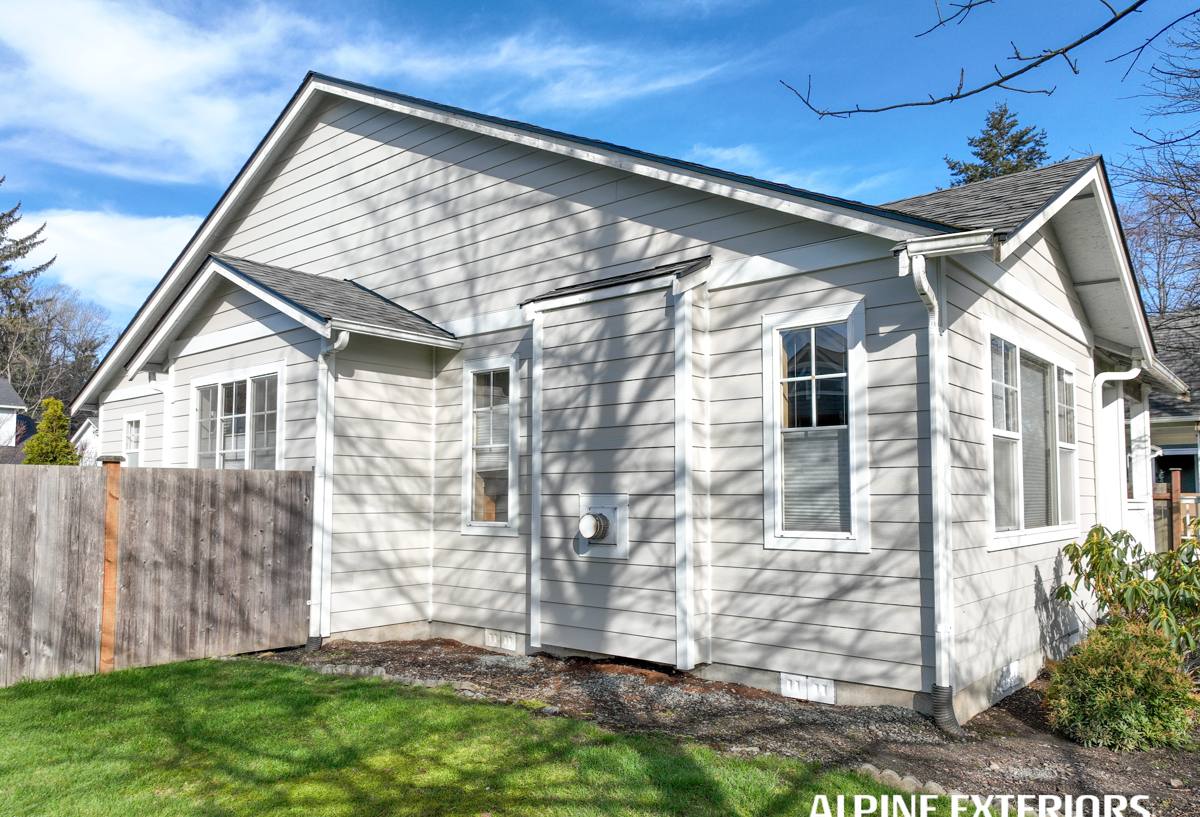
What Salt Air, Driving Rain, and Moss Season Do to Vertical Siding
Three climate factors show up again and again on siding jobs in this part of Whatcom County:
- Salt-laden marine air — corrodes exposed fasteners and accelerates the breakdown of finishes that aren't built to hold a factory-cured coating.
- Driving, wind-pushed rain — rain out here doesn't just fall, it gets pushed sideways into vertical joints, corner boards, and window trim. Any gap in flashing or caulking becomes an entry point.
- A long moss and mildew season — shaded elevations and north-facing walls in the valley can stay damp for months at a stretch, which is exactly the environment moss, algae, and mildew need to take hold on a painted or fiber-based surface.
Board and batten siding is more exposed to all three than a standard horizontal lap profile, simply because it has more vertical seams and more edge exposure per square foot of wall. A batten that isn't fastened and flashed correctly gives moisture a straight path behind the cladding, and once water is trapped behind vertical boards it has nowhere to drain quickly. That's the difference between a board and batten job that looks sharp for thirty years and one that's cupping, staining, or rotting at the bottom courses within five.
Why We Install James Hardie for This Look, Not Alternatives
Board and batten is traditionally associated with wood — cedar, primed spruce — or with newer engineered wood products like LP SmartSide. We don't install those, and in a climate like Nooksack's, the reasons matter more than usual:
Wood-based battens and boards, whether solid cedar or engineered wood panel, rely on a factory or field-applied coating to keep moisture out of the substrate. Once that coating is compromised at a cut end, a nail hole, or a seam — which is inevitable on a profile with this many joints — the underlying wood can absorb water and swell, and repeated wet-dry cycles through a long moss season shorten the product's life. Vinyl board and batten avoids the rot question but has its own limits here: it flexes and can crack in cold snaps, its color is baked in rather than factory-cured over a fiber substrate, and it doesn't hold up visually as a premium, custom look the way a fiber cement board and batten system does.
James Hardie's vertical siding system — HardiePanel vertical panels paired with HardieTrim battens — is fiber cement, not wood. It doesn't absorb water the way wood does, it won't support rot, and it's manufactured with a factory-applied ColorPlus finish that's baked on and warranted against fading and peeling far beyond what a field-applied paint job on cedar or spruce will do. Hardie's HZ5 product line is also engineered specifically for wetter, harsher climates like the Pacific Northwest — not a generic national product retrofitted for our conditions. That combination is why board and batten on our crews means Hardie, full stop.
What a Correct Board & Batten Installation Actually Involves
Rain Screen and Drainage Behind the Panel
The single biggest factor in how long board and batten siding lasts in this climate is what's happening behind it, not what you see on the surface. A drainage gap (rain screen) between the panel and the weather-resistive barrier lets any moisture that does get past the surface drain down and out instead of sitting against the sheathing. Skipping this step to save time is the most common shortcut we see on failed board and batten jobs, and it's invisible until the siding is already failing.
Flashing and Sealant at Every Penetration
Windows, doors, hose bibs, light fixtures, and the top and bottom terminations of each wall all need proper flashing, not just caulk. Caulk is a maintenance item; flashing is the actual water management. In driving rain, a joint that relies on caulk alone will eventually fail — it's a question of when, not if.
Batten Spacing and Fastening Pattern
Battens need consistent, manufacturer-specified spacing and fastener placement — over-driven or under-driven nails, wrong fastener spacing, or battens fastened directly through the panel into structural framing without accounting for expansion all shorten the system's service life and can void the manufacturer's warranty. This is a profile where installation quality shows up as a straight, clean grid — sloppy spacing is visible from the street, not just a technical defect.
Bottom Clearance and Grade
Board and batten run vertically all the way to grade in a lot of designs, but the bottom edge still needs proper clearance from soil, hardscape, and roof lines to avoid wicking moisture up from below — a detail that's easy to compromise on if the crew is chasing a clean look over a durable one.
Our Process for Nooksack Board & Batten Projects
1. On-Site Assessment
We walk the exterior, check current siding and trim condition, look at drainage paths around the foundation, and identify any moisture damage already present behind existing cladding — common on older homes in the area where the original siding has been holding water for years without anyone knowing.
2. Tear-Off and Prep
Old siding comes off, sheathing gets inspected and repaired where needed, and the weather-resistive barrier and rain screen are installed correctly before a single panel goes up. This step is where most of the long-term performance of the job is actually decided.
3. Panel and Batten Installation
HardiePanel goes up per Hardie's fastening schedule for our exposure category, with flashing integrated at every window, door, and penetration as the wall is built up — not added afterward. Battens are set to consistent spacing and fastened per spec.
4. Final Walkthrough
We check caulking, paint lines, and fastener finish, and walk the exterior with the homeowner before calling the job done.
Board & Batten Material Comparison
| Material | Moisture Resistance in a Wet Valley Climate | Finish Longevity | Long-Term Maintenance |
|---|---|---|---|
| Cedar / Primed Spruce | Absorbs water at cuts, seams, and fastener holes; relies on coating integrity | Field-applied paint or stain, typically 5-8 years before recoat | Highest — regular repainting, caulk checks, rot inspection |
| Vinyl Board & Batten | Doesn't rot, but can trap moisture behind panels; flexes and can crack in cold | Color molded in, fades over time, cannot be repainted easily | Low, but limited repair options if damaged |
| Engineered Wood (e.g. LP SmartSide) | Wood-based core; vulnerable if coating is breached at edges | Factory primed, still needs field topcoat and maintenance | Moderate — edge sealing and coating upkeep matter |
| James Hardie Fiber Cement | Non-combustible, doesn't absorb and swell like wood; engineered HZ5 line for wet climates | Factory-applied ColorPlus finish, warranted well beyond field paint | Low — periodic wash, watch caulk lines |
Cost Factors for a Board & Batten Project in This Area
| Factor | Why It Moves the Price |
|---|---|
| Tear-off scope | Full removal of old siding and any hidden sheathing repair adds labor before the new system goes on |
| Wall height and complexity | Multi-story walls, dormers, and lots of window/door trim mean more flashing and cutting |
| Rain screen system | Proper drainage detailing behind the panel is a real material and labor cost, and it's the step that protects the investment long-term |
| Batten spacing/pattern | Tighter batten spacing for a custom look uses more trim material and installation time |
| Trim and corner detail | Board and batten reads as a premium look partly because of corner and trim treatment, which adds cost over a basic lap job |
We give straight, itemized numbers on-site rather than broad national averages that don't reflect what a valley-climate installation actually requires here.
Maintenance Checklist for Board & Batten Homes in Nooksack
- Rinse siding annually to remove salt residue and slow moss/algae growth on shaded walls
- Inspect caulking around windows, doors, and penetrations each fall before the wet season sets in
- Check the bottom edge of siding near grade and hardscape for soil buildup or standing water
- Look for any staining, cupping, or soft spots at batten joints, which can signal a flashing issue
- Keep gutters clear so overflow doesn't run down the wall behind the siding
- Trim back vegetation and tree cover where it's keeping a wall shaded and damp longer than the rest of the house
Why a Crew That Already Works Nooksack Matters
Board and batten installed to a generic national spec doesn't automatically hold up to a Whatcom County valley climate. A crew that already works this area knows which walls take the worst of the driving rain, how long moss season actually runs here, and where salt-air corrosion shows up first on fasteners and trim. That local knowledge shows up in small decisions — fastener choice, rain screen detailing, where to add extra flashing — that a crew unfamiliar with the area might not think twice about. It also means service after the install isn't a phone call to a distant office; it's a crew that's still working roads away.
If you're weighing board and batten for a home in the Nooksack area, we're glad to walk the exterior with you, point out anything specific to your walls and exposure, and give you a straightforward, no-pressure estimate — fill out the form below to get started.