 Lynden Siding
 Why Blaine Roofs Need a Different Kind of Storm Repair
Blaine sits at the edge of Whatcom County, close enough to the water that homes here take weather most inland houses never see. Wind off the water hits roofs harder, rain comes in sideways more often than straight down, and the salt in the air works on metal and fasteners year-round, not just during a storm event. A repair crew that only deals with typical inland wind damage can miss the things that matter most in a coastal Whatcom County town — and a roof patched the wrong way here tends to fail again within a season or two.
This page covers what storm damage actually looks like on a Blaine roof, what a correct repair involves, and how we handle the job from first call to final walkthrough.
What Blaine's Weather Does to a Roof Over Time
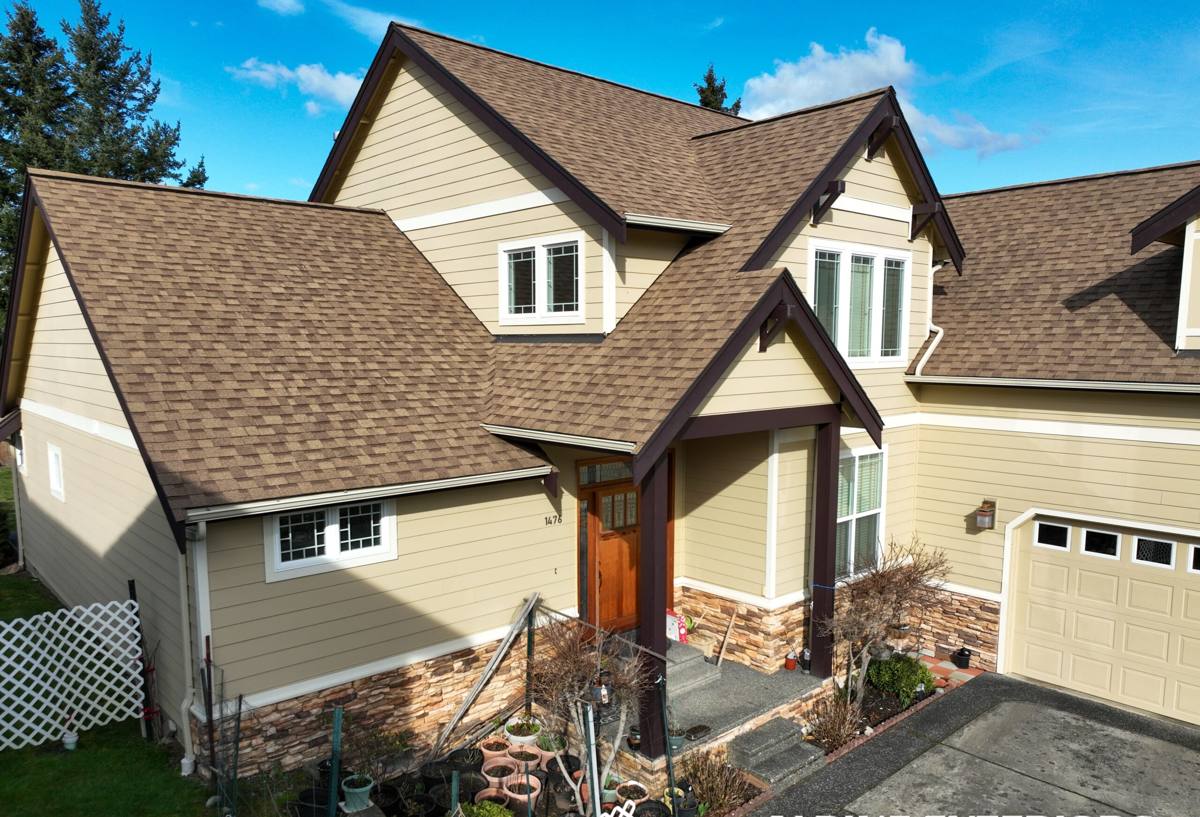
Three things define roofing conditions in this part of Whatcom County: salt air, driving rain, and a moss season that runs longer than most homeowners expect.
Salt-laden air corrodes exposed fasteners, flashing edges, and metal drip edge faster than it would a few miles inland. A nail or flashing seam that would hold up for decades elsewhere can start to rust and lose its grip in well under that here. Driving rain — wind-driven, not just falling straight — gets pushed sideways under shingle tabs, around poorly sealed flashing, and into any gap a storm has opened up. It's this combination of wind and rain together, not either one alone, that turns a small storm ding into an active leak. And the region's long, damp moss season means any roof that isn't cleaned and maintained builds up moisture-holding growth that works its way under shingle edges, holding water against the roof deck long after the storm itself has passed.
None of this means Blaine roofs are doomed — it means the repair has to account for these conditions specifically, not just patch what's visibly broken.
What Actually Counts as Storm Damage
Not every problem after a windstorm is obvious. Some of the most common issues we find on Blaine roofs after weather events include:
- Shingles lifted, cracked, or blown off entirely, especially near ridges and roof edges where wind pressure is highest
- Ridge cap shingles loosened or missing — often the first thing to go in a wind event
- Granule loss from shingles being pelted by wind-driven rain and debris, which shows up as bald patches or granules collecting in gutters
- Flashing pulled away or bent around chimneys, vents, and skylights
- Soft spots or discoloration on the underside of roof decking, a sign that water has already gotten past the surface layer
- Gutter and downspout damage that lets water pool against the roofline instead of draining away
Some of this is visible from the ground. Most of it isn't, which is why a proper storm inspection means getting on the roof, not just looking up at it from the driveway.
What a Correct Storm Repair Involves
Inspection Before Anything Else
A correct repair starts with figuring out the actual extent of the damage, including damage that isn't visible from below. That means checking the roof deck, the flashing details, the ridge and valley lines, and the condition of the underlayment underneath the shingles — not just replacing what's obviously missing and calling it done.
Matching Materials, Not Just Covering Gaps
Shingles vary by manufacturer, line, and even production run — color and profile can drift over a few years. We match as closely as materials allow so a repair doesn't stand out as an obvious patch, and we're upfront when an exact match isn't possible.
Flashing and Underlayment Done Right
Most repeat leaks trace back to flashing that was reused or resealed instead of replaced, or underlayment that wasn't extended far enough past the damaged area. Given how much wind-driven rain this area sees, we treat flashing and underlayment as the part of the job that determines whether the repair actually holds.
Ridge and Valley Detail
Ridges and valleys take the most wind pressure and carry the most water volume during a storm. These areas get extra attention on every repair, since a shortcut here is usually where the next leak starts.
Our Process, Start to Finish
1. Assessment
We inspect the roof in person, document what we find, and explain what's storm damage versus what's pre-existing wear. You get a clear picture before any work starts.
2. Temporary Protection, If Needed
If there's active exposure to the deck, we get it covered and protected first so the situation doesn't get worse while repair materials are sourced.
3. The Repair Itself
We remove and replace damaged materials down to sound decking, install matched shingles and correctly detailed flashing, and check ventilation and moss buildup in the surrounding area while we're up there — it's more efficient to address related issues in one visit than to come back for something we already saw.
4. Cleanup and Walkthrough
We clear debris, check gutters for granules and blockages, and walk the finished repair with you so you know exactly what was done and why.
Repair or Replace?
Most storm damage is repairable. But there are cases where a roof that's already near the end of its life, or one with damage spread across multiple areas, makes more sense to replace than to keep patching. Here's how we think about it:
| Factor | What It Tells Us | Typical Cost Impact |
|---|---|---|
| Extent of damage | A few shingles or one ridge section repairs cleanly; damage scattered across multiple slopes adds labor and material matching complexity | Ranges from a few hundred dollars for a small, localized fix to several thousand for widespread damage |
| Age and condition of the existing roof | A roof already past its expected service life may not be worth repeated storm repairs | Repair cost may approach a meaningful fraction of replacement cost |
| Underlying deck condition | Soft or rotted decking found during repair adds material and labor beyond the visible damage | Adds to repair cost per section replaced |
| Material availability | Discontinued or hard-to-match shingle lines may require a larger repair area or a different approach | Can shift the economics toward partial or full replacement |
We'll give you an honest read on which side of that line your roof falls on — we don't push replacement when a repair will genuinely hold, and we won't recommend a patch we don't think will last through the next storm season.
After the Storm: A Homeowner's Checklist
If you've just been through a wind or rain event and are wondering whether your roof needs attention, here's what's worth checking or having checked:
- Look at your yard and gutters for shingle pieces, granules, or flashing fragments
- Check ceilings and attic spaces (if accessible) for new water stains or damp spots
- Note any daylight visible through the roof deck from inside the attic
- Watch for musty odors, which can indicate trapped moisture even without a visible leak
- Don't climb onto the roof yourself after a storm — wet, wind-loosened materials are unstable
- Get an inspection promptly rather than waiting to see if a small issue gets worse on its own
- Keep any photos or notes from the storm event itself, which can help if you pursue an insurance claim
Moss, Salt Air, and Keeping a Repaired Roof Healthy
A repair only holds as long as the roof around it is maintained. In this part of Whatcom County, that mainly comes down to two things: moss and salt exposure. Moss holds moisture against shingles and works its way under tabs and flashing edges, which is exactly the kind of slow damage that turns into storm-related failure the next time wind and rain hit at the same time. Regular moss removal and gutter clearing go a long way toward keeping a roof — repaired or not — performing the way it should.
Salt air is a slower, quieter factor, but it adds up. Metal flashing, fasteners, and any exposed hardware benefit from being checked periodically for early corrosion, well before it becomes a leak point. We flag these things during repair visits even when they're not the reason for the call, because catching them early is a lot cheaper than dealing with the leak they eventually cause.
Why Local Experience in Blaine Matters
A crew that only occasionally works this far north in Whatcom County doesn't see the pattern of failures that show up specifically in coastal conditions — the flashing corrosion, the moss-driven rot, the wind-driven rain that gets in where a standard repair wouldn't expect it. We work in Blaine regularly enough to know what tends to fail here and why, which means less guesswork during the inspection and a repair that's built for the conditions your roof actually faces, not generic storm damage from somewhere drier and more sheltered.
It also means straightforward answers. If a repair will hold, we'll tell you that. If your roof is past the point where another patch makes sense, we'll tell you that too — along with why.
If a recent storm has left you with damage, or you're just not sure whether something you noticed is worth worrying about, we're happy to take a look. Reach out for a free, no-pressure estimate using the form below.