 Lynden Siding
 Birch Bay sits right on the water in the northwest corner of Whatcom County, and that changes what a window replacement job needs to hold up against. A home a few miles inland in Lynden deals with the same marine-influenced weather system, but a house on Birch Bay itself takes it head-on: more direct salt spray, more wind pushing rain sideways into the wall, and a longer stretch of the year where shaded siding and window trim never fully dry out. Window replacement here isn't a smaller version of an inland job. It's a job that has to be built around tougher conditions from the start.
We're based in Lynden and drive out to Birch Bay on a regular basis — it's routine work for us, not an occasional trip out to the coast. This page covers what Birch Bay's climate actually does to windows, what a correct replacement involves, and how our process works, so you know what to expect before you ever call anyone.
What Birch Bay's Waterfront Climate Does to Windows
Every window on a Birch Bay home is fighting a more aggressive version of the same weather the rest of Whatcom County deals with. Being right on the water doesn't just mean a nicer view — it means the window is exposed to conditions a home a few miles inland rarely sees at the same intensity.
Salt Air and Hardware Corrosion
Direct exposure to salt-laden air speeds up corrosion on window hardware, screen frames, and fasteners, especially on elevations that face the water and take the brunt of prevailing wind. Lower-grade hardware finishes are usually the first thing to show it, with pitting, stiffness, or discoloration showing up years before it would on an inland home.
Wind-Driven Rain and Flashing
Storms off the water push rain sideways into window flashing, head trim, and sill pans instead of letting gravity do the work. That sideways load is a much bigger test of the installation than of the window product itself. A well-made window with sloppy flashing will leak on a waterfront lot; a modest window installed with a correctly pitched sill pan and properly lapped flashing usually won't.
A Long Moss and Mildew Season
Shaded walls and window sills that don't drain well stay damp for a large part of the year on this stretch of coastline, and that supports moss and mildew growth, plus slow rot at the sill and lower corners of wood-framed windows. It's gradual — most homeowners don't notice until paint starts failing or a sill feels soft underfoot.
Birch Bay's Housing Stock: Why Age and Style Matter Here
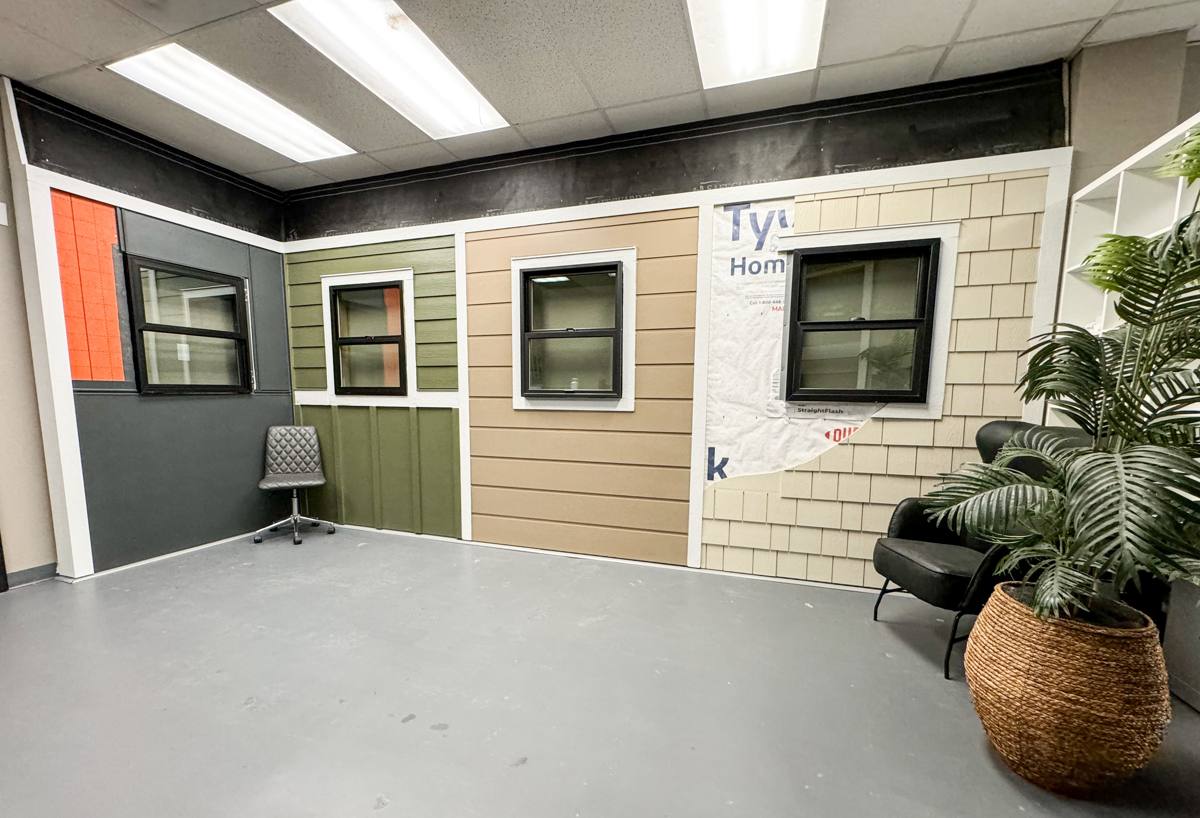
A lot of the housing in Birch Bay didn't start out as a full-time residence. Smaller seasonal or vacation cottages are common, many of them added onto or converted for year-round living over the years, and that history shows up directly in window replacement work. Older cottages were often built to whatever dimensions made sense at the time, before manufacturers standardized common sizes, so a like-for-like replacement sometimes means ordering a custom-sized unit rather than pulling something off a shelf. Newer construction and remodels aimed at the water view add another wrinkle, with larger picture windows and wider openings that carry more wind load and more perimeter to flash correctly.
None of that makes a project unusual for us — it's routine in this neighborhood. It does mean the job starts with careful field measurement and an honest conversation about what's actually in the wall before we quote anything, rather than assuming a standard size will fit.
Choosing Window Materials for Direct Waterfront Exposure
Material choice matters more on a Birch Bay lot than it does a few miles inland, because the corrosion and moisture load is higher. There's still no single right answer for every home — budget, sun exposure, and how long you plan to stay in the house all factor in — but the trade-offs are worth understanding before you decide.
| Frame Material | Behavior on a Waterfront Lot | Maintenance | Realistic Lifespan Here |
|---|---|---|---|
| Vinyl | Won't rot or corrode; performance depends heavily on installation quality at seams and welds | Low; occasional track and weep-hole cleaning | 20-30 years |
| Fiberglass | Dimensionally stable, holds up well against sustained salt and moisture exposure | Low | 30-40+ years |
| Wood, painted or clad | Attractive but the most vulnerable to salt-accelerated moisture damage at joints and sills | Higher; regular paint or finish upkeep, more frequent on water-facing walls | 15-25 years depending on upkeep and exposure |
| Aluminum | Conducts cold and is the most susceptible to corrosion in salt-influenced air unless heavily finished | Moderate to higher | 15-25 years |
On a direct waterfront elevation, we lean toward vinyl or fiberglass for most homeowners, simply because they carry the least corrosion risk over time. Wood-framed windows can still work well on a Birch Bay home, especially on a sheltered or non-view elevation, as long as the owner is realistic about the upkeep that comes with the location.
Full-Frame Replacement vs. Insert Replacement
One of the first decisions on any window job is whether to do a full-frame replacement, which removes the old window down to the rough opening and rebuilds the flashing from scratch, or an insert replacement, which fits a new window into the existing frame. Insert replacement is faster and less disruptive to the surrounding siding and trim, and it works well when the existing frame is sound and was properly flashed to begin with. Full-frame replacement costs more and takes longer, but it's the honest call when there's already moisture damage at the sill or jambs, or when the original flashing was never done correctly — which we see more often on older Birch Bay cottages than on newer inland construction. We'll tell you which situation you're actually in rather than defaulting to the cheaper option and sealing a moisture problem up behind a new window.
What a Correct Installation Involves on This Stretch of Coastline
Most window failures near the water aren't failures of the window itself — they're shortcuts in the flashing and sealing details that don't show up until a storm season or two later. On every Birch Bay job, that means:
- A properly pitched sill pan that sheds water outward instead of letting it pool under the frame
- Head flashing integrated with the housewrap above the window, lapped correctly for water to shed downward and outward
- Jamb flashing tied into the surrounding wall assembly rather than relying on caulk alone
- Weep holes and drainage paths left clear and functional, not sealed shut during installation
- Corrosion-resistant fasteners and hardware rated for direct salt-air exposure, not general-purpose hardware
- Insulation and air sealing around the frame that doesn't trap moisture against the framing
None of these add meaningfully to the cost of a job relative to the window itself, but skipping them is exactly what turns a window that should last decades into one that's leaking behind the wall within a few years on a lot this exposed.
Signs a Birch Bay Home's Windows Need Attention
Because the climate here works faster on windows than it does a few miles inland, it's worth catching problems early rather than waiting for them to become obvious.
- Visible fogging or condensation between panes, usually a sign of a failed seal on a double- or triple-pane unit
- Drafts or a noticeable temperature difference near a closed window, especially on the water-facing side of the house
- Soft, discolored, or spongy trim and sill material
- Difficulty opening, closing, or latching a window that used to operate smoothly
- Corroded or stiff hardware, hinges, or locks
- Peeling paint or bubbling finish on wood-framed windows
- Water staining on interior wall or ceiling surfaces near a window
Any one of these is worth a professional look. Caught early, most point to a repair or resealing job. Left alone through another storm season, several of them point to real water damage in the surrounding wall framing, and that's a more expensive fix.
How Our Process Works, Start to Finish
We start with an on-site look at the home, not a phone-quote guess, because window openings on Birch Bay's older housing stock don't always match standard sizes. From there:
- We measure every opening in the field and check the condition of the existing frame, sill, and surrounding wall for moisture damage.
- We give you a straightforward read on full-frame versus insert replacement, and why, before ordering anything.
- We walk you through material and glass options against your budget and how the home is exposed to wind and water.
- Once materials arrive, we handle removal, flashing, and installation as a full sequence, not a rushed one-day swap on a job that needs more care.
- We clean up thoroughly and walk the finished openings with you before we consider the job done.
Why a Lynden Crew That Already Works Birch Bay Matters
A crew that installs and repairs windows on this stretch of coastline through every season sees how salt air, wind-driven rain, and a long moss season actually behave on real houses over years, not just how a product performs on a spec sheet. That shows up in practical decisions: how much extra attention a water-facing elevation needs compared to a sheltered one, how a sill pan should be pitched for the amount of wind-driven rain a given lot actually sees, and which flashing details are worth the extra time on install day so you're not dealing with a leak two winters later. Being based in Lynden and running out along Birch Bay-Lynden Road regularly also means we understand the difference between an older seasonal cottage and a newer view-oriented build, and we don't treat every Birch Bay home the same way.
Get a Free, No-Pressure Estimate
If your Birch Bay home has windows that are fogging, drafty, hard to operate, or just past their useful life on a lot this exposed, we're glad to take a look and give you a straightforward, honest read on what it actually needs. Reach out using the form below to schedule a free estimate — no pressure, no upsell script.