 Lynden Siding
 Birch Bay's Climate Is Harder on Siding Than Most of Whatcom County
Birch Bay sits right on the water, and that changes what siding has to deal with compared to homes a few miles inland. The salt air off the bay works into wood fiber, fasteners, and paint film in a way that inland Whatcom County homes never experience. Add in wind-driven rain that comes at the wall sideways instead of straight down, plus long stretches of overcast, damp weather that keep north- and west-facing walls shaded and wet for days at a time, and you have a exterior envelope that's under constant low-grade attack. None of this is dramatic — no single storm causes the damage. It's the cumulative effect of years of salt exposure, moisture cycling, and moss and algae growth that eventually finds every weak point in a siding system.
Homes here need siding that resists moisture absorption, holds paint and caulk joints without constant upkeep, and doesn't feed the moss and mildew that Birch Bay's shade and humidity practically guarantee. That's a different set of priorities than a siding job forty minutes inland, and it's why we treat Birch Bay jobs as coastal work, not standard Whatcom County work.
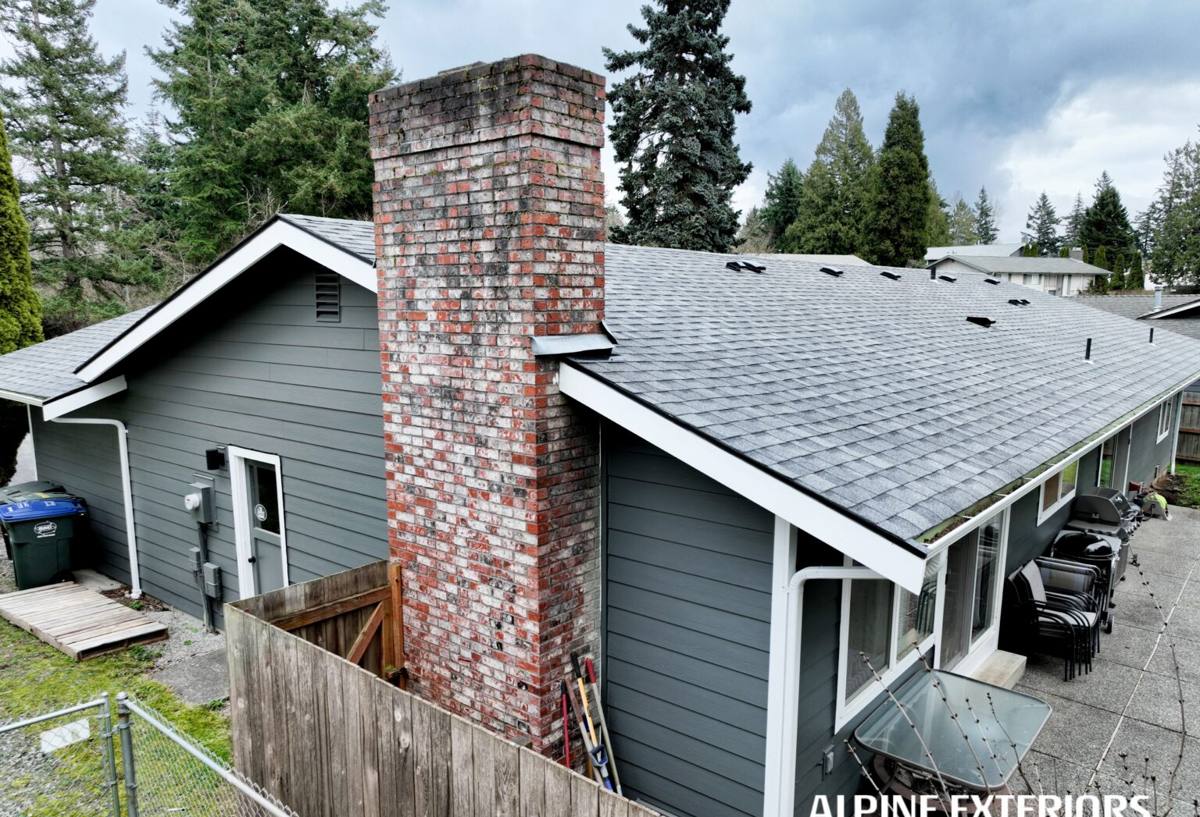
What Salt Air and Driving Rain Actually Do to a Wall
Salt Air
Airborne salt is hygroscopic — it pulls moisture out of the air and holds it against whatever surface it lands on. On wood-based siding, that means the surface stays damp longer than it would inland, which accelerates rot, paint failure, and fastener corrosion. Uncoated or poorly coated nails and screws are usually the first thing to fail in a salt-air environment; once a fastener starts corroding, it loses grip, and the siding around it starts to move.
Wind-Driven Rain
Rain that hits a wall at an angle behaves differently than rain falling straight down. It gets pushed up under laps, into joints, and behind trim if those details weren't built with the wind in mind. A siding job that would be fine on a sheltered inland lot can leak on a Birch Bay waterfront or near-waterfront property simply because the flashing and joint details weren't sized for the exposure.
Moss and Algae
Shade, moisture, and mild temperatures are exactly what moss and algae need to establish themselves, and Birch Bay has all three for a good chunk of the year. Moss holds moisture against the siding surface far longer than open air would, which is bad for any material but especially bad for anything with exposed wood fiber or a paint film that isn't fully sealed.
Why We Standardized on James Hardie Fiber Cement
We install James Hardie fiber cement siding exclusively — we don't install vinyl, LP SmartSide, primed wood, cedar, or fiber cement from other manufacturers. That's a deliberate standard, not a sales pitch, and it comes down to how those materials perform specifically in an environment like Birch Bay's.
Fiber cement itself is the right category of material for this climate: it's dimensionally stable, doesn't absorb water the way wood-based products do, and won't warp, delaminate, or rot the way engineered wood siding can when it stays wet. Within fiber cement, we chose James Hardie because of three things that matter directly for coastal Whatcom County exposure:
- HardieZone engineering: Hardie's HZ5 product formulation is engineered for climates with significant moisture and freeze-thaw cycling, which matches western Washington's coastal conditions better than a generic, one-size-fits-all fiber cement formula.
- ColorPlus factory finish: a baked-on finish applied under controlled conditions holds up to UV and moisture exposure far better than field-applied paint, which matters when a wall is going to spend months of the year damp.
- Non-combustible core: fiber cement doesn't contribute fuel to a fire the way wood-based siding can, which is a real consideration anywhere in Washington now, coastal or not.
We're not going to tell you other products are junk — many of them are reasonable choices in the right setting. But we've made a professional decision that in a salt-air, high-moisture environment like Birch Bay, Hardie's combination of moisture behavior, factory finish, and warranty structure is what we're willing to put our name behind.
What Correct Installation Involves in This Environment
Fiber cement siding is only as good as the installation behind it. In Birch Bay specifically, a few details matter more than they would on a sheltered inland lot:
Rainscreen and Drainage Gap
A ventilated gap between the siding and the water-resistive barrier lets any moisture that does get past the siding drain and dry out instead of sitting against the wall sheathing. This matters everywhere, but it matters more where wind-driven rain is pushing more water toward the wall in the first place.
Flashing at Every Penetration
Windows, doors, hose bibs, vents, and any other wall penetration need flashing detailed to shed water outward, not just caulk. Caulk is a backup, not a primary defense — it degrades, especially with UV and salt exposure, and it's the first thing that fails when a wall starts leaking.
Fastener Selection
Corrosion-resistant fasteners, installed per Hardie's fastening schedule, are non-negotiable this close to salt water. The wrong fastener is a slow failure that won't show up for a few years — exactly the kind of mistake that's expensive to find later and cheap to avoid up front.
Joint and Panel Layout
Butt joints and panel seams are the weak points in any lap siding system. Correct installation minimizes unnecessary joints, backs every joint that does exist, and follows Hardie's specified gaps and sealant details rather than tight-fitting panels that leave no room for material movement.
Signs Existing Siding Is Already Losing the Fight
If you're evaluating whether to replace siding on a Birch Bay home, these are the signs we look for first:
- Persistent moss or algae staining that comes back within a season of cleaning
- Soft spots or visible swelling at butt joints, corners, or below windows
- Paint that's chalking, peeling, or bare in patches, especially on north and west walls
- Rust streaking below fastener heads or trim nails
- Caulk joints that are cracked, shrunk, or pulling away from the siding
- Visible gaps or waviness in lap lines, which usually means fasteners have started to lose their grip
Any one of these on its own might just need a repair. Several of them together, especially on a home that's had the same siding for fifteen-plus years, usually means the material itself is past the point where repairs make sense.
Our Process for a Birch Bay Fiber Cement Job
1. On-Site Assessment
We look at the whole envelope, not just the siding — trim, flashing, window details, and any areas showing moisture damage. Coastal jobs sometimes turn up sheathing or framing issues that need to be addressed before new siding goes on, and we'd rather find that at the estimate stage than mid-job.
2. Prep and Water Management
Old siding comes off, the wall gets inspected and repaired as needed, and a proper water-resistive barrier and rainscreen gap go in before any Hardie product is installed. This step is where most of the long-term performance of the job actually gets decided.
3. Installation to Manufacturer Spec
We install to James Hardie's published fastening, clearance, and flashing requirements — not a generalized "close enough" standard. This is also what keeps the manufacturer's warranty intact, which matters if a product issue ever does come up down the road.
4. Final Inspection and Walkthrough
We walk the finished job with you, point out anything you should know for basic upkeep, and make sure everything from caulking to trim reveals is done to spec before we call it complete.
Cost Factors for a Birch Bay Fiber Cement Project
| Factor | Why It Matters Here |
|---|---|
| Wall prep and repair needs | Coastal moisture exposure means more homes need sheathing or framing repair before siding goes on |
| Home size and wall complexity | More corners, penetrations, and trim details mean more flashing and labor time |
| Rainscreen/drainage detailing | Proper drainage assemblies add labor but are the difference-maker in wind-driven-rain exposure |
| Siding profile and trim package | Lap width, panel vs. plank, and trim style all affect material cost |
| Color and finish selection | ColorPlus factory-finished options vs. field-painted affect both cost and long-term maintenance |
| Access and site conditions | Waterfront and bluff-adjacent lots can affect staging, scaffolding, and disposal logistics |
We give real numbers after seeing the specific house — broad ranges without seeing the wall conditions and layout aren't useful to you, and we'd rather give an honest estimate than a number that changes once we're on site.
Living With Fiber Cement Siding in a Salt-Air Environment
Correctly installed James Hardie siding is genuinely low-maintenance, but "low" isn't "none" in a Birch Bay setting. A short annual routine keeps it performing the way it's designed to:
- Rinse salt residue and grime off the siding once or twice a year, more often on walls that face the water directly
- Keep gutters clear so overflow isn't running down the face of the siding
- Trim back vegetation that shades walls and keeps them damp, which is what encourages moss in the first place
- Check caulk joints at trim and penetrations annually and have any cracked sections redone before they start leaking
- Address any moss growth promptly with a gentle wash rather than pressure-washing, which can drive water behind the siding
None of this is heavy work, but skipping it in a coastal environment shortens the life of even a well-installed system.
Why Hiring a Crew That Already Works Birch Bay Matters
Siding crews that mostly work inland don't always adjust their details for coastal exposure — they install the way they always do, and the wall performs fine for a while before wind-driven rain or salt-air fastener corrosion exposes the shortcuts. A crew that already works Birch Bay and the surrounding Whatcom County coastline knows to build in the rainscreen gap, use the right fasteners, and detail flashing for wind, not just gravity, because they've seen what happens when those steps get skipped on a house exactly like yours.
That local experience is also why we can tell you honestly, before any work starts, whether your home's exposure calls for extra attention in certain areas — something that's hard to judge accurately without having worked plenty of jobs in this specific stretch of coastline.
If you're weighing a siding replacement or just want an honest read on how your current siding is holding up against Birch Bay's salt air and rain, we're happy to take a look. The estimate is free, there's no pressure, and you'll get a straight answer about what your home actually needs.