 Lynden Siding
 Why Bellingham Decks Wear Out Faster Than Homeowners Expect
A deck in Bellingham lives a harder life than the same deck would in a drier inland climate. Whatcom County sits close enough to the water that salt-laden air reaches yards well beyond the immediate shoreline, working into fasteners, hinges, and any exposed metal connectors. Layer on the region's driving rain, which comes in sideways often enough to soak areas that a deck's original builder assumed would stay dry, and you have two forces working against the structure at once. The third factor is moss. Bellingham's long, mild, wet stretch of the year gives moss and algae months to establish themselves on decking boards, railings, and especially the shaded, poorly ventilated undersides of older decks.
None of this means a deck can't last in this climate — it means it has to be built and maintained with these conditions in mind from the start. A lot of the decks we get called out to replace weren't built wrong for the day they went in; they were built to a generic standard that never accounted for how much moisture this region actually sees over a decade or two.
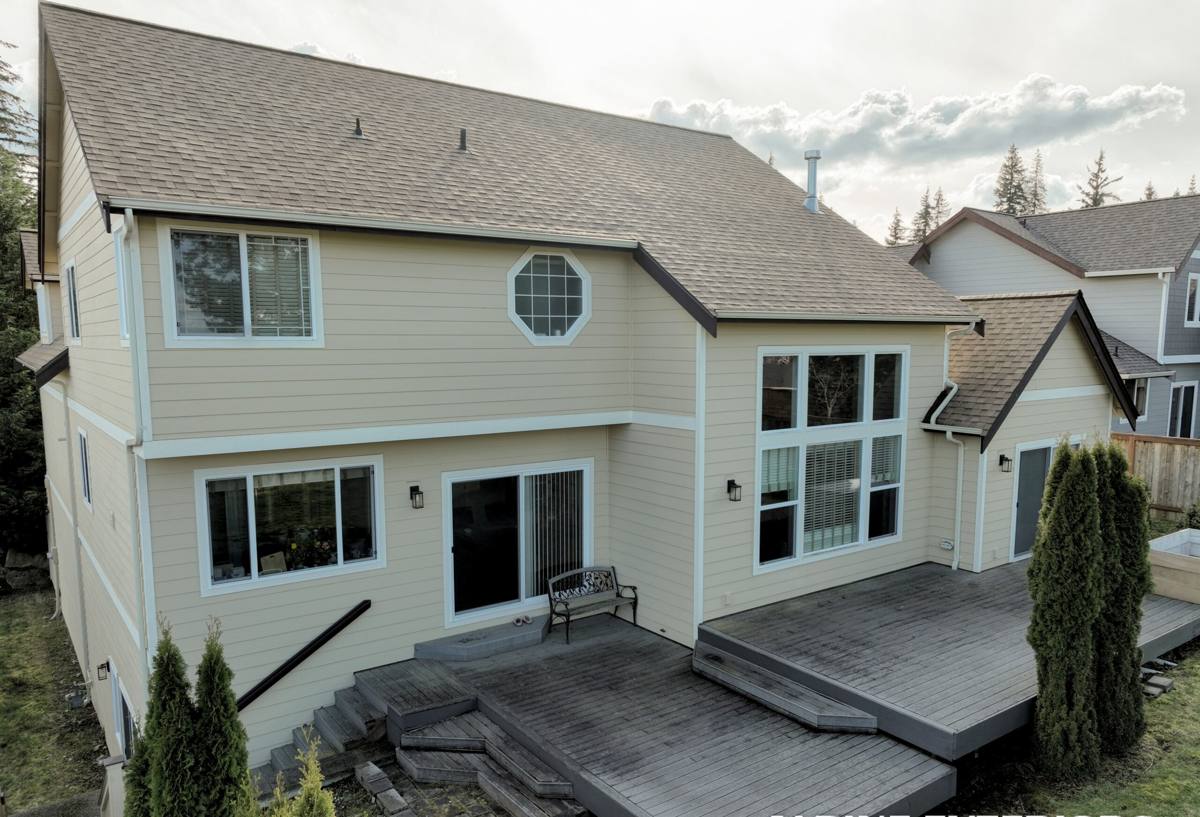
Signs a Deck Needs Replacing, Not Just Repairing
Not every tired-looking deck needs a full tear-off. But there's a point where patching boards or re-staining stops being a real fix and starts being a way to delay a bigger job. We look for a combination of the following before recommending replacement over repair:
- Soft, spongy, or visibly rotted boards in more than a handful of spots, especially near the house
- Rust streaks or corrosion around fasteners, joist hangers, or post bases
- A ledger board (where the deck attaches to the house) that shows water staining, gaps, or soft wood
- Noticeable bounce, sway, or movement when walking across the deck or leaning on the rail
- Persistent moss or algae growth that returns within weeks of cleaning
- Posts or footings that have shifted, settled unevenly, or sit in standing water after rain
- A structure that predates current code requirements for ledger attachment and guardrail spacing
If a deck is showing two or three of these at once, the framing underneath has usually been compromised long enough that resurfacing it would just be putting new boards on a weak base.
What a Correct Deck Replacement Actually Involves
A deck is only as good as what's underneath the decking boards. Most of the failures we see trace back to shortcuts taken in the framing, flashing, or connections — the parts that are invisible once the job is "done."
Ledger Board and House Connection
The ledger board, which bolts the deck to the house framing, is the single most important connection on the structure and the most common source of moisture damage. It needs proper flashing that directs water away from the house rather than behind the ledger, correct structural fasteners rather than nails, and a gap or drainage plane so water doesn't sit trapped against the siding. In a climate that sees as much sustained rain as Bellingham does, a poorly flashed ledger is often just a matter of time before it causes hidden rot in the house's rim joist.
Footings, Posts, and Structural Framing
Footings need to be sized and set at the correct depth for the load and soil conditions, with post bases that hold the post above grade and away from standing water — not buried or sitting directly on soil, which invites rot from the ground up. Joists, beams, and hardware should be rated for exterior, corrosion-resistant use, since anything less is a weak point in a coastal-influenced climate where humidity and salt air both accelerate corrosion.
Decking Material Selection
The visible decking is what homeowners notice first, but it's also where climate-specific choices matter. Wood species, board spacing for drainage, and whether the material resists moss growth all affect how the deck performs here specifically, not just how it performs on average.
Comparing Decking Materials for Wet, Coastal Climates
There's no single "best" decking material — the right choice depends on budget, maintenance tolerance, and how much moisture and moss pressure the site sees. Here's how the common options compare for a Bellingham yard:
| Material | Moisture & Moss Behavior | Maintenance | Typical Lifespan |
|---|---|---|---|
| Pressure-treated lumber | Resists rot when properly sealed; moss can still take hold in shaded areas without regular cleaning | Annual cleaning and periodic sealing/staining | 15-20 years with upkeep |
| Cedar | Naturally moisture- and insect-resistant; still needs sealing to prevent graying and moss | Sealing every 1-2 years | 15-20 years with upkeep |
| Composite decking | Does not rot, but can still support surface moss/algae growth if not periodically cleaned | Occasional washing, no staining or sealing | 25-30+ years, manufacturer-dependent |
| PVC decking | Fully moisture-resistant; least prone to moss adhesion of the common options | Occasional washing | 25-30+ years, manufacturer-dependent |
Composite and PVC products cost more up front, but for homeowners tired of the annual sealing cycle, the reduced maintenance is often worth it. Wood remains a solid, more affordable option as long as the maintenance schedule is actually kept up — the failures we see with wood decking are almost always maintenance gaps, not the material itself.
Our Deck Replacement Process
Every deck is different, but the process we follow stays consistent because it's built around getting the parts nobody sees right, not just the parts that look good on day one.
- On-site assessment of the existing deck, framing, ledger connection, and footings to confirm replacement is the right call
- Written scope and material selection, including a straightforward look at trade-offs between wood and composite/PVC options for your budget
- Full tear-off and disposal of the old structure
- Inspection and correction of any hidden damage discovered at the house connection or framing once the old deck is off
- New footings, framing, ledger flashing, and structural hardware installed to current code
- Decking, railing, and stair installation
- Final walkthrough covering how the new deck should be cared for through the wet season
Step four matters more than it might seem. It's common to open up a deck and find rot in the house's rim joist or siding that was hidden by the old ledger board — catching that now, rather than sealing it back up under a new deck, is the difference between a real fix and a deferred problem.
Building for Drainage and Moss Resistance From the Start
A deck's long-term moss and rot resistance is decided largely by decisions made during framing, not by which cleaner you use afterward. Board spacing that allows water to drain through rather than pool on the surface, adequate ventilation underneath the deck so the framing can dry out between rain events, and grading that moves water away from posts and footings all reduce how much moss pressure the deck faces year over year. We also pay attention to shaded, low-airflow areas — often near fences, dense landscaping, or the north side of a house — since those spots collect moisture longest and are usually where moss establishes first.
Permits and Local Code Considerations
Deck replacement projects in Whatcom County typically require a permit, particularly for anything involving new footings, structural framing changes, or guardrails above a certain height. Permitted work means the ledger attachment, footing depth, and railing spacing are inspected against current code — which matters most on older decks originally built under looser or outdated standards. We handle the permitting process as part of the job rather than leaving it to the homeowner to sort out.
Why Hire a Crew That Already Works in Bellingham
A deck built to a generic national standard can still fail early in a climate like this if the crew installing it hasn't accounted for local conditions. Working regularly in Bellingham and across Whatcom County means we're not guessing at how much moisture a ledger connection needs to shed, how aggressive moss growth gets in shaded yards near the water, or which framing details hold up and which ones we've had to go back and fix on other jobs. That local track record shows up in details a homeowner might not notice until year ten — the flashing that's still doing its job, the footings that haven't shifted, the framing that's still dry.
It also means we're a known, reachable crew if a warranty question or maintenance question comes up years down the line, rather than an out-of-area company that's harder to reach once the project is finished.
Keeping a New Deck in Good Shape Through the Wet Season
A well-built deck still needs some basic upkeep to get its full lifespan out of this climate. We walk every homeowner through a simple maintenance routine at handoff:
- Sweep debris and standing leaves off the deck surface regularly, especially in fall
- Clean moss or algae buildup promptly rather than letting it establish over a season
- Check and clear drainage paths and gaps between boards so water keeps moving through
- Inspect fasteners and hardware yearly for corrosion, particularly on decks closer to the water
- Reseal or restain wood decking on the schedule recommended for the product used
- Confirm gutters and downspouts near the deck are directing water away, not onto it
None of this is complicated, but skipping it is how a well-built deck ends up needing early repairs anyway.
Get a Straightforward Estimate
If your deck is showing rot, movement, persistent moss, or you're just not sure whether it's worth repairing versus replacing, we're happy to take a look and give you an honest read on it. Reach out for a free, no-pressure estimate on deck replacement for your Bellingham home — there's a form below to get started.