 Lynden Siding
 Decks Take a Different Kind of Beating Out Here
A deck in Aldergrove or greater Lynden doesn't fail the way a deck in a dry climate fails. It doesn't crack from sun exposure alone or bake apart from heat. It fails from the slow, steady work of moisture: months of drizzle, morning dew that never quite burns off under tree cover, and a moss season that can run from October well into April. Add in the salt-tinged air that drifts up from the Strait of Georgia and Boundary Bay on a west wind, and you've got a combination that ages wood, fasteners, and connectors faster than most homeowners expect.
None of that means decks here are a bad investment. It means they need to be built and replaced with those specific conditions in mind, not with a generic build that happens to look fine on install day. If your deck is soft underfoot, growing moss in the shaded corners, or showing gaps and cupping in the boards, it's usually not one problem — it's the cumulative result of years of wet-dry cycling finally catching up to the structure.
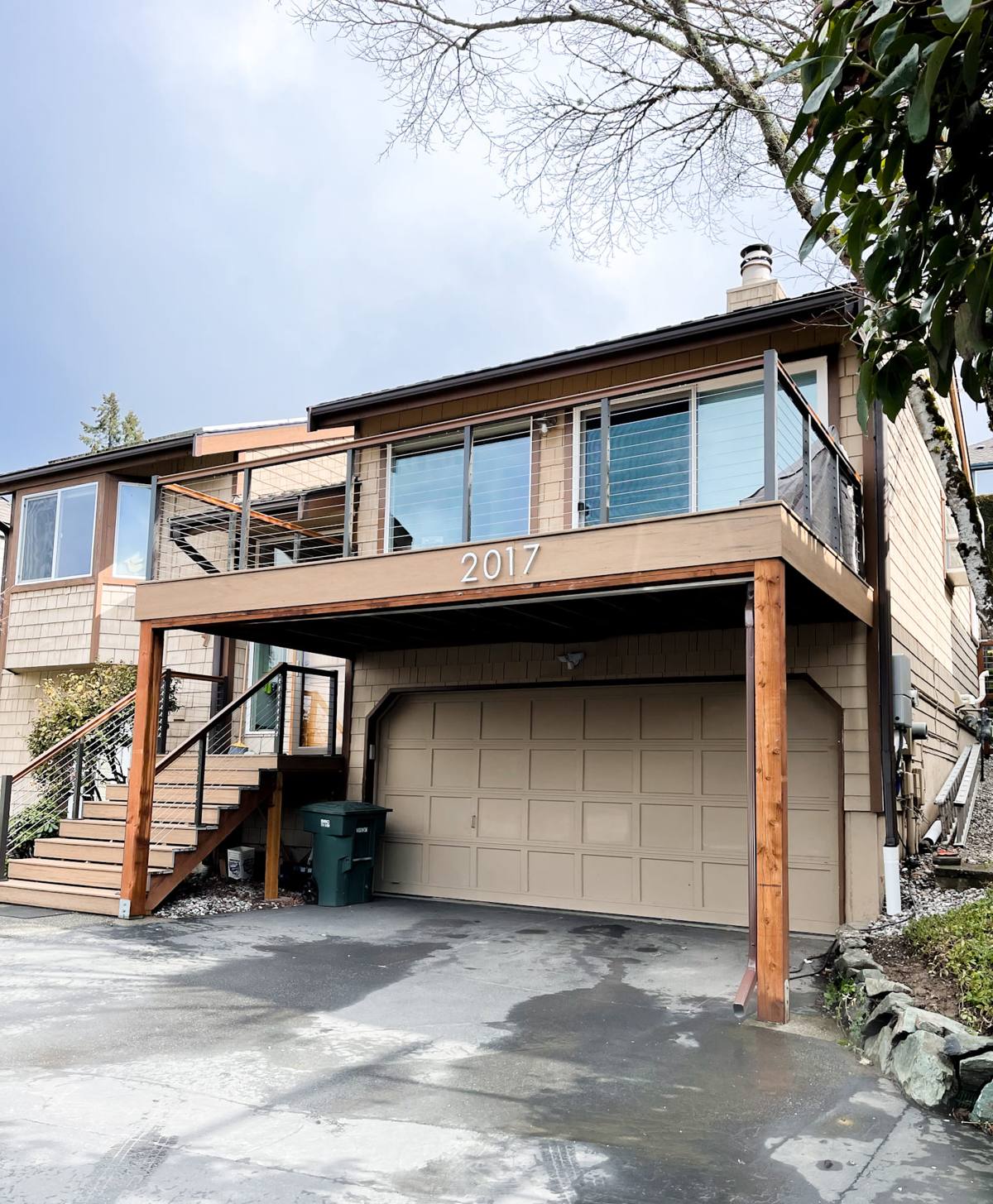
Why Straight Weather Matters More Than You'd Think
Aldergrove sits close enough to the coast that homes get a real dose of salt-laden air, especially on windier days. Salt air accelerates corrosion in exposed metal — fasteners, brackets, ledger board hardware — long before most people notice a problem with the wood itself. Meanwhile Whatcom County's driving rain, which often comes in sideways rather than straight down, gets pushed into joints, under flashing, and into end grain that isn't properly sealed or capped.
Then there's moss. It's not just cosmetic. Moss holds moisture against the deck surface and framing far longer than bare wood would ever hold it on its own, which is exactly the environment rot needs to get started. A deck that looks "just a little green in the corners" is often further along structurally than it appears, because the moss has been quietly doing its damage under the surface for one or more full wet seasons.
What This Looks Like on an Older Deck
- Soft, spongy spots on the decking or near the stairs, usually where drainage is poorest
- Rust streaking below joist hangers, screws, or ledger bolts
- Persistent moss or algae in shaded, north-facing sections that never fully dry
- Gaps opening between boards, or boards cupping and holding standing water
- A ledger board connection that feels loose or shows staining where it meets the house
- Railings that flex more than they used to, even if the decking itself still looks okay
What a Correct Deck Replacement Actually Involves
Replacing a deck properly is not simply pulling old boards and screwing down new ones. In this climate, most of the value is in what gets addressed underneath and around the visible surface.
1. Full Structural Assessment
Before any demo, we check the ledger board attachment to the house, the condition of the posts and footings, and the joists for rot, especially where they meet the ledger or sit close to grade. In this region, footings that were undersized or poured shallow decades ago are a common reason an otherwise "fine-looking" deck needs more than a surface refresh.
2. Proper Flashing and Water Management
The single most common failure point we see on older decks tied to the house is a ledger board with little or no flashing, or flashing that was installed but never properly integrated with the house's water-resistive barrier. Correct flashing directs water away from the house framing instead of trapping it against the ledger, which is exactly where driving rain wants to collect.
3. Hardware Rated for the Coast
Given the salt air off the Strait of Georgia, we use corrosion-resistant fasteners and connectors throughout — not just at the ledger, but at every joist hanger, post base, and railing connection. Standard hardware that might hold up fine further inland can start showing rust streaks within a few seasons out here.
4. Decking Material Selection
Whether you go with a quality pressure-treated wood, cedar, or composite decking, the decision should account for how each material handles constant moisture cycling and moss exposure, not just upfront cost or appearance. We'll walk through the honest maintenance trade-offs of each so you're picking based on how you actually want to spend your weekends, not a showroom sample.
5. Grading and Drainage Beneath the Deck
If the ground under the deck doesn't drain, that moisture sits and evaporates upward into the framing all season long. Part of a correct replacement is checking that water isn't pooling under the structure and correcting it where it is.
Comparing Decking Materials for This Climate
| Material | Moisture Resistance | Moss/Algae Tendency | Maintenance |
|---|---|---|---|
| Pressure-Treated Wood | Good, if sealed and maintained | Moderate — needs periodic cleaning | Annual cleaning/re-sealing recommended |
| Cedar | Naturally decay-resistant, but softer | Moderate to high in shaded areas | Periodic staining/sealing to hold appearance |
| Composite | Very good, doesn't absorb water like wood | Can still grow surface algae in constant shade | Low — occasional washing, no sealing |
There's no universally "right" answer here — a shaded, low-airflow deck in Aldergrove behaves differently than one that gets full afternoon sun. We'll look at your specific site conditions, including tree cover and prevailing wind and rain exposure, before recommending a direction.
Our Process for Aldergrove and Lynden Homeowners
Because we work this specific area regularly, we already have a working sense of the common lot layouts, drainage patterns, and how homes here are typically sited relative to weather exposure. That familiarity shortens the guesswork on your project.
- On-site evaluation — we inspect the existing deck, ledger connection, footings, and surrounding grade, and take note of any moisture or moss patterns specific to your yard.
- Honest scope discussion — we tell you plainly whether you need a full replacement, a partial rebuild, or whether targeted repairs would genuinely hold up. We don't upsell a full tear-out if it isn't warranted.
- Material and layout selection — we go over decking, railing, and hardware options with real trade-offs, not just brochure talk.
- Permitting — deck work often requires local permits depending on size, height, and attachment to the structure; we handle that coordination as part of the job.
- Demolition and disposal — old decking, framing, and hardware removed and hauled off responsibly.
- Rebuild — correct flashing, coastal-rated hardware, proper fastening schedule, and attention to drainage beneath the new structure.
- Final walkthrough — we check the deck with you before we consider the job finished, not just after we've packed up.
Why Hiring a Crew That Already Works This Area Matters
A deck built without accounting for Whatcom County's rain patterns and this area's salt exposure can look perfect for a year or two and then start failing quietly — moss creeping into corners, hardware rusting out of sight underneath, a ledger connection trapping water against the house. A crew that works Aldergrove and Lynden regularly isn't guessing at flashing details or fastener grade; it's applying what actually holds up here, because we've seen what doesn't.
There's also a practical side to hiring local: scheduling around our actual wet season, sourcing materials that are readily available in this region, and being reachable if a question comes up after the project's done — not a crew that drove in from three counties over for a one-off job.
Signs It's Time to Replace Rather Than Repair
Not every aging deck needs a full replacement, and we won't tell you it does just to sell a bigger job. That said, there are some clear signals that patching individual boards is no longer the honest answer:
- Rot has reached the joists or ledger board, not just the surface decking
- Multiple structural members show soft or spongy spots when tested
- The footings are undersized, shifted, or show signs of frost heave over the years
- Railings are loose at multiple posts, suggesting the whole framing has weakened
- You've already replaced individual boards more than once in the same spots
If your deck only shows isolated, surface-level wear, targeted repair may genuinely be the more sensible route, and we'll tell you that during the evaluation.
Living With Your New Deck Through the Wet Season
A correctly built deck still benefits from some basic seasonal care in this climate. Clearing fallen leaves and debris before the fall rains set in keeps moisture from pooling on the surface. A yearly rinse-down of shaded areas discourages moss from getting a foothold in the first place, and checking that gaps between boards stay clear of debris helps water keep draining the way it's designed to. None of this is heavy maintenance — it's the difference between a deck that looks good for a couple of decades and one that starts showing problems again in five or six years.
If your deck is showing its age, or you just want an honest read on whether repair or replacement makes more sense for your home, we're happy to come take a look. Estimates are free, there's no pressure, and you'll get a straight answer about what your deck actually needs.