 Lynden Siding
 Board & Batten Siding Built for Aldergrove's Climate
Board and batten has become one of the most requested siding profiles for homes in and around Aldergrove, BC — it dresses up a farmhouse, a craftsman remodel, or a modern build without looking like every third house on the street. But the look is only half the job. In this part of Whatcom County and the border-adjacent Fraser Valley, siding lives through salt-tinged coastal air, long stretches of driving rain, and a moss season that can run most of the year in shaded yards. A board and batten installation that isn't built for that combination will show it within a few winters — cupped boards, soft caulk joints, streaking, and moss creeping up from the bottom courses.
This page covers what board and batten siding needs to hold up on an Aldergrove home, what a correctly built system actually involves, and why we install it exclusively in James Hardie fiber cement rather than wood, vinyl, or engineered wood alternatives.
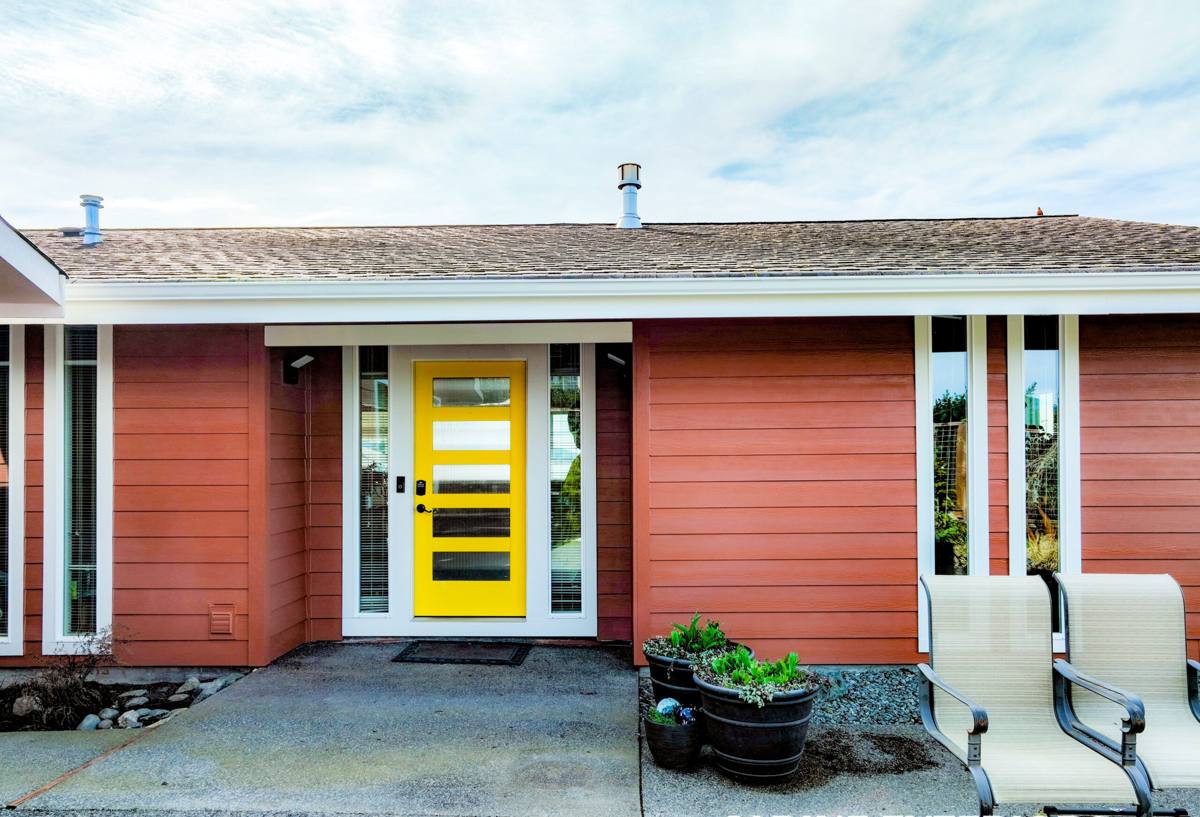
What Local Homes Need From This Siding
Salt Air and Corrosion
Homes closer to the coast and the lower Fraser Valley pick up trace salt in the air, especially during windier weather systems that push moisture inland. Salt-laden air accelerates corrosion on fasteners, flashing, and any exposed metal trim. It also speeds up the breakdown of lower-grade paint films, which is one reason a factory-applied finish matters more here than in a dry inland climate.
Driving Rain and Wind-Driven Moisture
Board and batten's vertical boards and raised battens create more seams and more opportunities for water to find a way in than a standard horizontal lap profile. Under normal rainfall that's not a problem if the assembly is built correctly. But this region regularly sees driving, wind-pushed rain rather than straight-down rain, and that changes how water behaves at every seam, corner, and penetration. A batten that isn't fastened and flashed correctly becomes a channel that funnels water straight into the wall assembly instead of shedding it.
Moss, Shade, and Humidity
Mature trees, fences, and neighboring structures throw a lot of shade across yards in this area, and shaded siding stays damp longer after every rain. Combined with the region's humidity, that's a recipe for moss and algae growth low on the wall and in any spot where airflow is restricted. Siding material that absorbs moisture gives moss something to root into; material that doesn't gives it nothing to hold onto.
Why Board & Batten Works Well in This Area
Beyond the climate demands, board and batten fits the architectural character homeowners in Aldergrove and the surrounding Lynden area tend to want — clean vertical lines that read as farmhouse, modern rustic, or craftsman depending on the trim and color choices around it. It's also a natural fit for accent applications: gable ends, dormers, porch surrounds, or a mix with horizontal lap siding on the main field. Because the vertical boards and raised battens create real shadow lines, the profile holds up visually at a distance in a way that flat panel siding doesn't, which matters on properties with long driveways or set-back homes.
What a Correct Board & Batten Installation Actually Involves
Board and batten looks simple from the ground, but it's less forgiving of shortcuts than standard lap siding because every batten seam is a potential water entry point. A correct installation includes:
- A drainage plane behind the siding — building wrap or membrane, installed shingle-style so water sheds outward and down, never into the wall
- A rainscreen gap (typically furring strips) so water that does get behind the boards can drain and the assembly can dry, rather than staying trapped against the sheathing
- Fastening pattern that matches the manufacturer's specification for board width and exposure — not "close enough" spacing
- Correct flashing at every window, door, and roof-to-wall intersection, installed before the siding goes up, not caulked in afterward as a patch
- Batten placement over board joints wide enough to cover movement without relying on caulk alone to keep water out
- Proper starter strip and base flashing at the bottom of the wall, kept clear of soil, mulch, and hardscaping so the bottom course isn't sitting in constant moisture
Skipping the rainscreen gap is the most common shortcut we see on board and batten jobs done wrong. Without it, any water that gets behind a board — and on a vertical profile in driving rain, some always will eventually — has nowhere to go. It sits against the sheathing until it either dries slowly through the siding itself or starts causing rot underneath, long before anything looks wrong from the outside.
James Hardie Board & Batten: The Only System We Install
We install James Hardie fiber cement exclusively — no vinyl, no LP SmartSide, no Cemplank, no Allura, no primed spruce or cedar. For board and batten specifically, that means HardiePanel vertical siding paired with HardieTrim battens, both engineered for this climate zone under Hardie's HZ10 product line built for the Pacific Northwest's wet weather pattern.
The reasons we standardized on this system come down to how the material behaves over years, not just how it looks on install day:
- Non-combustible — fiber cement doesn't feed a fire the way wood-based products can
- Factory-applied ColorPlus finish — baked-on color that resists the fading, chalking, and peeling that field-applied paint is prone to in this rain-and-sun cycle
- Dimensionally stable — fiber cement doesn't swell, cup, or warp with moisture cycling the way wood-based boards can, which matters most on the wide flat faces of board and batten
- Doesn't feed moss growth — it doesn't hold moisture the way wood-composite substrates can, so shaded, damp sections stay cleaner longer
- Strong transferable warranty — backed by the manufacturer, not just our own workmanship guarantee
How Board & Batten Materials Compare
| Material | How it handles driving rain / moisture | Maintenance burden | Typical lifespan here |
|---|---|---|---|
| James Hardie fiber cement | Stable, non-absorbent, engineered rainscreen-compatible profile | Occasional wash; factory finish holds color | Decades with correct install |
| Cedar / primed spruce | Absorbs moisture, prone to cupping and swelling at wide board faces | Repainting/staining on a recurring cycle, plus moss treatment | Shorter, heavily dependent on upkeep |
| Vinyl board and batten | Doesn't absorb water but relies on loose-lock panels that can flex and gap in wind-driven rain | Low, but limited repair options if damaged or faded | Moderate; can become brittle in cold snaps |
| Engineered wood (LP SmartSide, etc.) | Treated to resist moisture but still wood-based; edge and cut-end exposure is a known weak point | Requires careful sealing of every cut edge to protect the warranty | Moderate, install-sensitive |
This is a general comparison to help homeowners understand the trade-offs — not a claim that any of these products fail outright. Every one of them can perform if installed and maintained correctly. Our decision to install only James Hardie reflects what we've found holds up with the least homeowner upkeep in this specific climate, not a claim that the alternatives don't work anywhere.
Our Process, Start to Finish
For an Aldergrove-area board and batten project, our process runs in a consistent sequence:
- On-site assessment — we look at existing siding condition, wall orientation relative to prevailing wind and rain, shade patterns, and any trouble spots like window returns or roof-to-wall intersections
- Written estimate — scope, product selection, and pricing laid out clearly, with no pressure to sign on the spot
- Tear-off and inspection — removing existing siding lets us check the sheathing underneath for hidden rot or moisture damage before anything new goes up
- Weather barrier and rainscreen installation — the part of the job nobody sees but that determines how the siding performs for the next several decades
- Flashing at every penetration — windows, doors, hose bibs, vents, and roof lines
- Board and batten installation — fastened and spaced to Hardie's specification for the product and exposure
- Final walkthrough — we go over the finished work with the homeowner before calling the job done
Maintenance Checklist for This Climate
Even the right material benefits from basic upkeep. For board and batten siding in the Aldergrove area, we recommend:
- Rinse the exterior once or twice a year, focusing on shaded and north-facing walls where moss and algae tend to start
- Keep gutters clear so overflow doesn't run directly down wall sections
- Trim back shrubs and trees that keep siding shaded and damp longer than the rest of the house
- Check caulk at trim and window returns annually — it's a maintenance item on any siding system, not a defect
- Keep soil, mulch, and hardscaping from building up against the bottom starter course
Why Hire a Crew That Already Works in Aldergrove, BC
Board and batten installed to spec in a dry, mild climate can tolerate more shortcuts than the same siding installed here. A crew that hasn't dealt with sustained driving rain and long wet seasons is more likely to treat the rainscreen gap or the flashing details as optional. We work this specific area regularly, which means we're not guessing at how wind-driven rain behaves against a north-facing wall or how much shade a given lot gets through the wet months — we've already seen it on other homes nearby.
If you're weighing board and batten siding for a home in Aldergrove, we're glad to walk the property, talk through what the wall orientation and shade pattern mean for your specific job, and put together a straightforward, no-pressure estimate. Use the form below to get started.