 Lynden Siding
 Why Acme Homes Need a Roof Built for This Climate
Acme sits in the foothills east of Lynden, where dense tree cover, damp valley air, and a long, wet Whatcom County winter combine to keep roofs shaded and moist for months at a time. Add in the salt-laden air that moves inland off the Salish Sea and the driving, sideways rain that shows up every fall and winter, and you've got a climate that is hard on roofing materials that aren't installed with moisture management as the top priority.
A correctly installed metal roof handles this combination better than most alternatives, but "correctly installed" is doing a lot of work in that sentence. Metal roofing fails early almost always because of installation mistakes, not because the material itself is wrong for the area. This page covers what a metal roof actually needs to hold up on an Acme home, what our process looks like, and why local experience matters more here than it does in drier parts of the state.
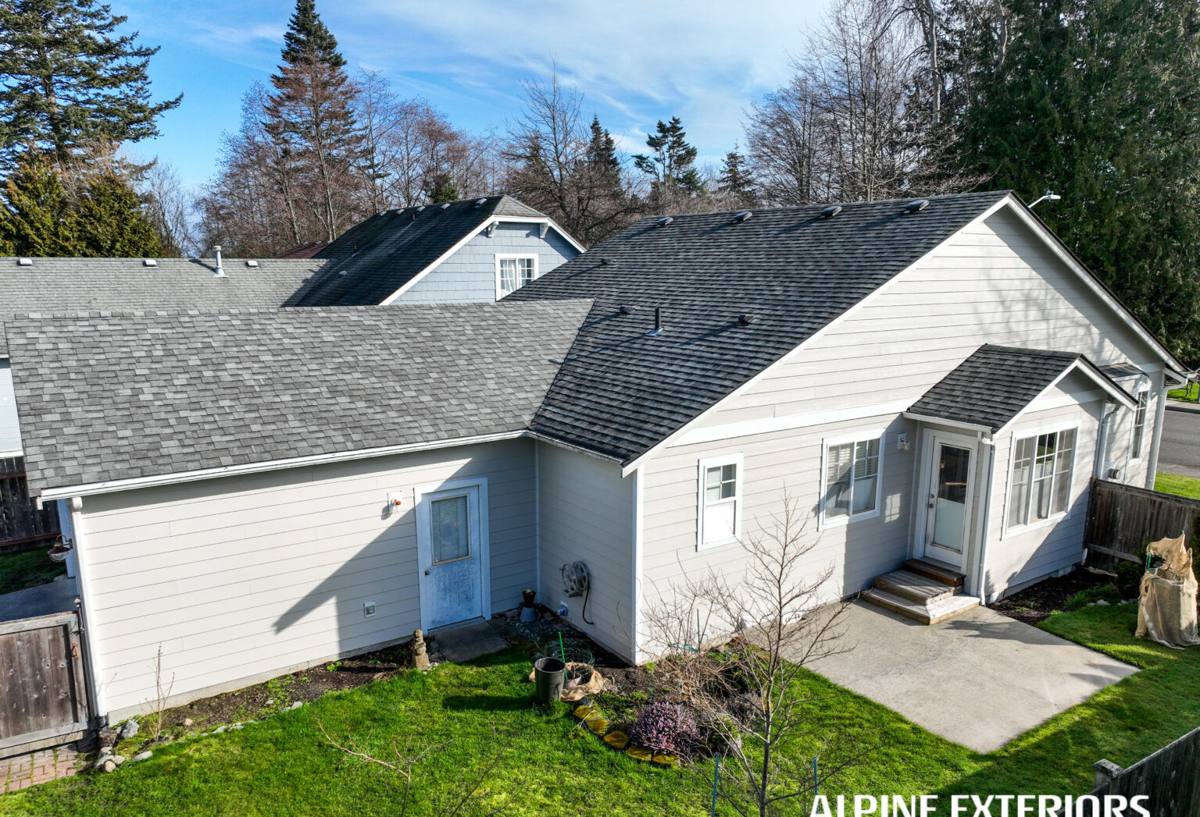
What a Correct Metal Roof Installation Actually Involves
Underlayment and Moisture Barrier
Metal panels are only as good as what's underneath them. In a moss-prone, high-moisture area like Acme, we use a synthetic or self-adhered underlayment rated for the temperature swings and condensation that metal roofs are prone to. Skipping a quality underlayment, or reusing old felt paper from a re-roof, is one of the most common shortcuts that leads to hidden rot years down the road.
Fastener and Panel Choice
Exposed-fastener panels rely on screws with rubber washers that compress the panel to the roof deck. Those washers degrade over time, especially with the temperature cycling and UV exposure common in this region, and every fastener is a potential leak point. Standing seam panels use concealed clips instead, with no fasteners penetrating the panel face — a meaningful advantage anywhere rain drives hard against a roof, which is a regular occurrence in Whatcom County storms.
Flashing and Penetration Details
Valleys, chimneys, vent pipes, and skylights are where roofs actually fail. Metal roofing requires flashing details sized and formed for metal panel profiles specifically — flashing pulled from a generic asphalt-roofing supply doesn't seat correctly against standing seam or ribbed panels. We custom-form flashing for each roof rather than relying on stock pieces that leave gaps.
Ventilation and Condensation Control
Metal conducts heat and cold quickly, which means an under-ventilated attic can produce condensation on the underside of the panels — moisture that has nothing to do with rain getting in from outside. Proper ridge and soffit ventilation, matched to the size of the attic space, keeps that condensation from ever becoming a problem.
Metal Roofing Options for Acme Homes
Not every metal roofing system is the same, and the right choice depends on the home's roof pitch, budget, and how much the owner wants to deal with long-term. Here's how the common options compare for a home in this area:
| Panel Type | Fastener Style | Typical Lifespan | Best Fit |
|---|---|---|---|
| Standing Seam | Concealed clips | 40-60+ years | Homes wanting the lowest long-term maintenance and best wind/rain performance |
| Exposed-Fastener Panel | Screws through panel face | 25-40 years | Budget-conscious projects, outbuildings, shops |
| Metal Shingle/Shake | Concealed or interlocking | 30-50 years | Homes wanting a traditional shingle or shake look with metal durability |
For primary Acme residences, we lean toward standing seam or metal shingle systems, since neither relies on washered fasteners that need periodic inspection and eventual replacement. Exposed-fastener panels still have a place — they're a reasonable, economical choice for a detached garage or shop — but we're upfront that they carry a shorter service life and more maintenance than the concealed-fastener options.
Moss, Debris, and the Local Maintenance Reality
The same tree cover and moisture that make Acme a beautiful place to live also make moss and organic debris a constant issue on roofs. Metal roofing resists moss growth far better than asphalt shingles because there's no granulated surface for spores to take hold in, but it isn't moss-proof — needles, leaves, and seed debris still collect in valleys and against any uphill obstruction, and moss can still establish itself in that trapped debris over time.
- Clear needle and leaf debris from valleys and behind chimneys or dormers at least once a year
- Keep gutters free-flowing so water doesn't back up under the drip edge
- Trim overhanging branches back where practical to reduce shade and debris load
- Watch for streaking or dark patches in shaded areas, which usually means moss or algae is starting to take hold
- Never pressure-wash a metal roof — it can strip protective coatings and force water under seams
- Have flashing and sealant points checked every few years, since sealant is the one component that does wear out over time
Our Process, Start to Finish
- On-site assessment — we walk the roof (or use a ladder assessment where pitch or access requires it) and check the deck, existing ventilation, and problem areas specific to the home.
- Panel and system recommendation — we talk through standing seam versus other options based on the roof's pitch, the home's style, and the owner's budget and maintenance preferences.
- Written estimate — a clear scope covering tear-off (if applicable), underlayment, panel system, flashing, and ventilation work, with no vague allowances.
- Deck prep and underlayment — any damaged sheathing is replaced before underlayment goes down, since covering a bad deck with new roofing just hides a problem.
- Panel installation and custom flashing — panels are installed to manufacturer spec, with flashing formed on-site for valleys, penetrations, and transitions.
- Final walkthrough and cleanup — we review the finished roof with the homeowner and clear the site of debris and fasteners.
Cost Factors for an Acme Metal Roof
Metal roofing costs more upfront than asphalt shingles, but the honest comparison has to include lifespan and maintenance, not just the install price. Broadly, homeowners in this area should expect somewhere in the range of $9 to $16 per square foot installed, with the spread driven by these factors:
| Factor | How It Affects Cost |
|---|---|
| Panel system | Standing seam runs higher than exposed-fastener panel due to material and labor |
| Roof complexity | Steep pitches, multiple valleys, and dormers add labor time and custom flashing |
| Tear-off vs. overlay | Removing an old roof and repairing the deck adds cost but is often necessary for a proper install |
| Ventilation upgrades | Adding or improving ridge/soffit venting is worthwhile here given local humidity, and adds modest cost |
| Access and site conditions | Tree cover, steep lots, and limited staging area — common around Acme — can affect labor time |
We provide a detailed, itemized estimate so homeowners can see exactly where the cost is going rather than a single lump-sum number.
Why a Crew That Already Works in Acme Matters
Roofing crews that mostly work drier, more open parts of the state don't always account for the extra ventilation, flashing, and moss-management details that a shaded, moisture-heavy area like Acme actually needs. A crew that regularly works Whatcom County roofs already knows how the local weather patterns behave against different roof orientations, which valleys tend to collect the most debris, and how much ventilation a typical attic in this area really needs — none of which shows up in a generic estimate written without local context.
That local familiarity also shows up in smaller, practical ways: knowing which suppliers stock the right panel profiles without a long lead time, understanding typical permitting expectations for the area, and being available for a follow-up check without a long drive. It's not a substitute for doing the installation correctly, but it does mean fewer surprises during the project.
Metal Roofing vs. Asphalt Shingles for This Area
Asphalt shingles remain a reasonable, lower-cost option for many homes, and we're not going to claim otherwise. But in a location with heavy moss pressure, near-constant tree shade, and driving winter rain, metal roofing's advantages are more pronounced than they'd be in a milder climate: better moss resistance, no granule loss over time, and a service life that can outlast two or more asphalt roof cycles. The right choice still comes down to budget, how long the homeowner plans to stay in the house, and the specific roof's pitch and complexity — we'll give a straight answer on which makes more sense for a given home rather than pushing one system across the board.
If you're weighing a metal roof for a home in or near Acme, we're glad to walk the roof, answer questions, and put together a straightforward, no-pressure estimate — just fill out the form below to get started.