 Lynden Siding
 What Whatcom County's Climate Does to a Deck
Acme is a quieter corner of the Lynden service area, but the climate that wears on decks across Whatcom County doesn't skip it. Salt-tinged air moves inland off the Salish Sea, rain settles in for days or weeks at a stretch, and moss season can run from early fall all the way into spring. None of that is unusual for this part of Washington — but it's exactly the combination that shortens the life of a deck if the original construction cut any corners.
Most of the deck damage we find here doesn't start on the surface. It starts underneath: a ledger board that's been soaking up moisture against the house for a few seasons, joist hangers rusting where flashing was skipped, or a support post sitting in ground that never fully drains between storms. By the time a homeowner notices soft decking or a railing that flexes underhand, the framing below has usually been losing the fight for a while.
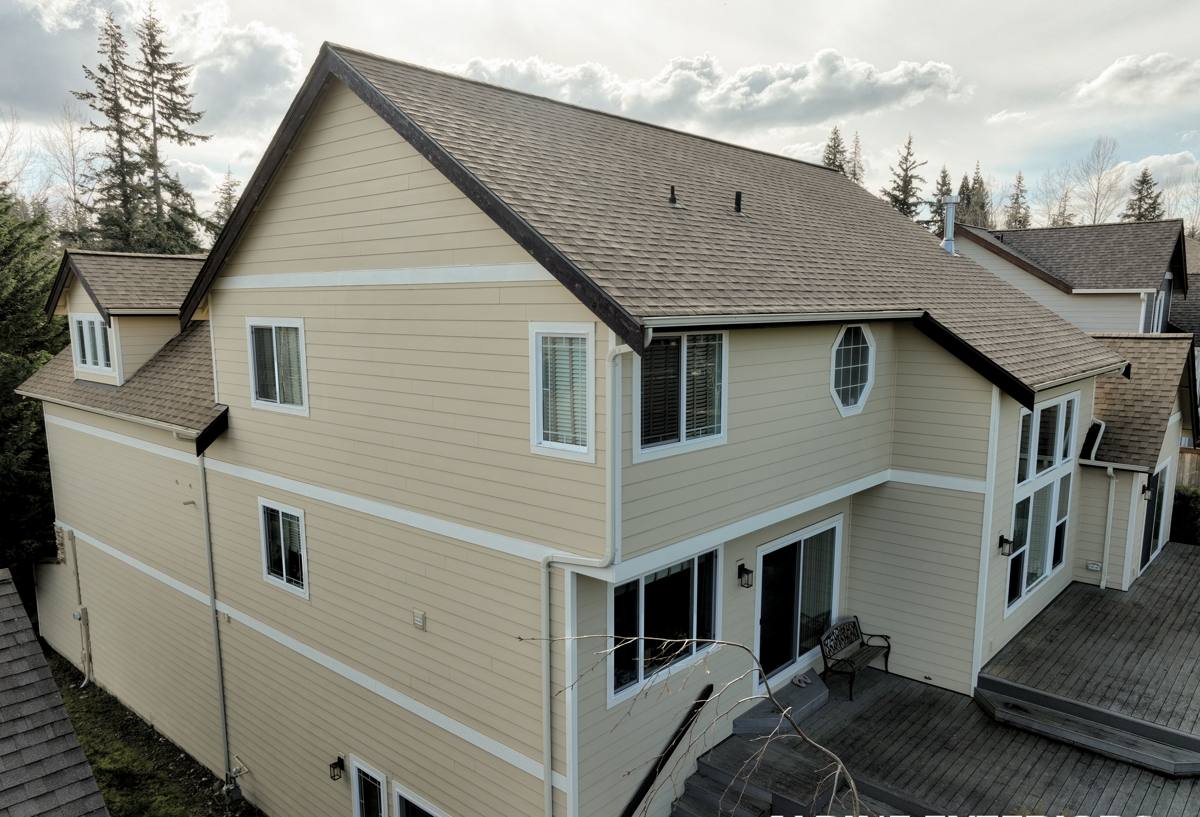
Signs Your Deck Needs Repair
A lot of what we get called out for is preventable if it's caught early. Walk your deck a couple of times a year, especially before and after the wet season, and check for:
- Soft or spongy spots when you press on decking boards, especially near the house or at board ends
- Green or black staining that keeps coming back within weeks of cleaning — a sign moisture isn't drying out between rains
- Rust streaks below fasteners or joist hangers
- Gaps opening where the ledger board meets the house, or dark staining along that seam
- Railings or stair rails that feel loose or move under light pressure
- Stairs that creak, flex, or feel uneven underfoot
- Fastener heads backing out or sitting proud of the board surface
- Standing water that takes more than a day to drain after a storm
None of these automatically mean the whole deck needs to come out. Most of the time they point to a specific area of repair — but they're worth acting on before the next wet stretch, not after it's already done more damage.
The Parts of a Deck That Fail First in This Climate
Ledger Board and Flashing
The ledger board — where the deck attaches to the house — takes the brunt of driving rain here. If it was installed without proper flashing, or the flashing has failed over time, water gets trapped between the ledger and the house framing and rot sets in where nobody sees it until it's advanced. This is one of the most common repairs we make, and one of the most important, since the ledger carries a real share of the deck's structural load.
Joists and Support Posts
Underneath the decking, joists and posts are exposed to whatever moisture works its way through gaps in the boards above. Poor airflow under a low deck, or a post set in soil that holds water, speeds up rot in this spot. Corroded joist hangers and fasteners are a common find once we open things up for a closer look.
Decking Boards
Wood decking absorbs and releases moisture with every wet-dry cycle, and in a climate where "dry" is relative for months at a time, boards cup, split, and hang onto moss and algae. Composite and PVC decking resist rot in the boards themselves, but they aren't immune to problems — fastener failure and substructure damage underneath still show up, along with moss and algae buildup on the surface if it's never cleaned.
Railings and Stairs
Railing posts anchored into a wet or rotted rim joist lose their grip over time, which is a safety issue, not just a cosmetic one. Stair stringers see similar wear, especially where they land on soil or a surface that holds water against the wood.
Repair or Replace? How We Make the Call
Not every deck problem calls for a full rebuild, and not every repair is worth doing on a deck that's genuinely reached the end of its life. We start by looking at the age and condition of the framing, since that's what determines whether a repair will actually hold going forward.
| Factor | Leans Toward Repair | Leans Toward Replacement |
|---|---|---|
| Framing condition | Solid, dry, no rot at connections | Rot at the ledger, joists, or multiple posts |
| Decking condition | Isolated soft boards or splits | Widespread cupping, splitting, or moss staining |
| Age of structure | Newer, built to current code | Older, undersized framing, or unknown build history |
| Railings and stairs | Loose but posts are still solid | Posts pulling free from rotted framing |
| Original construction | Proper flashing and fastener spacing | Missing flashing, wrong fasteners, no ventilation underneath |
When a deck's bones are sound, a repair extends its life for a fraction of the cost of a rebuild. When the framing itself is compromised, patching the visible symptoms just delays a bigger problem — and on a structure people walk and stand on, that's not a place to cut corners to save a repair bill.
What a Correct Repair Job Involves
Inspection First
We check the ledger board connection and flashing, probe joists and posts for soft wood, look at hangers and fasteners for corrosion, and check drainage and airflow underneath before we quote anything. That tells us whether we're looking at a board-level repair or something structural, and it's the difference between a repair that lasts and one that just covers up the problem for a season.
Materials That Match, Not Just Fill Gaps
Replacement boards need to match the existing decking as closely as possible, and any framing repair needs lumber rated correctly for ground contact or above-ground use. Using the wrong grade of treated lumber in a climate this wet is how a repair turns into another repair a few years later.
Fasteners and Flashing
Corroded fasteners get replaced with corrosion-resistant hardware rated for contact with treated lumber. Where flashing at the ledger is missing or has failed, we install it correctly rather than sealing over a problem that will just resurface.
Drainage and Airflow
Where standing water or poor airflow contributed to the original damage, we address that as part of the repair. Fixing the surface without fixing the moisture source just means doing the same repair again down the road.
Permits and Code Compliance
Structural repairs — especially anything touching the ledger connection, framing, or guardrails — can fall under Whatcom County's permitting requirements depending on scope. We factor that into the plan up front so the work is done to code, not just done to look finished.
Repair Material Options
What we use to repair with depends on what's already on your deck and what makes sense going forward.
| Material | Best For | Upkeep in This Climate |
|---|---|---|
| Pressure-treated lumber | Structural framing repairs, budget-minded board replacement | Needs sealing or staining every 2-3 years to keep shedding moisture |
| Cedar | Visible decking where appearance matters, matching an existing cedar deck | Regular cleaning and periodic sealing to resist moss and graying |
| Composite or PVC boards | Replacing failed wood decking with a lower-maintenance surface | Periodic cleaning to prevent surface algae and moss; no sealing required |
We'll walk through the honest trade-offs for your specific deck rather than push one option. A composite repair over failing framing doesn't solve the actual problem, and a full cedar match may not make sense if the surrounding wood is already near the end of its service life. As a general rule, a handful of board replacements and hardware fixes is a modest job; ledger and framing repairs cost more because of the labor to expose and rebuild the structure underneath, not the materials themselves.
Our Process
- On-site inspection of the framing, decking, railings, and stairs, including areas that aren't visible from the surface
- A written scope that separates structural repairs from cosmetic ones, so you know exactly what you're paying for and why
- Sourcing materials that match your existing deck where that's possible
- Repair work, with corroded hardware, failed flashing, and damaged framing addressed as part of the job rather than skipped to save time
- A final walkthrough so you can see what was repaired, why it failed in the first place, and what to watch going forward
Why a Crew That Already Works Acme and Lynden Matters
Deck repair plays out a little differently depending on where you are in Whatcom County. A crew that already works the Acme and Lynden area has seen how the local mix of rain, humidity, and slow-drying shade shows up on decks over the years — which framing details tend to fail first, which repairs hold up through the next wet season, and which shortcuts from an original build tend to cause trouble a few years down the line. That's a different starting point than pricing a repair off a generic checklist without having worked decks in this climate before.
Working locally also means we're not guessing at permit expectations or inspection requirements for structural deck work in the county — we handle that as part of the job whenever the scope calls for it, rather than treating it as an afterthought.
After the Repair: Keeping It From Happening Again
A repaired deck still needs maintenance suited to this climate. A few habits go a long way toward protecting the work:
- Clean moss and algae off decking surfaces before they get a chance to hold moisture against the wood
- Keep gutters and downspouts clear so roof runoff isn't draining directly onto or under the deck
- Reseal or restain wood decking on the schedule appropriate to the material, not just when it starts to look faded
- Check the ledger connection and railing posts once a year for early signs of movement or staining
- Avoid leaving planters or furniture sitting directly on boards for months at a time — it traps moisture underneath
If you're seeing soft boards, a wobbly railing, or moss that keeps coming back on a deck in Acme or elsewhere around Lynden, we're glad to take a look. We offer free, no-pressure estimates — we'll tell you honestly whether you're looking at a straightforward repair or something bigger, and lay out the options either way.