 Lynden Siding
 Building Decks for Acme's Particular Weather
Acme sits inland from the salt air that rolls off Bellingham Bay and Puget Sound, but it still gets the full Whatcom County treatment: long stretches of driving rain from fall through spring, heavy shade under second-growth fir and cedar on wooded lots, and a moss season that can run eight months out of the year. A deck built here does the same job as a deck anywhere else — outdoor living space — but it has to survive conditions that dry-climate deck details were never designed for. We've built and repaired decks throughout the Lynden area long enough to know which shortcuts fail first, and which details actually hold up.
This page is about custom deck construction specifically for Acme homes: what the site conditions demand, what a correctly built deck looks like from the footings up, and how we run the job so you're not the one discovering a problem five years in.
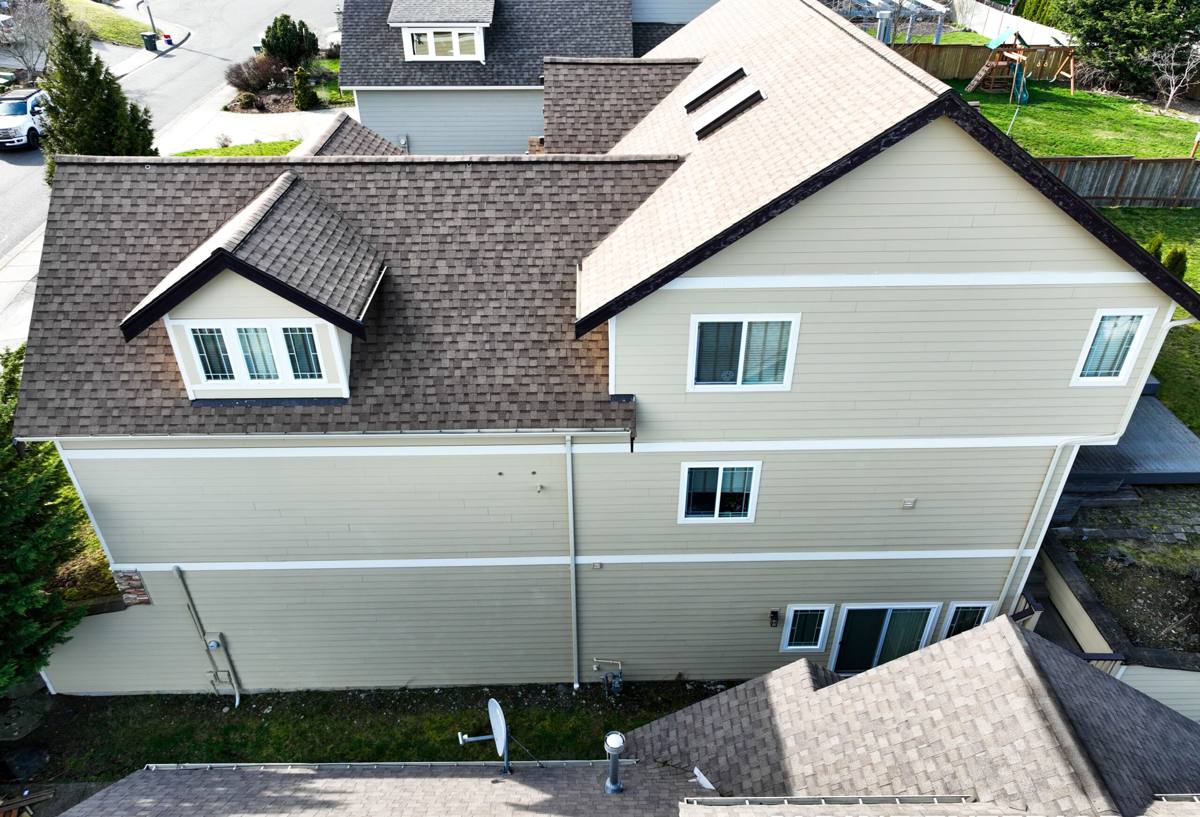
What Acme Properties Ask of a Deck
Most of the lots we see around Acme are wooded or partially wooded, which means shade, moisture retention, and organic debris (needles, cones, leaf litter) collecting on and under the deck surface for most of the year. That combination is exactly what moss, algae, and rot need to get started. A few site realities we plan around:
- Shaded decks stay damp far longer after rain than open, sun-exposed decks — surface choice and airflow underneath both matter more here than they would on a south-facing lot.
- Sloped or wooded ground often means footings need to go deeper or wider to get past organic soil into stable bearing ground.
- Fall needle and leaf debris will clog narrow deck-board gaps and gutter lines if the spacing and drainage aren't planned for it.
- Whatcom County's frost depth and drainage requirements affect how footings are sized and set, even though winters here are mild compared to inland Washington.
Framing and Footings: The Part Nobody Sees But Everyone Feels
Footings
We size and set footings to Whatcom County's current building code requirements, not the minimum that happens to pass. On wooded or sloped Acme lots, that often means digging past a layer of organic topsoil to reach undisturbed soil, and using footing sizes that account for the actual load path of the deck, stairs, and any attached structures like pergolas or hot tubs.
Ledger Attachment and Flashing
If the deck attaches to the house, the ledger board and its flashing are the single most important detail on the entire project. A poorly flashed ledger is the most common source of hidden rot we find when we're called out to repair someone else's deck — water gets behind the ledger, runs down the rim joist, and rots the wall framing before anyone notices from outside. We flash every ledger connection with proper step flashing and a drainage gap, not just caulk and hope.
Joists, Hangers, and Fasteners
Given the rainfall totals Whatcom County sees, we use stainless steel or heavy hot-dip galvanized hardware and fasteners rated for ground-contact and coastal-grade exposure, not standard-duty coated screws that start streaking and weakening within a few wet seasons. Every joist hanger, post base, and structural screw is chosen to match the framing material and stay corrosion-resistant for the life of the deck.
Choosing a Decking Surface for a Shaded, Wet Lot
The decking material matters more here than in a dry climate, because it's the surface that has to shed water and resist moss in shade for months at a stretch. There's no single "best" choice — it's a trade-off between upfront cost, maintenance commitment, and appearance.
| Material | Moisture & Moss Behavior | Maintenance | Typical Lifespan Here |
|---|---|---|---|
| Pressure-treated pine | Absorbs water, can cup or check if not sealed; moss gains a foothold in shaded spots without regular cleaning | Annual cleaning, re-seal every 1-2 years | 15-20 years with upkeep |
| Cedar | Naturally rot- and insect-resistant, sheds water well, but greys and softens without periodic treatment | Cleaning and oil/sealer every 1-2 years | 20-25 years with upkeep |
| Composite (capped) | Doesn't absorb water or rot, but moss and algae can still grow on the surface film in deep shade | Periodic washing, no sealing or staining | 25-30+ years, manufacturer-warrantied |
| PVC decking | Fully water-resistant, best moisture performance of the group | Occasional washing | 25-30+ years, manufacturer-warrantied |
For heavily shaded Acme lots, we lean toward capped composite or PVC on decks that get real, continuous shade — the reduced maintenance burden pays for itself over time. For sunnier or more open sections of a lot, cedar remains a solid, honest choice as long as the homeowner is realistic about the sealing schedule. We'll walk your specific site with you and give a straight recommendation rather than pushing whatever's easiest to install.
A Note on Board Spacing and Airflow
On shaded, debris-heavy lots we typically run slightly wider board gaps and make sure the structure underneath has real airflow — no skirting that seals the underside completely, and no ground-level dead air pockets where moisture sits. Debris that collects in tight gaps holds water against the board edges and is one of the fastest ways to shorten a deck's life in a wooded setting.
Our Process for a Custom Acme Deck
1. Site Walk and Design
We look at sun exposure, slope, drainage patterns, and how you actually want to use the space — dining, a hot tub, grilling, stairs down to the yard. We talk through material trade-offs honestly, including what a lower-maintenance option costs versus what a natural-wood look costs in upkeep over the years.
2. Permitting
Most new decks and significant deck rebuilds in Whatcom County require a building permit, and setback rules apply depending on how close the structure sits to property lines. We handle the permit process and design to the setbacks and code requirements that apply to your parcel, so you're not the one navigating the county office.
3. Footings, Framing, and Inspection
Footings are dug, formed, and poured to code depth and size; framing goes up with corrosion-resistant hardware sized to the actual loads. Structural work gets inspected before it's covered up — no shortcuts hidden under decking.
4. Decking, Railing, and Stairs
Surface material goes down with the spacing and fastening pattern appropriate to that material and your site's shade and debris conditions. Railings and stairs are built to current code for height, baluster spacing, and load.
5. Walkthrough and Care Guidance
We walk the finished deck with you and explain what maintenance it actually needs — cleaning schedule, any sealing or staining timeline, and what to watch for as the seasons change.
Moss and Mildew: Managing It, Not Fighting It Forever
In a shaded Whatcom County lot, moss isn't a sign that something was built wrong — it's a sign that organic matter, shade, and moisture are doing what they do everywhere in this region. The goal of a good deck build is to make moss easy to manage rather than impossible to stop:
- Board spacing and structural airflow that let the deck actually dry out between rains
- A surface material matched to how much shade and debris the specific area of the deck gets
- Gutters or drip-edge details that keep roof runoff from sheeting directly onto the deck surface
- A realistic seasonal cleaning routine — a simple wash-down in early fall and again in spring goes a long way
Cost Factors for a Custom Deck in Acme
Every deck is priced around its own site and design, so we won't quote a number without seeing the lot, but these are the factors that move the price up or down the most:
| Factor | Why It Affects Cost |
|---|---|
| Height above grade | Taller decks need more substantial framing, footings, and often stairs with a mid-landing |
| Slope and soil conditions | Sloped or organic-heavy soil on wooded lots often means deeper or additional footings |
| Decking material | Composite and PVC cost more upfront than pressure-treated wood but reduce long-term maintenance |
| Railing style | Cable, glass, and custom railing systems cost more than standard baluster railing |
| Roof or cover integration | Tying a deck cover or pergola into the house roofline adds structural and flashing work |
| Access and staging | Wooded or tight-access lots can add time for material handling and equipment access |
What to Check Before Hiring a Deck Contractor Around Acme
- Do they pull a building permit and design to Whatcom County setback rules, rather than treating it as optional?
- Will they explain their footing depth and sizing, not just say "it'll be fine"?
- Do they use stainless or coastal-grade hardware and fasteners, not standard interior-grade coated screws?
- Do they flash the ledger connection properly if the deck attaches to your house?
- Can they speak specifically to shaded, wooded-lot conditions rather than giving generic advice made for a dry, open climate?
- Do they give you a straight answer on maintenance expectations for whatever material you choose?
Why Local Experience on This Specific Terrain Matters
A deck built to a generic national spec sheet can still fail in Whatcom County if it ignores what this climate actually does to wood, hardware, and shaded ground over time. We've built and repaired decks across the Lynden area, including properties around Acme with the same wooded, damp, moss-prone conditions, and we design around those conditions from the footings up rather than treating them as an afterthought. That's the difference between a deck that needs real repair work in five years and one that just needs a wash-down and an occasional re-seal.
If you're planning a new deck or replacing one that's showing its age, we're happy to walk the site with you, talk through material options honestly, and put together a clear plan for your specific lot. Reach out for a free, no-pressure estimate using the form below.