 Lynden Siding
 Siding Installation for Abbotsford Homes
Abbotsford sits in the heart of the Fraser Valley, just across the border from our home base in Lynden, and the two areas share a lot more than a highway crossing — they share a climate that is genuinely hard on exterior siding. Salt-laden air moving in off the water, driving rain that comes in sideways during winter storms, and a moss season that seems to start earlier every year all work against whatever material is bolted to the outside of a house. We've installed siding on enough homes in this region to know which products and details hold up here, and which ones quietly fail a few years in.
This page is specifically about siding installation for Abbotsford properties — not a generic rundown of siding in general, but what actually matters when you're deciding what goes on your walls, how it should be installed, and who you trust to do it.
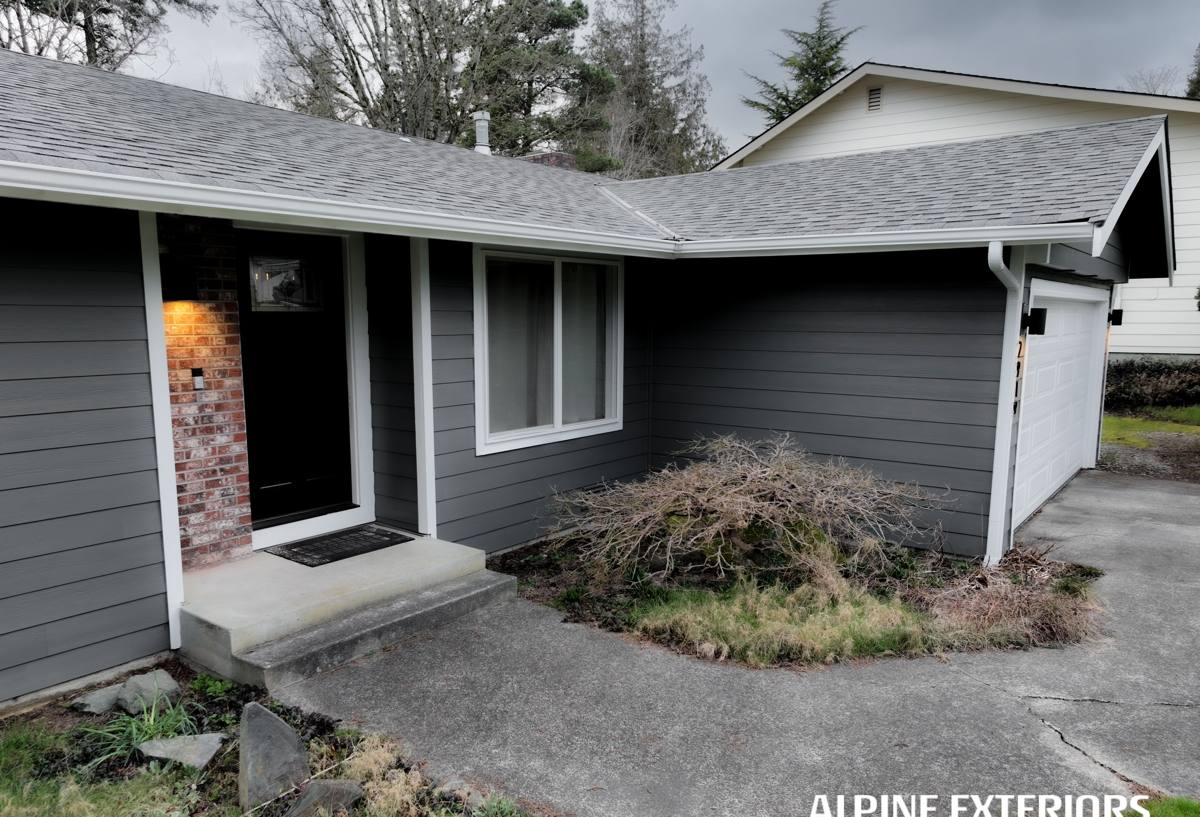
What This Climate Does to Siding Over Time
Every siding material eventually shows what the local weather is doing to it. In Abbotsford, that shows up in a few predictable ways.
Salt Air and Driving Rain
Salt-carrying air accelerates corrosion on fasteners, flashing, and any exposed metal trim, and it can work its way into seams and joints that weren't sealed with enough care in the first place. Combine that with wind-driven rain — the kind that hits siding at an angle instead of falling straight down — and you get water finding its way behind panels through gaps that would stay dry in a calmer climate. Most siding failures we see aren't the material failing on its own; they're water getting in through a joint, a nail hole, or a poorly lapped seam and doing damage from the inside out.
Moss and Algae Season
The Fraser Valley's long, wet, mild winters are close to ideal growing conditions for moss and algae. On siding, that growth isn't just cosmetic — moss holds moisture against the surface far longer than open air would, which keeps wood-based products damp and speeds up rot in anything that isn't moisture-resistant by design. A siding product's texture and finish matter here almost as much as what it's made of, because a rougher, more porous surface gives moss more to hold onto.
Why We Install Only James Hardie Fiber Cement
We made the decision to install James Hardie fiber cement siding exclusively, and a climate like Abbotsford's is a big part of why. Fiber cement doesn't absorb water the way wood-based products do, it doesn't support rot, and it's non-combustible, which matters given how often stray sparks or nearby brush can be a concern in the drier months here. James Hardie's ColorPlus factory finish is baked on under controlled conditions rather than applied on-site, which gives it better resistance to fading and to the kind of surface breakdown that gives algae and moss something to grip.
James Hardie also engineers specific product lines for different climate zones — the HZ5 line is built for regions with more freeze-thaw cycling, while HZ10 is formulated for wetter, milder coastal-influenced climates like this one. Choosing the right HZ designation isn't a marketing detail; it changes how the product's moisture barrier and engineered composition perform against the specific weather it's actually facing. We spec the product line to the site, not the other way around.
We don't install vinyl, LP SmartSide, or untreated wood siding, and we're upfront about why: each of those products has real strengths, but each also comes with a maintenance burden, moisture sensitivity, or installation tolerance that we don't think holds up well against decades of Fraser Valley winters. Fiber cement, installed correctly, is the product we're willing to put our name behind here.
How Common Siding Materials Handle This Climate
Homeowners comparing options deserve an honest look at the trade-offs, not just a sales pitch. Here's a fair comparison of how the major residential siding materials tend to perform under Abbotsford's conditions.
| Material | Moisture Behavior | Upkeep in This Climate |
|---|---|---|
| Vinyl | Doesn't absorb water itself, but relies entirely on the house wrap and flashing behind it — if that fails, moisture can sit trapped behind the panels unnoticed | Low routine maintenance, but panels can warp or crack in temperature swings and are difficult to repair invisibly |
| Untreated or primed wood/cedar | Absorbs moisture readily; prone to swelling, cupping, and rot without diligent upkeep | Requires regular refinishing and moss treatment; the biggest long-term maintenance burden of the group |
| James Hardie fiber cement | Engineered core resists moisture absorption; factory finish sheds water rather than holding it | Occasional washing; no refinishing needed for the life of the ColorPlus warranty period |
What a Correct Installation Actually Involves
The siding material only performs as well as the installation behind it. On every Abbotsford project, a few details matter more than they get credit for.
The Weather-Resistive Barrier and Flashing
A properly lapped house wrap, correctly integrated window and door flashing, and a drainage plane that actually lets incidental water escape rather than pool are the real defense against wind-driven rain — not the siding panel itself. We treat this layer as the primary waterproofing system, with the siding as the second line of defense.
Fastening, Clearances, and Joints
James Hardie specifies exact nailing patterns, minimum clearances from grade, decks, and roof lines, and joint treatment at every seam. Skipping these — nailing too high or too low, butting boards tight with no gap for movement, or leaving ground clearance too tight — is how a well-made product ends up with an installation-caused failure a few years later.
Caulking and Finish Details
Every joint, corner, and penetration gets sealed with a product rated for exterior movement and UV exposure, not general-purpose caulk. Given how much rain this region sees, a shortcut here shows up as a stain or soft spot much sooner than it would somewhere drier.
Our Process
- On-site assessment of the existing siding, sheathing condition, and any moisture or moss damage already present
- Product and HZ line selection based on the home's exposure, elevation, and orientation
- Removal of old siding and inspection of the sheathing and framing underneath before anything new goes on
- Repair of any rot or damage found during tear-off — this gets addressed before the new weather barrier goes up, not covered over
- Installation of house wrap, flashing, and James Hardie siding to manufacturer specification
- Final walkthrough and cleanup, with a review of maintenance expectations specific to your home
Signs Your Abbotsford Home May Need New Siding
- Moss or algae that returns within weeks of being cleaned off
- Soft, spongy, or bouncy spots when you press on the siding, especially near the bottom edges
- Paint that keeps bubbling or peeling in the same spots year after year
- Visible warping, buckling, or gaps opening up at seams and corners
- A noticeable jump in heating bills that isn't explained by anything else
- Staining or discoloration that tracks downward from a window, corner, or roofline — a sign water is getting behind the siding somewhere above it
Cost Factors for Siding Installation in Abbotsford
Every home is different, so we won't quote a number without seeing the property, but these are the factors that actually move the price up or down.
| Factor | Why It Affects the Price |
|---|---|
| Total square footage and home height | More surface area and multi-story access both add material and labor time |
| Tear-off vs. new construction | Removing existing siding, disposing of it, and addressing whatever is found underneath adds time that new-construction installs don't have |
| Sheathing or framing repair needed | Moisture or moss damage found during tear-off has to be repaired before new siding goes on |
| Trim, corner detail, and architectural complexity | Homes with more windows, dormers, and trim work take more precise (and slower) installation |
| Siding profile chosen | Lap siding, shingle-style panels, and board-and-batten each have different material and labor costs |
Why It Matters That We Already Work in This Area
A crew that installs siding across the border regularly understands the practical realities of the job here — how the permitting and inspection process works in Abbotsford, how material deliveries and scheduling work across the crossing, and what this particular stretch of the Fraser Valley's weather actually does to a house over a full year, not just during a sales visit in the summer. That familiarity shows up in the small decisions on a job site: where extra flashing gets added even though the spec sheet doesn't require it, or which side of a house needs a tighter joint treatment because of how the wind and rain typically hit it.
It also means we're not guessing at what "normal" looks like for an Abbotsford home. We've seen enough of them to know what a well-installed job should still look like after a decade of this climate, and we build to that standard from the start.
Maintenance After Installation
James Hardie siding installed correctly is low-maintenance, not no-maintenance. In this climate, that means an annual rinse to keep moss and algae from establishing themselves, keeping gutters clear so water isn't sheeting down the siding face, and trimming back vegetation that holds moisture against the wall. None of this is heavy work, but skipping it entirely for years at a stretch is how even a good installation starts to show its age early.
If you're weighing your options for an Abbotsford property, we're happy to take a look and give you a straight, no-pressure estimate — what your siding actually needs, what it would take to fix it right, and what it would cost. There's a form below to get that conversation started.