 Lynden Siding
 Roofing Along the Lynden–Abbotsford Border Country
Homes on both sides of the Lynden and Abbotsford, BC line sit in the same weather system, even though they're in two different countries. Whatcom County and the lower Fraser Valley share a marine-influenced climate off the Salish Sea: mild temperatures, a wet season that can stretch from October into May, and enough shade and moisture on north-facing slopes to keep moss and algae in business year-round. A roof here doesn't fail because of one big storm. It fails slowly, from repeated cycles of saturation, drying, and regrowth that most homeowners never see happening until a ceiling stain or a soft spot in the decking gives it away.
Roof replacement in this area isn't a generic job. It has to account for how much rain actually lands on this roof, how long it stays wet, and how much sun (or lack of it) it gets to dry back out. That's the lens we use on every Abbotsford-area and Lynden roof we bid.
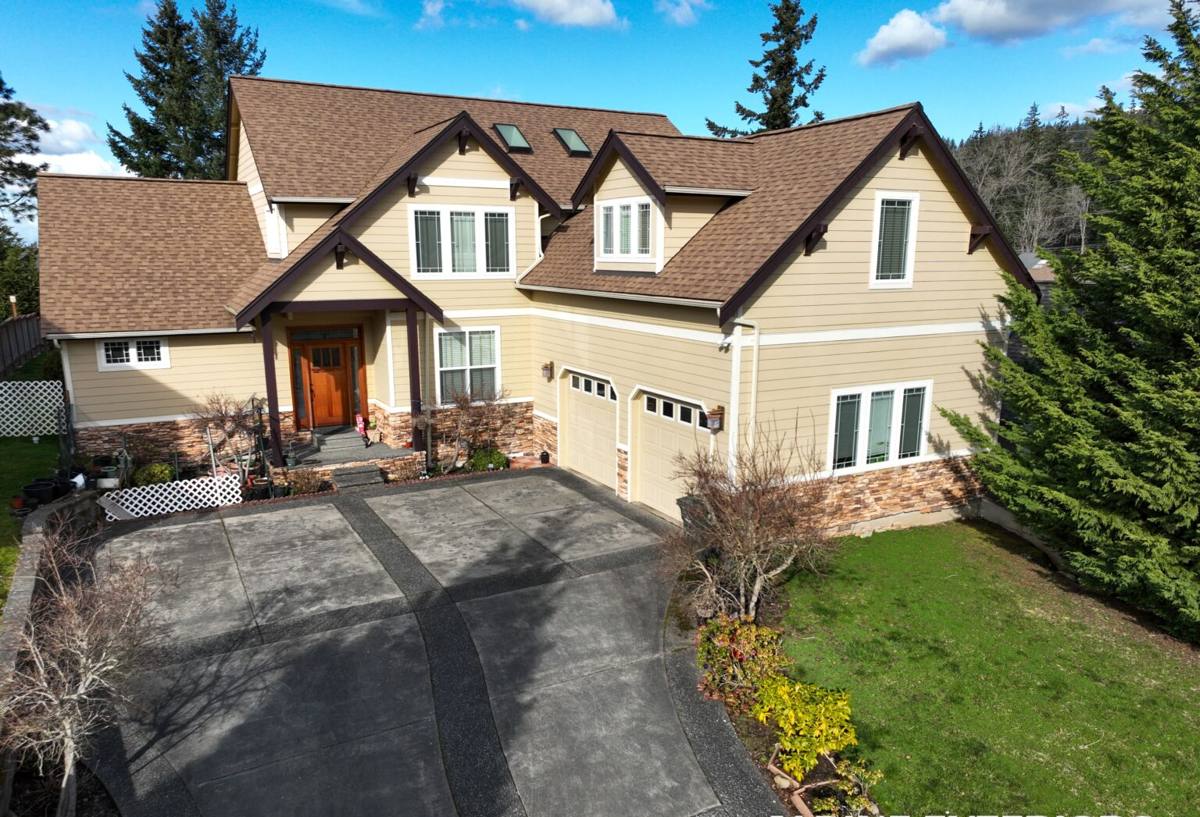
What This Climate Actually Does to a Roof
Three things do most of the damage out here, and they compound each other:
- Driving rain: wind-driven rain doesn't just fall straight down — it gets pushed sideways under shingle tabs, around poorly lapped flashing, and into any gap in the underlayment. A roof that would be fine in a drier climate can leak here simply because it wasn't detailed for wind-driven moisture.
- Long moss season: shaded roof planes, especially north and east exposures under fir or cedar trees, stay damp for days after a storm. Moss roots into shingle mat, lifts tabs, and holds water against the roof surface exactly where you don't want it.
- Salt-tinged marine air: proximity to the Salish Sea and Georgia Strait means metal components — flashing, fasteners, vents — see more corrosion pressure than they would inland. Cheap or mismatched metal is where roofs start failing first.
None of these are dramatic. That's the problem. They're the kind of slow, cumulative damage that a homeowner doesn't notice until a repair estimate turns into a replacement conversation.
Signs an Abbotsford-Area or Lynden Roof Is Due
We get called out for a lot of roofs that are past the point where a repair makes sense. Common signs include:
- Granules collecting in gutters or at downspout outlets — a sign the shingle surface is wearing thin
- Shingle edges curling or cupping, especially on south and west-facing slopes
- Moss growth thick enough that you can see it lifting shingle tabs, not just staining them
- Dark streaking that doesn't wash off — usually algae, not just dirt
- Soft or spongy spots underfoot when walked (we check this during inspections, not something to test yourself)
- Daylight visible through the roof deck from inside the attic
- A roof approaching or past 20-25 years for asphalt composition, or showing wear well before that from heavy shade and moisture exposure
Any one of these on its own might just need a repair. Two or three together, especially on a roof already past 15-20 years, usually means replacement is the more honest recommendation.
What a Correct Roof Replacement Involves
A roof replacement is more than swapping old shingles for new ones. The parts nobody sees are what determine whether the roof holds up through its first few wet winters.
Tear-Off and Deck Inspection
We remove the existing roofing down to the deck rather than layering over it. That's the only way to actually see the plywood or plank sheathing underneath — soft, delaminated, or water-stained decking has to be found and replaced before anything new goes down, not discovered later as a leak.
Underlayment as the Real Water Barrier
Shingles shed most water, but underlayment is the backup layer that protects the deck when wind drives rain up under a tab or when ice or debris backs water up at an edge. In this climate we treat underlayment as essential, not optional — synthetic underlayment or a self-adhered membrane at eaves, valleys, and around penetrations, sized to how exposed the roof plane actually is.
Flashing Details That Get Skipped on Cheap Jobs
Chimneys, skylights, sidewalls, and valleys are where the vast majority of roof leaks actually start — not in the open field of shingles. Correct step flashing, counter-flashing, and valley metal, properly lapped so water always moves downhill over the next piece, is what separates a roof that lasts from one that leaks in year three.
Ventilation and Moisture Control
A roof deck that can't breathe traps moisture from inside the house, which shortens the life of the new roofing from underneath. We check intake at the eaves and exhaust at the ridge or through roof vents, and correct imbalances as part of the replacement rather than leaving an old, undersized ventilation setup in place under new shingles.
Material Options for This Climate
There's no single "right" roofing material for every home — it depends on budget, roof pitch, how much shade the roof gets, and how long you plan to stay in the house. Here's how the common options actually compare for Lynden and Abbotsford-area conditions:
| Material | Typical Lifespan | How It Handles Moss & Moisture | Considerations |
|---|---|---|---|
| Asphalt composition shingle (architectural) | 25-30 years | Good with algae-resistant granules; still needs moss management on shaded planes | Best balance of cost and performance for most homes; widest color/style range |
| Asphalt composition shingle (3-tab) | 18-22 years | More vulnerable to moisture uptake at edges over time | Lower upfront cost, shorter service life in wet shade |
| Standing seam metal | 40-50+ years | Excellent — sheds water fast, minimal surface for moss to root into | Higher upfront cost; requires correct fastening and expansion detailing |
| Cedar shake | 20-30 years with upkeep | Most maintenance-intensive; needs regular treatment and cleaning to resist moss and rot | Traditional look, but highest ongoing maintenance burden in this climate |
For most Lynden and Abbotsford-area homes, a quality architectural asphalt shingle with proper underlayment and flashing gives the best value. Metal earns its higher cost on steep, heavily shaded roofs where moss and moisture are a constant fight, or for homeowners planning to stay in the house long-term.
Our Process, Start to Finish
- On-site inspection: we walk the roof (weather permitting) and check the attic from inside, not just look from the ground.
- Written estimate: a clear scope covering tear-off, deck repair allowance, underlayment, flashing, ventilation, and material, so there are no surprise line items later.
- Scheduling around the weather: we plan tear-off days around dry forecast windows and keep the deck protected if conditions shift mid-job.
- Tear-off and deck repair: old roofing removed, deck inspected and repaired as needed.
- Underlayment, flashing, and new roofing installed to manufacturer specification, with attention to every valley, penetration, and edge.
- Final walkthrough and cleanup: yard and gutters cleared of debris and nails before we consider the job done.
Moss, Algae, and Keeping a New Roof Looking Like It
A new roof still needs a little seasonal attention in this climate, especially on shaded or north-facing planes. Simple habits go a long way:
- Keep overhanging branches trimmed back to let more light and air reach the roof surface
- Clean gutters at least twice a year so water doesn't back up under the lowest course of shingles
- Have moss growth removed gently (never pressure-washed directly on asphalt shingles) before it has a chance to lift tabs
- Watch shaded valleys and north slopes first — that's where problems start
- Schedule a quick roof check every few years, not just when something looks wrong
Why Local, Cross-Border-Area Experience Matters
Lynden and the Abbotsford, BC area sit close enough together that a lot of homes here see nearly identical weather exposure, even with an international border between them. A crew that works this specific stretch of the Fraser Valley and Whatcom County border country knows which roof orientations take the worst of the driving rain, which neighborhoods hold shade — and moss — longest into the summer, and how to sequence a tear-off around a forecast that can turn in a few hours. That's not something a crew unfamiliar with this stretch of the Pacific Northwest picks up on the first job. It shows up in fewer callbacks and roofs that actually perform through their first few wet seasons, not just look good on installation day.
Get a Straight Answer on Your Roof
If your roof is showing its age, has moss you can't keep ahead of, or you just want an honest read on how many years it has left, we'll come take a look. The estimate is free, there's no pressure attached to it, and you'll get a clear, itemized answer either way. Use the form below to get started.