 Lynden Siding
 Building a Deck That Holds Up in Abbotsford's Climate
Abbotsford sits in the Fraser Valley, just north of the Whatcom County line, and it gets the same weather pattern that shapes every deck we build closer to home in Lynden: long stretches of driving rain, humid marine air moving in off the coast, and a moss season that can run from fall through spring. A deck built to a generic spec sheet will survive a dry summer. Whether it survives ten wet winters depends on decisions made before the first board is ever cut — footing depth, flashing detail, fastener choice, and how the framing is designed to shed water instead of trap it.
This page is about one project type: new deck construction and major rebuilds for homes in Abbotsford. We're not going to give you a generic list of decking materials. We're going to walk through what actually matters for a structure that sits outside, uncovered, in this specific climate, year after year.
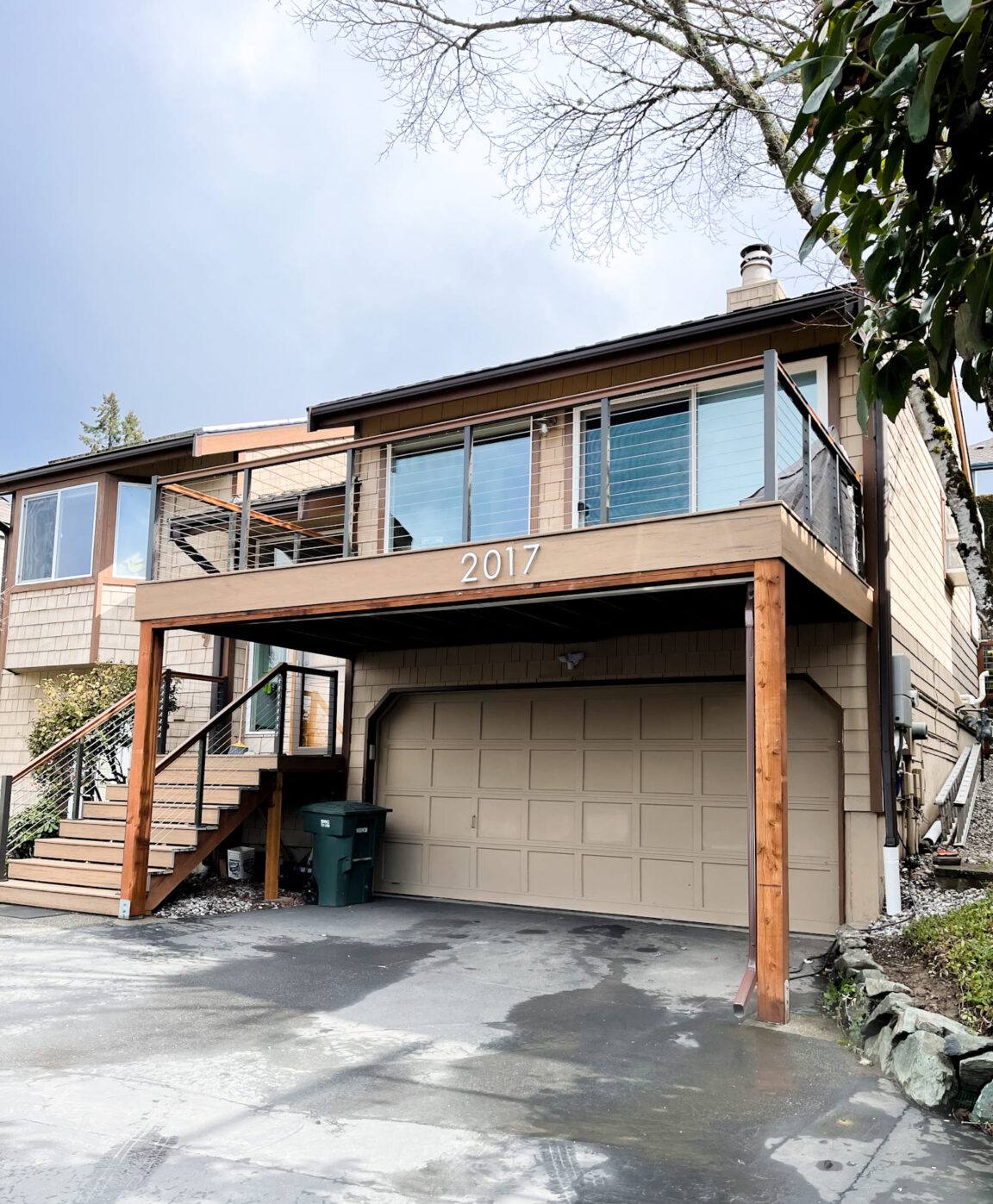
What Rain, Salt Air, and Moss Actually Do to a Deck
Most deck failures aren't dramatic. They're slow. Understanding the failure pattern is the first step to avoiding it.
Driving Rain and Wind-Driven Moisture
Rain that falls straight down is easy to manage with a sloped surface. Rain that's driven sideways by wind gets forced into joints, under ledger boards, and into end grain that isn't sealed. Once moisture gets past the surface of a board, it doesn't dry out quickly in our climate — the humidity stays high enough, long enough, that trapped water becomes an ongoing problem instead of a one-time event.
Salt Air and Corrosion
Coastal and near-coastal air carries fine salt particles that accelerate corrosion on any exposed metal — screw heads, joist hangers, bolts, railing brackets. Standard zinc-coated fasteners that would last for decades inland can start showing rust streaks and pitting in a fraction of that time in a marine-influenced climate. This is a hardware problem more than a lumber problem, and it's one of the most overlooked details in deck construction.
Moss
Moss needs shade, moisture, and a surface to grip. Horizontal deck boards, especially in gaps and under furniture or planters, are exactly that surface. Beyond the appearance issue, moss holds moisture against the wood constantly, which speeds up rot in untreated or under-treated areas, and it turns a deck surface slick and genuinely dangerous when wet.
Choosing a Decking Material for Fraser Valley Weather
There's no single "best" decking material — there's a best material for your budget, your maintenance appetite, and how exposed the deck is to weather. Here's how the common options actually compare in this climate:
| Material | Upfront Cost | Maintenance | Moisture / Salt-Air Performance | Typical Lifespan |
|---|---|---|---|---|
| Pressure-treated lumber | Lowest | Annual cleaning, re-sealing every 1-2 years | Good if properly sealed and maintained; end grain is the weak point | 15-20 years |
| Cedar | Mid-range | Regular oiling or staining to prevent graying and checking | Naturally rot-resistant, but softer surface is more moss-prone if not sealed | 15-25 years |
| Composite (capped) | Higher | Occasional washing; no sealing or staining | Excellent — doesn't absorb moisture the way wood does, resists moss better with regular rinsing | 25-30+ years |
| PVC decking | Highest | Minimal; wash as needed | Best moisture and corrosion resistance of the group; won't rot or splinter | 30+ years |
Our standard is to talk through this table with the homeowner, not just quote whatever's cheapest or whatever has the best margin. If you want the warmth of real wood and are willing to do annual upkeep, cedar or well-maintained pressure-treated lumber is a legitimate choice. If you want to spend your weekends doing something other than sealing a deck, composite or PVC earns its higher upfront cost over the life of the structure. What we won't do is sell you a wood deck without being upfront about the maintenance commitment that comes with it in this climate.
Framing, Footings, and Flashing — What's Underneath Matters More Than the Boards
A deck's surface material gets all the attention, but the framing underneath is what actually determines how long the structure lasts and whether it stays safe.
Footings
Footings need to be sized and set below the local frost line so the deck doesn't shift with seasonal freeze-thaw cycles. Undersized or improperly poured footings are one of the most common causes of a deck that develops a noticeable lean or bounce within a few years.
Ledger Board Flashing
Where a deck attaches to the house is the single highest-risk point for water intrusion on the entire structure. Proper flashing — installed correctly, in the right sequence relative to the house's siding or sheathing — keeps water from working its way behind the ledger board and into the wall assembly. This detail is invisible once the deck is finished, which is exactly why it's the detail worth asking a contractor about directly.
Joist Layout and Spacing
Joist spacing affects both the bounce you feel walking across the deck and how the decking material performs long-term. Composite and PVC boards, in particular, often require tighter joist spacing than traditional lumber to avoid sagging between supports — a detail that's easy to miss if the framing is built to a generic spec instead of the specific decking product going on top.
Fasteners and Hardware: The Detail Most Decks Get Wrong
Given the salt air exposure common across the Fraser Valley and Whatcom County coastline, we treat fastener selection as a structural decision, not an afterthought. That means stainless steel or heavy-duty coated fasteners rated for exterior and coastal exposure, corrosion-resistant joist hangers and structural screws, and hidden fastener systems where the decking product supports them, which also reduces the number of exposed fastener heads that can corrode or stain the board over time. Cutting corners here doesn't save meaningful money on a project — it just moves the cost to five or ten years down the road, when hardware failure shows up as a wobble, a stain, or a board that's come loose.
Permits and Code Basics for Abbotsford Homeowners
Deck construction in Abbotsford falls under the BC Building Code and is typically subject to a permit through the City of Abbotsford's building department, particularly for decks above a certain height off grade or attached to the main structure. General code items that shape how we design and build include guardrail height and spacing requirements for elevated decks, stair rise and run limits, and footing and structural requirements that may call for engineering sign-off on larger or higher decks.
We're not going to quote you exact fees or turnaround times here — those change, and the only reliable source is the City of Abbotsford building department directly. What we do is handle the drawings and documentation a permit application needs and build to the approved plan, so the homeowner isn't the one chasing down code requirements mid-project.
Why a Crew That Already Works in Abbotsford Matters
Building a deck well requires knowing the local building department's expectations, the realistic weather windows for pouring footings and completing framing, and how local supply availability affects material lead times — not just general carpentry skill. Because we already work both sides of the Lynden–Abbotsford corridor, we're not learning Abbotsford's permitting process or climate behavior on your project. We show up knowing what inspectors here typically flag, what flashing details actually hold up through a Fraser Valley winter, and how to sequence a build around the rain instead of fighting it.
That local familiarity also means straightforward scheduling and communication — no guessing about cross-border logistics, no delays because a crew is unfamiliar with the area. It's the same standard of work we hold to on every deck we build, applied consistently to Abbotsford projects.
Our Deck Building Process
- Site visit and consultation — we look at grade, drainage, sun/shade exposure, and how the deck will connect to your home before recommending materials or layout.
- Design and material selection — we walk through decking options, railing style, and layout based on your budget and how you'll actually use the space.
- Permit documentation — we prepare the drawings and details needed for the City of Abbotsford's permit process.
- Framing and footings — footings set below frost line, ledger flashing installed correctly, joists laid out for the specific decking product chosen.
- Decking, railing, and finish work — installed with corrosion-resistant fasteners appropriate for the exposure.
- Final walkthrough — we go over the finished deck with you, including basic maintenance expectations for the material you chose.
Keeping a New Deck Ahead of Moss and Moisture
Even a well-built deck needs some seasonal attention in this climate. A short maintenance routine goes a long way toward protecting the investment:
- Sweep leaves and debris off the deck surface regularly, especially in fall — trapped organic material is what moss and mildew feed on.
- Clean out the gaps between boards once or twice a year so water can drain instead of pooling.
- For wood decking, reapply a water-repellent sealer or stain on the schedule recommended for the product — typically every one to two years in this climate.
- Avoid setting planters or furniture with solid bases directly on the decking for long periods; they trap moisture underneath.
- Check railing hardware and any visible fasteners annually for early signs of corrosion or staining.
- Rinse composite or PVC decking periodically to prevent surface mildew, even though it won't rot.
If you're planning a new deck or replacing one that hasn't held up to Abbotsford's weather, we're happy to take a look and put together a free, no-pressure estimate — just fill out the form below.