 Lynden Siding
 Windows Around Wiser Lake Take a Different Kind of Beating
Wiser Lake sits in a pocket of Whatcom County that stays damp longer than most people expect. The lake itself keeps humidity elevated close to the water, storm systems roll in off the Pacific with sideways rain more often than a gentle straight-down soak, and the tree cover around many of the lots holds moisture and shade against exterior walls well after a storm has passed. Add in the salt-tinged marine air that moves inland from the Sound and a moss season that can stretch from fall through spring, and you have an environment that is genuinely harder on windows than a typical inland Washington town.
None of that means window installation here needs to be exotic. It means it needs to be done correctly, with the right materials and the right sequence, every time — because the margin for a sloppy install is thinner around Wiser Lake than it is somewhere drier. A window that would limp along for a decade with a mediocre install in Eastern Washington can start showing rot, fogging, or air leaks in a fraction of that time here if the flashing and sealing weren't done right the first time.
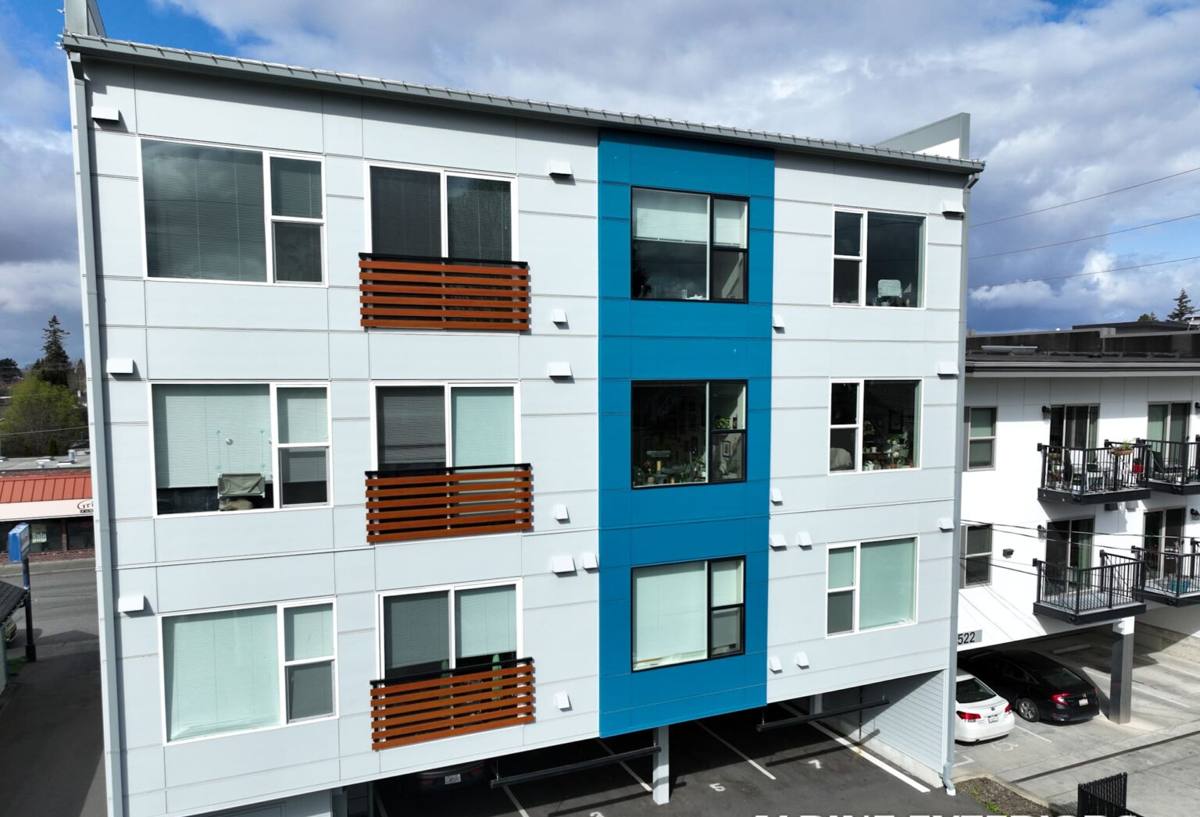
What Poor Window Performance Looks Like in This Climate
Homeowners around Wiser Lake usually notice problems in a handful of predictable ways. Recognizing them early saves the surrounding wall framing, not just the window itself.
- Fogging between the panes — the seal on a double- or triple-pane unit has failed and moist air has gotten into the gas-filled cavity. This is not fixable with cleaning; the sealed unit needs replacement.
- Soft or discolored trim and sill wood — usually a sign that driving rain has been getting behind the exterior casing for a while, often because flashing was missing or installed backwards.
- Visible moss or green growth on sills and lower trim — a climate reality here, but heavy growth right at a window opening usually means water is sitting there instead of shedding away, which points to a slope or flashing issue.
- Drafts or a cold stripe near the frame in winter — the interior seal or the low-expansion foam and backer rod around the frame has failed or was never installed to spec.
- Difficulty opening or closing — swollen wood-composite frames, or a house that has settled enough that the rough opening is no longer square.
Any one of these is worth a look before it turns into a framing repair. Wet-climate rot spreads quietly behind trim long before it's visible on the surface.
What a Correct Window Installation Actually Involves
A window installation is really a small waterproofing project with a window in the middle of it. In a climate that sees this much driving rain, the sequence matters as much as the window itself.
Prepping the Opening
Old caulk, damaged trim, and any compromised sheathing get removed and inspected before anything new goes in. Installing a new window over a wet or rotted opening just hides the problem for a year or two.
Flashing, Not Just Caulk
Self-adhered flashing membrane goes around the rough opening in a specific shingle-lap order — sill first, then jambs, then head — so that any water that does get past the exterior cladding is directed back out and down, never trapped against the framing. Caulk alone is not a substitute for proper flashing; it's a secondary defense, not the primary one.
Sill Pan and Slope
The sill gets a drainage path with a slight outward slope so bulk water has somewhere to go instead of pooling against the bottom of the frame — the single most common failure point on homes near standing water like Wiser Lake.
Setting and Sealing the Unit
The window is shimmed level, plumb, and square, fastened per the manufacturer's schedule, then sealed on the interior and exterior with the correct low-expansion foam and sealant — enough to stop air and water movement, not so much that it distorts the frame or voids the manufacturer's warranty.
Trim and Final Weatherproofing
Exterior trim goes back on (or new trim is installed) with a paintable, flexible sealant at every joint, and the interior is finished so the whole assembly reads as a clean, factory-tight installation rather than a patch job.
Choosing Windows That Hold Up Near the Lake
Material choice matters more here than in a drier part of the state. Some options that perform fine elsewhere in Whatcom County are a worse fit directly around Wiser Lake because of the sustained moisture and shade exposure.
| Frame Material | How It Handles This Climate | Trade-Off |
|---|---|---|
| Vinyl | Resists moisture and rot well; no painting required | Limited color range; can flex slightly in large sizes |
| Fiberglass | Very stable in wet, temperature-swinging conditions; low expansion/contraction | Higher upfront cost than vinyl |
| Aluminum-clad wood | Attractive wood interior with a weatherproof exterior shell | Exterior clad seams need correct detailing to stay watertight; more installation-sensitive |
| Bare wood | Classic look for older or historic-style homes | Needs consistent exterior maintenance to avoid the rot this climate encourages — we'll walk you through what that upkeep actually requires before you commit |
We don't push one brand or material on every job. We'll tell you honestly which option fits your home's exposure, your maintenance appetite, and your budget — including where a lower-maintenance material saves you money over ten years even if it costs more today.
How We Approach a Wiser Lake Window Job
- On-site assessment. We look at each opening individually — sun and shade exposure, proximity to the lake, existing water damage, and how the current windows have actually held up.
- Honest scoping. Some windows need full replacement; others just need better flashing and trim work around a unit that's still sound. We tell you which is which.
- Written estimate. Materials, labor, and timeline spelled out before any work starts — no surprise add-ons once demo begins.
- Removal and opening inspection. We don't install over hidden rot. If we find compromised sheathing or framing, we show you before covering it back up.
- Correct flashing and sealing sequence. Every job gets the same waterproofing discipline described above, regardless of window price point.
- Final walkthrough. We check operation, seals, and trim with you before calling the job done.
What Drives the Cost of a Window Installation
| Factor | Why It Matters |
|---|---|
| Number of openings | Per-window cost drops somewhat as the job scales, since setup and crew time are shared |
| Frame material and glass package | Vinyl runs less than fiberglass or clad-wood; upgraded low-E or triple-pane glass adds cost but pays back in comfort and energy use |
| Condition of the existing opening | Hidden rot or framing repair adds labor and materials beyond the window itself |
| New construction vs. retrofit | Retrofitting into existing siding and trim takes more careful detailing than a new-construction opening |
| Access and site conditions | Second-story or tricky-access openings around sloped lakefront lots take longer |
We'll never give a real number without seeing the openings in person, but we're happy to talk broad ranges over the phone so you can start planning.
Why Local Experience Around Wiser Lake Actually Matters
A window installer who mostly works drier parts of the county can still do a technically fine install and still get outperformed by the climate, because they're not used to designing for this much sustained moisture. A crew that regularly works the Wiser Lake area has already seen which sills rot first, which exposures grow moss fastest, and which flashing details actually hold up through a full Whatcom County wet season rather than just looking right on installation day. That's not a marketing point — it changes real decisions on site, like where to add extra flashing lap or which sill detail to use on a shaded, lake-facing wall.
We're also a call away if something needs a second look after the fact, rather than a company that did one job in the neighborhood and moved on.
Simple Maintenance That Extends the Life of a New Installation
Even a correctly installed window benefits from basic upkeep in this climate:
- Rinse pollen, moss spores, and debris off sills and tracks a couple of times a year, especially after fall leaf drop.
- Check exterior caulk lines annually for cracking or separation, particularly on sun-and-shade-exposed walls.
- Keep gutters clear so overflow isn't running down the wall directly above window openings.
- Trim back vegetation that keeps a window in constant shade and dampness.
- Operate each window through its full range a few times a year so hardware doesn't seize.
If you're weighing window replacement or repair for a home near Wiser Lake, we're glad to come take a look and give you a straight answer — no pressure, no upsell. Use the form below to request a free estimate.