 Lynden Siding
 Storm Damage Roof Repair Built for Nooksack's Weather
Nooksack sits in the low, flat stretch of Whatcom County east of Lynden, close enough to the Nooksack River that drainage, moisture, and standing dampness are part of everyday life for anyone who owns a home here. Storms coming off the Pacific push marine air up the valley, and by the time they reach this part of the county they've usually turned into sideways, wind-driven rain rather than a simple straight-down soaker. That kind of weather doesn't just wet a roof — it drives water sideways into seams, under lifted shingle tabs, and behind flashing that would stay dry in a calmer climate. When we get called out to a storm-damaged roof in the Nooksack area, the underlying cause is almost always some combination of wind uplift, saturated moss mats, and flashing that's been slowly failing for longer than the homeowner realized.
A correct storm damage repair has to deal with all three of those things at once. Patching the one shingle that's obviously missing and calling it done is how the same roof ends up with a ceiling stain six months later. Our approach starts with figuring out what the storm actually did, not just what's visible from the ground.
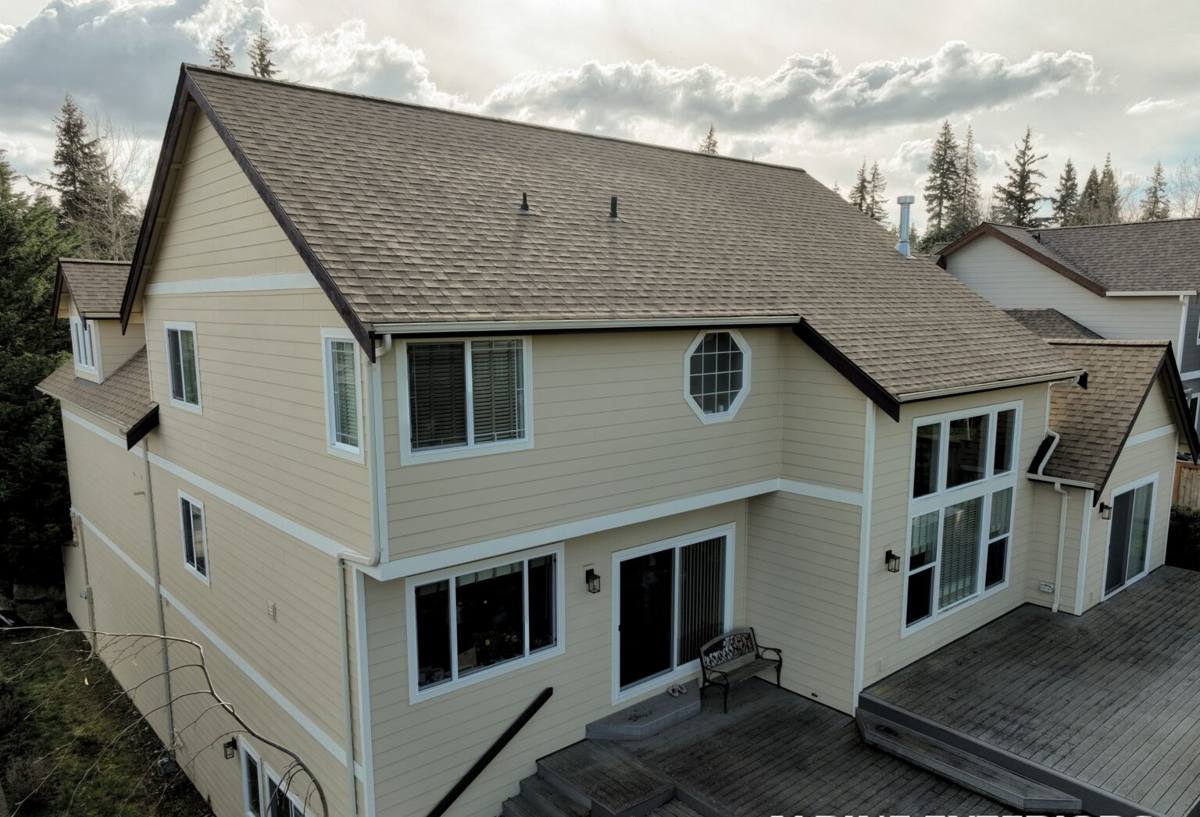
What Storms Actually Do to Roofs in This Part of Whatcom County
Whatcom County doesn't usually see the kind of hail damage that dominates storm-repair conversations in other parts of the country. Here, the damage profile is different, and it's worth understanding because it changes how a roof should be inspected and repaired.
Wind uplift on composition shingles
Most homes in and around Nooksack are roofed in asphalt composition shingle, and wind is the biggest threat to that material. Gusts get under a shingle tab, break or stress the seal strip, and either tear the shingle off outright or leave it loose enough that the next rain gets underneath it. A shingle that's been lifted and re-sealed by sun and pressure can look fine from the driveway and still be letting water in.
Driving rain finding old flashing
Flashing around chimneys, skylights, dormers, and roof-to-wall transitions is designed to shed water moving in one direction. Wind-driven rain moves sideways and sometimes even slightly upward under an overhang, which is exactly the condition flashing wasn't built to handle if it's aged, under-lapped, or was installed with cut corners. This is where a lot of "mystery leaks" after a storm actually originate.
Falling limbs and debris
The tree cover and hedgerows common around Nooksack properties mean storm winds bring down branches and debris that punchure shingles, crack ridge caps, or dent gutters and metal flashing. Even a glancing hit can crack a shingle without tearing it loose, which is easy to miss on a quick visual check.
Moss mats holding moisture against the deck
The long wet season and shaded north-facing slopes common on Nooksack-area roofs let moss establish quickly. Moss doesn't just look bad — it holds water against the shingle surface and works its way under tabs and around fasteners, which means a storm hitting a mossy roof does more damage than the same storm would on a clean one. Moss-related moisture retention is one of the most common contributing factors we find during a storm damage inspection.
Signs Your Roof Took Storm Damage
Not all storm damage announces itself with an active leak. After any significant windstorm, it's worth walking the property and checking for the following before the next rain event makes things worse.
- Shingle granules collecting in gutters or at downspout outlets
- Shingles that look curled, lifted at the corners, or slightly out of alignment with their neighbors
- Bare or exposed patches where a shingle tab has torn away
- Bent, creased, or dented metal flashing around chimneys, vents, or skylights
- Gutters pulled loose from fascia boards, or sagging under debris weight
- New or worsening moss growth in the days following a wet storm cycle
- Ceiling stains, musty odors in the attic, or new drafts near roof penetrations
- Cracked or displaced ridge cap shingles along the roof peak
If you see two or more of these after a storm, it's worth getting a roof looked at before the next weather system moves through — waiting through another rain cycle almost always turns a repair into a bigger repair.
What a Correct Storm Damage Repair Involves
A repair that actually holds up in this climate goes well beyond swapping out the shingle that's obviously gone. Here's what we check and address on every storm-damage call in the Nooksack area.
Full roof-surface inspection, not just the reported spot
Wind damage rarely limits itself to one location. We walk the entire roof plane — not just the area near the reported leak — because a storm strong enough to damage one section usually stressed the whole roof, and the next leak often starts somewhere the homeowner hasn't noticed yet.
Deck and underlayment check where shingles are missing
Once shingles are pulled back or found missing, we check the condition of the underlayment and the roof deck itself. Prolonged moisture exposure from a storm can soften sheathing or saturate underlayment, and replacing shingles over a compromised deck just sets up the next failure.
Matching shingle type, weight, and color
Repairs that mix mismatched shingle profiles or colors stand out and can affect how well the patch integrates with the surrounding wind and water seal. We match the existing shingle as closely as the product line allows, and we're upfront when an exact match isn't available due to discontinued colors or lines.
Flashing rebuilt, not just re-caulked
A common shortcut in storm repairs is sealing a flashing gap with caulk instead of correcting the underlying lap and step-flashing sequence. Caulk is a short-term patch, not a repair. Where flashing has failed, we rebuild the lap sequence so water sheds the way it's supposed to, with sealant used only to finish the job, not carry it.
Fastening to current wind-exposure standards
Shingles that lifted once are prone to lifting again unless the repair improves on the original fastening. We nail to pattern and, where wind exposure warrants it, add sealant-back tabs or additional fasteners in a manner consistent with the shingle manufacturer's high-wind installation instructions.
Repair or Replace: How We Help You Decide
Not every storm-damaged roof needs a full replacement, and not every roof that "just needs a patch" is actually a good repair candidate. The right call depends on the roof's age, the extent of the damage, and what condition the rest of the roofing system is in.
| Factor | Repair Usually Makes Sense | Replacement Usually Makes Sense |
|---|---|---|
| Roof age | Under 12–15 years, shingles still flexible | Approaching or past 20 years, shingles brittle or heavily granule-worn |
| Damage extent | Isolated to one or two roof planes | Spread across most of the roof surface |
| Underlying deck | Solid, dry sheathing beneath damaged areas | Soft, stained, or rotted sheathing found during inspection |
| Moss history | Light, manageable moss with no deck staining | Heavy, long-term moss with visible moisture damage underneath |
| Prior repairs | Few or none, roof otherwise in good shape | Multiple past patch jobs stacking on top of each other |
We walk homeowners through exactly which column their roof falls into and why, in plain terms, before recommending anything. If a repair is the honest answer, that's what we'll propose — a storm damage call isn't an excuse to sell a replacement a roof doesn't need.
What Affects the Cost of a Storm Damage Repair
Storm repair pricing varies enough from job to job that a flat number isn't useful, but the factors that drive cost are consistent. Understanding them helps set realistic expectations before an inspector even shows up.
| Cost Factor | Why It Matters |
|---|---|
| Roof pitch and access | Steeper roofs and difficult access (tall trees, tight setbacks) take longer to work safely |
| Shingle availability | Discontinued colors or profiles may require sourcing or a larger repair area to blend properly |
| Extent of flashing work | Rebuilding flashing at chimneys, skylights, or valleys takes more time than shingle-only repairs |
| Deck condition | Any sheathing replacement adds material and labor beyond the surface repair |
| Moss remediation | Heavy moss requires careful removal before repair work can begin without causing further damage |
Documenting Damage for Insurance
Most storm damage claims move faster and get resolved more fairly when there's clear documentation from the start. We photograph and note damage location, likely cause, and extent before any repair work begins, which gives homeowners something concrete to bring to their insurance adjuster. We're not a public adjuster and we don't negotiate claims on a homeowner's behalf, but a clear, honest damage assessment from a contractor who was actually on the roof carries real weight in that conversation. Where a tarp or temporary cover is needed to stop active water intrusion while a claim is processed, we handle that as its own straightforward step rather than folding it into a larger sales pitch.
Our Process, Start to Finish
- Inspection. We assess the full roof, not just the reported damage area, and identify contributing factors like moss, aging flashing, or wind exposure.
- Honest findings. You get a plain-language explanation of what's damaged, what caused it, and whether repair or replacement is the right call — with photos where useful.
- Written estimate. A clear scope of work and price before anything is scheduled, no verbal-only agreements.
- Temporary protection if needed. If there's active water intrusion, we address that first, even if full repair scheduling takes a few extra days.
- Repair work. Deck and underlayment addressed where needed, flashing rebuilt properly, shingles matched and fastened to hold up to the next storm, not just this one.
- Final walk-through. We show you what was done and why, and clean the site of debris and old material before we leave.
Why a Crew That Already Works Nooksack Matters
Storm damage repair isn't just a technical skill — it's a familiarity skill. A crew that regularly works the Nooksack and greater Lynden area already knows which roof styles and ages are common here, how the local moss season tends to progress, and which storm patterns off the valley cause the most wind-uplift damage. That familiarity means less time spent diagnosing the obvious and more time spent on the parts of the job that actually matter — the flashing detail, the deck condition, the fastening pattern that will hold next time. It also means a faster response after a storm, since we're not driving in from across the county or scheduling around a long backlog in an unfamiliar service area. For homeowners near Nooksack, that local presence is the difference between a roof that gets a real fix and one that gets a rushed patch from a crew that won't be back.
After the Repair: Keeping Storm Damage From Coming Back
A good repair buys time, but Whatcom County's climate doesn't let up, so a little maintenance keeps that repair working as long as it should.
- Clear gutters and downspouts before the fall storm season builds, so water has somewhere to go
- Keep an eye on moss growth and address it before it establishes thick mats, especially on shaded slopes
- Trim back branches that overhang the roof to reduce debris impact and abrasion during wind events
- Have the roof looked at after any unusually strong windstorm, even if nothing looks obviously wrong
- Check the attic occasionally for musty smells or daylight around penetrations, which often show up before a ceiling stain does
None of that requires a professional visit every time, but it does mean paying attention between storms rather than only after one causes visible damage.
Get a Straight Answer About Your Roof
If a recent storm left you wondering whether your roof needs attention, the safest move is to have it looked at before the next weather system tests it further. We offer free, no-pressure estimates for storm damage repair in the Nooksack area — an honest look at what's actually going on, what it will take to fix it right, and what it's likely to cost. Use the form below to get a visit scheduled.