 Lynden Siding
 Why Siding Wears Out Faster on Abbotsford Homes
Abbotsford sits in a part of the Fraser Valley that takes weather seriously. Storms moving in off the Pacific bring long stretches of driving rain, and the same air currents that keep the valley green also carry salt-tinged moisture inland from the coast. Add a moss season that can run most of the year on shaded and north-facing walls, and you have a climate that is genuinely harder on exterior siding than drier parts of the country. It's the same weather pattern we see just south of the border in Lynden and the rest of Whatcom County — which is exactly why we work on homes in both places.
None of this shows up overnight. Siding usually fails at the edges first — seams, corners, and trim joints where water has the most opportunities to get behind the material. A wall can look fine from the sidewalk while the siding just above the foundation, or tucked under a window sill, is already soft, stained, or holding moisture it should have shed years ago. That's the pattern we plan around on every Abbotsford project.
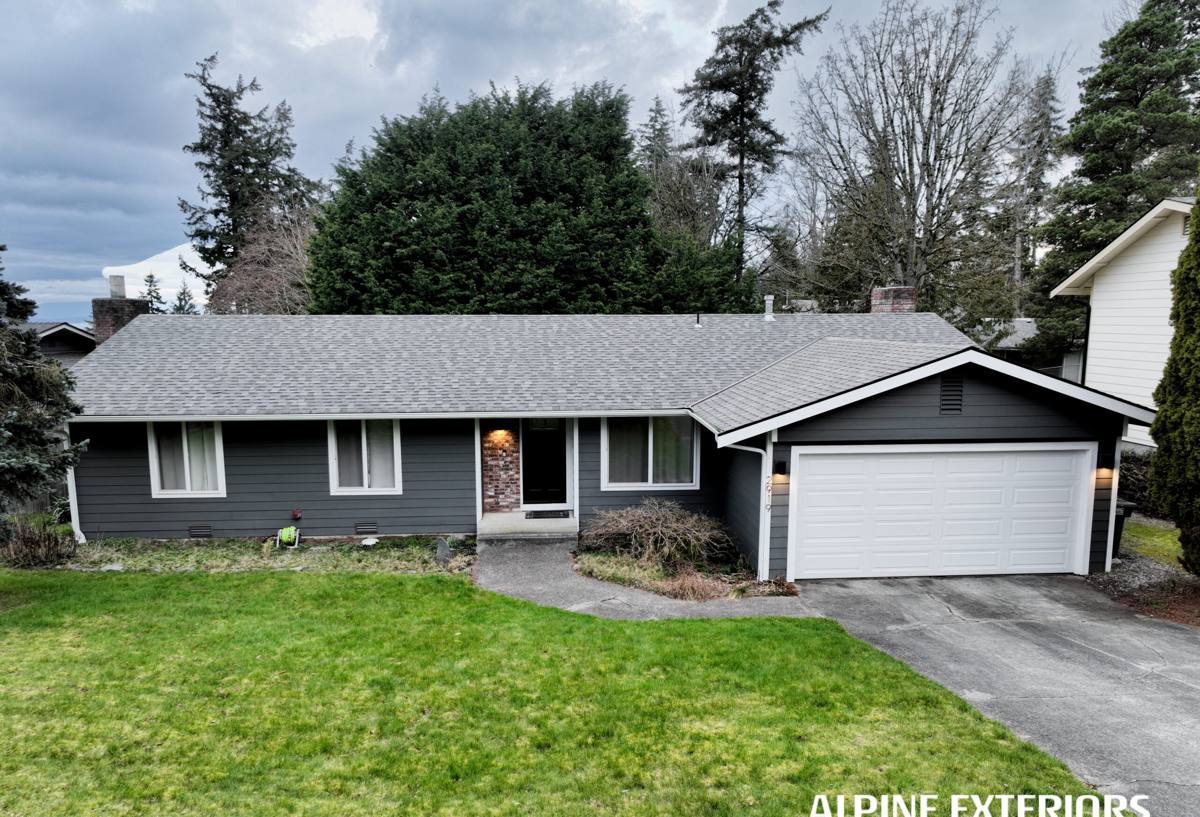
Signs Your Siding Has Reached the End of Its Life
Repair makes sense when the damage is isolated. Replacement makes sense when the problems are showing up in more than one place, or when the siding itself — not just the paint — is the issue. Common signs we look for on Abbotsford homes include:
- Panels that feel soft or spongy when you press on them, especially near the bottom courses
- Paint that won't hold anymore, even after a fresh coat
- Dark streaking or persistent staining, particularly on north- and west-facing walls
- Warping, buckling, or panels pulling away from the wall at the seams
- Visible moss or algae buildup that comes back within a season of cleaning
- Gaps opening up around trim, windows, or corner boards
- Siding older than 20–25 years, particularly wood or vinyl products not rated for this kind of exposure
If more than one or two of these apply, it's usually a sign the whole wall assembly — not just the visible siding — needs attention.
What a Correct Siding Replacement Actually Involves
Tear-Off Reveals the Real Story
Tear-off is where a siding job either gets fixed properly or gets covered up. Once the old material comes off, we can see the sheathing, the house wrap, and the flashing underneath — and in a climate that pushes this much water at a wall over the years, it's common to find soft sheathing, compromised wrap, or flashing that was never sealed correctly the first time. Reusing damaged sheathing or wrapping new siding over old problems is how a home ends up needing another replacement well ahead of schedule. We repair what tear-off exposes before anything new goes up.
Flashing and Water Management
In a climate with this much driving rain, how water is managed behind the siding matters as much as the siding itself. That means properly lapped flashing at every window, door, and roofline transition, a continuous water-resistive barrier installed shingle-style so water sheds outward, and a drainage gap behind the siding so any moisture that does get in has somewhere to go and can dry out instead of sitting against the wall.
Why We Only Install James Hardie Fiber Cement
We install James Hardie fiber cement siding exclusively — not vinyl, not LP SmartSide, not cedar, primed spruce, Cemplank, or Allura. That's not a marketing position; it's a standard we settled on after seeing how different products actually hold up in this kind of weather. Fiber cement is non-combustible, doesn't rot or swell the way wood-based products can when they take on repeated moisture, and Hardie's ColorPlus factory finish is baked on rather than field-applied, so it holds color and resists the fading and chalking that shorten the repaint cycle on other materials. Hardie also builds climate-specific HZ product lines engineered for regions with heavy moisture exposure, which fits this part of the Pacific Northwest well. It's a premium product with a real installation learning curve, and it comes with a strong transferable warranty when installed to spec — which is the whole reason we standardized on it instead of offering a menu of cheaper options.
Comparing Siding Options for This Climate
| Material | Moisture & Moss Resistance | Maintenance | Typical Lifespan |
|---|---|---|---|
| James Hardie Fiber Cement | Strong — non-combustible, engineered for wet climates, holds factory finish | Low — occasional wash, no regular repainting with ColorPlus | 30+ years with correct install |
| Vinyl | Moderate — doesn't rot but can warp, and seams can trap moisture | Low, but limited to color it was manufactured in and can fade | 20–30 years, shorter in high-UV or impact areas |
| LP SmartSide (engineered wood) | Moderate — treated to resist moisture but wood-based, sensitive to installation errors | Moderate — field-applied finish needs upkeep | 20–30 years if maintained closely |
| Cedar / Natural Wood | Weaker in constant wet exposure — prone to moss, rot, and cupping | High — regular sealing, staining, and moss treatment | 15–25 years depending on upkeep |
| Primed Spruce/Wood | Weakest — primer is a temporary barrier, not a moisture solution | High — repaint and inspect frequently | 10–20 years |
Every product on this list has a legitimate use case somewhere. In a valley climate with this much sustained moisture and a long moss season, the products that depend on a field-applied finish or untreated wood tend to show their age fastest — which is the trade-off we weigh with every homeowner before recommending a material.
Our Process, Start to Finish
- On-site assessment of the current siding, trim, and any visible trouble spots
- Tear-off and inspection of sheathing, house wrap, and existing flashing
- Repair of any compromised sheathing or framing found underneath
- Installation of a continuous water-resistive barrier and drainage gap
- Installation of James Hardie siding, trim, and flashing to manufacturer spec
- Final walkthrough to check seams, caulking, and finish before we call it done
What Drives the Cost of a Siding Replacement
We don't quote a number until we've actually seen the house, because too many variables affect it to make a broad estimate meaningful. The biggest factors on an Abbotsford project are usually the size and height of the home, how much sheathing or framing repair the tear-off uncovers, how much trim and detail work is involved around windows and corners, and which Hardie product line and profile you choose — lap siding, shingle-style panels, and board-and-batten all price differently. Access also matters: a home with tight side yards or a steep lot takes longer to stage and work around than one with open access on all sides. A free on-site estimate is the only honest way to give you a real number.
Why Hiring a Crew That Already Works in Abbotsford Matters
Cross-border projects come with their own logistics — moving crews and material efficiently, understanding local permitting expectations, and knowing what actually fails first on homes in this specific climate. A contractor who's worked Fraser Valley and Whatcom County wall assemblies already knows where water tends to find its way in on homes built to older standards, and plans the tear-off and flashing details around that instead of learning it on your project.
Before hiring anyone for a siding replacement here, it's worth asking a few direct questions:
- Are you a certified installer for the product you're proposing, and can you show it?
- What exactly does tear-off include — do you inspect and repair sheathing, or just re-cover it?
- What's your approach to flashing and drainage behind the siding?
- What warranty applies to the material and to your labor, and who backs each one?
- Can I see a written scope of work before anything starts?
A contractor who answers these clearly and specifically is usually the one who's done the job right before.
Keeping Your New Siding Looking Right
One of the practical advantages of James Hardie's factory-applied ColorPlus finish is how little upkeep it asks for afterward — no repainting cycle every few years the way field-finished materials often need. That said, this climate still calls for some basic care: keep gutters clear so water isn't sheeting down the wall, maintain a few inches of clearance between siding and grade or mulch beds to limit moss and moisture contact, and give the siding an occasional rinse to keep organic buildup from taking hold, especially on shaded sides of the house. None of it is heavy maintenance — it's just the difference between siding that stays looking new and siding that quietly starts collecting the same moss and staining problems the old siding had.
If your Abbotsford home is showing any of the signs above, or you're just planning ahead, we're happy to come take a look. The estimate is free, there's no pressure, and you'll get a straight answer about what your siding actually needs.